Cultural Change
 Call Kai
 Learn
 Practice Test
 Spaced Repetition
 Match
 Flashcards
 Knowt Play
1/10

Earn XP
Description and Tags
Cultural Change
11 Terms
Acculturation
The process by which individuals or groups adopt elements of another culture, usually as a result of prolonged contact between different cultural groups. This process can involve changes in language, customs, values, behaviours and identity.
What are the key domains of Cultural Change?
Language
Customs
Values
Behaviors
Identity
What is berry’s acculturation model?
Provides different strategies for individual to cultural adapt
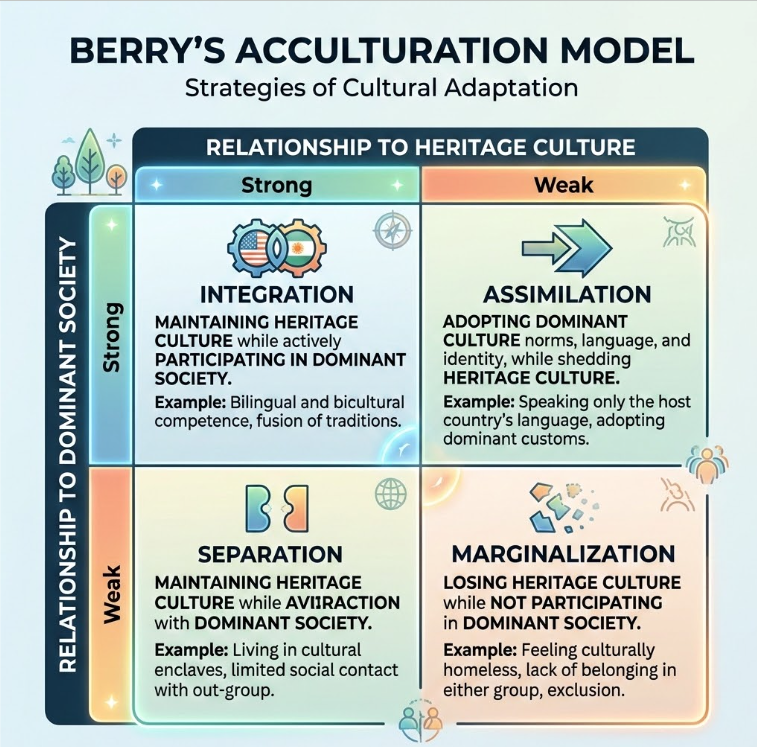
What is integration in Berry’s Acculturation Model?
Keeping ones original culture while excepting the new dominant culture.
What is assimilation in Berry’s Acculturation Model?
Abandoning one’s original culture in order to fully adopt the dominant culture.
What is separation in Berry’s Acculturation Model?
Rejecting / avoiding the dominant countries culture for your own.
What is Marginalization in Berry’s Acculturation Model?
Loosing / Reject one’s own culture and refuse to accept the new dominant culture of the country.
What are the psychological effects of acculturation?
Adjusting to a new culture while coping with trauma from forced migration can result in acculturative stress, depression, or PTSD.
What are the social effects of acculturation?
Differences in acculturation rates within families can lead to intergenerational conflict.
What are the physical effects of acculturation?
Many refugees experience a decline in physical activity due to urban living, work demands, or safety concerns in their new environment.
What are some positive effects of acculturation?
Refugees may gain better access to a diverse food supply, clean water, and nutrition education in the host country.
Can improve access to healthcare systems, leading to better treatment of chronic diseases and preventive care.
Learning to navigate a new culture builds emotional strength, adapptability, and problem-solving skills.
Positive effects are more likely in a supportive environmetn that encourages integration without forcing assimilation, respects cultural diversity and reduces discrimination.