130 Chemistry Lab Equipment
 Call Kai
 Learn
 Practice Test
 Spaced Repetition
 Match
 Flashcards
 Knowt Play
1/32

There's no tags or description
Looks like no tags are added yet.
33 Terms
Small Test Tubes
Cylindrical glass tubes open at the top and rounded at the bottom, used for holding, mixing, or heating small amounts of liquid chemicals.

Large test tubes
Cylindrical glass tubes open at the top and rounded at the bottom, used for holding, mixing, or heating small amounts of liquid chemicals.

Watch Glass
A shallow, circular, slightly concave piece of glass (looks like a large contact lens) used as a beaker cover, a surface to evaporate liquids, or to hold solids while weighing.

Graduated Beaker
Wide, cylindrical glass cups with a flat bottom, a small pouring spout, and rough volume markings on the side; used for holding, mixing, and heating liquids (not for precise measurements).

Erlenmeyer Flask
Cone-shaped glass flasks with a flat bottom, wide body, and narrow cylindrical neck; designed so you can swirl liquids without spilling them.

Graduated Cylinder
Tall, narrow, cylindrical tubes with a flat base and fine measurement lines along the side, used for accurately measuring specific liquid volumes

Plastic Bottles (250 mL NaOH, 125 mL NaCl)
Squeezable or screw-cap plastic storage bottles designated for holding specific stock solutions (sodium hydroxide and sodium chloride) during labs.

Test Tube Rack
A wooden, plastic, or metal stand with slots or pegs designed to hold multiple test tubes upright at the same time.

Test tube holder
spring-loaded wire clamp with finger grips used to safely hold a single test tube, especially when heating it over a flame or in a hot water bath.

Small & Large Test Tube Brushes
Long, twisted wire handles with bristles on the end, used to scrub the inside of test tubes and narrow glassware.

DI Water Wash Bottle
A squeezable plastic bottle with a long, angled nozzle at the top, filled with deionized (DI) water for rinsing glassware and adding small amounts of water.

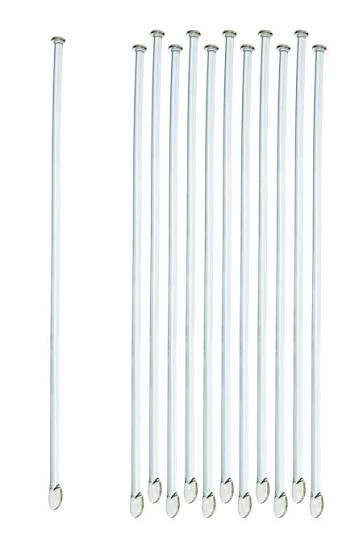
Glass Stirring Rod
A solid, thin, straw-length glass stick used to manually mix chemicals and liquids together.
Buret Reading Card
A small white card with a bold black stripe across the center, held behind a buret to make the curved liquid line (meniscus) easier to see and read accurately.

Crucible Tongs
Metal scissor-like tongs with curved, serrated tips near the end, used to pick up and carry hot crucibles, evaporating dishes, or small beakers.

Buret
A long, narrow, graduated glass tube with a stopcock (valve/tap) at the bottom tip; mounted vertically on a ring stand to dispense exact, measured volumes of liquid drop by drop during titrations.

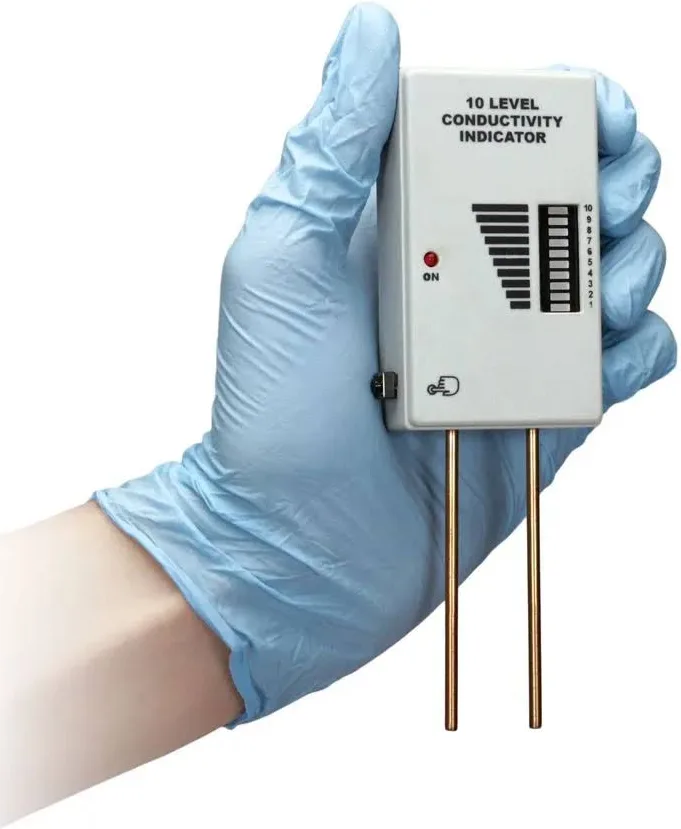
Conductivity Meter
A handheld digital pen or benchtop probe with metal electrodes at the tip (or a simple circuit with two metal prongs and a light bulb/LED); dipped into a liquid to measure how well the solution conducts electricity, which shows whether electrolytes (ions) are present and how concentrated they are.
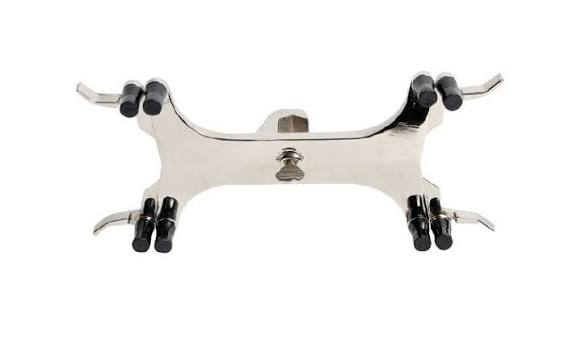
Buret Clamp
A metal clamp with spring-loaded or thumb-screw jaws that attaches to a vertical ring stand; designed to securely hold one or two burets upright and straight without blocking the volume markings.
Pipette (Volumetric or Graduated)
A slender glass or plastic tube used to draw up and transfer a precise volume of liquid (often paired with a rubber pipette bulb or pump at the top to create suction; volumetric pipettes have a single bulge in the middle for one exact volume, while graduated pipettes have measurement lines along the tube).

Exhaust Hood (Fume Hood)
A large, enclosed, box-like workstation with a sliding glass front window (called a sash) and an internal ventilation fan; pulls hazardous fumes, vapors, and toxic gases away from your face and vents them safely out of the building when working with volatile or smelly chemicals

Ring Stand
A heavy flat metal base with a tall vertical metal rod, used as the main support frame to hold clamps, rings, and glassware above the lab bench.

Iron Ring (Support Ring)
A circular metal ring with a built-in clamp that attaches to a ring stand, used to hold wire gauze, funnels, or beakers during heating or filtration.

Wire Gauze
A flat square of metal mesh with a heat-resistant ceramic center, placed on top of an iron ring to support glassware and spread heat evenly from a flame.

Bunsen Burner
A small vertical metal gas burner with a heavy base and an adjustable air collar at the bottom, connected to the bench gas valve by a rubber hose to produce a single open flame.

Hot Plate / Magnetic Stirrer
A flat, square, plug-in benchtop device with control knobs; heats liquids safely without an open flame and uses a rotating magnet underneath to spin a small white magnetic stir bar inside your beaker or flask.

Funnel (Glass or Plastic)
A wide cone-shaped top tapering into a narrow stem, used to pour liquids cleanly into narrow openings or to hold folded filter paper when separating solids from liquids.

Spatula / Scoopula
Small stainless-steel tools—a spatula has a flat paddle end, while a scoopula looks like a tiny curved trough—used to scoop solid powders out of reagent jars onto a weigh boat.

Weigh Boat (or Weighing Paper)
A small, lightweight, square plastic tray (often white or blue) or glossy square paper placed on a balance to hold solid chemicals while weighing them so you don't spill directly onto the scale.

Analytical Balance
A high-precision digital scale enclosed in a glass box with sliding doors on the sides and top; the doors block air currents so it can accurately measure tiny masses down to 0.0001 grams.

Volumetric Flask
A pear-shaped glass flask with a flat bottom, a very long narrow neck, and a single etched line on the neck; used to prepare solutions of one exact, highly accurate volume.

Crucible and Cover
A very small, cup-shaped white porcelain (ceramic) dish with a loose-fitting lid, designed to withstand extreme heat when burning or strongly heating solid samples.

Evaporating Dish
A shallow, wide, white porcelain bowl with a small pouring lip, used to heat solutions until the liquid evaporates and leaves solid crystals behind.

Mortar and Pestle
A heavy, thick-walled ceramic bowl (mortar) paired with a club-shaped grinding stick (pestle), used to crush and grind solid crystals into a fine powder.

Dropper Pipette (Medicine Dropper / Pasteur Pipette)
A short glass or plastic tube with a narrow tip and a small rubber bulb at the top, used to add liquids one unmeasured drop at a time.
