PATH 3810 Pathology of Respiratory System
 Call Kai
 Learn
 Practice Test
 Spaced Repetition
 Match
 Flashcards
 Knowt Play
1/62

There's no tags or description
Looks like no tags are added yet.
63 Terms
atelectasis
incomplete expansion of lungs or collapse of previously inflated air space

atelectasis
resorption atelectasis
occurs when obstruction prevents air from reaching distal airways
common cause is mucus plug in bronchus
compression atelectasis
associated with accumulation of fluid, blood, or air in pleural cavity (pleural effusion, pneumothorax)
contraction atelectasis
occurs when local or generalized fibrotic changes in lung or pleura limit expansion and increase elastic recoil during expiration

emphysema
emphysema
irreversible enlargement of the airspaces distal to terminal bronchioles
destruction of alveolar walls without fibrosis
mild chronic inflammation featuring macrophages, CD8+, CD4+, and neutrophils
emphysema leads to
destruction of connective tissue due to imbalance of proteases and oxidative stress
acute respiratory distress syndrome
manifestation of severe acute lung injury
progressive respiratory insufficiency due to inflammatory processes

ARDS

ARDS
ARDS outcome
mortality rate of 60% but 40% in US
survivors may have persistent impairment
obstructive pulmonary disease
characterized by a limitation of airflow and decreased expiratory rate
major diffuse obstructive disorders
emphysema
chronic bronchitis
asthma
bronchiectasis
asthma
chronic inflammatory disorder of the conducting airways that causes recurrent episodes of wheezing, breathlessness, chest tightness, and cough
reversible and intermittent bronchoconstriction with chronic bronchial inflammation and increased mucus production
intrinsic (non-atopic) asthma
triggered by nonimmune stimuli such as aspirin, pulmonary viral infection, cold air, physiologic stress, exercise, pollutants
atopic (extrinsic) asthma
genetic predisposition to type I hypersensitivity
T cells stimulate B cells which activate eosinophils, IgE production, and mucus production
atopic asthma acute phase
inflammatory mediators and mast cells trigger parasympathetic bronchoconstriction, mucus production, vasodilation, and vascular permeability
atopic asthma late phase
eosinophil, neutrophil, T cell infiltration
synthesis of cellular mediators
pneumonia
inflammation of the lung parenchyma with exudate
pneumonitis
inflammation of the lung interstitium without exudate
bronchopneumonia
patchy consolidation involving one or more than one lobe
lobar pneumonia
regional consolidation contiguous spaces of part or all of a lobe filled with exudate
lobar pneumonia stages
congestion
red hepatization
grey hepatization
resolution

acute pneumonia

pneumonia: early organization of exudates

advanced organizing pneumonia with transformation of exudates to fibromyxoid masses
bronchopneumonia
pneumonia with inflammatory processes in bronchial, bronchiolar, and alveolar lumens
cranioventral consolidation of lungs

suppurative bronchopneumonia
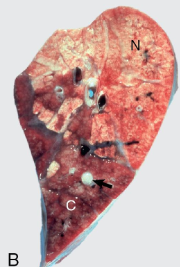
suppurative bronchopneumonia

fibrinous bronchopneumonia

fibrinous bronchopneumonia
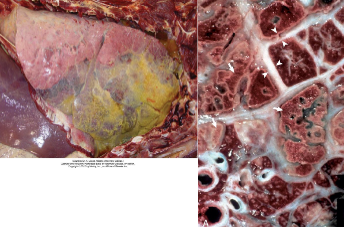
pneumonic mannheimiosis (gross)

pneumonic mannheimiosis (microscopic)
atypical pneumonia
respiratory distress disproportionate to clinical and radiologic signs
inflammation localized to alveolar septa
interstitial pneumonia
pneumonia in which inflammatory process is localized to the components of alveolar walls
may lead to fibrosis

interstitial pneumonia (gross)

interstitial pneumonia (microscopic)
embolic pneumonia
centered on blood vessels: arterioles and capillaries
agent is delivered via bloodstream
characterized by random multifocal lesions in lobes

embolic pneumonia (gross)

embolic pneumonia (microscopic)
granulomatous pneumonia
characterized by activation of alveolar and interstitial macrophages together with CD4 T cells and can involve neutrophils and multinucleate giant cells

granulomatous pneumonia
tuberculosis
communicable chronic granulomatous disease caused by Mycobacterium tuberculosis
tuberculosis pathogenesis
Th1 CD4 T cells play a role in cell-mediated immunity against mycobacteria
mediators include IFN-y, IL-12, TNF, and nitric oxide synthase
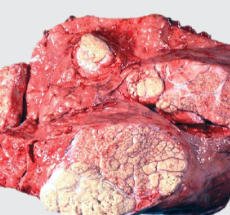
tuberculosis (gross)

granuloma (microscopic)
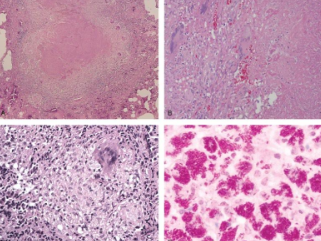
tuberculosis
pneumothorax
air or gas in pleural sac
hemothorax
blood collection in pleural cavity
usually due to ruptured aortic aneurysm
chylothorax
pleural collection of milky lymphatic fluid containing microglobules of lipid
pyothorax
collection of pus in pleural cavity

hemothorax

chylothorax

pyothorax
squamous cell carcinoma
arise centrally in major bronchi, preceded by metaplasia or dysplasia
adenocarcinoma
peripherally located carcinoma
bronchioloalveolar carcinoma
subtype of adenocarcinoma

precursor lesions of squamous cell carcinomas
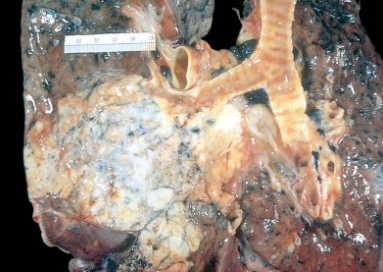
squamous cell carcinoma

atypical adenomatous hyperplasia
precursor lesion of invasive adenocarcinoma

bronchioalveolar carcinoma
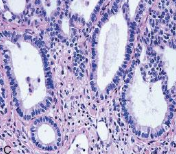
invasive adenocarcinoma