BIOL 111 Midterm Exam
 Call Kai
 Learn
Learn Practice Test
 Spaced Repetition
 Match
Match Flashcards
 Knowt Play
1/96

There's no tags or description
Looks like no tags are added yet.
Name | Mastery | Learn | Test | Matching | Spaced | Call with Kai | Chat |
|---|
No analytics yet
Send a link to your students to track their progress
97 Terms
natural selection
the process through which populations of living organisms adapt and change
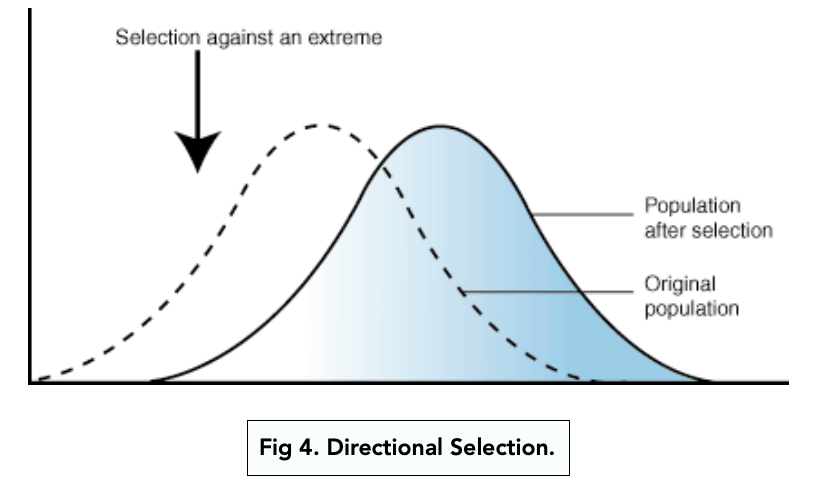
direct selection
-selection moving in one direction
-overall distribution of traits shifts
-mean trait changes
disruptive selection
-selection takes away from mean group
-mean trait doesn’t necessarily change

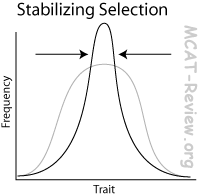
stabilizing selection
-selection reinforces mean character trait
genetic drift
-random changes in allele frequency
-has greater effect on small populations
-still a type of evolution, just not natural selection
sexual selection
-type of natural selection where members of a sex compete for access to mates based on specific traits
-can oppose other forms of natural selection and result in fitness costs
-(think male peacock example)
continuous variation
trait changes gradually over a wide range of values
NO distinct categories
ex: height, skin color
discontinuous/discrete variation
variation falls into distinct, separate categories
ex: blood groups
biogeography
the scientific study of the geographic distribution of species, organisms, and ecosystems across geographic/geological space and time
heritability
the proportion of variation in a genetic trait within a specific population that is due to genetic differences between individuals, rather than environmental factorsnic
niche
all of the interactions of a species with the other members of its community,
speciation
-the formation of new and distinct species in the course of evolution
-the splitting of a single evolutionary lineage into two or more genetically independent lineages.
sister taxa
groups that share an immediate common ancestor, making them each other's closest relatives on a phylogenetic tree
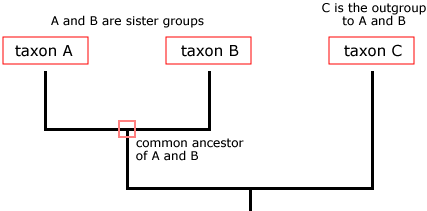
outgroup
more distantly related species on phylogenetic tree

node (on phylogeny)
points at the ends of branches which represent sequences or hypothetical sequences at various points in evolutionary history.

branch (on phylogeny)
-path of transmission of genetic information from one generation to the next
-branch lengths indicate genetic change i.e. the longer the branch, the more genetic change has occurred.

common ancestor
an ancestral group of organisms or individual species from which two or more descendant lineages evolved
extant
species, genus, or family still living on Earth
polyploidy
-a condition where a cell or organism has three or more complete sets of chromosomes instead of the usual two sets
-can lead to nearly instant speciation
phenology
the study of the timing of recurring biological life cycle events and how they are influenced by seasonal weather and climate.
(phenotypic) plasticity
different phenotypes emerging from a single genotype
range shift
a change in the geographic distribution of a species or population over time
artificial selection
the human-driven process of intentionally choosing and breeding specific plants or animals to amplify desired traits in future generations
microbe
spontaneous generation
the theory that living cells emerge spontaneously from non-living matter
symbiosis
-two or more organisms of different species living together in close proximity
-can include beneficial, neutral or harmful (e.g. parasitism) relationships.
cell
an individual biological unit capable or metabolism and reproduction
-bound by a plasma membrane and containing a genome
genome
-the entire genetic content of a cell, including the chromosome and any extra-chromosomal elements like plasmids
-can be made up of DNA or RNA
transcription
the process of synthesizing a single-stranded mRNA molecule from a coding sequence of DNA (a gene) in the genome
ribosome
a complex of RNA and protein that translates mRNA into protein
translation
the process of synthesizing a protein as a specific sequence of amino acids specified by codons in mRNA
a long RNA molecule transcribed from DNA, consisting of codons.
codon
a specific sequence of 3 consecutive nucleotides that encode a specific amino acid or the ‘start’ or ‘end’ of translation
protein
a string of specific amino acids that fold into a specific 3-dimensional structure that determines its biological function (e.g enzyme, structural, etc).
horizontal gene transfer
the transfer of genetic material between organisms rather than from parent to offspring
-primarily occurs in microbes
Pasteur’s spontaneous generation experiment
-pasteur determined that microbes do not arise from spontaneous fermentation, they come from other microorganisms in environment
-only breaking the neck of the flask allowed the microbes into the broth, previously they would be unable to swim through the steep neck of the flask

autotroph
an organism that uses an inorganic carbon source (like carbon dioxide)
heterotroph
an organism that uses organic carbon (like carbohydrates and sugar)
phototroph
an organisms that gets its energy from light (rather than chemical energy)
oxidation
loss of electrons by a molecule.
reduction
gain of electrons by a molecule
redox
the coupling of oxidation and reduction ‘half reactions’ into a single chemical reaction, releasing energ
respiration
such as oxygen (in the case of aerobic respiration), sulphate or nitrate (in the case of
anaerobic respiration).
ribozyme
an RNA molecule that catalyses a chemical reaction
RNA World Theory (1960s)
-RNA formed first, eventually leading to DNA/protein formation
-RNA can store replication info, replicate itself, act as an enzyme (ribozyme), could have catalyzed reactions before DNA/protein evolution
-But… RNA isn’t stable in water (gets broken down through hydrolysis)
Primordial Soup Theory (1871)
-Early earth environment had many compounds that are abundant in life: C, H, H2O, NH3. Early earth had chemically reducing atmosphere (very low levels of O2 gas)
-the atmosphere produced simple organic compounds from energy sources
-compounds accumulated in a “soup” concentrated at various locations.
-concentration led to eventual formation of complex organic molecules
life eventually rose from complex polymers
early cells then broke down polymers to generate ATP (heterotrophy)
Deep Sea Hydrothermal Vent Theory (2010)
-Alkaline water from vents combines with acidic ocean water to create natural proton gradient
-hydrothermal vent structures produced by chemical reactions between rock and water
-chimney structures are porous and can act as a semi-permeable membrane (energy generated with movement of proton gradient)
-Once energy was reliably generated, formation of organic monomers, polymers, DNA, RNA, and proteins would follow

stromatolite
macroscopic structures formed through the activity of microbial mats, either fossilized or living.
microbial mat
layered community of microorganisms growing together on a surface
biosignature
evidence that may indicate the presence of past or present life
molecular biomarker
an organic molecule preserved in rocks or sediments that can provide evidence about past life
anoxygenic photosynthesis
photosynthesis that does not produce O2 and uses electron donors other than water
cyanobacteria
bacteria capable of oxygenic photosynthesis
Great Oxidation Event
-the interval when O2 first accumulated substantially in Earth’s atmosphere
-occurred 2.4-2.1 billion years ago
-caused by cyanobacteria that performed oxygenic photosynthesis
prokaryote
an organism whose cells lack a membrane bound nucleus
eukaryote
-organism whose cells contain DNA within a membrane-bound nucleus and other membrane-bound organelles
-a domain of life on Earth
endosymbiosis
-a relationship in which one organism lives inside another
-central to the origin of mitochondria and chloroplasts
eukaryogenesis
-the evolutionary process that gave rise to the eukaryotic cell and lineage
-merging of asgard archaea and alphaproteobacteria (evolved into the mitochondria)
archaea
single-celled microorganisms that are evolutionarily distinct from bacteria
asgard archaea
a group of archaea that are the closest known archaeal relatives of eukaryotes
metagenomics
sequencing of DNA directly from an environmental sample without first culturing the organisms
Horizontal Gene Transfer (HGT)
movement of genetic material between organisms rather than from parent to offspring
vertical inheritance
transmission of genetic material form parent to offspring
species tree
a phylogenetic tree showing the evolutionary relationships among organisms
gene tree
a phylogenetic tree showing the evolutionary history of a particular gene
virus
genetic material enclosed in a protein coat that requires a host cell to replicate
phage
a virus that infects bacteria or archaea
polytomy
a node on an evolutionary tree where more than two descendant lineages split from a single ancestral group
yeasts
singe-celled funghi
hypha/hyphae
-long, thin, branching filaments that form the main body (mycelium) of a fungus
-can absorb a ton of nutrients
mycelium/mycelia
the vegetative body of a fungus that is made up of hyphae

chitin
tough, natural sugar polymer that forms the cell wall of a fungus
septum/septa
internal dividers that split hyphae into cellular compartments
saprophyte/saprophytic
an organism that obtains nutrients from dead/rotting plant or animal material
symbiont
-an organism that lives in long-term association with an organism of a different species
-typically refers to the smaller of the two partners (the larger=host)
-does NOT imply a mutually beneficial association
conidia
asexual, non-motile spores produced by some fungi for reproduction and dispersal
conidiophore
specialized branch of a fungus that produces conidia
Dikaryotic stage
-fungi reproductive stage where each cell contains 2 separate, genetically distinct haploid nuclei (but one cytoplasm) from different parents
plasmogamy
1st stage of fungi sexual reproduction where cytoplasm of 2 parent cells fuse without the fusion of their nuclei
karyogamy
final step in fungi sexual reproduction where 2 haploid cell nuclei fuse to forma single diploid nucleus
monophyletic
a biological grouping that consists of a single common ancestor and ALL of it’s descendants
protist
any eukaryotic organism that is not a plant, animal, or fungus
plantae
taxonomic kingdom consisting of multicellular, eukaryotic, and mostly autotrophic organisms that photosynthesize
archaeplastids
a group of living things including land plants, green/red algae, and glaucophytes
opisthokonts
a broad group of eukaryotes, including both the animal and fungus kingdoms
chloroplasts
structure within the cells of plants and green algae that is the site of photosynthesis
secondary endosymbiosis
a non-photosynthetic eukaryote engulfs another photosynthetic eukaryotic cell (such as red/green algae), that has already undergone primary endosymbiosis
thallus
a vegetative body (such as algae, fungi…) that lacks true roots, stems, leaves, and vascular tissue
trophic cascade
-adding or removing top predators triggers a domino effect of dramatic changes down through the lower levels of a food web
-ex: local sea otter extinction led to surplus of sea urchins that consumed kelp, which resulted in the destruction of kelp forests
alternation of generations
-unique to plants
-life cycle where an organism switches between multicellular haploid stage (1 set of chromosomes) and multicellular diploid phase (2 sets of chromosomes
haploid=gametophyte: produces gametes through mitosis
diploid=sporophyte: produces spores through meiosis
-(spores = haploid!)
sporophyte
the diploid, spore-producing phase in the life cycle of plants and some algae
gametophyte
the haploid phase in the life cycle of plants and some algae that produces gametes (sperm+eggs)