thermal comfort
 Call Kai
 Learn
 Practice Test
 Spaced Repetition
 Match
 Flashcards
 Knowt Play
1/30

There's no tags or description
Looks like no tags are added yet.
31 Terms
define thermal comfort
the state of mind which expresses satisfaction with the thermal environment
define thermal neutrality
the condition in which a person is not feeling too hot or too cold
can assume they are feeling thermal comfort
describe the factors that affect thermal comfort
indoor environment
personal variables
weather conditions
design and type of space
personal control over space - adaption
define inside air temperature (ta)
average temperature of the bulk air in a room
define mean radiant temperature (tr)
average temperature of the surfaces that surround a particular point in a room
define operative temperature (top)
average of the air temperature AND mean radiant temperature (weighted by respective heat transfer)
what is operative temperature affected by?
convection and radiation
how is mean radiant temperature (tr) calculated?
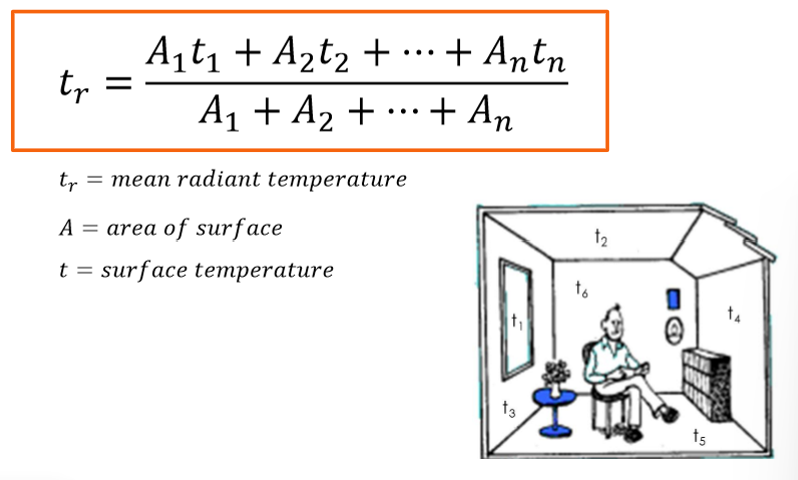
how is operative temperature (top) calculated?
what assumption is made?
assume air speed < 0.1m/s and calculating dry resultant temperature

what is operative temperature top also known as ?
dry resultant temperature OR
inside environmental temperature (tei)
how can we assess thermal comfort?
PMV/PPD INDEX
ADAPTIVE THERMAL COMFORT MODEL
what does PMV and PPD stand for?
PMV - predicted mean vote
PPD - percentage of people dissatisfied
how was the PMV/PPD index developed?
took a group of people of different ages, genders etc
placed them in environmentally controlled chambers
altered state of undress OR
one other of 6 environmental/personal variables
find PPD from measured PMV
what are the 6 environmental/personal variables in PMV/PPD index?
air temp
radiant temp
air velocity
humidity
clothing
metabolic heat
define the adaptive thermal comfort model
if a change occurs and produces discomfort, people react in ways that restore their discomfort
who conducted studies in adaptive thermal comfort?
humphreys and nicol
what does the adaptive thermal comfort model demonstrate?
thermal comfort is affected by heat balance of human body AND OTHER FACTORS
people are NOT passive recipients of thermal environment
play active role in creating thermal environment through physical/behavioural responses
how does acclimatisation impact the adaptive thermal comfort model?
modifies people’s thermal expectations and preferences
causes people to have different reactions
have different ideas of thermal comfort
physical/behavioural responses to cold
shivering
huddling
exercise
alter thermostat/turn on heating
put on more clothes/warmer clothes
physical/behavioural responses to heat
sweating
open windows
wear less/cooler clothes
turn on fans/ac
how does the adaptive thermal comfort model explain the relation between occupants and the building?
comfort is achieved by occupants adapting to the building AND adapting the building to them
within reasonable context → should be supported by conditions allowing occupants to control their environment
factors to consider when designing thermally comfortable buildings
outside climate
building’s context and form
building services
occupants
how can buildings be designed to achieve thermally comfortable indoor environments?
activities & clothing levels of occupants
effective planning of spaces
expectation and experience of occupants
buffer spaces
provision of local control/adaption opportunities
enable movement to space where most comfortable
educate occupants on adaptions to maintain thermal comfort
purpose of buffer spaces
protect against extreme thermal exposure to maintain comfortable interior
who ran the PMV/PPD index?
fanger
who ran the SET (standard effective temperature) model
gagge
how did PMV/PPD index classify their data?
a 7 point scale
resulting number is called comfort vote
+3 is hot, -3 is cold
why was the PMV/PPD index criticised?
doesn’t consider
age
gender
number of occupants
acclimatisation
assumes people to be totally passive to thermal environment
how does humidity impact perception of temperature?
higher humidity levels - seems warmer
lower humidity levels - seems colder
humidity > 80% - unable to cool by perspiration
optimum average room temperature range
what must it not fall below?
optimum: 21-23C
must not fall below 18C
equation for human body heat balance
