2.4 Price
 Call Kai
 Learn
 Practice Test
 Spaced Repetition
 Match
 Flashcards
 Knowt Play
1/25

There's no tags or description
Looks like no tags are added yet.
26 Terms
Price
the sum of money a consumer has to pay for a good or service. it is determined by the interaction of supply and demand
Efficiency
concerned with the optimal production and allocation of scarce resources
Equilibrium price and quantity
where the quantity supplied exactly matches the quantity demanded
Allocation of resources
how scarce resources are distributed among producers and how scarce goods and services are allocated among consumers
Determination of price
the interaction of the free market forces of demand and supply to establish the general level of price for a good or service
Market forces
factors that determine price levels (interaction of demand and supply) and the availability of goods and services in the economy without government intervention
Price as a reflection of worth
price is often used to indicate worth- not always accurate
worth = how much u value summin
worth varies due to:
different ppl
changes in fashion and tastes
diff situations
asking price is js wat the seller wants but the acc market worth/value depends on wat buyers r willing and able to buy. if a house is listed for 250k but no one is willing and able to buy tha shi/ no demand for it, then its not its true market value, true price is wat buyers finna acc pay
cost (differs to price)
how much money a producer must pay to provide the product
The role of price
price has a role to play in determining an efficient distribution of resources
in a market economy, price is the means by which these scarce resources are allocated between competing users
efficiency def again
the optimal production and distribution of scarce resources
3 Functions in determining the efficient distribution of resources and price
STR
Signalling
Transmission of preferences
Rationing
Signalling
Prices change to signal where resources are needed and where they are not
Price increase = due to more demand, need more supply, signals more resources are required
Price decrease = due to less demand, need less supply, signals fewer resources are required
Transmission of preferences
Producers’ choices that send information to suppliers of resources about their changing needs
Higher prices = producers need more resources from suppliers to increase supply
Lower prices = producers need fewer resources from suppliers to decrease supply
quick memory trick to remember difference between signalling and transmission
Signalling = price gives information
Transmission = that information gets passed on and acted on
example of transmission of preferences- mobile phone manufacturer

Rationing
If resources are scarce, prices increases – only those willing and able to pay the price are allocated the resources.
For example, the demand for tickets among England supporters for an Ashes cricket series will be very high and exceed supply, therefore the price rises and the higher price acts as a rationing device to equate demand with supply.
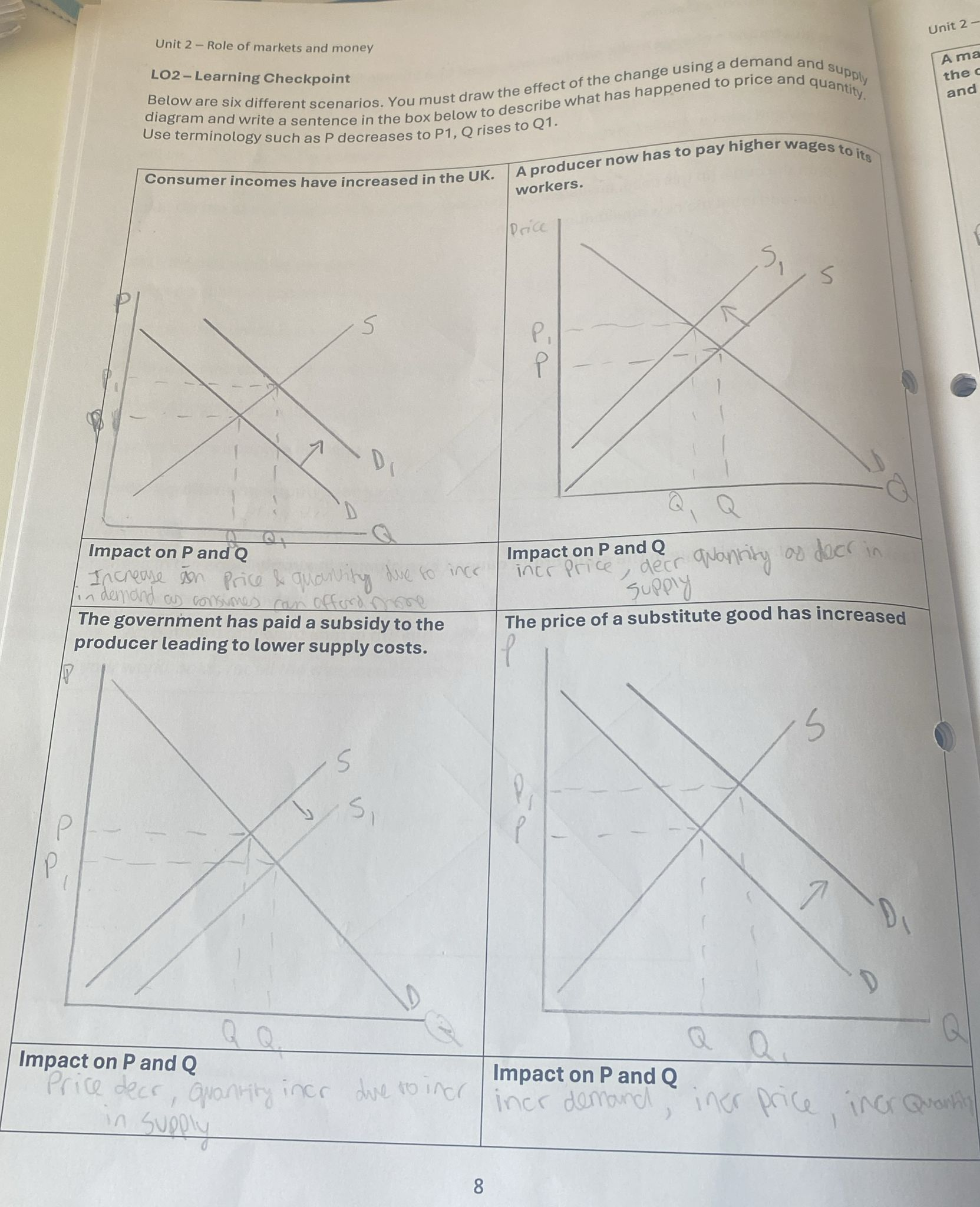
Changes in the equilibrium point are caused by either
An outward or inward shift in the demand curve (PASIFIC)
An outward or inward shift in the supply curve (PINTSWC)
DRAWING a change in equilibrium

examples of change in equilibrium graphs
Disequilibrium
refers to a situation where demand and supply are not equal, meaning the market is not in balance
Excess demand
shortage of supply
demand is greater than supply
not enough goods for everyone who wants to buy
illustrating excess demand

Excess supply
shortage of demand
supply is greater than demand
too much of a product is unsold
illustrating excess supply

Explaining graph

6mark analyse w a graph
