(2) Poland: Military History and Notable Events
 Call Kai
 Learn
Learn Practice Test
 Spaced Repetition
 Match
Match Flashcards
 Knowt Play
1/31

There's no tags or description
Looks like no tags are added yet.
Name | Mastery | Learn | Test | Matching | Spaced | Call with Kai | Chat |
|---|
No analytics yet
Send a link to your students to track their progress
32 Terms
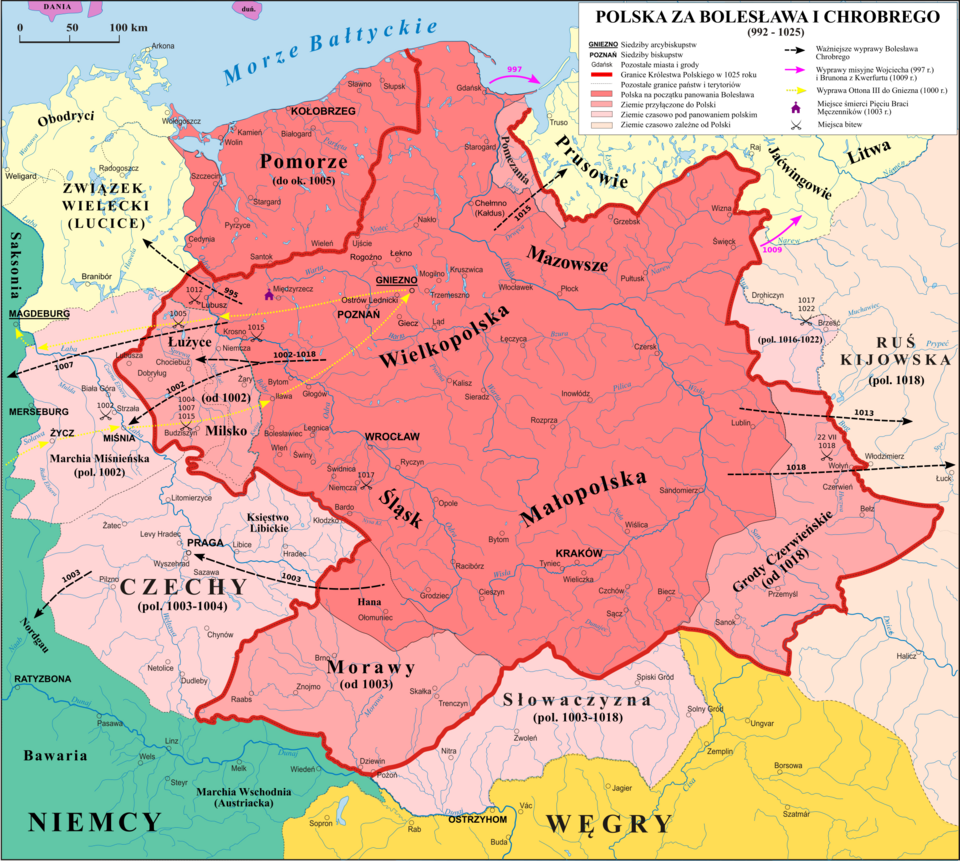
1003 - 1018 - Polish-German Wars (All Facts)
Series of conflicts fought between Boleslaw and his namesake forces and kingdom and Henry II and his forces of the Holy Roman Empire
Series of conflicts which ended with the Peace of Bautzen
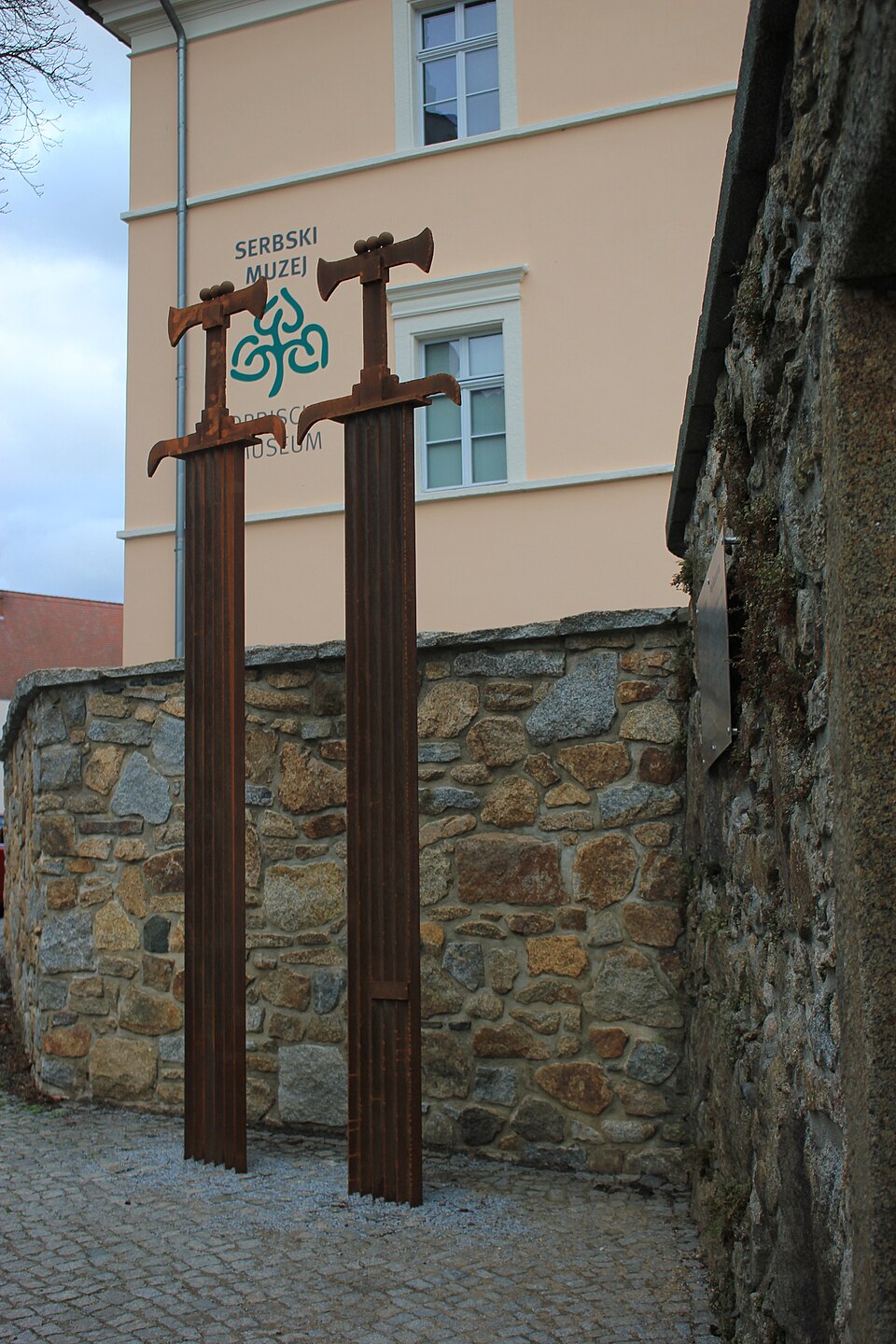
1018 - Peace of Bautzen (All Facts)
Treaty signed between Boleslaw of Poland and Henry II of Germany / the Holy Roman Empire which ended the German-Polish Wars of 1003
Treaty in which Boleslaw of Poland consolidated his territorial gains from the War

1241 - Battle of Legnica (All Facts)
Battle in which Batu Khan and the Mongols defeated the Polish, Moravian, and Teutonic Knight forces during the First Mongol Invasion of Poland
Battle after which Mongol horsemen from the Tartar region broke the Teutonic Knights and contemptuously cut off an ear from each Teutonic corpse to be bagged and counted like vermin’s tails, with their having collected nine bags total
1245 - 1618 - Lithuanian-Muscovite Wars (All Facts)

1410 - Battle of Grunwald (All Facts)
Battle in which Jagello and his Polish forces, with help from the Lithuanian forces, defeated the grand master and knights of the Teutonic Order, thus ending its two centuries of rule in the region
Battle which lasted for a day and resulted in the death of some 200 Teutonic Knights
Battle before which both sides had been preparing for a decisive battle for some time, and had even submitted their cases to public opinion throughout Europe in memoranda sent to several countries, including England
At the same time military preparations were also going on, with the order recruiting Western knights and the Poles enlisting some Czech (Bohemian) mercenaries
Battle in which the Polish and Lithuanian forces were not as experienced but nonetheless outnumbered the larger Teutonic Knights’ forces
Battle in which Jagello decided to thrust at the Teutonic Order’s capital at Marienburg, with the Polish gentry finally having carried the day when the German grand master’s charge failed

1444 - Battle of Varna (All Facts)
Battle in which General Janos Hunyadi of Hungary and King Wladyslaw III and their forces were defeated by Murad II and the Ottoman Turks in modern-day Bulgaria on the shores of the Black Sea during the Hungarian-Ottoman Wars
Battle which allowed the Ottoman Turks to enter Constantinople and which failed to prevent further Ottoman expansion into the Balkans
Battle after which King Wladyslaw III vanished
1466 - Second Peace of Thorn / Torun (All Facts)
Peace treaty signed between the Teutonic Knights and the Kingdom of Poland, ending the Thirteen Years’ War between the Teutonic Knights and Poland

1512 - 1522 - Fourth Lithuanian–Muscovite War / Ten Years’ War (All Facts)
War in which Vasily III and his Muscovite forces, with the help of Mikhail Glinsky and Lithuanian rebels, defeated Sigismund and his Polish-Lithuanian forces
War in which Vasily III and his Muscovite forces gained control of Smolensk after two bloody but abortive previous attempts to take it
War which ended with an armistice conceding control of Smolensk to Vasily III
War whose armistice treaty was also a diplomatic coup for Vasily III

1515 - First Congress of Vienna (All Facts)
Meeting attended by the Holy Roman Emperor Maximilian and the Jagiellonian brothers, King Vladislaus II of Hungary and Bohemia, and King Sigismund of Poland and Grand Duke of Lithuania where they all forged an alliance with one another
Meeting in which Holy Roman Emperor Maximilian married off his children Ferdinand and Mary to King Vladislaus II of Hungary and Bohemia’s children Louis and Anne
Meeting in which the Kingdom of Hungary, given its absence of a direct heir to King Louis II, was inherited to Archduke Ferdinand of Austria and the House of Habsburg
This partially protected them from the Ottoman Empire
Meeting after which the hereditary territories of the Habsburgs were united amongst Austria, Bohemia, and Hungary

1534 - 1537 - Fifth Lithuanian-Muscovite War / War of Starodub (All Facts)
War in which King Sigismund of Poland and Grand Duke of Lithuania and his Lithuanian-Polish forces failed to regain Smolensk and lost it to Russia
War after which Prussia still remained a fief of Poland

1558 - 1583 - Livonian War (All Facts)
War in which Tsar Ivan IV and his Russian forces were defeated by Poland, Lithuania, Denmark, Norway, Sweden, Transylvania, and the namesake confederation
War which Tsar Ivan IV began due to
his ambition to transform Russia, which, at the time, had a rudimentary agriculture and little industry; by taking control of the Baltic and its ports, as they had already become, at the time, important centers of international trade and offered the prospect of benefit from the more advanced western countries of the time
War in which Tsar Ivan IV
sent his troops into the namesake kingdom / confederation in a lightning strike designed to secure the Baltic region for Muscovy (Russia) and give it an outlet to the west
War in which Tsar IV and his Russian forces
seized several large towns and fortresses
disputed with one another in Moscow and ultimately destroyed their momentum
may have overreached themselves during that period of the Tsar’s imperial expansion, but the Baltic region would have been a considerable prize nonetheless
War which saw
The Siege of Narva
The Siege of Pskov
War during which
the namesake Order of Knights managed to improve its military and diplomatic posture, still being the area’s main defense force
Riga (modern-day Latvia; of the namesake confederation / order) put itself under the protection of Poland
the namesake confederation was partitioned as Sweden and Denmark were poised to take over (modern-day) Estonia and Courland
War which ended when Russia made peace with Poland gave up its claims to the Baltic state of Livonia

1563 - 1570 - Northern Seven Years’ War (All Facts)
War in which Sweden fought against Denmark, Norway, Poland, Lithuania, and Lubeck
War which ended with the Treaty of Stettin

1569 - Union of Lublin (All Facts)
Policy which officially established the Polish-Lithuanian Commonwealth
Policy in which
Poland and Lithuania
(officially) allied themselves to form a vast union stretching from the Baltic Sea to the Dniester River
agreed to accept each others’ religions and those of West Prussia and of Lithuania’s dominions in (White) Russia and Ukraine
declared Catholicism to be the official religion, but were made to be tolerant towards Protestants, Orthodox, and Jews
Policy which provided Lithuania protection from
raids of the Crimea Tartars
Muscovite imperialism, especially considering the Lithuanian-Muscovite Wars
Policy which provided Lithuanian nobility
enormous political, legal, and economic privileges enjoyed by their Polish counterparts in the new namesake union
Policy which made it so that the Grand Duchy of Livonia became formally united with Poland (and the Polish-Lithuanian Commonwealth)

1570 - Treaty of Stettin (All Facts)
Peace Treaty signed between Denmark and Sweden, which ended the Northern Seven Years’ War and restored the prewar frontiers of the states involved

1581 - 1582 - Siege of Pskov (All Facts)
Battle in which the Russian forces defeated the Polish-Lithuanian forces during the Livonian War

1591 / 1593 - 1606 - Long Turkish War / Thirteen Years’ War / Fifteen Years’ War / Sixth Habsburg-Ottoman War (All Facts)
War in which Murad III, Mehmed III, and Ahmed and their Ottoman forces fought against Holy Roman Emperor Rudolf II and the Habsburgs (Holy Roman Empire and Spain) and their allies; which ended in a stalemate
War during which Ottoman forces captured the fortress of Raab in Hungary

1595 - Siege of Esztergom (All Facts)
Battle in which Habsburg forces defeated Ottoman forces during the Long Turkish War Thirteen Years’ War / Fifteen Years’ War / Sixth Habsburg-Ottoman War
1596 - Union of Brest / Union of Brest-Litovsk (All Facts)
Synod which was responsible for the creation of the Ruthenian Uniate Church
Synod in which the Jesuit Order managed to unite the Roman Catholic and Orthodox Churches in modern-day Ukraine, a region of the Polish-Lithuanian commonwealth at the time, after only a year of negotiation
1597 - 1599 - War Against Sigismund / Battle of Stangebro (All Facts)
War / Battle in which Duke (and soon to be King) Charles IX and his Swedish forces defeated King Sigismund and his Polish-Lithuanian forces
War / Battle in which Duke Charles IX, having gained the support of the Lutheran states against the members of the Swedish council, inflicted a defeat on his Catholic nephew

1609 - 1618 - First Russo-Polish War (All Facts)
War in which King Sigismund III and his Polish-Lithuanian forces defeated Tsar Vasily IV and his Russian and Swedish forces
War in which King Sigismund III proclaimed that his own son, Ladislaus IV, be the new Tsar of Russia
War during which the Poles pressed home their advantage by occupying Moscow while the Swedes entered Russia
War during which the Russians forced the invading Poles to capitulate and, incensed by Polish and Swedish advances into their lands, the Russian people organized against them
This operation was undertaken by Kuzma Minin and Dmitry Pozharsky
War during which Poland had Smolensk in its possession by the end of the “Time of Troubles” and used it as the base for the offensive
At one point during the war, this caused serious concern to Tsar Michael, who had been grappling with a host of domestic problems which he inherited when he assumed the throne
Somehow, in response to this development, Moscow withstood the assault by the Polish forces
War which ended with the Truce of Deulino, which was signed after the failure of the offensive which brought Polish troops near Moscow after they ran short of ammunition and provisions and withdrew

1609 - 1611 - Siege of Smolensk (All Facts)
Battle in which King Sigismund III of Poland-Lithuania and his Polish-Lithuanian and Cossack forces defeated Russia and their combined Russian and Swedish forces in the Russo-Polish War
1618 - Truce of Deulino (All Facts)
Peace Treaty signed between Russia and Poland-Lithuania, which ended the Russo-Polish War of 1609
Peace Treaty in which
Poland retained the provinces of Smolensk and Seversk
recognized the “election” of Michael Romanov to the throne of the Tsardom of Russia, in succession to Poland-Lithuania’s Ladislaus IV (despite not having yet renounced a claim to that throne which stemmed originally from the “Time of Troubles")

1618 - 1648 - Thirty Years’ War (All Facts)
Conflict
between Catholics and Protestants in Germany following the failure to reconcile them via the Peace of Augsburg
Conflict in which
4.5M-8M people were killed from
the battlefield
plague and disease
the constant maneuvering helped to spread disease
famine
the constant maneuvering laid waste to vast tracts of farmland
Crops were destroyed
German towns lost as many as 50% of their populations from
being razed to the ground by siege and fire
plague borne by countless armies
the European continent was nearly destroyed
Conflict which began
with the Defenestration of Prague and Bohemian Revolt
when Bohemia elected itself a new Protestant as king, Frederick V, previously the elector of Palatine, to replace the Habsburg King Ferdinand II, whom the Bohemian estates had previously “accepted” as king
Conflict during which
The Protestant Union was dissolved
Conflict during which
Johann Tserclaes (Count of Tilly) and his Catholic forces sacked the Heidelberg University Library
Bavaria (as well as Spain and Austria) invaded France with their armies and advance units of the Bavarian cavalry arrived in the Parisian suburbs
These armies invaded France but were driven back
Conflict which saw
The Bohemian Revolt
The Defenestration of Prague
The Battle of White Mountain
The Vatellina War (between Spain and Switzerland)
The Battle of Lutter
The Battle of Dessau Bridge
The Sack of Magdeburg
The Battle of Breitenfeld
The Battle of Lutzen
The Battle of Nordlingen
The Battle of Wittstock
The Battle of Rheinfelden
The Battle of Freiburg
Conflict which involved
The Eighty Years’ War / Dutch Revolt (between Spain and the Netherlands / Dutch Republic)
Conflict which ended with
The Peace of Prague
The Peace of Westphalia
This took three years of negotiation in two cities, Munster and Osnabruck, to bring about the official signing
Just four years prior to the start of the war,
Catholics and Protestants alike in Germany were already preparing for the conflict, which threatened to engulf the whole continent as
battle-lines were already being drawn up by then
fortunes were already being spent equipping private armies throughout Germany
Germany prepared itself to be the battlefield when the war would break out
In the Protestant north of Germany,
whole cities were ringed with star-shaped walls, bastions, and moats
In Catholic Bavaria and in the Rhineland,
great new fortresses pierced the skylines
intense diplomatic activity was taking place, particularly on the part of
Prince Christian of Anhalt-Bernburg
King James of England
Conflict which ended when three successive salvos crashed out from 70 cannons on the walls of Munster to announce that peace came from a war-ravaged Europe after three decades of bitter conflict in which every power became involved both on land and sea
Conflict after which
100K+ mercenaries had to be paid and returned home lest they turn themselves into robber-bands adding even more torment to a war-weary Europe
the high cost of the war caused massive tax demands on both nobles and peasants, both parties of whom threatened revolt

1618 - 1620 - Bohemian Revolt (All Facts)
Revolt of the namesake estates against Ferdinand II and the Habsburgs that were ruling there
Revolt of Bohemians against the pro-Catholic policy of the regents in Prague
Revolt led by Jindřich Thurn (of Bohemia)
Revolt which triggered the Thirty Years’ War
Revolt which began with the Defenestration of Prague
1620 - 1621 - Second Polish-Ottoman War (All Facts)
War between Osman II of the Ottoman Empire and King Ladislaus IV of Poland-Lithuania, which ended in a stalemate
War in which the Janissaries were unwilling to fight for Osman II, yet they blamed him for the failure to take Poland

1621 - 1625 - Fourth Polish-Swedish War (All Facts)
War in which Gustavus Adolphus and his Swedish forces defeated King Sigismund III and his Polish-Lithuanian forces
War which began when King Sigismund III of Poland-Lithuania claimed the throne of Sweden
1621 - Siege of Riga (All Facts)
Battle in which Gustavus Adolphus and his Swedish forces defeated the Polish-Lithuanian forces during the Fourth Polish-Swedish War
Battle in which the sight of Gustavus Adolphus digging assault trenches spurred the Swedish army to victory as the namesake (modern-day Latvian) city surrendered after a hard-fought siege
Battle in which Gustavus Adolphus, ever at the forefront of his men, came close to death on at least one occasion as his troops advanced under a creeping artillery barrage and stormed the walls
Battle in which the burghers of the namesake town parleyed, but angered Gustavus Adolphus by describing him as “ruling prince in the kingdom of Sweden” rather than “King of Sweden”
While this affront could have meant a full-scale sacking by the Swedish army, Adolphus relented but still claimed the namesake city for Sweden

1626 - 1629 - Fifth Polish-Swedish War (All Facts)
War in which Gustavus Adolphus and his Swedish forces defeated King Sigismund III and his Polish-Lithuanian forces
War which ended with the Truce of Altmark

1629 - Truce of Altmark (All Facts)
Truce signed between Poland-Lithuania and Sweden, which ended the Fifth Polish-Swedish War
Truce which marked the annexation of the coast of Livonia by Sweden

1632 - 1634 - Smolensk War (All Facts)
War in which King Ladislaus IV and his Polish-Lithuanian forces defeated the Russian forces

1632 - 1633 - Siege of Smolensk (All Facts)
Battle in which King Ladislaus IV and his Polish-Lithuanian forces defeated the Russian forces during the namesake war
Battle which was begun by the Russians but whose namesake town remained in Polish hands
Battle during which King Ladislaus IV arrived later to relieve the namesake town, having obtained the support of the Dnieper Cossacks after they were disillusioned by Russia’s failure to come to their aid previously
Battle which ended when the Russian forces accepted an armistice from King Ladislaus IV and the remaining 8K Russian forces were permitted to retire
1654 - 1667 - Second Russo-Polish War (All Facts)
War during which the Ukraine comes under Russian domination
War after which Russia emerged as a major European power