Rx, Resp, GI, Bisphos., Glucocorticosteroids
 Call Kai
 Learn
 Practice Test
 Spaced Repetition
 Match
 Flashcards
 Knowt Play
1/55

There's no tags or description
Looks like no tags are added yet.
56 Terms
What is included on a prescription slip?
-Patient data (Heading)
-Drug
-Amount of drug
-Directions
-Signature, DEA #, refills if allowed.

Conversions:

1kg= how many pounds?
2.2 lbs
How many tsp in one tbsp?
three.
5 ml= 1 tsp
(5, 10, 15)
15 ml= 1 tbsp
gtt=
drops

Common abbreviations:
D (qd)= Daily
BID= Twice a day
TID= Three times a day
QID= Four times a day
q= every
q6h= every 6 hours
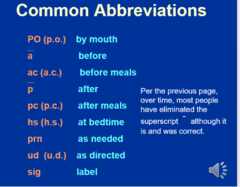
a=
before

ac=
before meals
p=
after
pc=
after meals
hs=
at bedtime
ud=
as directed
Schedule I drugs:
All illegal drugs and marijuana.
-Only research or approved institutions can have these medications.
Ex: heroin, LSD,
Schedule II drugs:
Highly abused legal drugs.
Ex: morphine, percocet (oxycodone), vicodin (hydrocodone)
-Written only, cannot call in, NO refills
Schedule III, IV, V drugs:
Lesser chance of abuse.
Ex: Valium (diazepam), Codeine, Nubain
Asthma:
-Heredity (Eosinophilic phenotype)
-Early childhood exposure to allergens
-Air pollution
Asthma triggers:
-Irritants
-Allergens
-Infections
-Physical activity
-Emotional
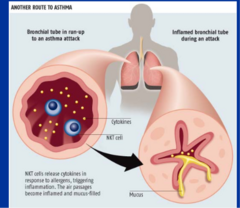
What occurs during an asthmatic attack?
-Individual is exposed to an allergen which triggers inflammation due to the release of cytokines.
-The inflamed bronchioles become mucous filled and constricted.
What converts arachidonic acid to leukotrienes?
Lipoxygenase
What do leukotrienes do?
Trigger anaphylactoid actions such as asthma.
(spasm, swelling, mucous)
Eosinophils and E-Asthma:
Eosinophils are WBCs that combat parasites and certain infections and also control mechanisms in allergic response.
E-Asthma: severe type of asthma caused by high numbers of eosinophils in airway and lungs.
Treatment of Asthma:
Directed towards prevention/treatment of the 3 manifestations of an attack:
-Inflammation (edema/swelling)
-Bronchoconstriction
-Fluid (mucous)
Preventative asthma medications include:
-Anti-inflammatory
-Anti-cholinergics
-Beta-2 (long acting)
-Steroid, beta-2 combo
-IgE inhibitor
-Eosinophil inhibitors
Anti-inflammatory asthma medication examples:
Corticosteroids: Flovent
Leukotriene inhibitors: Singulair
Anti-cholinergic asthma medication example:
Atrovent
Steroid, Beta-2 combo asthma medication example:
Advair Discus
IgE inhibitor asthma medication example:
Xolair
(allergic only)
Eosinophil inhibitor example:
Fasenra
Episodic asthma medications:
Beta-2 agonists.
-Albuterol
(Epinephrine for emergencies)
GI Diseases:
-GERD
-Ulcer (gastric or duodenal)
-Inflammatory (Ulcerative colitis, Crohn's)
-IBD
GERD=
Gastro-esophageal reflux disease.
-Discomfort caused by over-production of gastric acid OR acidic foods; usually a combo of both.
Parietal Cells:
Found in the epithelial lining of the stomach.
-Parietal cells have histamine 2 receptors (H2) and Cholinergic receptors (ACH)
-Stimulation of these receptors cause the release of gastric acid
(H2 blockers block H2 receptors)
(Anti-cholinergic block cholinergic receptors)

Antacids:
Neutralize gastric acid once it has already been released.
H+/K+-ATPase:
An enzyme involved in the release of gastric acid.
-Referred to as the proton pump of the stomach
-Proton pump inhibitors (PPIs) prevent the release of hydrogen ion which lowers the acidity of the stomach.
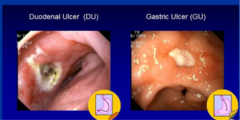
Ulcers are caused by:
Due to the loss of the gastric mucosal barrier which allows the gastric acid to damage the epithelial lining of the stomach and duodenum.
Treatment for GERD:
-Antacids
-H2 receptor blockers: Cimetidine (Tagamet), Famotidine
-PPI's: Omeprazole (Prilosec)
Treatment for Ulcers:
Same treatment as for GERD + antibiotics for H. pylori.
Inflammatory Bowel Disease includes:
-Ulcerative Colitis
-Crohn's Disease
Treated by anti-inflammatory agents: Adrenocorticosteroids and Biologics- neutralize proteins causing inflammation.

Bisphosphonates:
Primarily used in the treatment/prevention of Osteoporosis.
-Treatment of Paget's disease, multiple myeloma, metastatic bone cancer, etc.
-Osteoclast inhibitors- increases density of bone and chokes out blood vessels.
-Oral: Fosamax, Boniva, Actonel (once weekly)
-IV: Reclast (every 3 months or yearly)
Side-effects of Bisphosphonates:
-GI symptoms (nausea, vomiting)
-Renal disease
-Osteonecrosis
(IV use is associated with much higher morbidity- more severe side effects)
(If an individual is taking bisphosphonates and needs an extraction, they will have to stop taking them)

Adrenal Gland:
Sits on top of kidney.
Made up of the adrenal cortex and the adrenal medulla.

The adrenal cortex produces:
Adrenocorticosteroids.
-Glucocorticosteroids: Cortisol- stress hormone
-Mineral corticosteroid: Aldosterone, regulates loss/retention of Na+, K+, H2O.
-Androgens (masculine hormones)

Adrenal Medulla is involved with the conversion of...
Norepinephrine into Epinephrine

What is included in the HPA Axis?
H- Hypothalamus
P- Pituitary
A- Adrenal Cortex
HPA Axis at work:
During stress, hypoglycemia, trauma, or normal circadian rhythm- the hypothalamus releases corticotropin releasing factor (CRF).
-CRF stimulates the pituitary to release adrenocorticotropic hormone (ACTH).
-ACTH stimulates the adrenal cortex to release cortisol.
-The released cortisol affects physiologic functions.
-Cortisol will also BLOCK the release of CRF and ACTH through a negative feedback loop.

Physiologic function of Cortisol:
-Raises blood glucose
-Potentiates epinephrine
How does Cortisol raise blood glucose?
Glycogenolysis: Lysis of glycogen. Stimulates release of glucagon which produces glucose from the breakdown of glycogen.
Gluconeogenesis: Creating glucose from non-carbohydrates
-Lipolysis
-Proteolysis
Cortisol raising blood glucose:
When the blood glucose is too low, cortisol is released.
-Cortisol inhibits the formation of glycogen from glucose and instead stimulates the production of glucose from the breakdown of lipids and proteins.
-This will raise the blood glucose level.
-Cortisol stimulates the release of glucagon. Glucagon inhibits the formation of glycogen from glucose. It also causes the breakdown of glycogen into glucose --> raises blood sugar level.


Cushing Syndrome:
Chronic excessive level of cortisol.
-Can occur at level of the pituitary gland or adrenal cortex.
-If there is a tumor or disorder of the pituitary causing an increased level of ACTH, it will stimulate the adrenal cortex to release too much cortisol.
-If there is a disorder or tumor of the adrenal cortex, it can cause it to release too much cortisol.
(Presents as fat deposits around lower face and abdomen)
Physiologic effect and adverse effects of cortisol:

Corticosteroids vs. NSAIDS:
Some providers will prescribe CCS over NSAIDS due to their superior ability to block prostaglandin synthesis.
Problems with this:
-Edema
-Hyperglycemia
-Hypertension
-Inhibits normal immune response
-Osteoporosis
-Adrenal atrophy
Treatment considerations of corticosteroids:
-Dosing therapies (alternate days, no abrupt withdrawal)- prevent adrenal atrophy.
-Prior to surgery, increase dosage due to the trauma and stress that occurs with surgery.
-Reduced immune function- patient may need to be put on antibiotics.
Uses of corticosteroids in dentistry:
-Topical creams and solutions: aphthous ulcers
-Oral: multiple lesions or post surgical
-IM, IV, SubQ injection: during surgery to prevent post-op swelling.
True or False: Short term use of 1-5 days will not render the patient immunocompromised or cause major side effects.
True
Medical history concerns of patients on chronic steroid therapy:

Other medications used to serious, chronic inflammatory/autoimmune diseases:
-DMARDS: Disease modifying anti-rheumatic drugs
(Humira, Enbrel, Cyclosporine, Methotrexate)
-PDE4 inhibitors: Phosphodiesterase 4 inhibitors
(Daliresp, Otezla)