Great Britain: Political History and Notable Figures
 Call Kai
 Learn
 Practice Test
 Spaced Repetition
 Match
 Flashcards
 Knowt Play
1/10

There's no tags or description
Looks like no tags are added yet.
11 Terms

1692 - 1714 - Sophia of Hanover (All Facts)
Electress of Hanover
Her position essentially established the House of Hanover, per the Act of Settlement / Establishment, and the Hanoverian line, to the throne of Great Britain
She was the presumptive heir to the British throne following the death of Queen Anne, however, she died around the same time, so her son George succeeded Queen Anne and took what would have been her rule on the British throne

1707 - 1714 - Anne (All Facts)
Founder and First Queen (Ruler) of Great Britain (England and Scotland, and Ireland) and Final Queen (Ruler) of the House of Stuart
She was from the House of Stuart
She was the younger sister of her predecessor Queen
She was expected to rule much as did her predecessor King
She led Great Britain in the War of the Spanish Succession
During this time, England captured Sardinia and Minorca from France
She signed the Treaty of Utrecht with the other European leaders powers of the time, ending the War of the Spanish Succession
During her reign,
Parliament issued
The Acts of Union
After its passage, she rode in state to St. Paul’s Cathedral for a ceremony of thanksgiving, giving the British people an unexpected holiday to enjoy
Under her reign,
Britain’s South Sea Company was founded
She outlived all 17 of her children and thus died without an heir at Kensington
However, the Treaty of Utrecht and Act of Settlement / Establishment passed earlier in her reign as Queen of England (and Scotland) ensured that the House of Hanover would succeed the House of Stuart
Her first cousin once removed Sophia of Hanover was supposed to succeed her as per the Act of Settlement / Establishment, however she died and so Sophia of Hanover’s son succeeded her instead
She detested the Hanover line, but two days before her death realized that her successor would succeed her, as he was the great-grandson of King James of England and that a Stuart succession would cause political turmoil and be bad for business
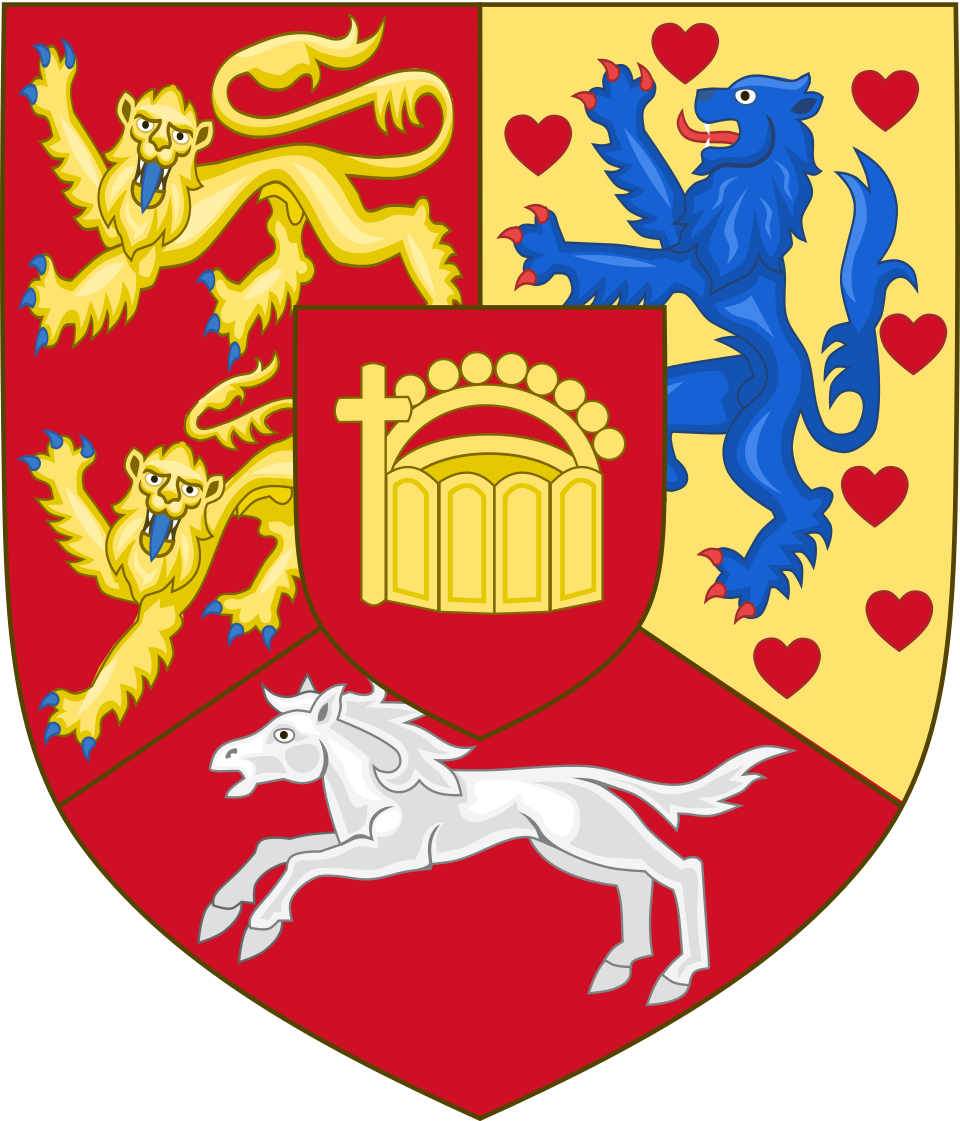
1714 - 1801 / 1901 - House of Hanover (All Facts)

1650 / 1707 - 1722 - John Churchill (All Facts)
He was the First Duke of Marlborough and an army officer
He is considered one of England’s / Britain’s greatest generals
His military triumphs derived from his
attention to detail
care for his fellow soldiers’ welfare
cool head in the heat of battle
He led England / Britain in the War of the Spanish Succession, in which
he and his English forces
seized Gibraltar in and from Spain
along with Scottish forces, Dutch forces, and Prince Eugene of Savoy and his Holy Roman forces defeated French forces and Bavarian forces in the Battle of Blenheim
he and his British forces
along with his Dutch forces and Prince Eugene of Savoy and his Holy Roman and Austrian forces defeated French forces in the Battle of Oudenaarde
along with his Dutch forces and Prince Eugene of Savoy and his Holy Roman and Austrian forces defeated French forces in the Siege of Lille
along with his Dutch forces and Prince Eugene of Savoy and his Holy Roman and Austrian forces defeated French forces in the Battle of Malplaquet

1714 - 1727 - George (All Facts)
2nd King (Ruler) of Great Britain and Founder and First King of the House of Hanover of Great Britain
He was the first (German) British monarch of the House of Hanover and first German monarch of Britain
He was initially the Elector of Hanover, son of the prior Electress, Sophia of Hanover (of Germany / the Holy Roman Empire)
He brought with him two German mistresses who he made countesses
He was appointed to the British throne by the British Parliament
in order to ensure confirmation of the Act of Settlement / Establishment passed during the reign of his direct predecessor
due to his fervent Protestantism, which helped suppress the Jacobite Movement / Party and remaining supporters of the House of Stuart, and thus prevent the political turmoil and bad business that a claimant of the House of Stuart to the throne would cause
due to his being the great-grandson of King James of England, which gave him (and thus his Hanover line) some legitimacy to the British throne
Despite these conditions, he spoke no English and had a notoriously foul temper which made hardly anyone care for him
Under his reign,
the Treaty of the Hague was signed with the European powers of the Quadruple Alliance, ending the War of the Quadruple Alliance
Britain was anxious to secure supplies of spars and hemp for the British Navy from Sweden, fearful of Russia’s increasing dominance in the Baltic over the course of the Great Northern War
1655 - 1728 - Francis Nicholson (All Facts)
British Army Officer and Colonial Administrator
He led an expedition in which he and his forces captured the French stronghold of Port Royal in Acadia (modern-day Nova Scotia and New Brunswick) during Queen Anne’s War during the War of the Spanish Succession
1656 - 1728 - Hovenden Walker (All Facts)
British Admiral and Naval Officer who led the failed (1711) Quebec Expedition during Queen Anne’s War during the War of the Spanish Succession
He and a few other survived on the one ship that survived the storm that occurred during the abortive expedition

1675 - 1732 - John Erskine (All Facts)
Earl of Mar and Scottish Politician and Aristocrat
He was nicknamed “Bobbing John” because of his characteristic political vacillation
He organized a Jacobite Rebellion which attempted to put James Francis Edward Stuart on the British throne

1721 - 1742 - Robert Walpole (All Facts)
Founder and First Prime Minister of Great Britain
He was an ambitious Whig politician
He was made the Chancellor of the Exchequer
He was granted the position following the collapse of the “South Sea Scheme” in England in the hope that he would restore financial order to Great Britain

1701 - 1766 - James Francis Edward Stuart (All Facts)
First Jacobite Pretender of Britain
He represented the leader of and was the installed king of the Jacobite Party
He was nicknamed “the Old Pretender”
He was the son of King James II of England
He believed the British were eager to welcome him, but when he arrived off the Devon coast, he was “refused even a night’s lodging”
He then went on to Scotland, where he tried and failed to land there to assert his rule despite 18 Scottish lords rallying to his cause because English and Dutch forces had suppressed the rebellion he instigated
As a result, he was disillusioned and fled to France
He welcomed Giulio Alberoni’s efforts to invade Britain through the namesake, but Alberoni was foiled by storms off Finisterre