Chemistry Tips (Finals) (16 Nov)
 Call Kai
 Learn
 Practice Test
 Spaced Repetition
 Match
 Flashcards
 Knowt Play
1/201

There's no tags or description
Looks like no tags are added yet.
202 Terms
Galvanic cell uses (2)
torches and car batteries
Electrolytic cells uses (2)
electro-plating and production of Cl2
which redox reaction is spontaneous?
galvanic
where is Eᶿ negative
electrolytic cell
what energy conversion takes place in each cell
Electrolytic: electrical energy → chemical energy
Galvanic: chemical energy → electrical energy
which terminal is which in electrolytic
anode = positive terminal
cathode = negtive terminal
which terminal is which in galvanic
anode = negative terminal
cathode = postive terminal
what’s nearest negative terminal of the battery?
physical terminal that supplies electrons to the cathode
giving it a negative charge so that reduction can take place.
in which direction does current flow?
anode to cathode
which mass increases and decreases?
anode decreases in mass
cathode increases in mass
functions of salt bridge (3)
completes the circuit
maintains electrical neutrality in the half cells
separates the half cells
writing cell notation

how to determine if reaction is spontanrous
if ‘Eᶿ cell = Eᶿ cathode - Eᶿ anode’ is positive
when does the current stop being delivered
until the reaction reaaches chrmical equilibrum then the voltage = 0
inc surface area of terminals =
inc RoR = inc maximum current
DOES NOT affect emf
what lowers internal resistance? (affect on current)
wider, shorter salt bridge
more conductive salt brige
inc current and deoesn’t affect emf
acronym for anode and cathode
AN OX
RED CAT
uses of graphite electrodes
inert (chemically unreactive)
conducts electricity
what does putting the electrolyte in a molten or aqueous solution afford you?
ions are free (mobile)
it allows the electrolyte to be conductive
electrolytic cell diagram

industrial uses of electrolytic cells (3)
electroplating
refining copper
production of chlorine
what is the aim of electroplating and which is the cathode?
aim is to coat metals with useful or preciouis metals
object that is coated is cathode
when refining copper which is anode, cathode, and electrolytes?
anode = impure copper
cathode = thin sheet of pure copper
electrolyte = Cu ions
why is the production of chlorine needed? what should you use and why?
important in the production of bleach, plastics and insectides
use a diaphragm or membrane cell to keep the products seperate
what is the electrolyte in the production of chlorine
concentrated NaCl
what is diaphragm made of?
porous asbestos and polymers
why can the solution form diaphragm seep through and where to?
diaphragm’s pores let the liquid seep from the positive side (anode) to negative side (cathode)
which side is more liquid kept on and why
higher liquid level on anode side to ensure liquid flows from left to right
prevents any NaOH that is formed from moving back to where Cl2 is produced which would cause unwanted side reactions
acronym for oxidation and reduction
OIL RIG
oxidising agent ~
substance that accepts electrons
reducing agent ~
substance that donates electrons
what is required for a spontaneous redox reaction
substance that is more easily oxidised must react with substance that is more easily reduce
(substance on right of table must be higher up than the substance on left)
electrode potential of half cell meaning
the tendency fir a half cell to attract electron
what are the standard cinditons for eletrode potentials
25℃ and 1 mol.dm⁻³
facts abt standard hydrogen electrode (SHE)
consists of hydrogen gas at 101,3kPa and 25℃ bubbling around a platinum electrode in 1 mol.dm⁻³ H⁺ ion solution
writeen as “Pt(s) I H2 (g) II other half cel’
///
///
annoted table of potentials

basic rule for naming:
1. identify longest chain
2. name longest chain
3. identify and name branches
4. write in a way that functional then branches get lowest number
suffix for CA, ester, and ketone
CA - anoic acid
Ester - oate
Ketone - one
how to write ester?
alcohol then CA
format for naming
prefix + stem + suffix
(suffix shows homologous series and prefix is position and branches)
types of structural isomers
Chain - straight/branched
Positional - functional group on diffrent carbon numbers
Functional - aldehyde & ketone, ester & CAformat for naming
prefixes for 1 to 7
meth-
eth-
prop-
but-
pent-
hex-
hep-
effects on IMF (3)
type of IMF (hydrogen/lond/etc)
number and type functional group(homologous series)
structure (no. carbons <chain length. and straight/branched chain <straight is strong>)
structure for stonger IMF’s
1, state homologous series and IMF on both *MENTION BOTH HAVE LONDON
state which compound has stronger IMF
state that it means more energy needed to overcome IMF
state which has higher BP/VP/MP
a bit about elimination (2)
specific, reaction
specific: cracking
long alkane → broken into smaller alkanes and alkenees

a bit about combustion (3)
specific: heat and excess oxygen
alcohol AND alkene AND alkane
CO₂ + H₂O

a bit about substituon (X₂) (3)
specif, condition, change
specific: halogenation
condition: ultraviolet light or heat
Alkane → Haloalkane
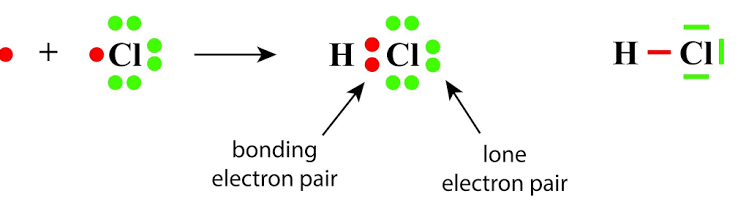
a bit about addition (of H₂) (4)
specific, catalyst, condition, reaction
specific: hydrogenation
catalyst: Pt, Pd or Ni
condition: alkene dissolved in organic solvent
Alkene → alkane

a bit about esterification (3)
condition, elements, products
conditions: heat and a catalyst of conc. sulfuric acid
with CA and alcohol
Ester + H₂O
a bit about addition of H-X (3)
specific, condition, reaction
specific: hydrohalogenation
condition: no water
Alkene → Haloalkane

a bit about elimination of H₂O (2)
specific, condition, reaction
specific: dehydration
condition: heat with excess conc. sulfuric acid or H₃PO₄
Alcohol → Alkene
a bit about substitution (w/ dilute base) (3)
specific, condition, reaction
specific: hydrolysis
condition: heat under reflux (dilute base)
Haloalkane → Alcohol

a bit about addition of H₂O (4)
specific, condition, catalyst, reaction
specific: hydration
condition: steam
catalyst: H₃PO₄ (many others)
Alkene → Alcohol
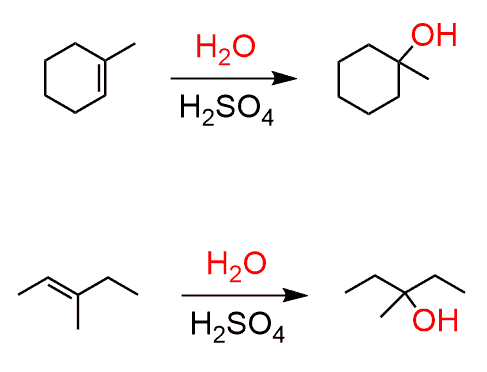
a bit about addition of X₂ (2)
specific: halogenation
Alkene → Haloalkane

types of cracking and conditions
thermal - high press and temp
catalytic - lower press and press than thermal
a bit about elimination of H-X (3)
specific, condition, reaction
specific: dehydrohalogenation
condition: hot conc. NaOH or KOH dissolved in ethanol AND water cannot be present
'
Haloalkane → Alkene

types if organic reactions
addition
elimination
combustion
esterification
elimination of H₂O
Addition (of H₂)
substitution (with X₂)
elimination of H-X
Addition of X₂
Addition of H₂O'
Substitution (with dilute base)
////
/////
nitrate
ammonium
nitrite
thiosulfate
chlorate
sulfate
NO₃⁻
NH₄⁺
NO₂⁻
S₂O₃²⁻
ClO₃⁻
SO₄²⁻
permanganate
ethanoate/ acetane
dichromate
phosphate
hydronuim
MnO₄⁻
CH₃COO⁻
Cr₂O₇⁻
PO₄³⁻
H₃O⁺
hydrogen carbonate
hydrogen sulfate
sulfite
hydroxide
carbonate
HCO₃⁻
HSO₄⁻
SO₃²⁻
OH⁻
CO₃²⁻
name a condition for hydrolysis (2)
strong dilute base
mild heat
catalyst for esterifiation
sulfuric acid
what to remember about naming esters?
-yl goes on alcohol (eg. propyl ethanoate*
% purity =
(m pure) / (m total) x 100
format for investigative question
“what is the relationship between…”
what to do if highly flammable (2)
use waterbath to heat
keep away from open flames
what type of hydrocarbons decolourise in water
unsaturated
why do alkanes only react in sunlight/ with heat
they need energy added to it
sunlight supplies activation energy that is needed
molecular formula after in bromine water?
gets two Br and no extra H2O
-substituted
galvanic diagram
no external power source needed
used in batteries

electrolytic diagram
battery or power cell needed
electroplating, electro refining, water electrolysis

explain change in direction of electron flow when half cellls are changed and refer to reducing strength
X is a better reducing agent than Y therefore X is reduced
n = (for charges and stuff)
Q/qe
during electroysis why are only A and B oxidised and not C
the potential difference is not strong enough to oxidize C
% yield =
(actual yield) / (theo. yield) x 100
how to solve for limiting (5)
- balance equation
- moles for reactant
- pick a reactant and work out others
- determine what's lmitng
table for empirical
element I mass (g) I n (n=m/M)(mol) I ratio (divide by smallest) I simplest ratio
ions on table
+1 +2 +3 ± -3 -2 -1 0
what do you round to with empirical
to biggest half then need to multiply out fraction (2 base)
how to find mass reacted
find mass of product (n=m/M)
use mol ratio to get mass of reactant that reacted
get mass of reactant
subtract as needed
What are the standard conditions for electrochemical cells?
Temperature: 25 degrees C (298 K)
Pressure: 1 atm (101.3 kPa) for gases
Concentration: 1 mol/dm3 for aqueous solutions (electrolytes)
What must always be included in standard cell notation regarding platinum (Pt) and cell orientation?
Include platinum (Pt) as an inert electrode when a half-cell contains only aqueous ions or gases (no solid metal conductor).
By convention, the anode (oxidation) is written on the left and the cathode (reduction) on the right (Oxidation || Reduction). Temperature is implied and not written in the notation unless conditions are asked.
What should you remember when a disturbance is applied to an equilibrium system or electrochemical cell?
Apply Le Chatelier's principle: the equilibrium shifts in the direction (forward or reverse) that counteracts or relieves the imposed stress.
Focus strictly on how the cell's equilibrium responds to the change made, rather than focusing only on the change itself.
always state the disturbance, the direction favored, and the net effect on yields/concentrations.
What are the physical and chemical benefits of aluminium?
Physical: Lightweight and durable.
Chemical: Forms a thin, adherent, passive protective oxide layer on its surface that prevents underlying metal from further corrosion.
What are the economic and environmental benefits of using cryolite in aluminium extraction?
Economic: Lowers the melting point of alumina (Al2O3) from over 2000 degrees C down to 950 to 1000 degrees C, drastically reducing electrical energy costs.
Environmental: Lower energy consumption means fewer fossil fuels burned at power stations, thereby reducing greenhouse gas emissions (like CO2).
What are the types of intramolecular bonds and their constituent bonding conditions?
Covalent: Non-metal + Non-metal (sharing of electron pairs).
Ionic: Metal + Non-metal (transfer of valence electrons forming oppositely charged ions).
Metallic: Metal + Metal (lattice of positive metal ions in a sea of delocalized valence electrons).
What are the types of intermolecular forces and the conditions for each?
Ion-dipole forces: Between an ion and a polar molecule.
Hydrogen bonding: A strong dipole-dipole force where H is covalently bonded to highly electronegative atoms (F, O, or N).
Dipole-dipole forces: Between two polar molecules.
London dispersion forces: Present in all molecules (especially non-polar molecules) due to temporary instantaneous dipoles.
Why do ionic compounds have high melting and boiling points?
They consist of a giant ionic crystal lattice
held together by strong electrostatic forces of attraction between oppositely charged ions.
Because there are many of these strong bonds throughout the lattice, a large amount of thermal energy is required to overcome them.
What must electrodes be made of, and how do inert electrodes function?
Electrodes must be solid and electrically conductive. If an inert electrode (such as platinum or graphite) is used, it does not participate chemically in the redox reaction itself; instead, it provides a solid conductive surface for electron transfer while the ions or gases in the electrolyte undergo oxidation or reduction.
Why isn't water oxidized in preference to chloride ions during brine electrolysis, despite water having a more favorable standard reduction potential?
Although thermodynamic standard potentials favor water oxidation, the extremely high concentration of Cl- ions in concentrated brine shifts the reaction rate and kinetics, making the oxidation of Cl- ions predominant.
What must you remember when using half-reactions with 2e- (or multiple electrons) when calculating moles of electrons?
Always ensure that half-reactions are balanced and multiplied by the appropriate stoichiometric factor so that the total moles of electrons lost in oxidation equal the moles gained in reduction when combining them.v
What can the cathode compartment be contaminated with in certain industrial electrolysis cells (e.g., chlor-alkali cells), and why?
In membrane or diaphragm chlor-alkali cells, the cathode compartment (where reduction of water produces H2 gas and OH- ions) can experience trace contamination or reduced current efficiency if oxygen gas (O2) or chlorine gas leaks across the separator/membrane from the anode side.
//
//
What does a non-polar molecule indicate regarding its intermolecular forces?
A non-polar molecule indicates a symmetrical charge distribution (zero net dipole moment). Consequently, the only intermolecular forces operating between them are weak London dispersion forces.
What does having more electrons in a molecule mean for its intermolecular forces?
More electrons mean a larger, more polarizable electron cloud. This leads to larger temporary (instantaneous) dipoles forming, resulting in stronger London dispersion forces, which require more thermal energy to overcome (hence higher melting/boiling points).
Fully explain why chlorine gas (Cl2) is produced predominantly at the anode during the electrolysis of concentrated sodium chloride (brine) instead of water.
Under standard conditions, water (H2O) has a more negative standard reduction potential than chloride ions (Cl-), meaning water is thermodynamically more easily oxidized.
However, in concentrated brine, the very high concentration of Cl- ions drastically increases the rate of chloride oxidation.
Coupled with kinetic overpotential for oxygen evolution at the electrode, the oxidation of Cl- to Cl2 becomes the predominant reaction.
pH =
-log[H3O]
what do diff pH’s mean?
pH = 7 means neutral
pH < 7 means acidic (acid left over; reaction will ionise)
pH > 7 means basic (alkaline; base left over; reaction will dissociate)