Lecture 17: Meiosis 2- Genetic Variation and Errors
 Call Kai
 Learn
 Practice Test
 Spaced Repetition
 Match
 Flashcards
 Knowt Play
1/26

There's no tags or description
Looks like no tags are added yet.
27 Terms
What is a key difference between asexual and sexual reproduction?
Asexual reproduction involves a single organism producing offspring identical to itself, while sexual reproduction involves the combination of genetic material from two parents.
How do mitosis and meiosis differ in terms of their outcomes?
Mitosis results in two genetically identical daughter cells, while meiosis produces four genetically diverse gametes.

What is the primary purpose of meiosis in organisms?
The primary purpose of meiosis is to produce gametes for sexual reproduction, ensuring genetic diversity.
How are genes arranged on chromosomes within an organism's genome?
Genes are arranged linearly along chromosomes, with each chromosome containing many genes that encode for specific traits.
What is the significance of genetic diversity produced by sexual reproduction?
Genetic diversity enhances a population's ability to adapt to changing environments and resist diseases.
What is the overarching concept of sexual reproduction?
Sexual reproduction creates genetic variation.
What is the significance of independent assortment in meiosis?
Independent assortment occurs during metaphase I of meiosis and contributes to genetic variation.
What happens during crossing over in meiosis?
Non-sister chromatids swap regions of DNA, resulting in recombinant chromatids.

What is a bivalent in meiosis?
A bivalent is formed when replicated chromosomes pair up and attach to their homologous chromosome.
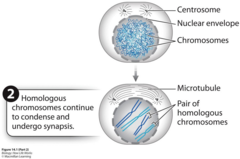
What is the result of crossing over?
The result is recombinant chromatids.
How does independent assortment affect gamete formation?
Independent assortment allows for different combinations of maternal and paternal chromosomes in gametes.

What are the consequences of nondisjunction during meiosis?
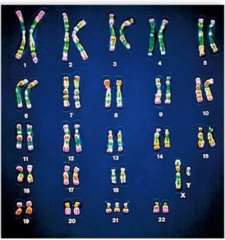
Nondisjunction can lead to gametes with incorrect chromosome numbers, resulting in conditions like Down syndrome.
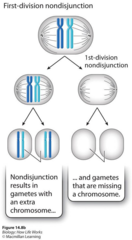
What is nondisjunction?
Nondisjunction is the failure of homologous chromosomes or sister chromatids to separate properly during meiosis.
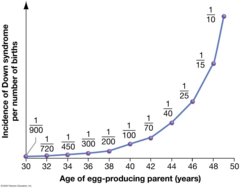
What is the impact of parental age on nondisjunction events?
Nondisjunction events increase in occurrence with parental age.
What is the difference between sexual and asexual reproduction in terms of population growth?
Asexual reproduction can rapidly increase population size, while sexual reproduction promotes genetic variety.
What is the role of meiotic spindles in meiosis?
Meiotic spindles attach to chromosomes and pull them to the metaphase plate for alignment.

What are the two types of chromosomes involved in genetic notation?
Autosomal chromosomes and sex chromosomes.
What is a dominant allele?
A dominant allele masks the effect of a recessive allele and determines the phenotype.
What is the significance of gene notations in Drosophila melanogaster?
Genes are named after their mutant phenotypes, with wildtype being the dominant allele.
What does a homozygous genotype mean?
A homozygous genotype has two identical alleles for a particular gene.
What does a heterozygous genotype mean?
A heterozygous genotype has two different alleles for a particular gene.
What is the difference between wildtype and mutant phenotypes?
Wildtype is the normal phenotype, while mutant is any deviation from it.
What is the role of crossing over in genetic diversity?
Crossing over increases genetic diversity by creating new allele combinations.
What is a recombinant genotype?
A recombinant genotype is formed as a result of crossing over, leading to new combinations of alleles.
What is the significance of the metaphase plate in meiosis?
The metaphase plate is where chromosomes align before being separated into daughter cells.

What happens to chromosome number after fertilization if nondisjunction occurs?
New organisms may not be diploid for all chromosomes due to incorrect gamete chromosome numbers.
How does sexual reproduction relate to pathogen exposure?
Pathogen exposure may increase the rate of sexual reproduction to enhance genetic diversity.
