Counseling and Behavior Change
 Call Kai
 Learn
 Practice Test
 Spaced Repetition
 Match
 Flashcards
 Knowt Play
1/70

There's no tags or description
Looks like no tags are added yet.
71 Terms
What are characteristics of effective nutrition counselors?

What is the definition of cultural humility?

What are some characteristics that you need to understand about your client as a counselor?
individual personality
needs
expectations
concerns
prejudices
culture
readiness or willingness to change
What is the function of a therapeutic relationship?
creates an atmosphere of trust and safety
provides a medium or vehicle for intense affect
models a healthy interpersonal relationship
provides motivation for change
Characteristics associated with the Nutrition Care Process (NCP)


patient is at the center
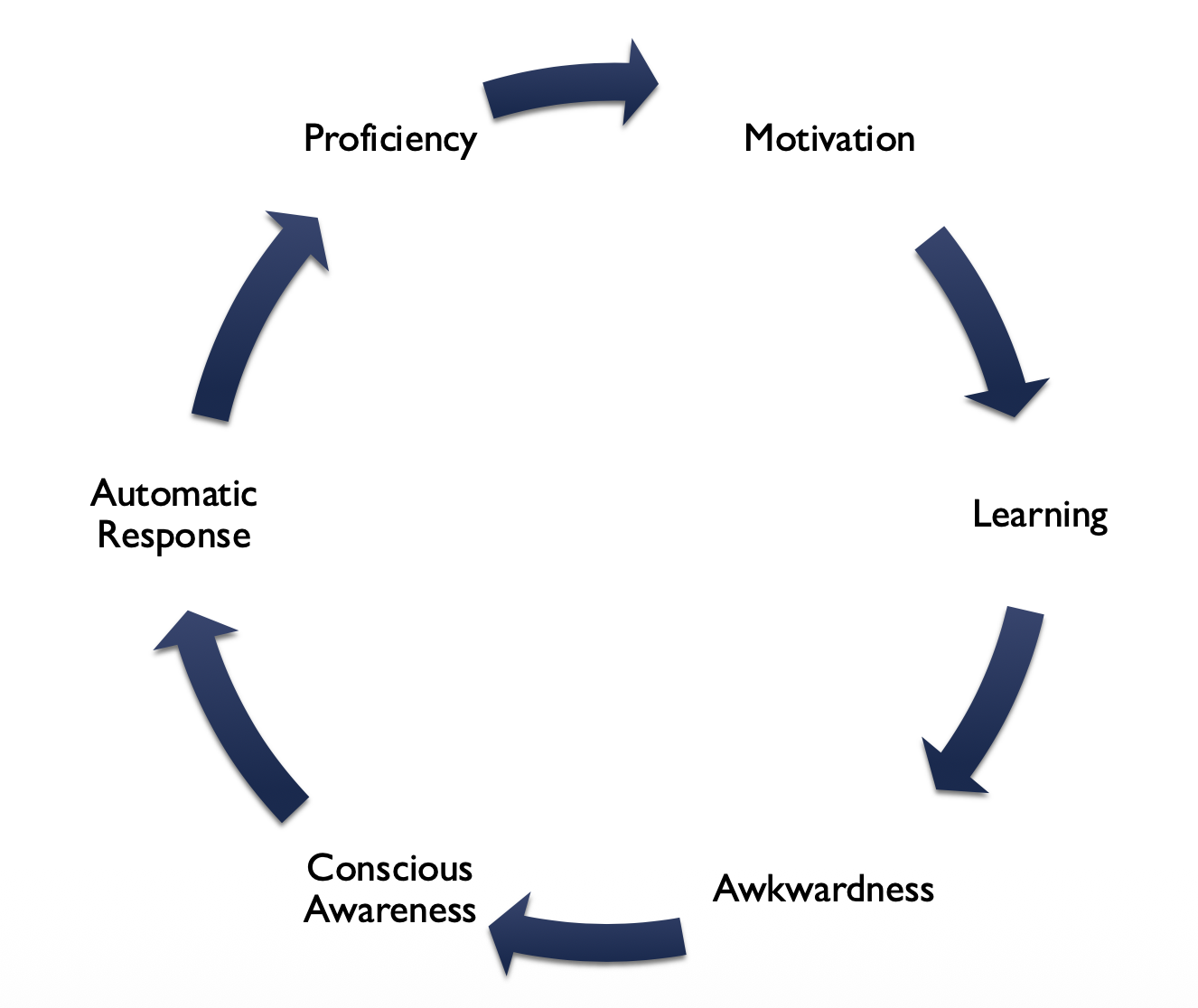
Show the process of developing counseling skills.
What are some characteristics associated with listening?
the foundation of counseling
physiological perception → hearing, but need to be present to listen
comprehension
interpretation → mirroring back
What are the three essential factors of listening?
openness
concentration
comprehension
How do we gain better comprehension?
language
pay attention to nonverbal sings
frame of reference → understand the context
What are five barriers to listening?
preoccupation
selective listening
feelings
ignoring emotional messages
defensiveness
What are some forms of non-verbal communication?
proxemics → how physically close someone is
intimate space
personal space
social space (where we want to be)
public space
paralanguage (voice qualities, characteristics, qualifiers, segregates)
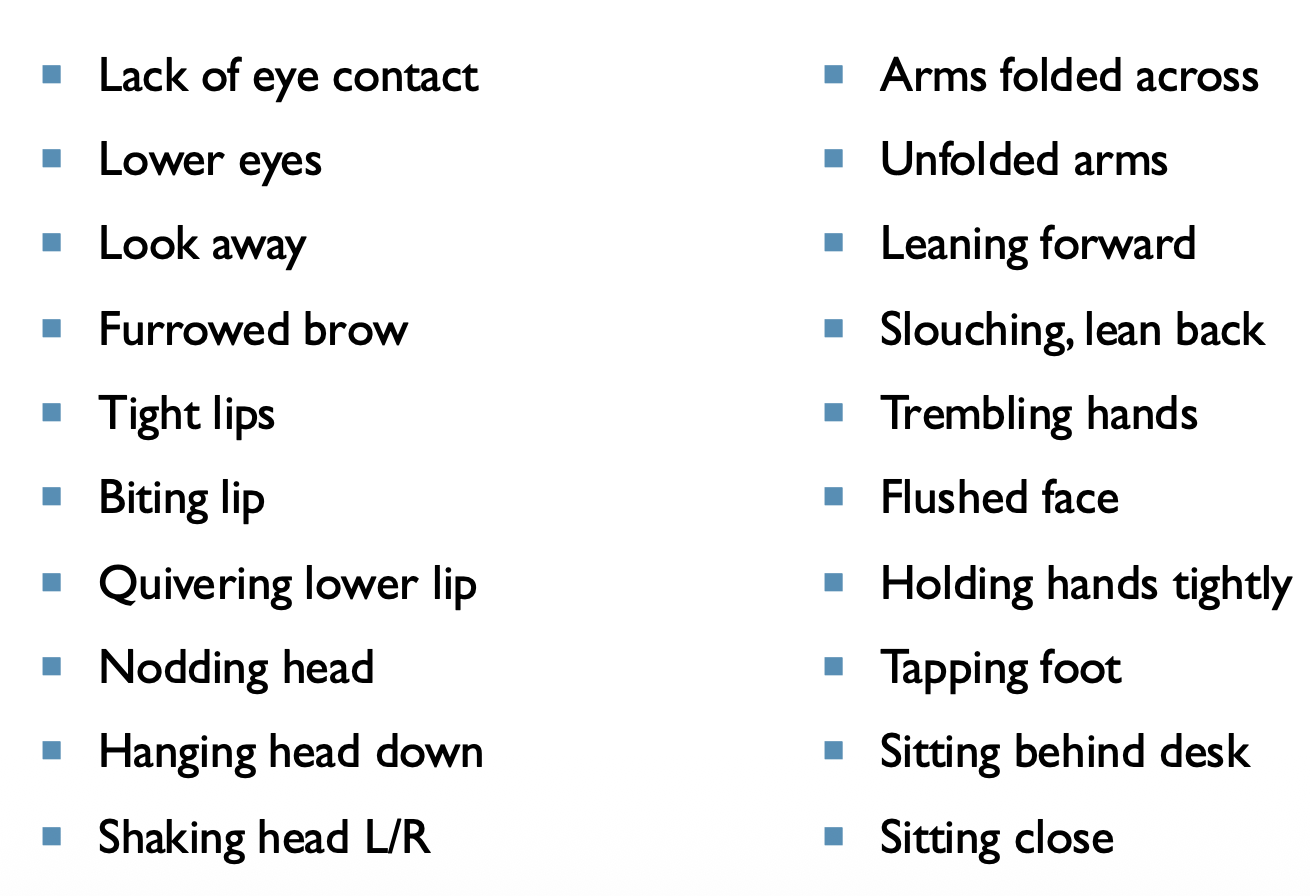
What are some general meanings of non-verbal behavior?
What are the three different representational systems?
visual
auditory
kinesthetic (feel, sense, grasp. handle)
accommodating to the client’s representational systems
When relationship/rapport building, where are the answers?
all answers are within the client
What are 6 different basic counseling responses?
attending
reflection/emphathizing
legitimation/validity
respect
personal suport
partnership
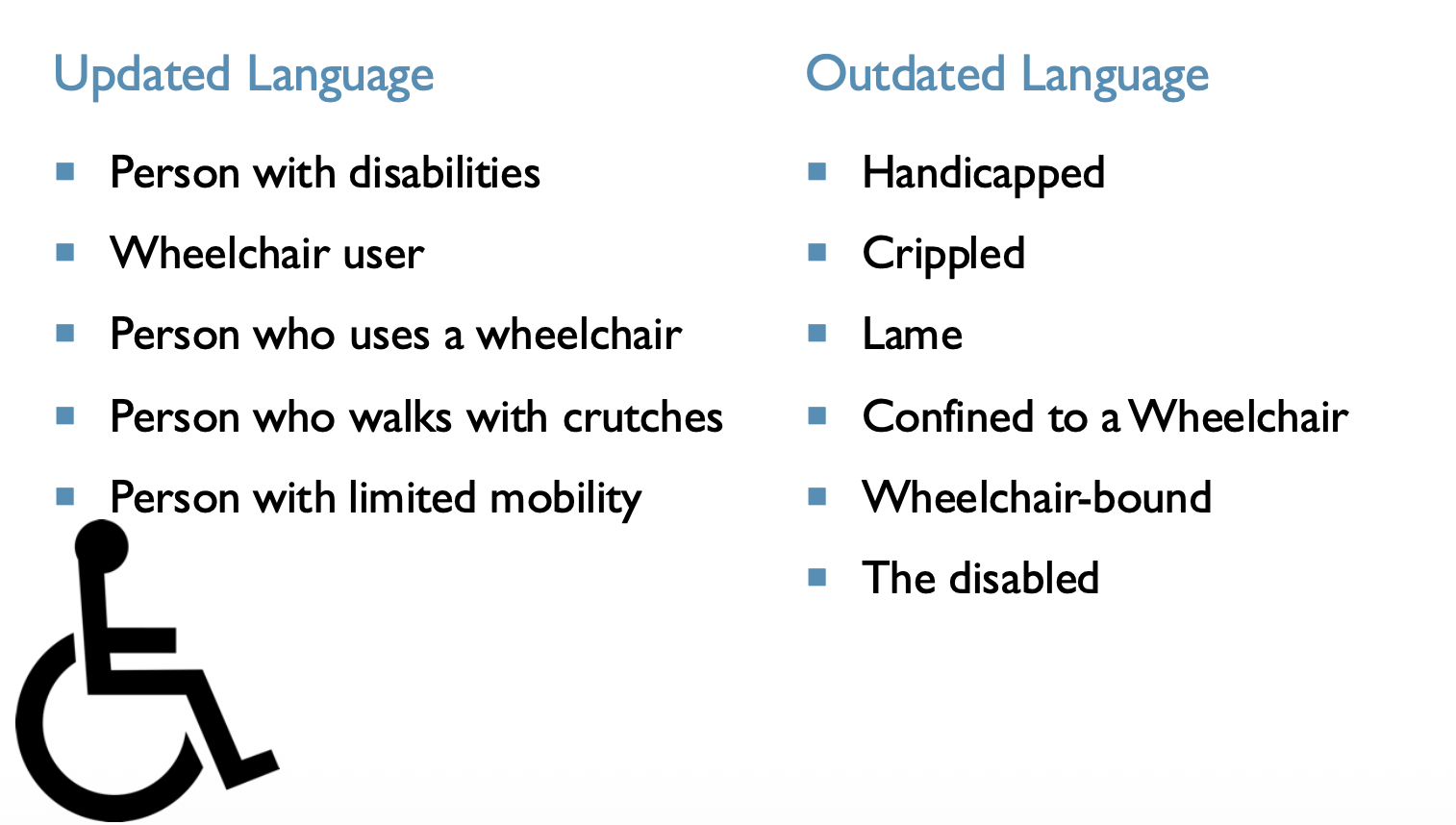
What kind of language should we use when communicating?

List updated language to talk about about people with disabilities (person-centered language) vs outdates language.
What are microaggressions?

From Soleil Ho, SF Chronicle, what were some words that they said they would never use in restaurant reviews?
crack
addictive
guilt
ethnic
authentic
etc.
What are two different types of questions?
open ended questions
closed ended questions
What are examples of closed-ended questions?
can be answered with “yes”, “no”, a number, or a very short answer
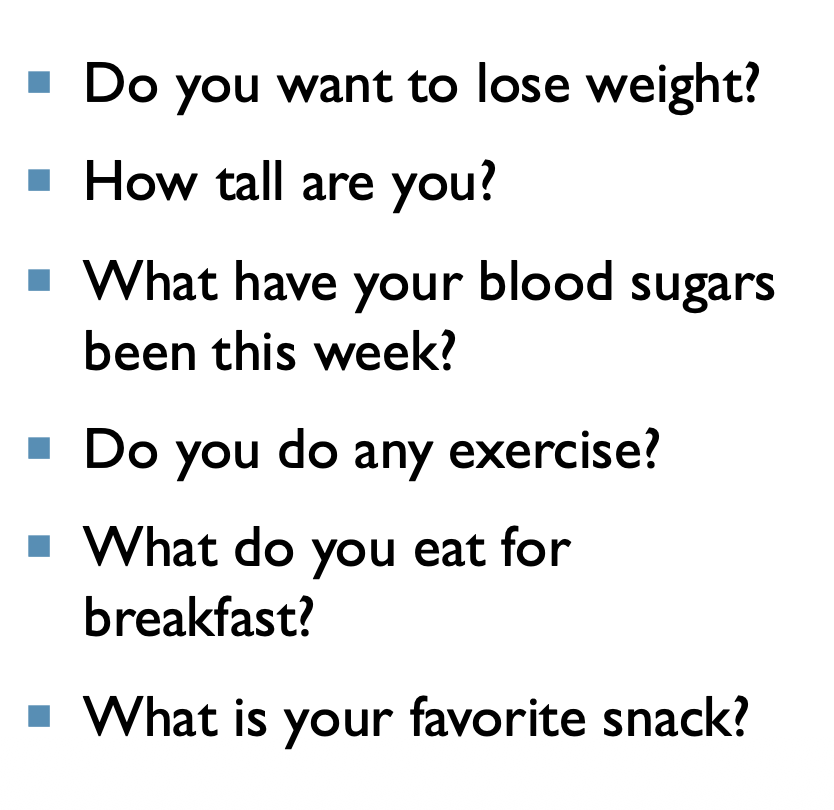

What are examples of open-ended questions?

these questions request a story from the client, not just an answer. they encourage though and an active role for the client
What are some phrases that you can say to affirm efforts and strengths?

What is the mirror/reflect counseling skill?
repeating back a few words that sound key
reflecting back meaning/values/feeling
make short summaries
What does mirroring sound like?
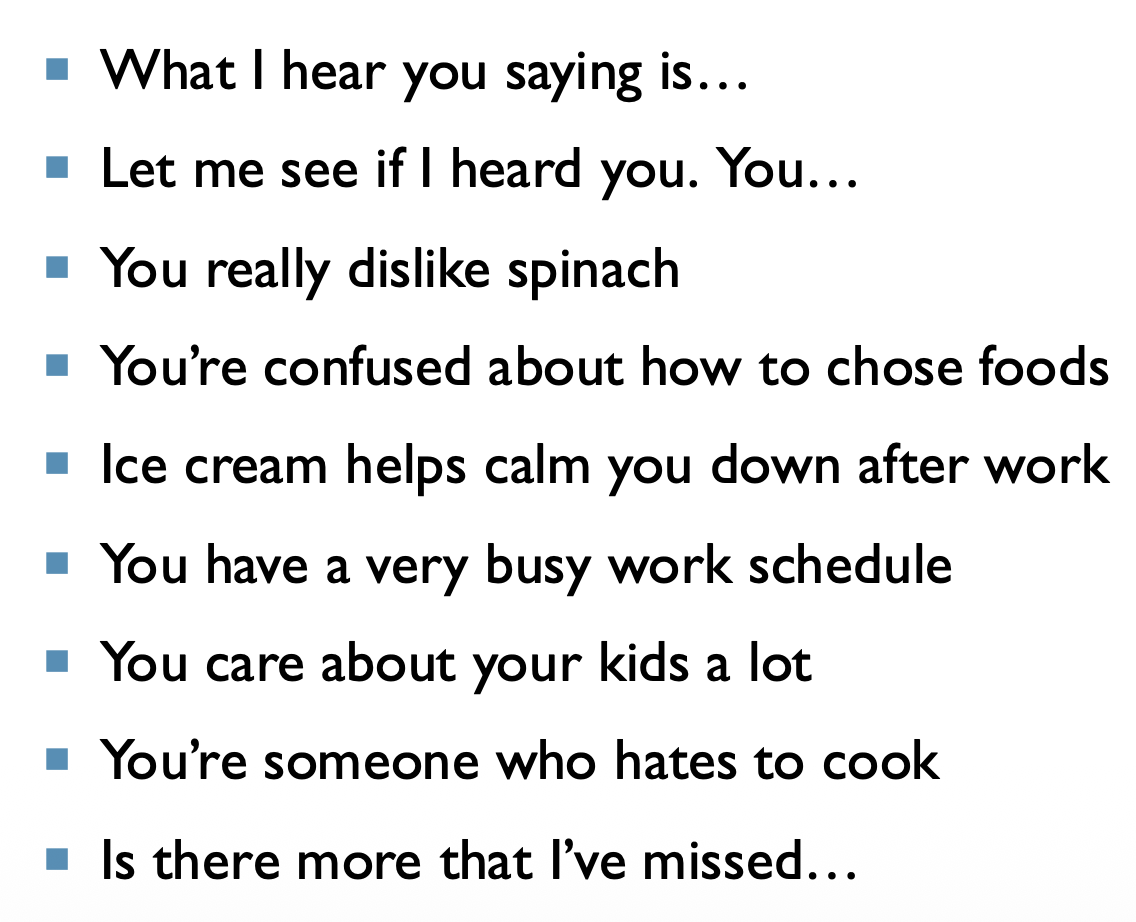
Is mirroring only relevant to language?
no
you can mirror body language, tone of voice, one word, a phrase, a whole concept or process
What does mirroring do?

What does summarizing/paraphrasing do?
reinforces what has been said
shows that you are listening
prepares the way for further exploration or for next steps
When counseling, why is it important to clarify or note a discrepancy?
to get back on track and in order to gain better info
What is andragogy?
the way adults learn
occurs when there is a definable need/motivation
Who facilitates learning?
teachers
adults are partners in learning
What is teaching not?
teaching is not telling
What are the six principles of adult learning?


What is Bloom’s Taxonomy of learning?
a hierarchical framework created in 1956 under the guidance of educational psychologist Benjamin Bloom to classify educational learning objectives and-skill
What are the six different levels of Bloom’s taxonomy?
create
evaluate
analyze
apply
understand
remember
Describe the create sector of Bloom’s taxonomy.
produce new or original work
design, assemble, construct, conjecture, develop, formulate, author, investigate
Describe the evaluate sector of Bloom’s taxonomy.
justify a stand or decision
appraise, argue, defend, judge, select, support, value, critique, weigh
Describe the analyze sector of Bloom’s taxonomy.
draw connections among ideas
differentiate, organize, relate, compare, contrast, distinguish, examine, experiment, question, test
Describe the apply sector of Bloom’s taxonomy.
use information in new situations
execute, implement, solve, use, demonstrate, interpret, operate, schedule, schedule, sketch
Describe the understand sector of Bloom’s taxonomy.
explain ideas or concepts
classify, describe, discuss, explain, identify, locate, recognize, report, select, translate
Describe the remember sector of Bloom’s taxonomy.
recall facts and basic concepts
define, duplicate, list, memorize, repeat, state
What are the three different learning domains?
cognitive
affective
behavioral
Describe the cognitive domain
factual learning → some people have no idea where to start, so this is a good start
related to the understanding and remembering info from Bloom’s taxonomy
patient/client can state a fact
information that can be recalled and used later
Describe the affective domain
attitudes
opinions
feelings
aka the certain way someone feels about themselves or how they feel about food
Describe the behavioral domain
adopting a new behavior
changing an existing behavior
most of the changes that people make
stating a fact is not a demonstration of behavioral learning
What are some things to keep in mind when thinking about behavioral change.
occurs slowly, over time
psychology outweighs logic and knowledge

need to reconcile social and psychological needs vs. physiological needs
habits are hard to break
What are the five levels of Mazlow’s hierarchy of needs?
self actualization
self-esteem
love and belonging
safety
physiological
What are some strengths of eating behaviors (4)?
habits reinforced by years of repetition
learned from family
often used to cope with emotional distress
involve a survival task
Why do people use food as a coping mechanism?
to deal with stress, boredom, anxiety, or even to prolong feelings of joy
When do we change?
when we want to
when it matters to us
when we know how
when we believe we can (self efficacy)
What is the transtheoretical model of stages of change?
map of six stages of change
helps to assess the client’s readiness to change and to consider interventions
want to help client move to next stage
wrong intervention in the wrong stage it can lead to failure/dropout

What are the five different stages of change in the transtheoretical model?
precontemplation
contemplation
preparation
action
maintenance
(habituation)
Describe the pre-contemplation stage.
unaware/under-aware of health problems
in denial about need to change; resistant
no plans to change diet or exercise
can include hopelessness
not ready to change
where a lot of clients are
What is the counseling approach for someone in the precontemplation stage?
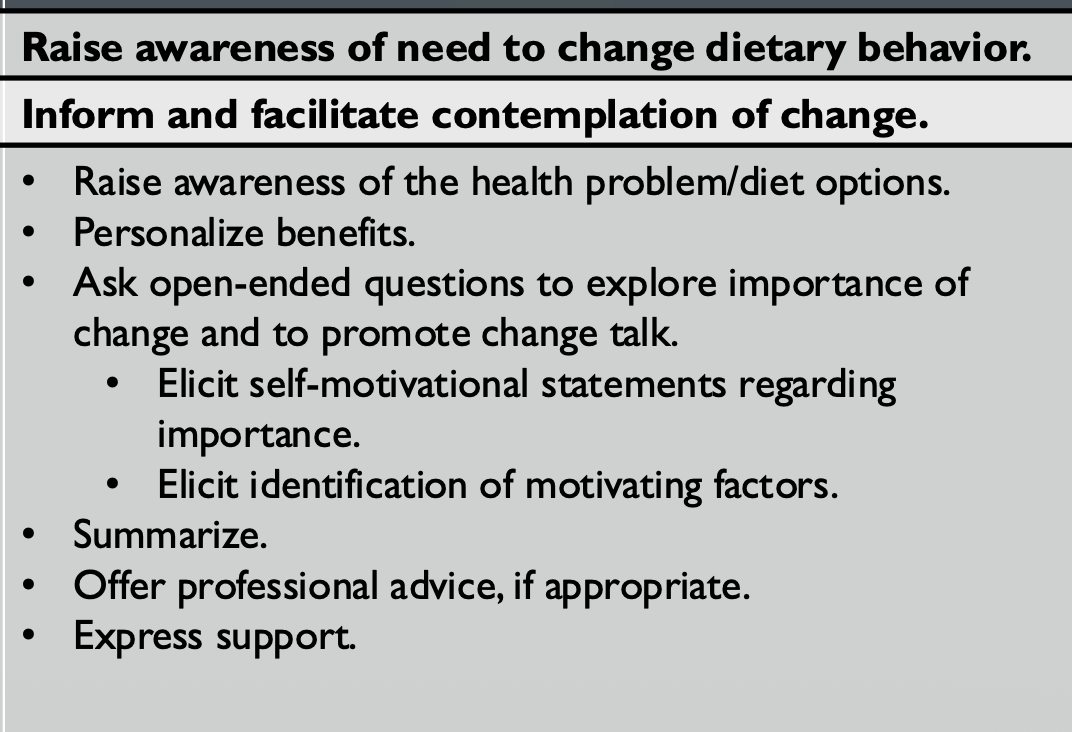
ruler: 1-3
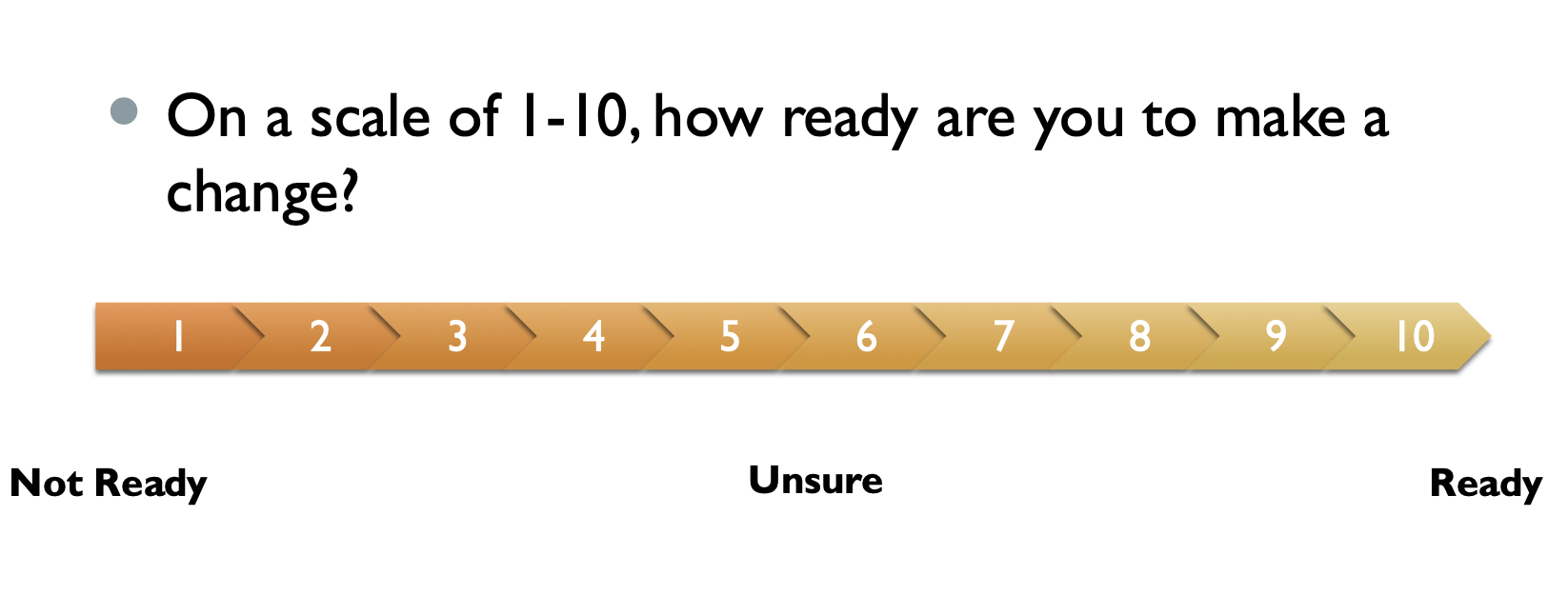
What is the readiness ruler?
Describe the contemplation stage.
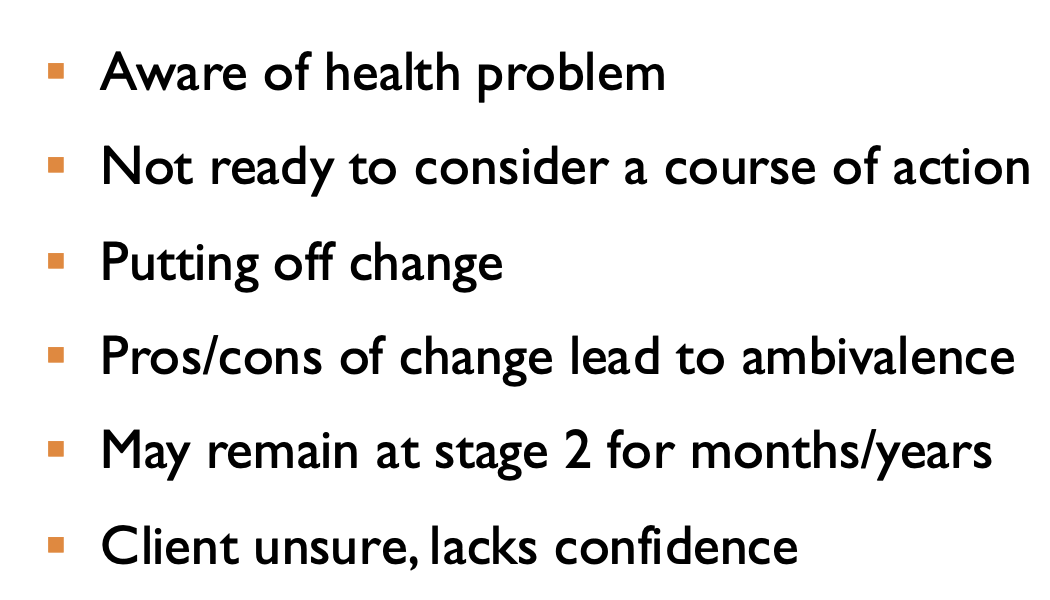
What is the counseling approach for someone in the contemplation stage?

ruler : 4-7
Describe the preparation stage.

What is the counseling approach for someone in the preparation stage?

ruler: 9-10
Describe the action stage.
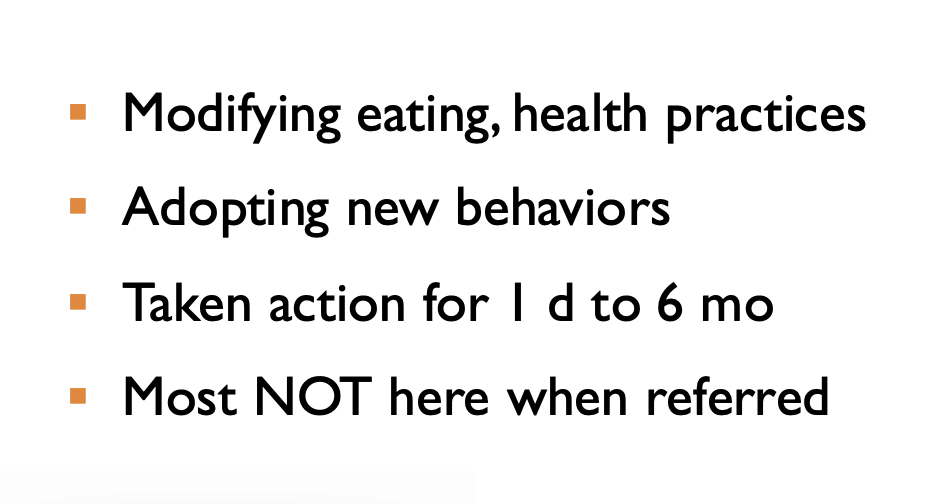
Describe the maintenance stage.

What are some interventions you can carry out in the maintenance stage?
tailored revisions
problem solving skills
social and environmental support (so that when they get back to their normal life outside of the dietitian they can maintain it)
Describe the habituation/termination stage.
changes maintained for 5 years
permanent lifestyle
What are some interventions in the habituation/termination stage.
self management
self monitoring
What should you expect when using the transtheoretical model?
lapses and relapses
should plan for it
recycling to a previous stage
starting over
it’s not always linear
Describe the Health Belief Model
model assumes that a person will adopt a behavior if failing to do so has consequences that threaten his or her lifestyle
changing behavior depends on a balance between barriers and benefits of change
self-efficacy is at the basis

What is motivational interviewing?
a client centered counseling style that guides clients through ambivalence about behavior change
has gentle guidance from the counselor while the client does most of the work
acknowledges resistance as an integral part of the change process
tends to be positive, encouraging, empathetic, non-confrontational, and respectful
emphasizes behavior change
What are the four motivational interviewing principles?
express empathy
roll with resistance
support self-efficacy
develop discrepancy
What are the four “OARS” of motivational interviewing?
the foundational skills for MI
open-ended questions
affirmations
reflective listening
summaries
After identifying readiness, what are the next steps in motivational interviewing?

What is success defined as?
change in behavior and improvement in patient’s health and well being