GEOG213-Lecutre 4-what controls topography
 Call Kai
 Learn
 Practice Test
 Spaced Repetition
 Match
 Flashcards
 Knowt Play
1/68

There's no tags or description
Looks like no tags are added yet.
69 Terms
what are 5 Expressions of tectonics at Earth’s Surface
faults,foldsand fractures, volcanism, plutons
what is a way of dating geomorphic events
relative datings, mazama ash
what changes rocks respons to stress and strain
Rock’s response depends on
• Type of stress applied (compression, tension, shear)
• Duration & rate of applied stress
• Pressure & temperature environment
• Rock type

what is this
vertical dike (Topography and drainage patterns reflect differential resistance of rocks to weathering & erosion.)

what drainage pattern is shown here
radial drainage on mt saint helens
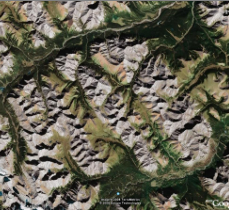
what drainage pattern is shown here
trellis drainage in rocky mts
8 types of drainage patterns

Structurally-controlled landscapes
Horizontally-bedded rocks •Dipping, bedded rocks •Folds and domes •Fractures •Faults •Extrusions •Intrusion
what are common features of horizontally bedded rocks
also cliff and bench toporaphy from differential erosion

geomorphic features of dipping, bedded rocks

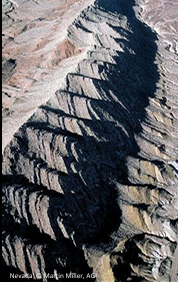
what is this landform and what causes is
flatirons, dipping bedded rocks

what are 1 and 2
1: scar
2:dip slope
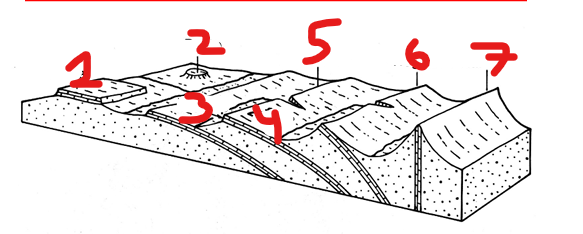
label the homoclinal ridge types
1:mesa
2:butte
3:scarp
4:dip slope
5:cuesta
6:hogback
7:razorback

whats this ridge type
scarp

what this ridge type
hogback or cuesta

what type of ridge is this
razor back but also trick questions its a vertical igenous dike
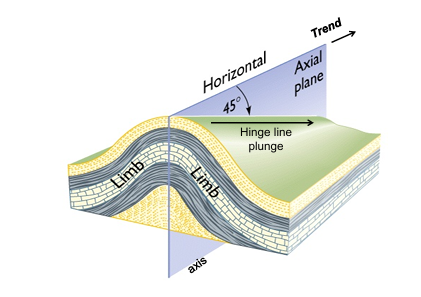
what type of fold is this and why?
anticline, A shape down, hinge line plunging down

syncline?

overturned anticline and syncline ?

recumbent syncline?
what happens when rocks fold
Weakening due to brittle deformation (fractures & faults
Young folds or very resistant beds: conformable landscape
Topographic inversion -synclinal ridge
what is the difference between non plunging and plunging folds
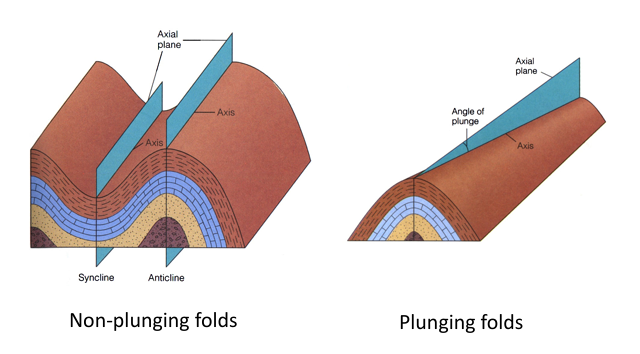
features of eroded, non plunging folds


features of eroded plunging anticlines
Homoclinal ridges form a V with scarps facing fold axis and converging in the direction of plunge

features of eroded plunging synclines
Homoclinal ridges for a V with scarps facing away from fold axis and diverging in the direction of plunge
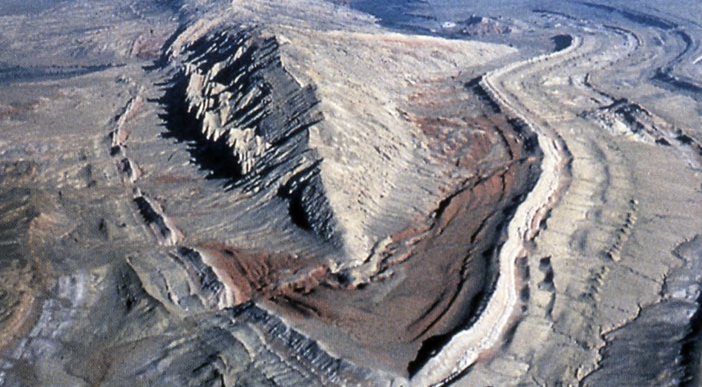
what is the structural control on this landscape
eroded plunging syncline

what is the structural control on this landscape
idk-add later

A: eroded plunging syncline?
B: idk
what are 4 features of eroded domes
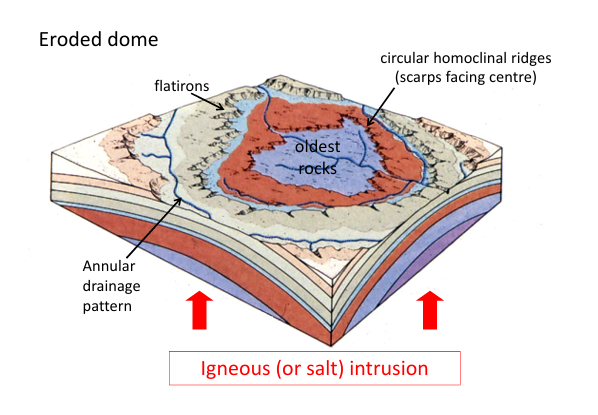

what is this
eroded dome
how do fractured rocks form
Breaks with no displacement
• Form due to contraction, pressure release or tectonics
• Erosion & drainage patterns depend on rock type

what drainage pattern is shown
contorted/deranged pattern

label the diagram
1:Fault scarp
2:Fault plane
3:strike
4:dip
5; handwall
6: footwall
7:throw

what types of faults are shown here
dip-slip faults (1 normal, 2 reverse fault)
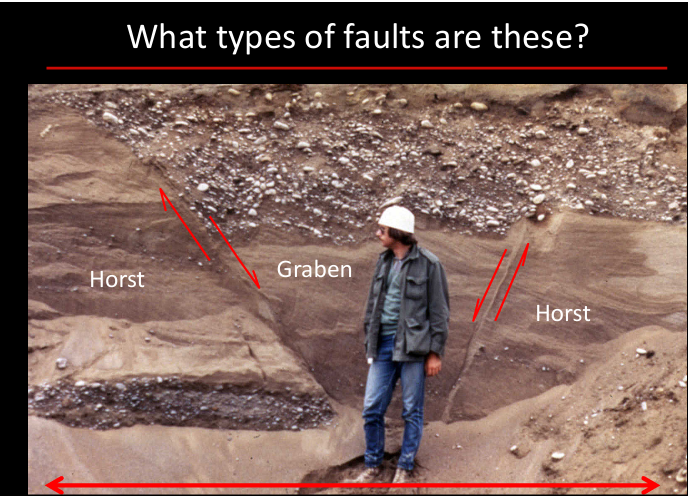
normal fault

reverse

what type of faults are these
strike-slip

is this strike slip fault left or right lateral?
right lateral (the opposite side moves to the right based off where you stand)

left or right lateral?
left lateral
what are oblique-slip faults

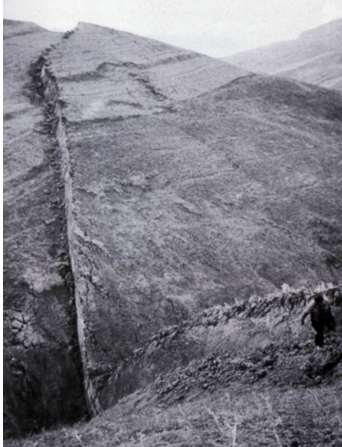
how did this move
oblique slip-revrse fault-steep

normal fault (triangular facets)

idk

Not always. Debris aprons can cover original land surface. Topographic inversion may leave fault line scarps (erosional).
what forms result from cominations of normal faults


idk

right laateral strike slip

right lateral strike slip
what are two surface expressions of igneous activity
1)Volcanic landforms (extrusions) constructed at Earth’s surface • Lava flows, ejecta, ash, volcanoes
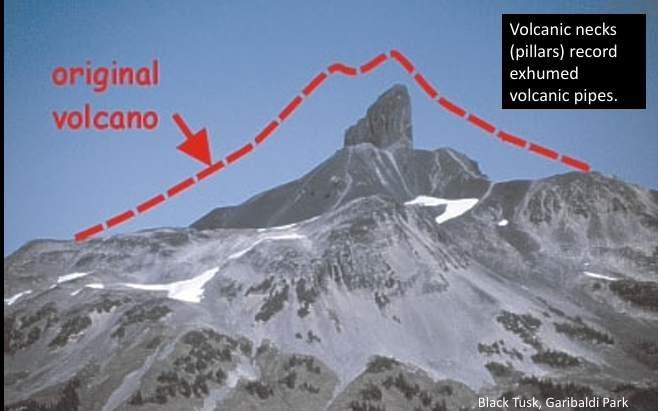
2) Plutonic landforms (intrusions) exhumed by erosion at Earth’s surface •Batholiths, domes, dikes, sills
three factors for volcanic shape
1. Chemical composition: silica content controls the viscosity of the magma and, consequently, its ability to plug up vents (Basaltic 50% silica; Andesitic 60% silica; Rhyolitic70% silica).
2. Eruption temperature: also controls viscosity and likelihood that lava will flow.
3. Gas Content: controls explosiveness and, ultimately, deposition patterns and flow types.
3 main spots of volcanoes
1) subduction zones
2) spreading centers
3)hotspots
two types of volcanic extrusions
1. Lava flows 2. Pyroclastic material

what type of lava is this
ropey (liquid)

what type of lava is this
blocky
what is a lobate flow
Lobate flows are volcanic surface features characterized by rounded, bulbous lava lobes that extend outward from a vent or fissure.
Common at spreading centers

what are marginal levees
Marginal lava levees are solidified walls of lava that form along the edges of a lava channel as the moving interior continues to flow

what are pressure ridges
Pressure ridges solidification & buckling:Pressure ridges are formed when the outer edges and surfaces of a lava flow begin to harden. If the advancing lava underneath becomes restricted, it may push up on the hardened crust, tilting it outward
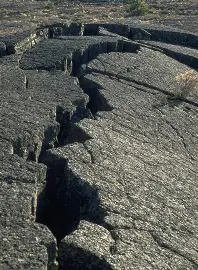

what structure is this
lava tube

what are these
spatter cones
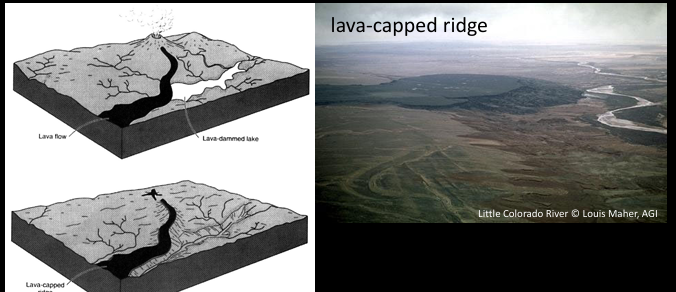
what process is occuring
topographic inversion
3 typess of pyroclastic material
Ash -< 2 mm
Lapilli –2-64 mm
Blocks (angular) & bombs (rounded) -> 64 mm

what type of volcano and why
shield: gentle slopes from low viscosity lava flows. Basaltic ex hawaii

what volcano is show and why
composite (stratovolcano): built by layers of lava and pyroclastic material
ex:mt saint helens
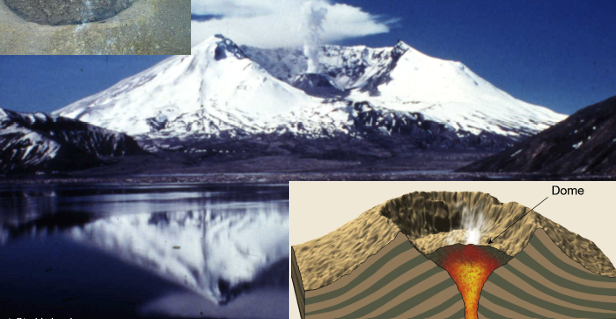
what volcano is shown and why
plug dome: viscous lava piles up in vent

what volcano is show
cinder cone (scoria)

what type of volcanos are shown
fissure at spreading centers

type of volcano and how it formed
tuya (table mountain), subglacial formation
how do igenous plutons form

example of an exhumed pluton
also yosemite and coast mountains