Bone Development & Clinical Application
 Call Kai
 Learn
 Practice Test
 Spaced Repetition
 Match
 Flashcards
 Knowt Play
1/41

There's no tags or description
Looks like no tags are added yet.
42 Terms
formation of the skeleton
all features start as fibrous connective tissue or hyaline cartilage
what parts of the skeleton goes through intramembranous ossification ?
flat bone of the skull, parts of the clavicle and the mandible
steps of intramembranous ossification
mesenchymal cells cluster around vessel and become osteoblast
osteoblast secretes osteoid and creates ossification center
osteoblasts grow and continue to create osteoid that surrounds osteoblast
becomes osteocyte
osteoid continues to form immature spongy bone
mesenchyme adheres to external surface and becomes periosteum
immature spongy bone is remodeled and replaced with compact bone
Central immature spongy bone matures (starts getting its calcium and salts to harden)
what parts of the skeleton goes through endochondral ossification ?
every other bone
steps of endochondral ossification
Mesenchymal cells specialize into osteoblasts, perichondrium becomes periosteum
Osteoblasts secrete osteoid but specifically in central portion of model to create bony collar
Chondrocytes left within bony collar, hypertrophy ( increase) and become primary ossification center
Chondrocytes from primary oc ossify surrounding cartilage
Chondrocytes die and matrix begins to dissolve
Cavities are now formed within the model ( hollow space)
Remaining cartilage ( ends) are healthy, growing rapidly to elongate the model
Cavity invaded by periosteal bud ( primary nutrient artery to nerve)
Osteoclasts partially erode cartilage matrix, creating matrix in center
Osteoprogenitor cells become osteoblasts (spongy bone formation)
Osteoclasts break down newly formed spongy bone and continue to expand cavity
Epiphysis stays as cartilage ends through birth
After birth, secondary ossification centers develop at epiphysis (short bones only have primary, irregular bones have multiple ossification centers)
Secondary ossification centers mimic that of primary except spongy bone remains and no cavity is formed
Space between diaphysis and epiphysis is the epiphyseal plate and is hyaline cartilage until you’re done growing
postnatal growth in length in order
1. Proliferation
2. Hypertrophic
3. Calcification
4. Ossification
what happens at the resting zone ?
Healthy cartilage, hangs out in epiphyseal plate
what happens at the proliferation zone ?
Growth zone
Chondrocytes begin rapidly dividing
what happens at the hypertrophic zone?
Older chondrocytes are pushed into this zone
They begin to enlarge and outgrow lacunae , those begin to erode = empty spaces
what happens at calcification zone ?
Matrix calcifies = chondrocytes die
what happens at ossification zone?
Bone marrow elements are able to come up and invade zone, bring osteoclast = break down old cartilage and osteoblasts = build new bone
postnatal growth width
completed through appositional growth
Osteoblasts in periosteum secrete bone matrix on external surface
Osteoclasts remove bone from endosteal surface
Typically more osteoblasts activity compared to osteoclast
remodeling bone
takes about 10 years for bone to turn over
what role do hormones play in remodeling bone?
determine if and when bones are remodeled
what role does mechanical stress play in remodeling bone?
determines where bones are remodeled
role of calcium in the body
Homeostasis for maintaining resting membrane potentials
what hormones play a role in influencing calcium during bone development?
parathyroid hormone
calcitriol
calcitonin
hypocalcemia
not enough calcium
what happens when there is not enough calcium?
release of parathyroid hormone, this hormone tells osteoclasts to kick up their activity = more bone resorption - more calcium in blood
hypercalcemia
too much calcium
what happens when there’s too much calcium?
calcitonin is secreted, reduces osteoclast activity = less bone resorption , osteoblasts increase activity = more bone built = pulls calcium out of blood and returns it to normal
parathyroid hormone
secreted by parathyroid gland
stimulates osteoclasts to promote bone resorption
calcitriol
helps with absorption by digestive tract
reabsorption by kidneys
deposition by osteoblasts
calcitonin
From the bone in and out of the blood
what are the sex hormones?
estrogen and testosterone
growth hormone
Promotes growth at epiphyseal plates, but influence all aspects of bone
metabolism
Wolff’s Law
the body adapts to the forces placed upon it
nondisplaced fracture
bones are still connected
incomplete = didn’t go all the way through
closed
displaced fracture
bones are not touching anymore
complete = went all the through the width of the bone
open

transverse fracture

oblique fracture
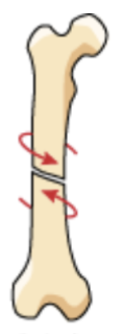
spiral fracture

comminuated fracture
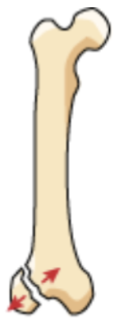
avulsion fracture

impacted fracture
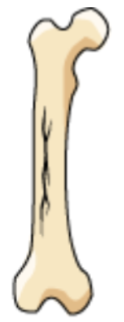
fissure fracture

greenstick fracture
Fracture repair
Hematoma formation - first 24-48 hours
Soft callus formation - fibroblasts lay down collagen , fibrocartilage
Hard callus formation - osteoblasts lay down temporary bony collar
Bone remodeling - osteoclasts reshape and slowly recreate the normal shape of bone, lasts 3-4 months

osteoporosis
Group of diseases and conditions -(osteoclasts) bone resorption out spaces bone deposit (osteoblasts)
osteoporosis risk factors
low calcium, low Vitamin D, low activity, parathyroid hormone disorder, low estrogen, genetic predisposition

osteomalacia
Bones are poorly mineralized
Weak and soft bone, calcium salts are not sufficient
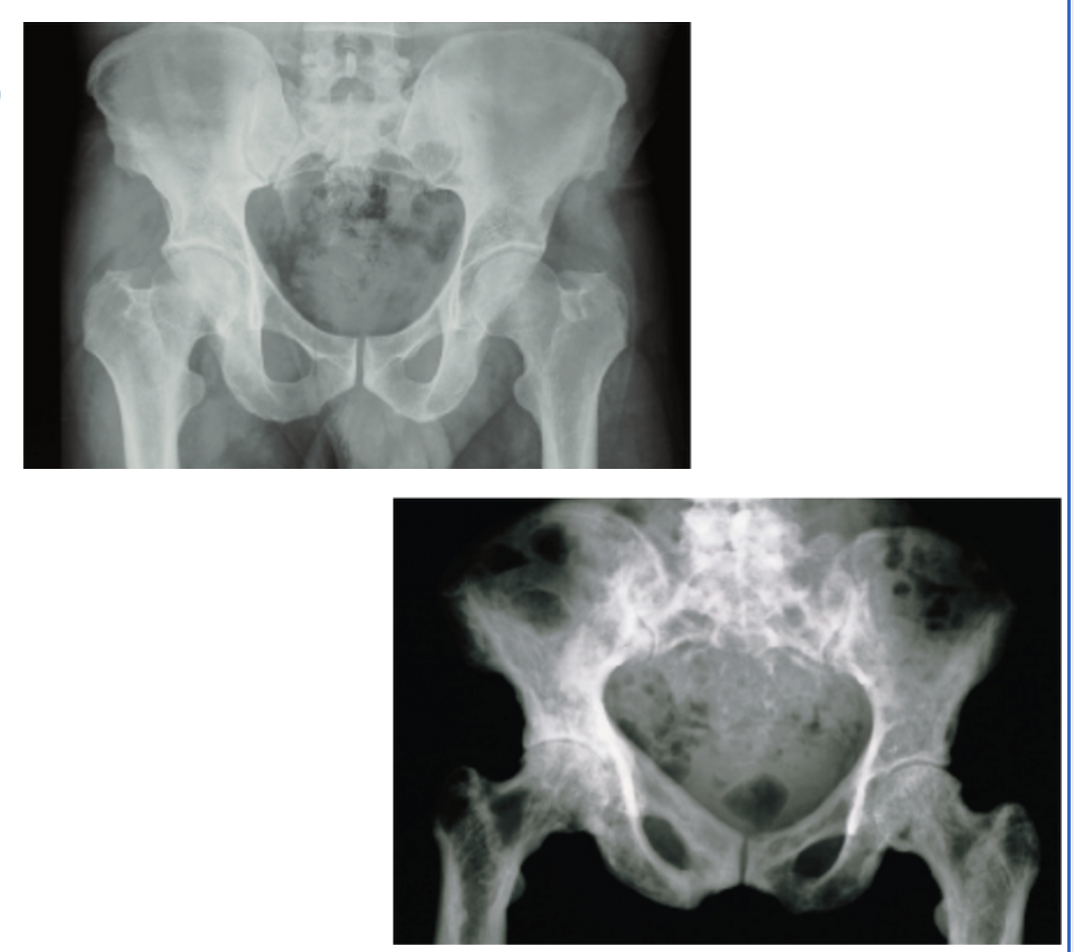
osteitis deformans
bone deposit and resorption
Abnormally high ratio of spongy
bone