Exercise 14A Fungi
 Call Kai
 Learn
 Practice Test
 Spaced Repetition
 Match
 Flashcards
 Knowt Play
1/22

There's no tags or description
Looks like no tags are added yet.
23 Terms
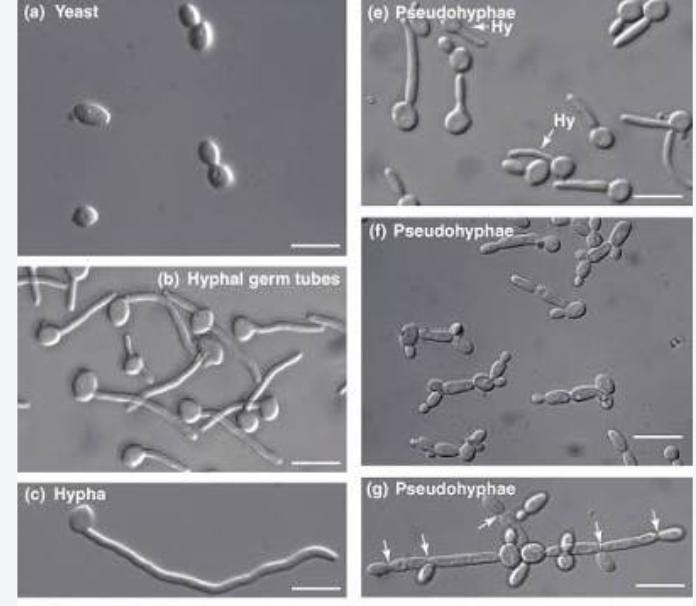
Proper name of this organism:
Candida albicans
Candida albicans - General type of microorganism:
Eukaryotic fungus (Yeast)
Candida albicans - Primary taxonomic group:
Ascomycota
Candida albicans - Characteristic traits
Commensal habitat, dimorphic shape (switches between oval budding yeast cells, elongated pseudo hyphae depending on temperature and pH.) It rapidly forms germ tubes when incubated in serum at 37°C
Candida albicans - Diseases caused:
Candidiasis, including oral thrush, vaginal yeast infections, and systemic infections.

Candida albicans at 28C - Photo:

Candida albicans at 37C - Photo:

Proper name of this organism:
Malassezia furfur
General type of microorganism - Malassezia furfur
Eukaryotic fungus (lipophilic yeast)
Primary taxonomic group - Malassezia furfur
Basidiomycota
Characteristic traits - Malassezia furfur
A lipophilic yeast that thrives on oily skin. Dimorphic in nature and can exist as either yeast or filamentous form.
Diseases caused - Malassezia furfur
Can cause skin conditions like tinea versicolor and dandruff.

Photo - Malassezia furfur
Proper name of this organism:

Microsporum gypseum
General type of microorganism - Microsporum gypseum
Eukaryotic fungus (geophilic dermatophyte)
Characteristic traits - Microsporum gypseum
Soil-dwelling mold that feeds on keratin. It produces many large, rough, boat-shaped spores divided into 4 to 6 sections.
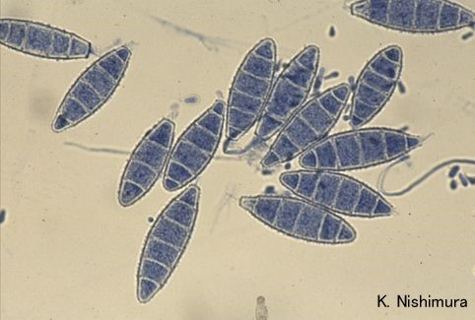
Photo - Microsporum gypseum
Proper name of organism

Penicillium roqueforti
General type of microorganism - Penicillium roqueforti
Eukaryotic fungus (saprotrophic mold)
Primary taxonomic group - Penicillium roqueforti
Ascomycota
Characteristic traits - Penicillium roqueforti
This species is known for its greenish-blue color, the production of penicillin, and its role in cheese production.
Diseases caused - Penicillium roqueforti
This species can produce mycotoxins that may affect human health, potentially causing allergic reactions or respiratory issues.
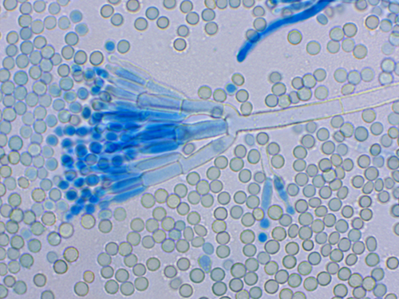
Photo - Penicillium roqueforti