VETM*4450: Neuro
 Call Kai
 Learn
 Practice Test
 Spaced Repetition
 Match
 Flashcards
 Knowt Play
1/57

There's no tags or description
Looks like no tags are added yet.
58 Terms
lesions in which parts of the brain would affect mental status
• thalamocortex
• RAS
3 areas to collect CSF from in horses
1) Lumbosacral space**
2) Atlanto-occipital space**
3) Atlanto-axial space
pros & cons of collecting CSF from lumbosacral space
• 85% success rate
• light sedation, no GA
+/- blood contamination

pros & cons of collecting CSF from atlanto-occipital space
• near 100% success
• req. GA (incr. cost, recovery)

pros & cons of collecting CSF from atlanto-axial space
• done standing & sedated
• need training, not done in field often
• US guided
• risk of bleed, as with any tap
how to perform CSF aspirate from lumbosacral space
1. sedate horse & put in stocks
2. prep skin aseptically, local block w lidocaine
3. palpate sacral tuber = mid-sacral region
4. insert needle perpendicular to spine (2nd person stands behind horse & directs you)
5. if no fluid, readjust angle or change the space you went in a bit
note: keep the stylet in until you're at the appropriate level to prevent biopsy; having someone else hold off jugular will incr. CSF pressure; may take a few sticks
what is CSF tested for
• protein level
• nucleated cell count
+/- specialized testing like EPM
normal TP in CSF?
normal nucleated cell count?
*protein*:
which eye muscle is innervated by:
a) trochlear n. (CN4)
b) abducens n. (CN6)
*trochlear* - dorsal oblique m.
*abducens* - lateral rectus m.
what do each of the following terms regarding horse gait analysis mean:
a) interference
b) cross-firing
c) foraging
a) *interference*: hitting the opposite foot
b) *cross-firing*: LF hits RH, or RF hits LH
c) *foraging*: LF hits LH, RF hits RH
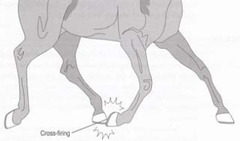
abnormalities to look for when walking horse in circles, esp. tight circles (gait analysis)
• steps on itself
• inconsistent foot placement
• pivoting
• circumduction
• inability to keep trunk on course
neuro structures in guttural pouch
• CN 9, 10, 11, 12, 5 (mandibular branch)
• cranial cervical ganglion
• sympathetic trunk
reportable viruses that affect the horse brain
• EEE/WEE/VEE
• West Nile
• rabies
how to test horse for togaviruses (EEE, WEE, VEE)
• HI
• FA
• complement fixation
• ELISA
• PCR
are encephalitis viruses (EEE, WEE, VEE) zoonotic
~no, because they're spread by arthropod vector (people can get them from mosquitos)
which of the following encephalitis viruses is foreign to Canada?
a) EEE
b) WEE
c) VEE
d) none
a) EEE
b) WEE
*c) VEE*
d) none
^mostly see EEE, sometimes WEE, but VEE is foreign
is there a vaccine for EEE/WEE/VEE
yes, cheap & effective (in Canada it's just for EEE/WEE; separate one for VEE but not available in Canada)
mortality rate of EEE/WEE/VEE infection w/ clinical signs in horses vs. people
very high mortality for both if clinical signs
(infection =/= clinical signs though)
in Canada, horses are commonly vaccinated for:
[ ] EEE
[ ] WEE
[ ] VEE
[*x*] EEE
[*x*] WEE
[ ] VEE
^usually a combined EEE/WEE vaccine; the VEE vaccine is separate and not available in Canada
where do horses get EEE/WEE from
sylvatic cycle between birds & mosquitos -> horses/ humans are dead end hosts
clinical course of EEE/WEE/VEE
2-14 d, most with EEE die or are euthanized
WEE/VEE -> may survive
diagnostic tests for EEE/WEE/VEE
• CBC, biochem
• CSF
• viral serology (if live + fever)
• high IgM (recent infection)
• brain exam at PM
treatment for EEE/WEE/VEE
• none
• supportive
• sedation, corticosteroids, mannitol
how many types of VEE are there
min 6 -> incl. epidemic & endemic forms
where do horses get West Nile virus
cycle in nature b/w birds & mosquitos -> mosquito transmits to horse & humans (dead end hosts)
prognosis for horse with west nile virus
• 30% mortality
• 90% of survivors become normal
is there a vaccine for west nile
yes, many types of vaccine
forms of rabies (clinical signs)
• "dumb" - depressed
• "furious" - hyperexcitable
• "paralytic" - flaccid paresis/paralysis
how long is rabies clinical course
1-8 days, may die acutely
how to test for rabies
• direct fluorescent Ab test (DFA)
• indirect fluorescent Ab test (IFA)
• cell culture
• mouse inoculation...
+/- Negri bodies on histo
3 body systems affected by EHV-1
• respiratory
• repro (abortion)
• neurologic
how does equine herpesvirus damage neuro tissue [pathophysiology]
*vasculitis* -> ischemia of neurons
**not neuronal infection
EqHV-1 may be latent in ____________
trigeminal nerve
lymphoid tissue
how is equine herpesvirus spread
• nasal, ocular
• respiratory
• reproductive
progression of EqHV-1 neuro disease
progresses for 24-48 hr usually, then stabilize;
need months for recovery
treatment for EHV myeloencephalitis
• anti-inflammatories
• fluids, nutrition
• decompress bladder, evacuate rectum
• sling
• antivirals - valacyclovir
is there a vaccine for EqHV-1
none labelled for protection against neurologic disease
one study suggests vaccinating increases risk of neuro disease
how to test for EqHV-1
• PCR
• serology
• virus isolation
• CSF
in Wobbler's, which limbs are more affected:
a) HL > FL
b) FL > HL
c) FL = HL
d) depends
a) HL > FL
b) FL > HL
c) FL = HL
*d) depends*
C1-C5 -> HL > FL
C6 - T2 -> FL > HL
how to diagnose Wobbler's
• neuro exam
• spinal rads, myelogram
• r/o other diseases
other diseases to rule out before diagnosing Wobbler's
• EPM, EHV-1, EDM
• cyst, abscess, tumour
• aberrant parasite migration
treatment for Wobbler's
• stall rest
• anti-inflammatories
+/- US-guided joint injections
+/- surgery
pathogen that causes equine protozoal myeloencephalitis (EPM)
Sarcocytis neurona
how do horses get infected with Sarcocystis neurona (EPM)
possums are the definitive host -> shed oocysts
horse is aberrant host -> ingests it from fecal contamination, then parasites localize to CNS (not PNS)

what effect does diet have on risk of Wobbler's
multifactorial cause, nutrition a factor:
• high protein/ calorie diet
• Cu/Zn imbalance
cell types infected by Sarcocystis neurona
• neurons
• mononuclear cells
• endothelial cells
how to test for Sarcocystis neurona (EPM)
• Ab in serum/CSF (exposure)
• Western blot
• indirect fluorescent Ab (IFA)
• surface Ag (SAG) testing
how to treat EPM
ponazuril (or toltrazuril)
+ corticosteroids (inflammation from parasite die off)
+/- vit E
prognosis for EPM
guarded - don't know extent of neural damage, need to see response to Tx
10-20% recover completely, 60% made some improvement
age of horse that gets equine degenerative myeloencephalopathy (EDM)
young (
cause of equine degenerative myeloencephalopathy (EDM)? treatment?
caused by vit E deficiency
supplement vit E, but not likely to be effective (damage already done)
age of horse that gets equine motor neuron disease (EMND)
adult horses (2-27 yr)
cause of equine motor neuron disease (EMND)
systemic oxidative stress d/t vit E deficiency
tests for EMND
• electromyography
• muscle biopsy (tail head)
• nerve biopsy (CN11, sternocephalicus m.)
+/- incr. CK & AST
+/- incr. protein in CSF
cause of polyneuritis equi/ cauda equina syndrome
unknown, maybe autoimmune, viral, allergic
prognosis for polyneuritis equi
'hopeless'
treatment for equine epilepsy
diazepam, phenobarbital, KBr
treatment for narcolepsy/ cataplexy
• atropine -> transient improvement
• imipramine (cataplexy?)