Biology - biological molecules
 Call Kai
 Learn
 Practice Test
 Spaced Repetition
 Match
 Flashcards
 Knowt Play
1/115

There's no tags or description
Looks like no tags are added yet.
116 Terms
what are the 3 types of bonds
hydrogen, ionic and covalent
structure of water
2 hydrogen atoms joined to 1 oxygen by covalent bonds, bond angle 104.5, polar
hydrogen bonds in water
the positive hydrogen atoms of one water molecule are attracted to the negative oxygen atoms of nearby water molecules and form hydrogen bonds
strength of bonds - weakest to strongest
hydrogen is weaker than ionic and covalent
carbohydrates
carbon, hydrogen and oxygen, sugars and non-sugars
monosaccharides
simple sugars, general formula (CH2O)n, n is 3 to 9
disaccharide
double or compound sugars, general formula 2[(CH2O)n]-H2O, low molecular mass, taste sweet, soluble in water
polysaccharides
non sugars, general formula (C6H10O5)n where n is usually greater than 300, high molecular mass, do not taste sweet, not readily soluble in water
sugars are:
important sources of energy (glucose), able to be transported in solution in animals (glucose in blood) and plants (sucrose in phloem)
non sugars are (polysaccharides)
important in storage (starch in plants, glycogen in animals), structural role in plants (cellulose in cell walls)
hexoses
monosaccharides with 6 carbon atoms, ring structure, e.g. glucose, fructose

what are the two different ring forms forms
alpha glucose, beta glucose
pentoses
monosaccharides, 5 carbon atoms, e.g. ribose and deoxyribose
ribose
constituent of RNA, needed to make nucleotides which form nucleic acids
deoxyribose
constituent of DNA, needed to make nucleotides which form nucleic acids

beta ribose
the form found in RNA
condensation reaction for two monosaccharides
disaccharide is formed and a molecular of water removed, glycosidic bond formed
hydrolysis reaction disaccharide
disaccharide broken down into two monosaccharides, molecule of water added
glucose and fructose
sucrose
glucose and galactose
lactose
alpha glucose and alpha glucose
maltose

starch
polymer of alpha glucose, storage molecule used by plants, mixture of unbranched helical molecule amylose, and branched amylopectin, 1,6-glycosidic bonds
glycogen (stored as small granules)
storage molecule in animals, present in liver cells and muscle tissue (and fungi), polymer of alpha glucose, similar in structure to amylopectin, many more side branches
why are starch and glycogen suitable to be storage molecules
they are insoluble and compact
what is the advantage of amylopectin and glycogen being branched?
more surface area for the quick release of energy
cellulose
polymer of beta glucose, every other monomer has to invert to be able to react, resultant molecule is straight, hydrogen bonds form, cross links so cellulose chains form microfibrils
microfibrils
high tensile strength allowing it to be used in a structural role such as cell walls
lipids
carbon, hydrogen and oxygen, non polar, insoluble in water, esters of fatty acids and glycerol
saturated fatty acids
only C-C single bonds
unsaturated fatty acids
one or more C=C double bonds, molecules bend
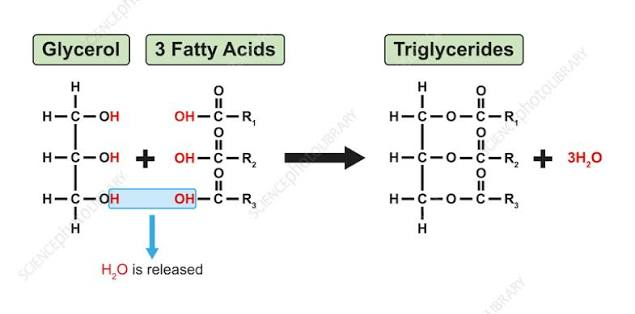
triglycerides
esters formed by condensation reactions between the glycerol and fatty acids, glycerol - 3 hydroxyl groups and a fatty acid molecule can become attached to each with 3 H2O molecules being removed
what is the bond between a fatty and a hydroxyl group called
ester bond
triglycerides containing unsaturated fatty acids
the bends caused by the C=C double bonds prevents the fatty acids from lining up, lowering the freezing point, which is why saturated lipids are more likely to be solids
why do saturated lipids contain more energy than unsaturated lipids
greater proportion of C-H bonds in the molecule
roles of lipids
energy stores, insulation, protection of vital organs, buoyancy in aquatic mammals
why are fats and oils important energy stores
compact, insoluble and can be stored in high concentrations in cells, release 2x as much energy per gram as carbohydrates, to release the energy, oxygen is needed and water is released
how is fat stored in animals
in adipose tissue beneath the skin and around the body organs, providing insulation and protecting vital organs and contributes to buoyancy in aquatic mammals
waterproofing using lipids
hydrocarbon tails of the fatty acids are hydrophobic, so they repel water, so fats, oils and waxes can be used for waterproofing parts of an organism
do saturated or unsaturated fats have stronger bonds
saturated
phospholipids can combine with…
carbohydrates to form glycolipids - which play an important role in cell recognition

phospholipid
ester compounds of glycerol, two fatty acids and a polar phosphate group, polar group soluble in water, glycerol molecule makes the hydrophilic head, fatty acid chains make the hydrophobic tail
air-water interface
phospholipid molecules orientate themselves so that their heads are in water with the tails sticking up into the air
what happens if phospholipids are submerged in water
they form a drop known as a micelle, polar heads point in to the water, hydrophobic tails pointing into the middle, flattening a large micelle forms a phospholipid bilayer which is the basis of all membrane structures found in cells
water
essential for all life, comprising 60% of our mass, and 80% of every cell, medium for chemical reactions
5 major properties of water which make it unique
solvent properties, high heat capacity, surface tension, incompressibility and behaviour when freezing
water is a liquid
has a relatively small molecular mass but is a liquid at room temperature, contrasts with similar sized molecules which are gases at rt, in water the molecules are held together by hydrogen bonds so there is a liquid medium for life
water as a solvent
due to its polarity, it is a good solvent for ionic compounds such as sodium chloride and polar molecules e.g. sugar and amino acids, important biologically as:
all chemical reactions in cells occur in aqueous solution
water acts as a transport medium (animals - blood), (plants - phloem, xylem)
specific heat capacity definition
amount of energy (joules) needed to raise the temperature of 1kg of the substance by 1oC
water’s thermal properties
water has a very high specific heat capacity compared to other liquids, as more energy is needed to break the hydrogen bonds, so large increase in energy results in a comparatively small rise in temperature of the water, affects how easily water changes state
biological advantage of water’s thermal properties
aquatic habitats are thermally stable, also linked with why sweating is effective
density of water
water reaches max density at 4oC, below this temperature, hydrogen bonds impose a more open lattice structure on the molecules, so ice is less dense than the water around it so it floats
biological advantage of the density of water
ice helps insulate the water, keeping its temperature stable, if ice sank, ponds would freeze from the bottom up, becoming solid quickly, surface ice can be a habitat
adhesive and cohesive properties of water
strong cohesive forces exist between water molecules so they can be drawn up into long columns through narrow tubes, molecules also adhere to most surfaces aiding transport
biological advantage of the adhesive and cohesive properties of water
this aids the transport of water through xylem vessels
surface tension of water
cohesive forces between water molecules means that they are more attracted to the water molecules near them than they are to air molecules, giving a very high surface tension to water, higher than any other liquid but mercury
biological advantage of surface tension of water
animals can exploit it as a habitat
biological advantage of water not being able to be compressed
many invertebrates use a hydro skeleton to support themselves and to allow movement
biological advantage of transparency of water
allows photosynthesis by aquatic plants
function of nitrate
needed in plants for formation of amino acids and DNA
function of phosphate
needed for ATP and nucleic acids
function of chloride
nervous impulses
function of hydrogen carbonate
buffering the blood (keeps pH constant)
function of calcium
calcium pectate - middle lamella between two cell walls in plants, bone formation and muscle contraction
function of magnesium
chlorophyll
function of sodium
nerve impulses
function of hydrogen
respiration and photosynthesis
nucleic acids
large, unbranched polymers formed from nucleotide monomers
nucleotide
made up of pentose sugar, an organic nitrogenous base and phosphate group
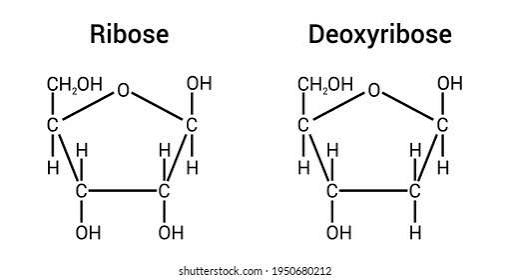
pentose
either ribose (RNA) or deoxyribose (DNA
condensation reactions
occur between carbon 1 of the pentose and a base and between carbon 5 of the pentose and phosphate group, with the removal of two molecules of water
5 organic bases
thymine, cytosine and uracil - sing ring pyrimidines
adenine and guanine - double ring purines
how are long polynucleotide chains built up
condensation reactions between phosphate group of one nucleotide and carbon 3 on pentose of another, forming a phosphodiester bond
phosphodiester bond
protects bases inside the double helix, making DNA stable, consists of phosphate group and 2 ester bonds
structure of DNA
DNA is a polymer of deoxyribonucleotides, pentose is deoxyribose, pyrimidine bases - C, T, G and A
double stranded, pentose sugars and phosphate groups form sugar phosphatebackbone
complementary base bairing
between a purine and a pyrimidine, A with T, C with G
two hydrogen bonds between A and T, three between C and G
hydrogen bonds in DNA
enable easy access for DNA replication, protein synthesis and provides stability

replication of DNA
each chain has a 5’ end, closest to carbon 5, and 3’ end, closest to carbon 3, two chains run in opposite direction and are antiparallel
role of DNA
how most organisms store their genetic information in the form of genes
gene definition
sequence of bases that gives the instructions on how to make a protein
function of having 4 different bases
the order of bases stores information
function of complementary base pairing
allows replication
function of DNA being very long
stores a lot of information
function of double helix with hydrogen bonds in the middle
protects the hydrogen bonds, lots of them make it a stable molecule
structure of RNA
RNA composed of ribonucleotides, pentose is ribose, pyrimidine bases are C and U, purine bases are A and G
single stranded, can form temporary double stranded with single stranded DNA molecule (happens by CBP)
link between DNA and RNA
RNA has several different forms with different roles in the cell, mRNA carries instructions on how to make a protein from the DNA in the nucleus to ribosomes in the cytoplasm
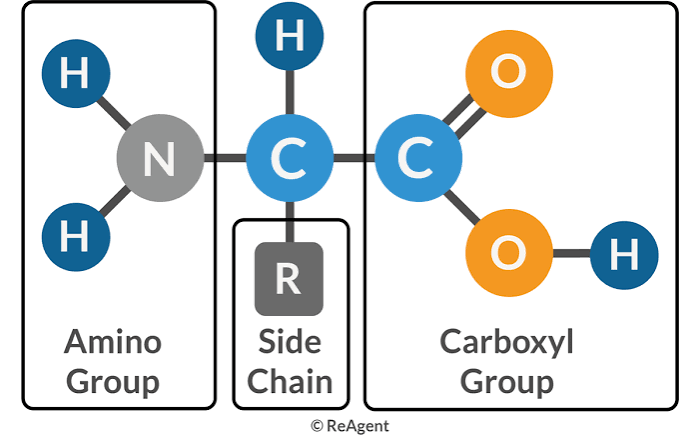
proteins
polymers of amino acids (20 different amino acids), carbon, hydrogen, oxygen and nitrogen, general formula NH2RCHCOOH
what does the R group represent in amino acids
single H atom to more complex groups that can contain sulphur

amino acid in aqueous solution
amino group is at one end and has basic properties, carboxylic is at the other end and is acidic
what does disassociated state mean
in pure state
why are there so many different proteins
there are 20 amino acids and there are many ways in which they can join together in a polymer

dipeptide
formed by a condensation reaction between the amino group of one amino acid and the carboxylic group of another, peptide bond formed, water molecule removed, two amino acid linking
polypeptide
linear sequence of amino acids joined together by peptide bonds
when proteins and polypeptides are broken down it is a…
hydrolysis reaction
what does a protein consist of?
one or more unbranched polypeptide chains coiled and folded into a 3D shape, structure is complex
primary structure
number, type and sequence of amino acids in chain, coded by the DNA of the cell in which protein is made
secondary structure
formation of repeating structures called alpha-helixes and beta-pleated sheets, structures held by hydrogen bonds between NH and C=O groups
tertiary structure
further bending and coiling to form a specific 3D shape, caused by bonds forming between the R groups of different amino acids in the same chain (bonds can be hydrogen, ionic or covalent disulfide)
amino acids with hydrophobic/hydrophilic R groups
tend to group together in the middle of the molecule, whilst hydrophilic ones will be on the outside, known as hydrophobic and hydrophilic interactions
quaternary structure
more complex proteins may consist of several polypeptide chains linked together, normally by bonds between R groups of amino acids of each chain e.g. haemoglobin
how is the final shape of a protein determined
nature of the R groups of its amino acids and the bonds they form with other R groups