Milking Parlour and Mastitis
 Call Kai
 Learn
 Practice Test
 Spaced Repetition
 Match
 Flashcards
 Knowt Play
1/17

There's no tags or description
Looks like no tags are added yet.
18 Terms
What is the vacuum on to off ration of a milking machine?
2:1
How can the milking parlour cause mastitis?
Hygiene
Machine
Damage to teat and teat end can be vector for spread of infection
How can the milking machine cause transfer of infection?
Contamination of liners
Wet milking: milk flushed upwards into the teat canal, carrying pathogens with it
Inadequate vacuums
Fluctuating vacuums
Blocked air bleed
What are some common problems with milk machines?
Vacuum
Too high
Settings
Regulator not working (can hear hissing)
Fluctuating/ Inadquate
Inadequate pump
Holes in tubing
Liner slip/ clusters falling off
Inadequate vacuum reserve
Blocked air bleeds
Milk doesn't drain - causing teat end impacts/ fluctuating vacuums
Faulty pulsation
Poor circulation
Set too fast
Inadequate rest phase
What will a faulty pulsator cause?
Blue teats
What simple tests can you carry out on milking machine?
Examine clusters
Blocked air bleeds
Cleanliness of liners
Wear of liners
Perishing/Holes in tubing
Vacuum gauge: level and watch whilst milking and observe for fluctuations
Liners slipping see, hear “shh” sound inadequate vacuum ( 5%)
Watch cows
Paddling or kicking
Teat score
Ask wash up routine
Ask when serviced- look at invoice
List some things you can do for milking parlour hygiene?
Gloves
Premilking teat prep
Fore-milking (drawing out some to inspect, can make milk faster)
Teat disinfection
Post milking teat dipping
Loafing time
Parlour management of clinically or subclinically infected cows
Milking order
Cluster disinfection
Parlour wash up routine
What common disinfectants can be used for the udder?
Chlorohexidine (non irritant, 0.35 to 0.5%)
Iodophors (0.1- 0.5%)
Chlorine dioxide (active in presence of faeces)
Hypochlorite (bleach, irritant, 4%)
How can you teat prep pre-milking?
Disinfectant wipe
Wash and dry
Spray or dip cup with disinfectant
Foaming produces
Teat brush
How does the milk ejection reflex work?
Oxytocin release from teat stimulation
Secretion delay determines milking routine
What does good letdown of milk flow look like? What can slow let down lead to?
Slow let down if there is not enough preparation (biphasic milking)
Increases teat end damage
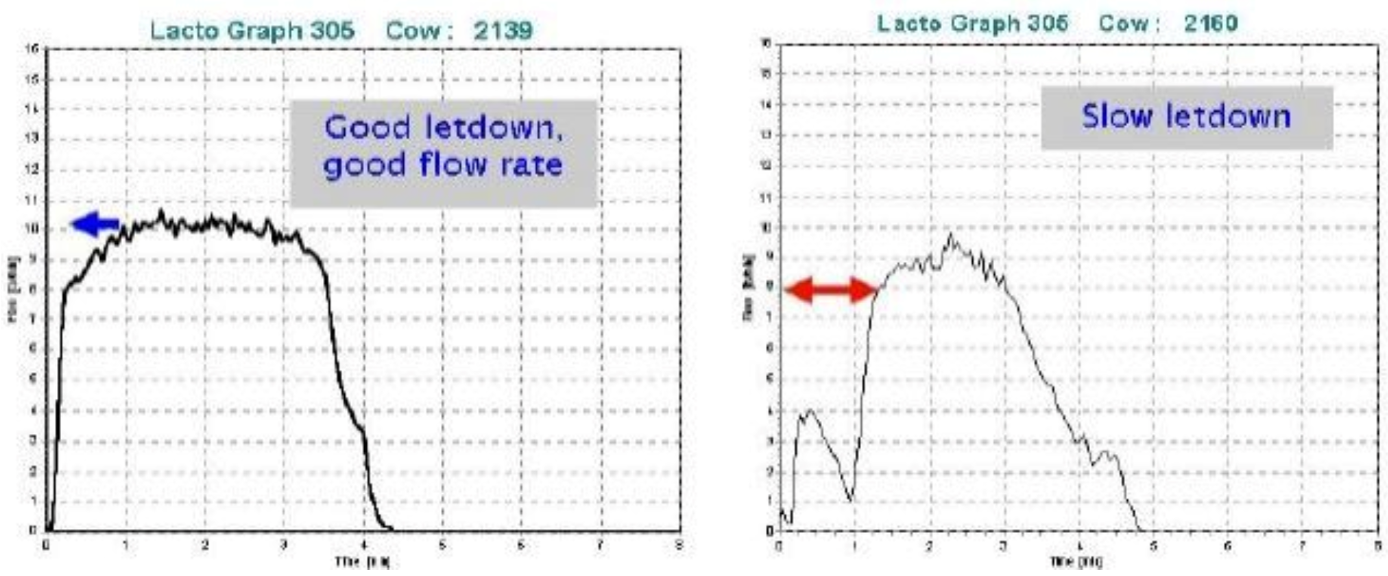
What is this showing?
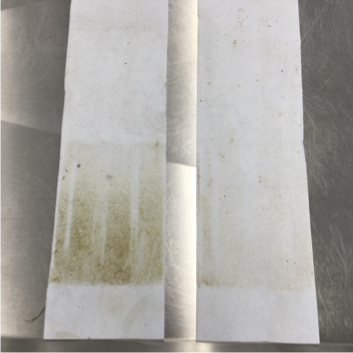
Milk filter analysis
Bacteriology
Remove filiter before cleaning cycle to get true picture
What is the purpose of post milking teat dipping?
Remove bacteria transferred to teats during milking
Key preventionof contagious pathogens
Staphylococcus aureus,
Streptococcus dysgalactiae
Streptococcus agalactiae
Widely practiced
How can loafing time help with mastitis?
Allow teat sphincter closure post milking
Prevent environmental infection
(30 mins in clean area but not if have lameness problems)
What milking order would you do in an ideal world?
HEIFERS
FRESH CALVERS (do not know status?)
HIGH YIELDERS
LOW YIELDERS
HIGH CELL COUNT COWS
MASTITIC COWS
N.B STILL NEED TO DISINFECT CLUSTER
What should you check to ensure appropriate cluster disinfection?
Water cleanliness
Chemical concentration
Dispensed volume
What problems can you get with parlour wash routine?
Not hot enough (>60C so tank needs to be 85-90C)
Not enough hot water 10-12 litres per unit
If Staphylococcus aureus hot wash every milking
How should you carry our a parlour investigation?
Milking machine
Observe cows
Observe vacuum gauge
Listen for liner slip
Teat score (minimum 20% of herd)
Observe parlour hygiene routines
Management high cell count and mastitic cows
Parlour wash up routine
Take milk samples for bacteriology