ECON 110A 1-3
 Call Kai
 Learn
Learn Practice Test
 Spaced Repetition
 Match
Match Flashcards
 Knowt Play
1/43

Earn XP
Description and Tags
Name | Mastery | Learn | Test | Matching | Spaced | Call with Kai | Chat |
|---|
No analytics yet
Send a link to your students to track their progress
44 Terms
economics
study of the use of scarce resources to satisfy unlimited human wants
factors of production
resources used to produce goods and services (land, labour, capital)
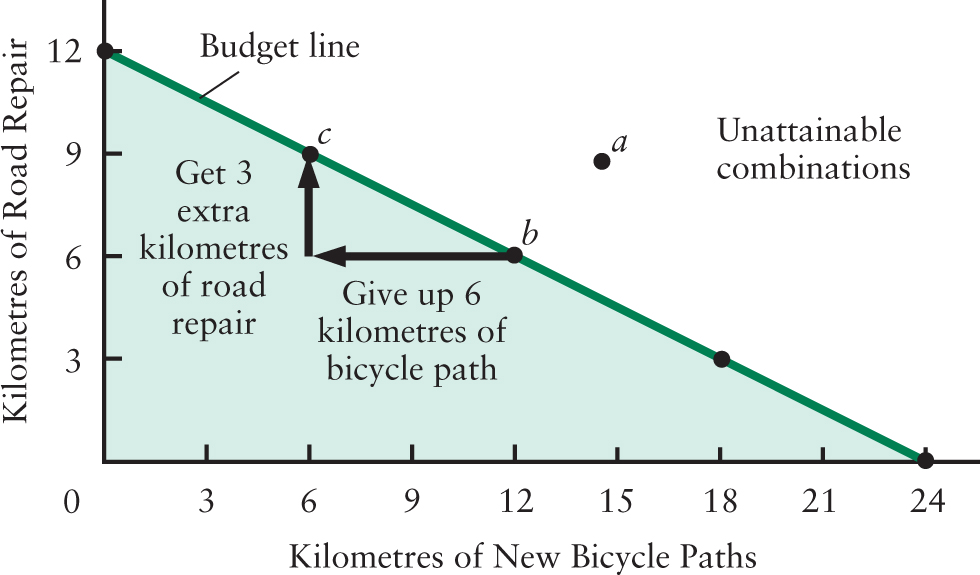
opportunity cost
value of the next best alternative that is forgone when one alternative is chosen, slope is o.c. (o.c. of a:c is a/c)
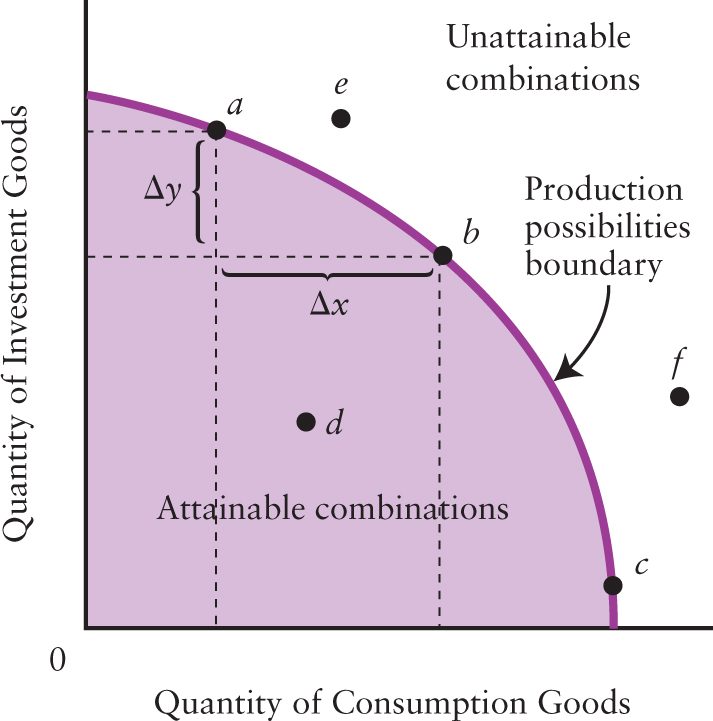
production possibilities boundary
a curve showing which alternative combinations of output can be attained if all available resources are used efficiently; economic growth shifts PPB outwards
self-organizing economy
individual consumers and producers act independently to pursue their own interests → collective outcome is coordinated
self-interest
individuals buy and sell what is best for them
maximization
consumers maximize their utility; producers maximize their profits
marginal decisions
decide whether they will be better off by buying or selling a little more/less of any given product
specialization
allows individuals to do what they can do well while leaving everything else to be done by others; must be accompanied by trade
division of labour
breaking up of a production process into a series of specialized tasks, each done by a different worker
trade and money
money greatly facilitates trade, which itself facilitates specialization
traditional economies
economies in which behaviour is based mostly on tradition
command economies
economies in which most economic decisions are made by a central planning authority
free-market economies
economies in which most economic decisions are made by private households and firms
mixed economies
economies in which some economic decisions are made by firms and households and some by the government
comparative advantage
a firm has the lower opportunity cost
positive statement
statement about what actually is/was/will be; not based on judgement
normative statement
statement about what ought to be; based on judgement
correlation
X causes Y, not direct evidence of this relationship
variable
well-defined item (price or quantity) that can take on various values
assumptions
motives, direction of causation, conditions under which the theory is meant to apply
endogenous variable
variable that is explained within a theory
causation
a change is X is predicted to CAUSE a change in Y
exogenous variable
variable determined outside a theory
quantity demanded
(desired) amount of a product that consumers want to purchase during some time period
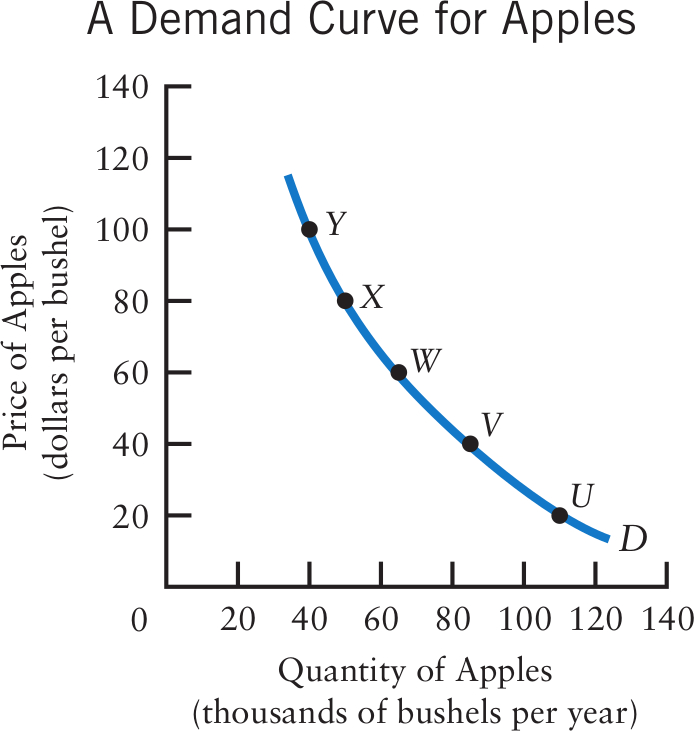
demand curve
negative slope, represents negative correlation between demand and price
change in quantity demanded
ONLY AFFECTED BY PRICE. change in the specific quantity of the good demanded, change of one point on the demand curve to another (on original demand curve or a new one)
change in demand
NOT AFFECTED BY PRICE. change in quantity demanded at every price of the product, shift in the whole demand curve
quantity supplied
amount of a product that producers want to sell during some time period
supply curve
positive slope, represents positive relationship between supply and price
change in quantity supplied
change in the specific quantity supplied, represented by a change from one point on a supply curve to another, either on the original supply curve or a new one
change in supply
change in quantity supplied at every price of the product, represent by a shift in the whole supply curve
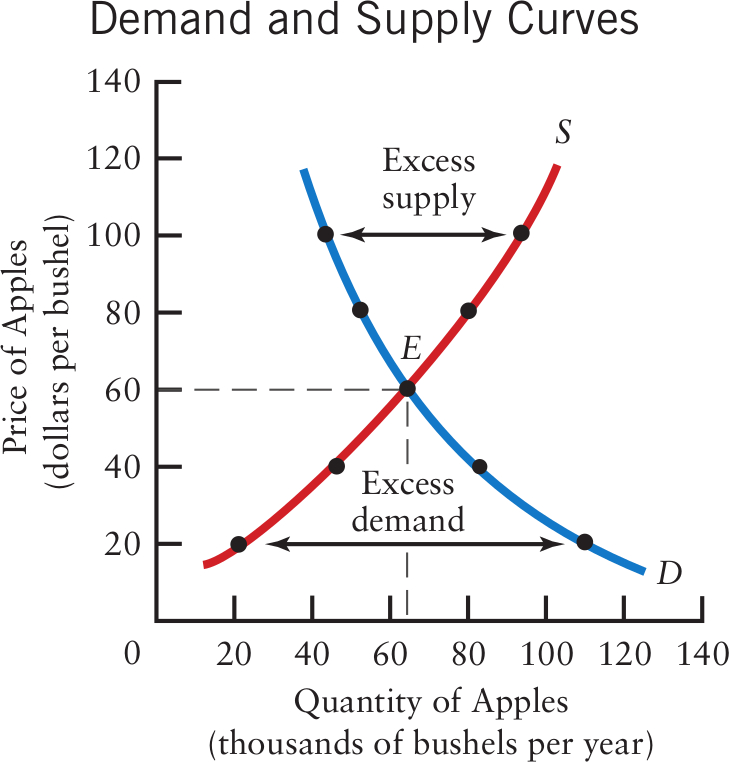
equilibrium price and quantity
price where quantity demanded = quantity supplied
disequilibrium
situation in which there is excess demand or supply, quantity exchanged is determined by the lesser of quantity demanded or quantity supplied
relative prices
ratio of two absolute prices, used in microeconomics
absolute prices
amount of money that must be spent to acquire one unit of a product
stock variable
at a point in time
flow variable
over period of time
increase in demand/supply
shifts curve to the right
decrease in demand/supply
shifts curve to the left
substitutes in consumption
goods placed in used of another good to satisfy similar needs (increase in P in one leads to increase in D of the other, v.v.)
complements in consumption
goods tend to be consumed together (demand curve shift in one will lead to same shift in the other)
inferior good
as one’s income rises, they buy less of that good
normal good
as one’s income rises, they buy more of that good