CHO (structure, nomenclature, and properties)
 Call Kai
 Learn
Learn Practice Test
 Spaced Repetition
 Match
Match Flashcards
 Knowt Play
1/165

There's no tags or description
Looks like no tags are added yet.
Name | Mastery | Learn | Test | Matching | Spaced | Call with Kai | Chat |
|---|
No analytics yet
Send a link to your students to track their progress
166 Terms
carbs energy per gram
4kcals/gram
ADMR for carbs
45-65% of energy
carbs are _____ compounds
organic
carbs are classified as _________ or __________—
available and unavailable
what are available carbs?
hydrolyzed by enzymes of the human GI tract to monosaccharides that are absorbed and metabolized
in terms of available carbs, what are the two rates of digestion
rapidly and slowly digestible carbs
what are rapidly digestible carbs
simple sugar (mono and di-saccharides) that are readily and rapidly cleaved by the enzymes and absorbed to contribute to blood glucose levels very quickly
what are slowly digestible carbs
those found in starches or complex carbs that are broken down more slowly and have weaker response to blood glucose concentrations
what are unavailable carbs?
not hydrolyzed by human enzymes but may be fermented by gut bacteria forming SCFA
carbs help spare
protein (as an energy source)
what happens when we fast?
When we fast and lack available glucose, we will break down muscle and use glucogenic amino acids as precursors to glucose
glucose provides energy for what tissues (most important)
nervous tissue and RBC (solely rely on glucose for energy)
where are carbs derived from (3 sources)
Diet (starches and sugars)
Glycogen (stored in liver and muscle as this form)
Gluconeogenic precursors (amino acids that have at least 3Cs in their skeleton)
all carbs are _____ and _____
hydrophilic, organic
organic =
contains carbon
what are the monosaccharides
glucose, fructose, and galactose
what are the disaccharides
sucrose, lactose, maltose
what are oligosaccharides
3-10 units
what are polysaccharides
>10 units (starches usually)
based on carbons, what are the carb classes?
3 carb units: triose
4: tetra
5: pentose
6: hexose
based on components in their simple structure, sugars are either what of 2 options??
aldoses or ketoses
what are aldoses?
have Aldehyde (carboxylic group at the end of the structure)
what are ketoses
have Ketone (carboxylic acid at the middle of the structure)
glyceraldehyde structure
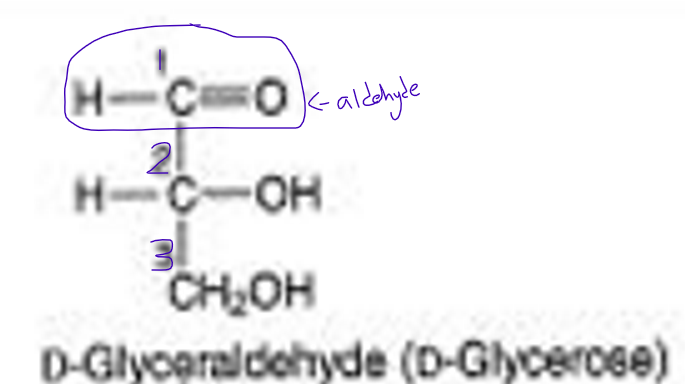
glyceraldehyde
aldose or ketose?
# of carbons?
chiral carbons?
aldose
3C
one (C2)
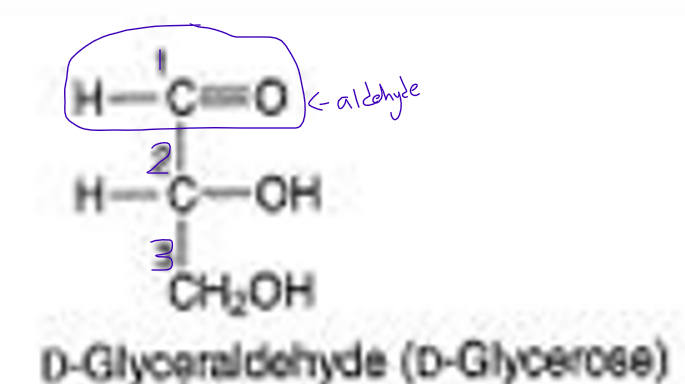
how do you number the linear monosaccharide
start with the C of the carboxylic group and work your way down
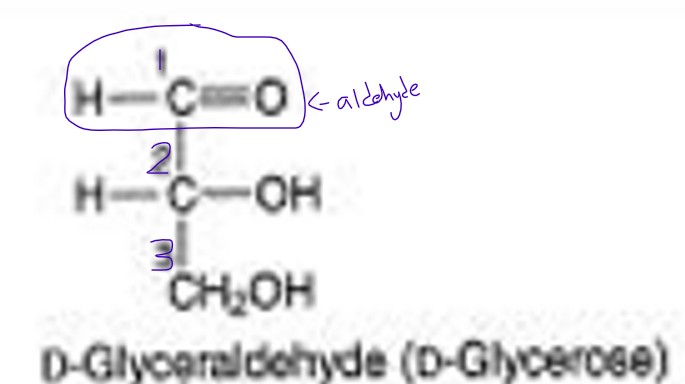
what is chirality
Ability turn light when is solution
a chiral molecule is identified by
has 4 different functional groups surrounding a carbon
the carbon having 4 different functional groups attached is known as
chiral carbon
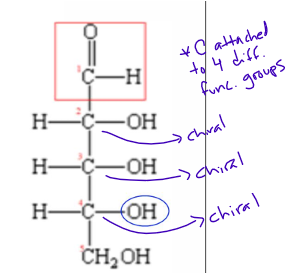
D vs L: where do you look?
the most distal chiral carbon from the carboxyl group (C1)
When is it D? when is it L?
when hydroxyl (OH) group is on the right = D
when hydroxyl (OH) group is on the right = L
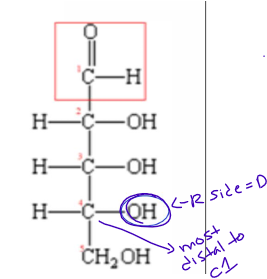
D stands for?
dextrorotatory
D formation means what?
means that when molecule is placed in solution and light is shined down, it will reflect the light to the right
L stands for
levorotatory
L formation means what?
reflect light towards the left
which configuration will we look at and why?
D, because they are the only carbs that are biologically relevant
what comes from/ happens to glyceraldehyde?
We can reduce it and ultimately get a bunch of different monosaccharides
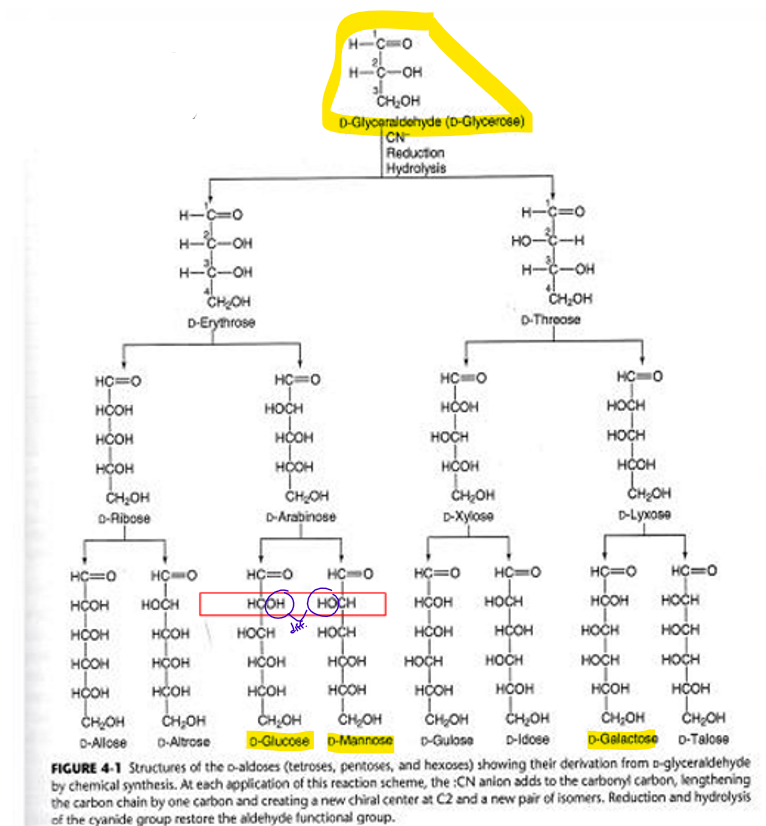
what are the 3 monosaccharides we will focus on?
D-glucose, D-mannose, D-galactose
D-glucose, D-mannose, and D-galactose
have how many carbons
how many chiral carbons
6 Cs
4 chiral carbons (when in Fischer form)
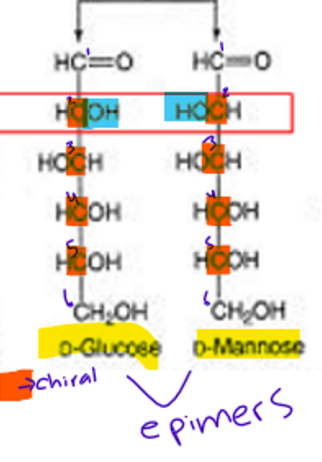
D-glucose and D-mannose are
epimers
what is an epimer
2 molecules that differ in one chiral carbon
what is stereochemistry
when a chiral molecule has optical ability or the ability to rotate the plane of linear polarized light as it travels through a solution
aka: means a special molecule can twist a beam of light as the light passes through a liquid
what will always exhibit stereochemistry
All chiral carbons (or chiral molecules)
what is an enantiomer?
are stereoisomers that vary in configuration at all chiral centers (are mirror images)

what happens when we add glucose to a solution (what will it want)
to react
how does glucose react in a solution (how does it react)
The aldehyde group of aldehydo-D-glucose (aka D-glucose) will react with its hydroxyl group attached to the chiral carbons

what are the 4 molecules D-glucose will make when in a solution?
B-D-glucopyranose
a-D-glucopyranose
B-D-glucofuranose
a-D-glucofuranose
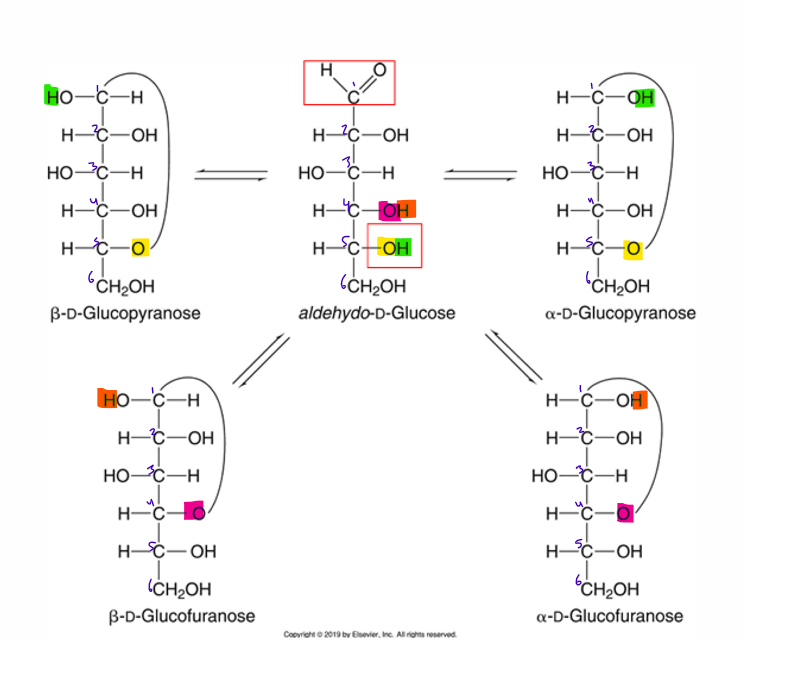
In solution, the linear monosaccharides tend to
cyclize
what are the types of configurations?
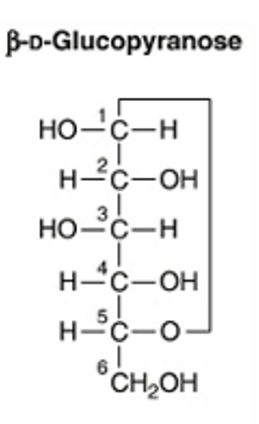
Fischer, Haworth, and chair formula
what is the Fischer formula
Linear structure configuration
what is the Haworth formula
Cyclized structure
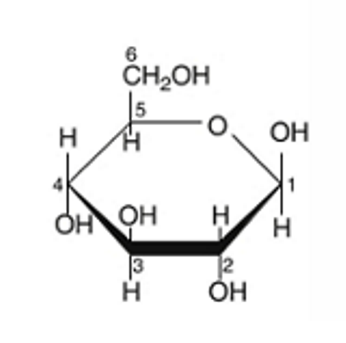
what is the chair formula
3D structure (most stable)
how does the process of cyclization occur? (with glucose as example)
Hydroxyl group on carbon 5 can react with the carboxyl group to cyclize
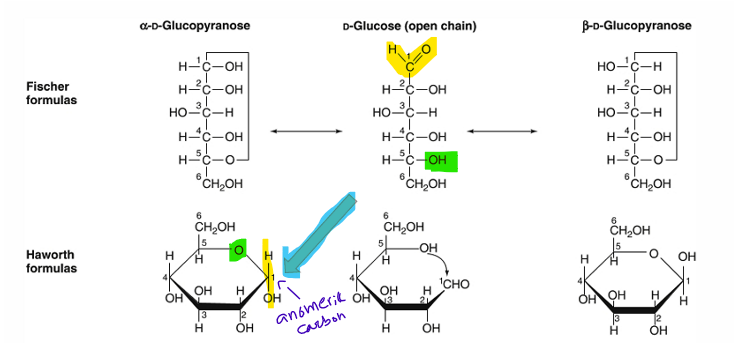
what happens to the carboxyl group carbon
it is now chiral
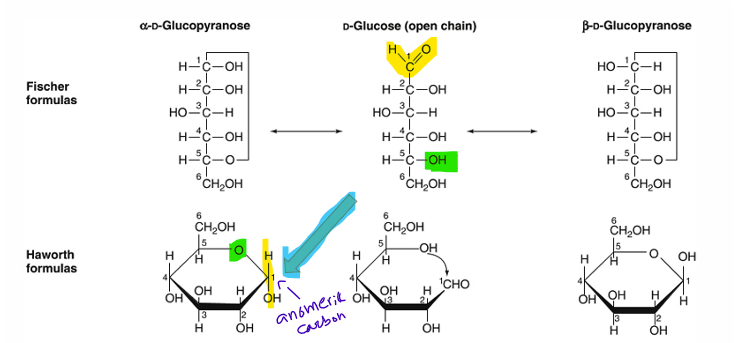
C1 is now called what?
the anomeric carbon
aka, the carboxyl group that reacted to cyclize, is called the anomeric carbon now
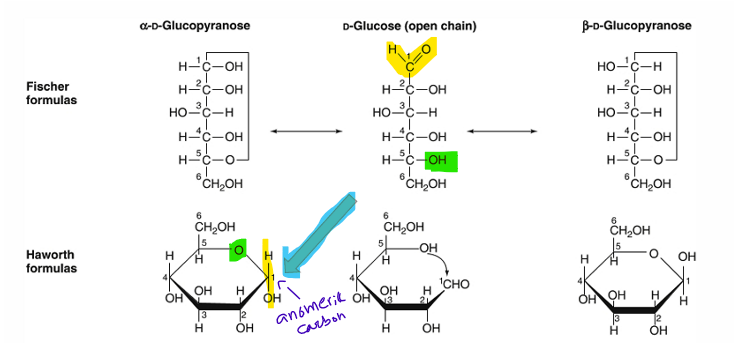
in Haworth formula, how do you know if sugar is D or L?
D is when CH2OH group attached to C5 is sticking out of the ring
L is when the CH2OH group attached to C5 is projecting inside of the ring
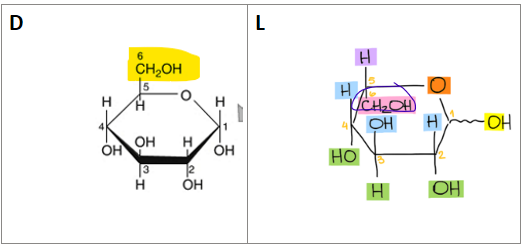
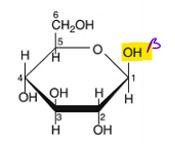
what is alpha configuration
when the hydroxyl group of a cyclized sugar’s anomeric carbon is projected down
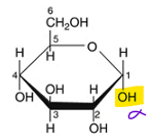
what is beta configuration
when the hydroxyl group of a cyclized sugar’s anomeric carbon is projected up
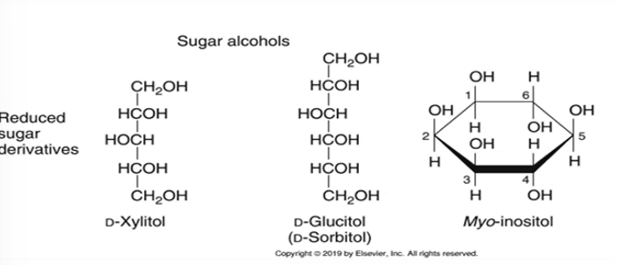
what are reduced sugar derivatives?
sugar alcohols (reduced sugars)
what are 3 examples of reduced sugars?
D-xylitol, D-glucitol (D-sorbitol), Myo-inositol
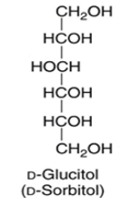
D-sorbitol comes from
reducing glucose (6C)
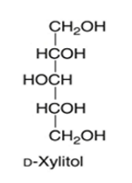
D-xylitol comes from:
reducing fructose (5C)
what is a glycosidic linkage
a link that forms between anomeric carbon of one sugar and another molecule, releasing water in the process (condensation)
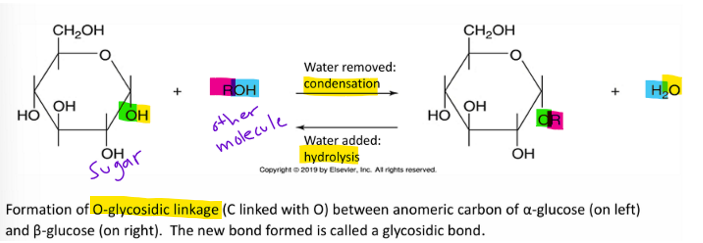
what are the types of glycosidic bonds (4)
O-glycosidic bond (C-O)
N-glycosidic bonds (C-N)
S-glycosidic bonds (C-S)
C-glycosidic bonds (C-C)
what is condensation
linking 2 molecules by removing water
what is hydrolysis
bond occurs when we remove water and get the starting 2 molecules
Glycosidic bonds can be hydrolyzed by
enzymes
enzymes and glycosidic bonds (how they work)
they are highly specific for the type of linkage (will care if it is alpha or beta!!)
The specificity to the beta or alpha will determine if
the carb is available or non-available (if we can break it down or not)
unavailable would mean
it is a fiber that the body cannot break down in the SI
how does uridine diphosphate (UDP) form glycosidic bond and what type of bond is it?
anomeric carbon of D-ribose forms linkage with N of uracil
-forms N-glycosidic bond

what does AGEs stand for
advanced glycation end points
what are AGEs? (bond that forms that starts process)
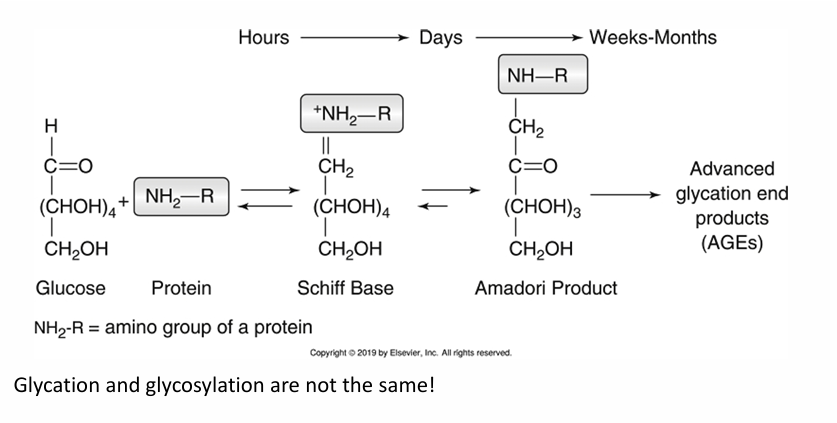
very reactive and harmful molecules that form from glucose and protein forming a N-glycosidic bond nonenzymatically
what is glycation
nonenzymatic glycosidic bond formation
what is glycosylation?
enzymatic glycosidic bond formation
process of AGEs forming
glucose + protein react —> form schiff base —> form unstable Amadori product —> after weeks to months for AGEs
why are AGEs bad (what do they do)
contribute to inflammation
Stiffen the artery walls, lungs, joints
contribute to vascular and eye complications in adults with DM
AGEs not only occur in the body, where else?
in food with the Maillard reaction (reaction of heating up glucose with protein that results in the browning color seen in bread)
what is Hemoglobin A1c (HbA1c)
a nonenzymatic glycation reaction of glucose to valine in one of the b-chains of hemoglobin
hemoglobin structure
4 chains
2 beta and 2 alpha
each chain contains heme group that attaches to iron (holds the oxygen)

how does HbA1c form?
Elevated glucose --> nonenzymatically attaches to Hgb via valine in beta chain via glycation
HbA1c criteria
normal
prediabetes
diabetes
Normal: <5.7%
Pre-diabetes: 5.8-6.4%
Diabetes: ≥ 6.5%

maltose (characteristics- 5)
made up of
type of bond
component of
reducing sugar?
broken down by what enzyme?
Glucose + glucose
Alpha 1,4 glycosidic bond
Is a component of starch
Is a reducing sugar (has free hydroxyl group on the end)
Broken down by maltase
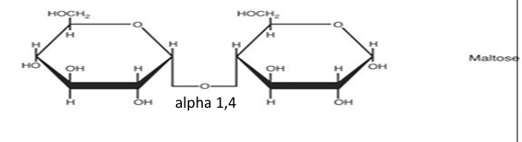
maltose is made up of
glucose + glucose
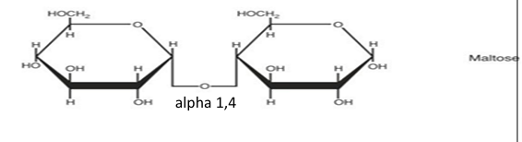
maltose type of bond
a-1,4-glycosidic bond

maltose is a component of
starch
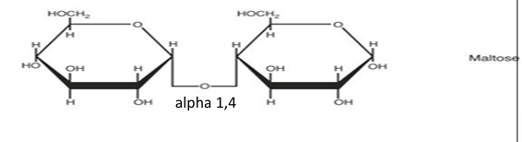
maltose is a ______ sugar
reducing sugar

what is a reducing sugar
has a free hydroxyl group at the anomeric carbon
maltose is broken down by what enzyme
maltase
sucrose characteristics (5)
made up of
type of bond
commonly found in
reducing sugar?
broken down by what enzyme?
Glucose + fructose
Alpha 1,4 glycosidic bond
Found in table sugar (sugar in food = sucrose)
Nonreducing sugar
Broken down by sucrase
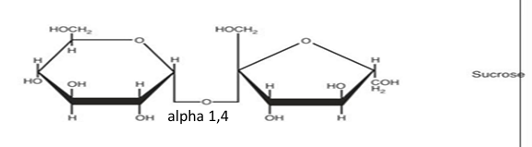
sucrose is made up of
glucose + fructose
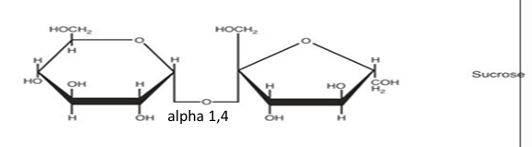
sucrose has what type of bond
a-1,4-glycosidic bond
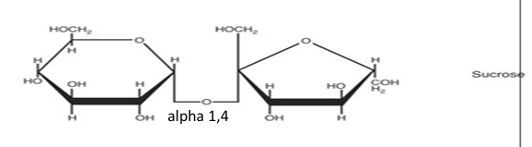
sucrose is found in
table sugar

sucrose is a __________ sugar
nonreducing
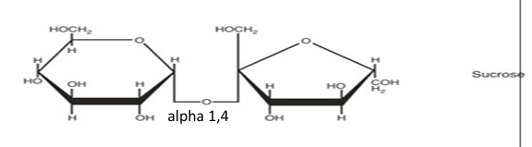
sucrose is broken down by
sucrase

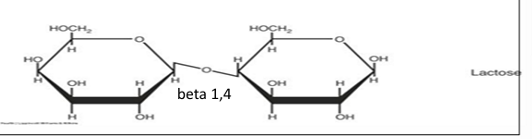
lactose characteristics (5)
made up of
type of bond
reducing sugar?
sweetness
broken down by what enzyme?
Glucose + galactose
Beta 1,4 glycosidic bond
Is a reducing sugar (has free hydroxyl group on the end)
Not as sweet as sucrose
Broken down in SI by lactase
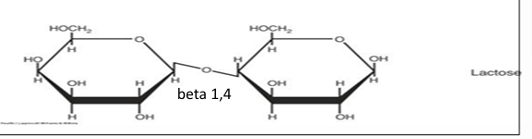
lactose is made up of
glucose and galactose
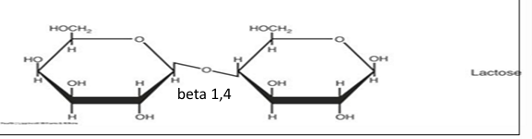
lactose type of linkage
b-1,4-glycosidic bond

lactose is a _________ sugar
reducing

lactose sweetness level compared to sucrose
less sweet