control of heart rate
 Call Kai
 Learn
 Practice Test
 Spaced Repetition
 Match
 Flashcards
 Knowt Play
1/18

There's no tags or description
Looks like no tags are added yet.
19 Terms
what is cardiac muscle
myogenic
what does myogenic mean
can contract and relax without recieving electrical impulses from nerves
what is the sinoatrial node (SAN)
group of cells in wall of right atrium
pacemake

what is the atrioventricular node (AVN)
conductive tissue that links atria and ventricles

what is the bundle of His
conductive fibres that carry waves of depolarisation down septum to base of ventricles
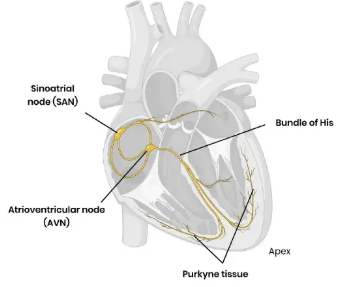
what is purkyne tissue
conductive fibres that carry waves of depolarisation from the base of the ventricles into the ventricle walls

describe the myogenic stimulation of the heart and transmission of a subsequent wave of electrical activity
SAN acts as pacemake sending regular waves of electrical activity across atria
causes atria to contract
non-conducting tissue between atria/ventricles prevents impulse passing directly to ventricles preventing immediate contraction of ventricles
waves of electrical activity reach AVN which delays impulse
allows atria to fully contract and empty before ventricles contract
Electrical activity passes from the bundle of His to the Purkyne tissue
causes ventricles to contract simultaenously from base up
where are chemoreceptors located
aorta and carotid arteries
where are barorecptors located
aorta and carotid arteries
what do baroreceptors detect
changes in blood pressure
what do chemoreceptors detect
changes in blood carbon dioxide concentrations (blood pH)
what structure controls heart rate
the cardioregulatory centre in the medulla
what is the cardioregulatory centre connected to
the SAN by nerves of the autonomic system
what does the autonomic nervous system control
unconscious activities, e.g. heart rate, digestion
subdivisions of the autonomic nervous system
sympathetic- fight or flight (increases rate)
parasympathetic- rest and digest (decreases rate)
if heart rate decreases, what receptors detected what
baroreceptors- rise in blood pressure
chemoreceptors- fall in blood CO2 concentration
changes in nervous system to make heart rate decrease
Impulses sent along sensory neurones to the medulla
Impulses sent along parasympathetic neurones to the SAN
Acetylcholine released, which binds to receptors on SAN
SAN decreases frequency of heartbeat initiation
if heart rate increases what receptors detected what
baroreceptors- low blood pressue
chemoreceptors- high blood CO2 concentration
changes in nervous system to increase heart rate
Impulses sent along sensory neurones to the medulla
Impulses sent along sympathetic neurones to the SAN
Noradrenaline released, which binds to receptors on SAN
SAN increases the frequency of heartbeat initiation