Lactation and Newborn Nutrition
 Call Kai
 Learn
 Practice Test
 Spaced Repetition
 Match
 Flashcards
 Knowt Play
1/33

There's no tags or description
Looks like no tags are added yet.
34 Terms
Recommendations on Breastfeeding from American Academy of Pediatrics (AAP)
Exclusive breastfeeding as the preferred method of feeding for all infants for the first 6 months and continued breastfeeding during the introduction of solids until the infant is 12 months old or older
Recommendations on Vitamins from AAP
Vitamin D ( 400 IU) until consuming >1 liter/day of vitamin D fortified formula or milk
Maternal Benefits from Breastfeeding
Decreased postpartum bleeding
Involution of the uterus
Possible decreased risk of postpartum depression
Reduced risk for: Ovarian cancer and premenopausal breast cancer, Type 2 diabetes, and Hypertension
Promotes bonding by skin-to-skin contact
Cost
Infant Benefits from Breastfeeding
Easily digestible
Antibodies protect against infection
Fatty acids (Omega-3 and Omega-6) are a key component to brain development
80% of cells in breast milk are macrophages (cells that kill bacteria)
Pre-term milk is specially designed for premature infants
Decreased risk for Respiratory tract infections, Gastrointestinal infections, Otitis media and SIDS
Long-term Breastfeeding Benefits for Infant
Decreased risk of adult onset:
Types I and II diabetes
Lymphoma, leukemia, and Hodgkins disease
Obesity
Hypercholesterolemia
Asthma
Allergies
Breastfeeding Benefits for Society
Reduced health care costs
Less parental absence from work because of ill infant
Less environmental burden
What is the breast composed of?
Alveoli15 to 20 segments (lobes), Myoepithelial, and Ductules
Alveoli15 to 20 segments (lobes)
Milk-producing cells within lobes
Myoepithelial
Contract to send milk to ductules
Ductules
Enlarge into lactiferous ducts and sinuses
Lactogenesis Stage 1
Occurs in mid-pregnancy when estrogen & progesterone are high—causing mammary gland to develop and function
May see small leaking of milk components known as colostrum
Lactogenesis Stage 2
Progesterone levels decrease after delivery of placenta
Progesterone decreases and prolactin increases to level where milk is produced by day 4 postpartum
Early Feeding Cues
Mouth opening, rooting, and licking lips
Mid feeding cues
Stretching, hand to mouth, increasing movement
Late feeding Cues
lots of movement and crying (may turn red)
Special Considerations
Sleepy/Fussy baby
Preterm birth
Cranial/facial anomalies
Inverted/flat nipples
Previous breast surgeries
Decreased lactogenesis
Lack of confidence and support
Maternal Indications of Effective Breastfeeding
Milk is “in” by day 3 or 4
Increased thirst
Breasts soften while feeding
Uterine contractions while feeding
Infant Indications of Effective Breastfeeding
Bursts of 15-20 sucks/swallows
Audible swallowing
6 to 8 wet diapers and 3 stools every 24 hours after day 4
Meconium Poop
blackish/green poop that appears on day 1 and 2

Transitional Poop
a normal, temporary type of stool occurs on day 3 & 4

Breast-fed Poop
loose, watery yellow/gold
More frequent than formula-fed (2-5/day)
No smell

Formula-fed Poop
more solid, light yellow to brown darker (1-2/day)
Strong odor

Keys to Breastfeeding Success
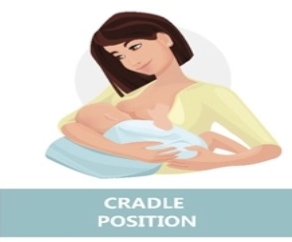
Proper positioning: Football, Cradle, Across the lap, Side-lying
Proper latch-on
Adequate support
Education
Community Resources
Lactation Consultants
LeLeche League
Physician/Midwife Offices
WIC ( Women, Infant & Children)
Support Groups
Nursing Diagnosis
Effective / Ineffective breastfeeding
Insufficient breast milk
Breastfeeding, readiness for enhanced
Ineffective infant feeding pattern
Risk for deficient fluid volume
Risk for impaired attachment / parenting
Readiness for enhanced parenting
Risk for neonatal jaundice
Benefits of Formula Feeding
Many Choices and Easy Preparation
Challenges of Formula Feeding
Costly, Lacks Antibodies and Unintended Contamination
Formula Feeding tips
First month of life, baby is usually satisfied with 2-3 ounces per feeding
Do not feed baby more than 32 ounces in a 24 hour period
Parents need to be educated on what type of formula to use, as well as how to prepare and store formula
Formula is available in 3 forms
Powdered Formula, Formula concentrate, and Ready to feed formula
Football Position

Cradle Position
Across the lap Position

Side-lying Position

Burping Positions
