food micro 1
 Call Kai
 Learn
Learn Practice Test
 Spaced Repetition
 Match
Match Flashcards
 Knowt Play
1/127

There's no tags or description
Looks like no tags are added yet.
Name | Mastery | Learn | Test | Matching | Spaced | Call with Kai | Chat |
|---|
No analytics yet
Send a link to your students to track their progress
128 Terms
bacteria, archaea, eukarya
what are the 3 domains?
morphology, gram stain (bacteria), biochemical reactions, growth pattern & reproduction (fungi), PCR-based, sequencing-based, protein profiles
what are some classification/identification techniques?
LAB, sporeformers, enteric pathogens, coliforms
what are some different, important bacterial groups?
fission formation
what is the formation of B called?

pseudohyphae
what is C called?
septate hyphae
what is the hyphae of E called?
prokaryotic ribosome
what type of ribosome is this?

eukaryotic ribosome
what type of ribosome is this?

the types of disease, nucleic acid content, morphological structure
classification for virus is usually based on: (3)
human viruses
viruses attack human cells, some cause enteric diseases
bacteriophages
viruses attack bacteria, affect food fermentation, may be used to control bacterial pathogens
beneficial microbes
type of microbe classification: food producing microbes (fermentation --> LAB), probiotics
spoilage microbes
type of microbe classification: organoleptic changes make it unacceptable to customer
pathogenic microbes
type of microbe classification: causes infection or intoxication
microbiological criteria
___ is developed to assess: safety of food, shelf-life, suitability, and adherence to legal requirements (such as GMP)
IFT, FDA, USDA, NSF, etc
microbiological criteria is established by:
culturing (growing in broth/agar), and microscopy (observe/count after staining)
what are the 2 most common detection techniques?
no growth
on culture-dependent methods, there is no accurate results if there is ___
standard plate count (SPC)
method used to determine number of cells in a food product via CFU of microbes per g of food, should use a specific medium --> often TSA
doesn't, individual
SPC ___ count total number of microbes, as it does not allow for ___ cell growth
can determine colony morphology, can be modified to test wide variety of microbes
advantages of SPC
time-consuming due to incubation, can't be used to identify microbes at species level
disadvantages of SPC
to homogenize and release microbes from the food
what is the role of a stomacher or a pulsifier?
count cells
dilutions make it easier to ___ on plates
high microbial load
what is the term for when a sample is too concentrated?
1:9
what is the ratio for dilutions
food
the agar serves as ___ for the microbes, so be sure to pick the suitable plate for the test
dilution(plate)
___ refers to how much of the sample actually ends up on the plate (dilution(tube) x amount sampled)
membrane filtration
if a sample is too diluted, ___ can be used to retain bacteria and create a higher concentration
most probable numbers (MPN)
this method relies on statistical probabilities to estimate the initial number, method of choice for determining the density of indicator organisms
ocular density
what does OD stand for?
less light is detected, higher OD
if there is more cells in a sample that you are viewing with a spectrophotometer, ___ & there is a ___
MPN
what does TEMPO calculate?
nutrients, temperature, oxygen, etc
what does a bacterium require for growth?
complex
___ mediums have many different ingredients that make them up, and can often be selective as well
Eosin Y, Methylene Blue
in EMB Agar, what are the selective agents?
Eosin Y, Methylene Blue, Lactose
in EMB Agar, what are the differential agents?
external
when subjected to an ___ stress (heating/freezing/low pH/etc), microorganisms can be injured
non-selective
injured cells are typically unable to form colonies on ___ media that healthy cells can tolerate
selective
XLD is a ___ medium
non-culturable bacteria
___ do not grow easily in the lab on growth media
viable but nonculturable (VBNC)
cells are viable, but cannot be cultured by typical microbiological methods, they can't form colonies in conventional culture media
Direct Microscopic Count (DMC)
observe microscopically, usually after staining, can be structural (spores, capsule) or differential (gram reaction, viability)
fast, able to observe cellular morphology, some methods are simple and easy
advantages of DMC
relatively high cell density is required to see enough cells to count, some methods require expensive instrument and chemical
disadvantages of DMC
green, red
in BacLight, live bacteria with intact cell membranes fluoresce ___ and dead bacteria with compromised membranes fluoresce ___
polymerase chain reaction (PCR)
DNA extracts from the sample, primer's used to bracket region of interest, dNTP & polymerase used to make copies, dsDNA is separated at 95C and primers anneal to template at 55C
endpoint PCR
PCR test where visualize amplicons in agarose gel after staining DNA
quantitative PCR
PCR test where visualize amplification in real-time due to incorporation of fluorescense molecules; requires a standard curve
digital PCR
PCR test where partition DNA template into thousands of wells first, then monitor fluorescense signal in each well; does not require a standard curve, good for detecting rare target, absolute quantification
sensitivity
___ = inclusivity = true positive rate
specificity
___ = exclusivity = true negative rate
detection limit
___ = analytical sensitivity; the smallest amount of the target (cell, toxin) that can be accurately measured by the method
food contact surfaces
surface monitoring determines if microorganisms are present on ___
low
surface monitoring may be useful on products that are expected to have a ___ microbial load
RODAC, Swab rinse
common methods of surface monitoring
ATP measurement
light output is recorded using a luminometer and a readout of the number of photons is obtained
product sampling
type of sampling involving products that are ready to go to market, as well as in-process and raw ingredient samples
environmental sampling/hygeine monitoring
type of sampling involving environment surrounding the food; facility or transport vehicle; i.e. RODAC & Swab rinse
emergency response/emerging issues sampling
type of sampling in response to outbreaks of foodborne illness to help identify the source of the disease-causing pathogen
product sampling plan
includes both sampling procedure & decision; 2-class & 3-class sampling plan; procedure varies, but mostly based on SPC; designed for quality/safety as accepted
product lot
the quantity of product which is produced, handled, and stored within a limited time period under uniform conditions
2-class sampling plan
assigns lot to one of two classes --> the decision is accept or reject; criterion based on n (# sample units tested), m (threshold conc. for unacceptable), & c (max allowable # of units yielding unacceptable results)
3-class sampling plan
criterion based on n, m, c, and M (max # of bacteria/unit; the lot is not acceptable if any sample is above M)
accepted, marginally accepted, rejected
decisions of product sampling can be: (3)
marginally accepted
some counts are greater than m but not greater than M, provided that the # of failed samples is less than c
oxidoreductase
enzyme classification: important in redox reactions; transfer electrons

transferase
enzyme classification: transfer a functional group; ex: methyl or phosphate group

hydrolase
enzyme classification: hydrolysis of various bonds; ex: urease

lyases
enzyme classification: cleave bonds by means other than hydrolysis and oxidation
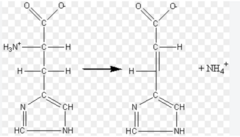
isomerase
enzyme classification: different arrangment of atoms within a single molecule
ligase
enzyme classification: join two molecules with covalent bonds; ex: DNA ___

translocase
enzyme classification: movement of ions or molecules across membranes; ex: ADP/ATP ___

400x
what is the total magnification when a 40x objective lens is used to view the sample? (by default, the eyepiece is 10x)
the agents are used to neutralize common disinfectants, the cell count will be underestimated
what is the function of the neutralizing agents? what happens to the surface monitoring results if the medium does not contain neutralizing agents?
no
if a student used a RODAC plate to determine the cleanliness of a food-contact surface, and the CFU/in^2 was 15 CFU/in^2, would you consider it a clean surface?
How do you find the total magnification of a microscope?
magnification of ocular lens x magnification of objective
reasons to incubate plates upside down (1)
avoid condensed water from falling onto the cultures
purposes of doing streak plate using quadrant method (3)
- To determine the colony morphology of the microbe
- To obtain isolated colonies
- To obtain pure cultures
what color are gram + bacteria after gram stain (and why)
- purple
- thick layers of peptidoglycan in cell wall retain primary stain
what color are gram - bacteria after gram stain (and why)
- pink
- thinner peptidoglycan layer => ethanol washes out primary stain => counter stain dyes them pink
can gram stain be used on fungi?
- no
- different cell wall structure
- fungal cell walls are made up of chitin and polysaccharides
purpose of iodine in gram stain
forms a complex with the dye, trapping it in gram+ but not gram- bacteria when the decolorizer (ethanol) is applied
why do you need young cultures for gram stain?
old cells can have damaged cell walls, leading to inaccurate results
oxidase test
- tests for presence of the enzyme cytochrome c oxidase
- visible by change of color
- enzyme substrate on dryslide is oxidized by cytochrome c oxidase resulting in color change
- change in color = enzyme is present (+)
catalase test
- tests for presence of the enzyme catalase
- visible by production of bubbles
- catalase breaks down hydrogen peroxide into oxygen and water
- if you see bubbles = catalase is present bc that is the oxygen from breaking down hydrogen peroxide
DMC
direct microscopic count
what method is a hemocytometer used for?
DMC
MF
microscopic factor
You calibrate the ocular micrometer at two different total magnifications, 100x and 1000x. The calibrated distance between the lines of the ocular micrometer is shorter at the lower magnification.
false (but I have literally no clue why)
We learned two plating techniques in the lab -- pour plate and spread plate. Depending on the plating technique, the dilution factor will be different even with the same volume of dilution plated.
False, it should be the same if you plate the same volume of the same dilution on each plate
relationship between catalase and aerobic capacity
If the microorganism is an aerobe, having catalase would be helpful because hydrogen peroxide is dangerous, however it doesn't exactly mean that it is for sure an aerobe
relationship between oxidase test and aerobic capacity
- there are other types of oxidase, so a negative test doesn't imply that the microbe isn't an aerobe or doesn't use ETC
- however, cytochrome c oxidase is used in ETC to reduce oxygen so positive test would imply aerobe
Emperor Leo VI of Byzantium issued an edict that forbade eating blood sausage because he found out the causative agent of botulism.
false, they didn't know the reason back then
Who was the father of canning?
Nicholas Appert
The yeast used in making alcoholic beverages is in the domain:
Eukarya, All yeast are in domain eukarya because they are fungi
Saccharolytic bacteria
Bacteria that are able to hydrolyze complex carbohydrates
All bacteria are either Gram positive or Gram negative
false, some are neither
What are the classification techniques for fungi? (3 and maybe more but these were the ones in the question)
- morphology (what they look like)
- reproduction (asexual vs sexual)
- DNA sequencing
NOT gram stain
coccus
round shape