Microbio lecture 1-6
 Call Kai
 Learn
Learn Practice Test
 Spaced Repetition
 Match
Match Flashcards
 Knowt Play
1/174

There's no tags or description
Looks like no tags are added yet.
Name | Mastery | Learn | Test | Matching | Spaced | Call with Kai | Chat |
|---|
No analytics yet
Send a link to your students to track their progress
175 Terms

Hyphal fragmentation

Budding yeast cells

Chlamydoconidia

Macroconidia

Microconidia

Phialoconidia

Phialoconidia

Sporangiospores

A. Conidia
B. Phialide
C. Vesicle
How is Arthroconidia formed?
Hyphal fragmentation
How is Blastoconidia formed?
Budding
How is Chlamydoconidia formed?
Thick-walled differentiated cells
How is Macroconidia formed?
Is it multicellular or unicellular
Large conidia, multicellular
How is Microconidia formed?
Is it multicellular or unicellular
Small conidia, unicellular
How is Phialoconidia formed?
Produced by Phialides
How are Sporangiospores formed?
Produced inside a sporangium.
How do prokaryotic cells replicate?
Binary fission
Do antibiotics work on viruses?
Are viruses Motile?
No
Do viruses have nucleus?
Do viruses have metabolism of their own?
No
Mould, Bacteria, Virus, Yeast
Sequence them from the largest to smallest
Mould, Yeast, Bacteria, Virus
Describe resident microbiota
relatively stable commnities associated with a body site
Describe transient microbiota
microorganisms temporarily present
Primary pathogens, Pathobionts, Commensal microorganisms, Opportunistic pathogens
Sequence from the least to the most severe
Commensal microorganisms, pathobionts, opportunistic pathogens, primary pathogens
Describe eubiosis
a balanced and functional microbial community associated with a healthy host
Describe dysbiosis
a disruption or alteration of the composition and/or the function of the microbial community

Disk diffusion
measurement of inhibition zones

Broth dilution
determination of minimum inhibitory concentration (MIC)
Sexual and Asexual reproduction of Zygomycota
Sexual: Zygospores
Asexual: Sporangiospores
Sexual and Asexual reproduction of Basidiomycota
Sexual: Basidiospores
Asexual: rare
Sexual and Asexual reproduction of Ascomycota
Sexual: Ascospores
Asexual: Conidia

Moulds

Yeasts
What is fungal cell wall made of
Chitin, Glucans, Mannoproteins
What does the fungal cell membrane contain?
Ergosterol
Moulds
multi/unicellular
reproduction by ____
composed of ____ forming ___
muticellular
reproduction by spores
composed of hyphae forming a mycelium
Yeasts
multi/unicellular
reproduction by__
cell wall contains___
unicellular
reproduce by budding/fission
cell wall contains glucans, mannans and chitin

A. Aerial hyphae
B. Mycelium
Aspergillus, Penicillium,Saccharomyces what type of fungi phylum
Ascopores
Cryptococcus, mushrooms what type of fungi phylum
Basiodiospores
Rhizopus, Mucor what type of fungi phylum
Zygospores
Yeast are multi/unicellular
Unicellular fungi
Superficial mycoses
Epidermis, keratinized structures, mucous membranes lesions
Subcutaneous mycoses
subcutaneuous tissue lesions
systemis mycoses
respiratory and digestive tracts and other organ systems lesions
group of diseases resulting from the ingestion of fungal toxins which have been in food. name?
mycotoxicoses
secondary metabolities produced by fungi that are capable of causing disease and death in humans and other animals
mycotoxins

staining method
Lactophenol blue

Gram staining

Indian ink
Fungal spores and antigens must trigger hypersensitivity reactions with tissue invasion. T/F
F
Fungal diseases, clincal signs result from
A) exaggerated immune response
B) fungal growth in tissues
A
Repeated exposure of fungal diseases will lead to chronic respiratory disease T/F
T
Samples for specimen diagnosis should be collected from the active margin of fungal lesions. T/F
T

Biosafety cabin —> risk of human infection from spore aerosols
A dermatophyte test medium used for the isolation of dermatophytes. T/F
A dermatophyte test medium contains antibiotics that inhibit bacterial contaminants and many saprophytic fungi. T/F
A dermatophyte growth is typically associated with a colour change of the medium from red to yellow. T/F
A dermatophyte growth is associated with a colour change due to acidic metabolic products. T/F
Positive cultures cannot be confirmed by microscopic examination and colony morphology. T/F
T
T
F
F
F
Treatment for fungi involves targeting Ergosterol, from the plasma membrane of the fungi. T/F
T
Dermatophytes are a member of the phylum of
A. Basidiomycota
B. Ascomycota
C. Zygomycota
B
Dermatophytes are anaerobic. T/F
Dermatophytes are septate fungi. T/F
F
F
Lesion development of dermatophytes is influenced by virulence of the dermatophte, immunological competence of spores facilitated by the host. T/F
T
For dermatophytes, affinity for keratinized structures, inactive arthrospores (arthroconidia) adhere to keratinized structures and germinate. T/F
T
For dermatophytes, after tissue invasion by arthrospores, hyphae grow centrifugally from the lesion towards normal. T/F
Metabolic products of arthrospores produces local inflammatory response which is met by cell-mediated response. T/F
Both T
Infection and germination of Dermatophytes can be cause by
Minor trauma, bites from arthropods, damp skin surfaces, warmth
Wood’s lamp can be carried with suspicious dermatophyte lesions in cats and dogs, what colour will be found
Apple-green fluorescence
Dermatophytes laboratory recognition, what microscopic appearance will be found, and by what staining.
Macroconidia, lactophenol blue staining

Dermatophytes recognition
Microsporum Canis

Dermatophytes recognition
Microsporum gypseum

Dermatophytes recognition
Microsporum nanum

Dermatophytes recognition
Trichophyton mentagrophytes

Dermatophytes recognition
Trichophyton verrucosum
Isolation on Dermatophytes selective agar
Growth of Dermatohytes result in ____ metabolic products and the medium colour changes to ___
alkaline, red
Isolation of Dermatophyte test medium
Other contaminating fungi might also induce a colour change, other fungal media should be also considered. T/F
T
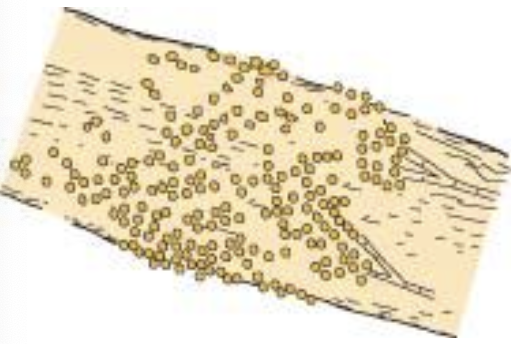
Treatment of scrapings of dermatophytes with ____ and the observation of arthrospores
KOH (potassium hydroxide)

Dermatophytes PAS technique
Histological sections of skin is unable to be stained by PAS technique to demonstrate fungal structures. T/F
F
Aspergillus spp. is a member of which phylum
Ascomycota
Aspergillus spp.
They are ubiquitous, saprophytic moulds with septate hyaline hyphae. T/F
They grow slowly by unpigmented colonies. T/F
They form conidia from phialides. T/F
They are acquired by the contact of spores on the skin. T/F
T
F
T
F

Sporing heads of Aspergillus
A. Conidia
B. Phialide
C. Vesicle
The pathogenesis of Aspergillus involves the spore inhalation, causes respiratory mitosis, affects the terminal parts of the ___ ___ and the production of extracellular enzymes that inhibits the activity of ___ and ____ by macrophages.
Bronchial tree
cilia
phagocytosis
Aspergillus spp. explain competent immune respone
Localized infection:
Granulomatous response:
confined to the respiratory tract
the host successfully controls the fungus via phagocytosis, forming mycotic granulomas to sequester the hyphae
Aspergillus spp. explain compromised immune response
Angioinvasion:
Thrombosis and infarction:
Dissemination:
hyphae undergo rapid elongation and invade blood vessel walls
invasion triggers severe vasculitis, thrombus formation and necrosis
fungus enters the systemic circulation (hematogenous dissemination) and produces multiple secondary fungal foci
Guttural pouch mycosis affects which animal
Horses
How does Guttural pouch mycosis affect the animal?
Fungal hyphae penetration into deeper tissues —→ tissue necrosis, thrombosis

What are the clinical signs of Aspergillus spp.
Epistaxis, dysphagia and laryngeal hemiplegia
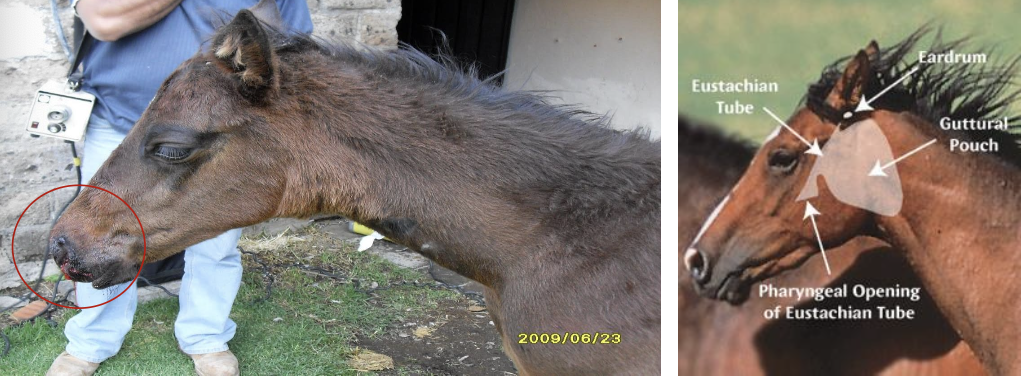
Diagnosis for Guttural pouch mycosis
Clinical signs, endoscopic examination (nasal cavity and guttural pouch), X-ray

Diagnosis for guttural pouch disease what staining method?
Methenamine silver/PAS may reveal hyphal invasion
Whats the diagnosis for Guttural pouch mycosis
Isolation on SDA/PDA and lactophenol blue staining
PCR, serological tests
Yeasts are eukaryotic/prokaryotic, multicellular/unicelullar budding cells
Eukaryotic, unicellular
The asexual reproduction of yeast is by
blastoconidia
Can yeast form hyphae?
Yes
Teleomorph of yeast belong to the phylum ___ or ___
Basidiomycota, Ascomycota

Candida albicans grow at 37 degree celsius
____ produced on cornmeal agar, it is resistant to _____.
Its opportunistic infections are related to ____ in animals and humans.
Chlamydospores
cycloheximide
immunosuppression

Cryptococcus neoformans produced by large ____ , grow at 37 degree celsius producing ____.
Teleomorph is a _____
____ infection derived from environmental sources.
____ or sometimes desseminated disease in cats, dogs, horses and cattle.
Mucopolysaccharide
Mucoid colonies
Basidiomycyte
Opportunistic
Localized granulomas
Hyphae is the common characteristic of yeast/mould
Mould

Malassezia pachydermatis
Bottle-shaped cells
____polar budding
On the ____ of mammals and birds
Associated with canine seborrhoeic dermatitis and otitis externa
Associated with ___ which alter the microclimate of skin
Monopolar budding
Skin
immunosupression
Yeast. Localised mucocutaneous form of Candida (albicans)
Oral cavity, Gastrointestinal tract, Urogenital tract
Yeast virulence factors Candida (albicans)
Surface integrin-like molecules -
Surface structures -
Proteases and phospholipases -
Surface integrin-like molecules - allow adhesion to matrix proteins
Surface structures - bind fibrinogen and complement components
Proteases and phospholipases - aid tissue invasion
Yeast virulence factors Candida (albicans)
Phenotypic switching and biofilm
Hyphal forms
Phospholipase
Phenotypic switching and biofilm - host defence mechanism
Hyphal forms - cells convert to hyphal form to facilitate tissue penetration
Phospholipases - enhance invasiveness
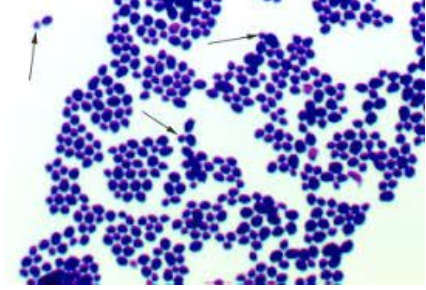
Candida albicans
Blastoconidia

Candida albicans
Blastoconidia

Candida Albicans
Chlamydospores
Cryptococcus (neoformans) pathogenesis
Dropping of pegions, inhalation, yeast cells trapped in nasal cavities and lungs