L03 Research Methods
 Call Kai
 Learn
 Practice Test
 Spaced Repetition
 Match
 Flashcards
 Knowt Play
1/59

There's no tags or description
Looks like no tags are added yet.
Name | Mastery | Learn | Test | Matching | Spaced | Call with Kai | Chat |
|---|
No analytics yet
Send a link to your students to track their progress
60 Terms
To link neurochemicals and behavior, we will need to…
observe neurotransmission
e.g. Measure DA levels, DA neurons and DA receptors
manipulate neurotransmission
e.g. Activate/inhibit DA projections and receptors
measure behavior
e.g. Animal behavioral tests and human behavioral tests
we examine brain-behaviour correlations
Observational vs. Experimental Studies
Observed alterations in neurotransmitter system
Observational studies
Correlational, not causal association
More common in humans
Manipulation of neurotransmitter system
Experimental studies
Allow for causal inferences
More common in animals
Both correlate to Behavior or Behavioral Disorder
observational studies - exploring associations - observe NT + behaviour/disorder

Observing NT systems
Localization and quantification of system elements (e.g. receptors, enzymes, etcetera) - see where pieces are + how much (what receptor on what cell)
Measuring transmitter levels (via metabolites)
Measuring gene-trait associations
Cell activity
Quantification + Localization
various strategies for quant + localiz.
can do for enzyme, transporter, etc.
high mRNA levels correlated w protein → quantification
add more notes from TB*

Quantification (How much)
Baseline gene + protein expression
Expression can change
e.g. social isolation increases mRNA and protein levels (α4/δ GABAA subunits)
Implications of these changes can be explored
Do GABAA subunits contribute to the psychological effects of isolation?
% change in receptor sub units on y-axis - expression changes depending on env.
expression only changes in area where already expressed?

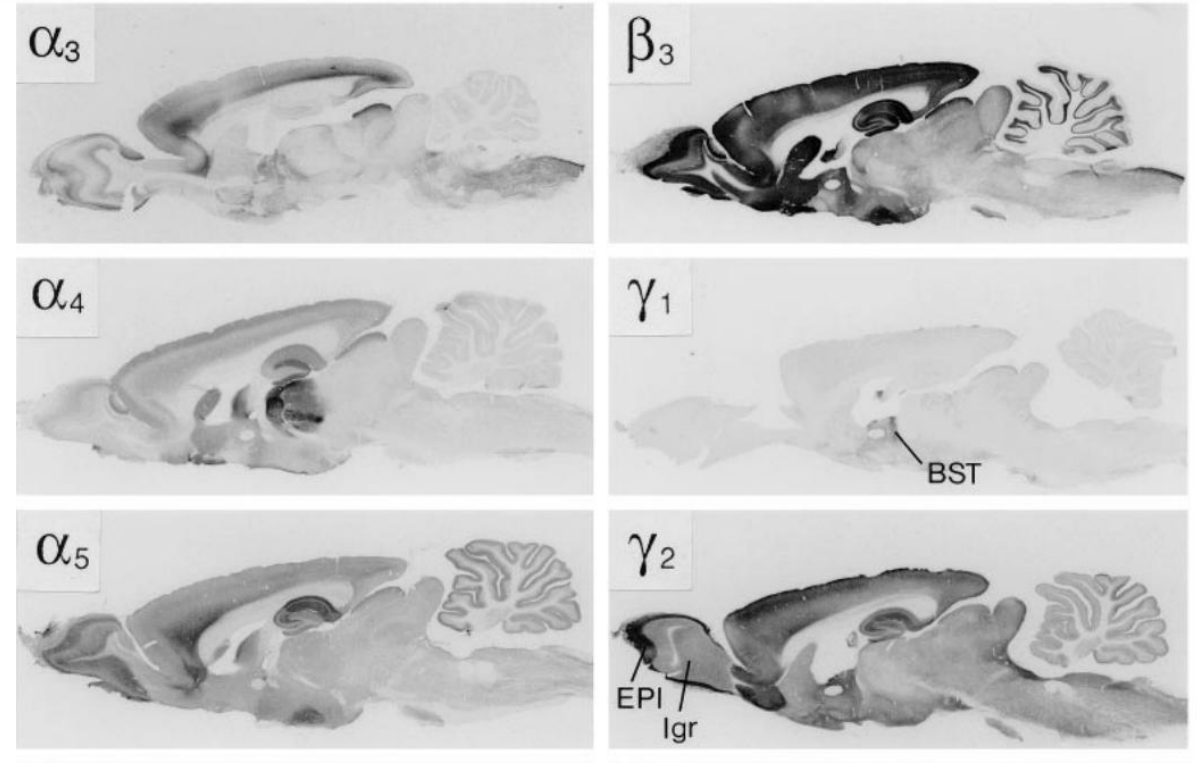
Localization (Where)
take AB for receptor, it attaches to AB, if you produce signal from AB —> you have dark signal that reflects the receptor
binding reflects presence of receptor
treatments do not change localization - they change quantitation (done in post-mortem studies due to invasiveness)
Positron Emission Tomography
We can measure receptor occupancy/availability in the live human brain under different conditions
Reduced GABAA receptor occupancy in Fragile X Syndrome - could impact GABAA receptor sensitivity, or GABA levels, etc.
Reduced DA2 receptor availability in addiction
imaging of NT systems in live organisms
DA theory of SUD - less DA2 receptors for binding, less DA levels overall?

PET for exploring drug mechanisms
PET studies can show a relationship between drugs, receptor binding and psychological function
Subjective intensity of psilocybin experience correlates with 5-HT2A receptor occupancy (see L06)
looking at amount of receptor binding via PET for serotonin receptor w psychedelics (which are similar in structure to serotonin) - occupancy of receptor by drug is related to intensity of experience

Measuring neurotransmitter levels
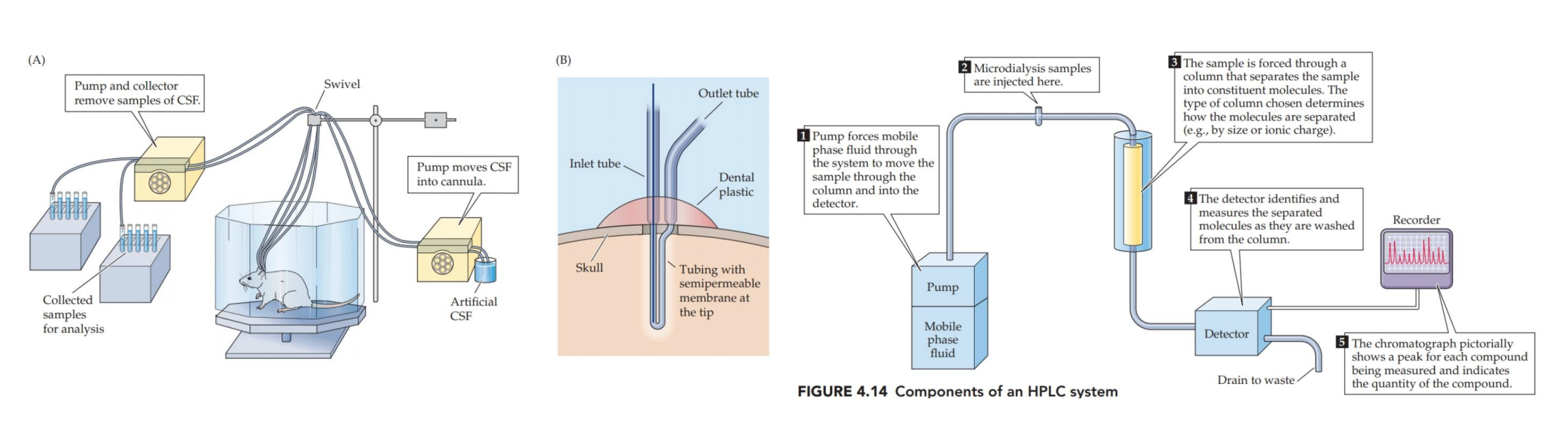
microdialysis
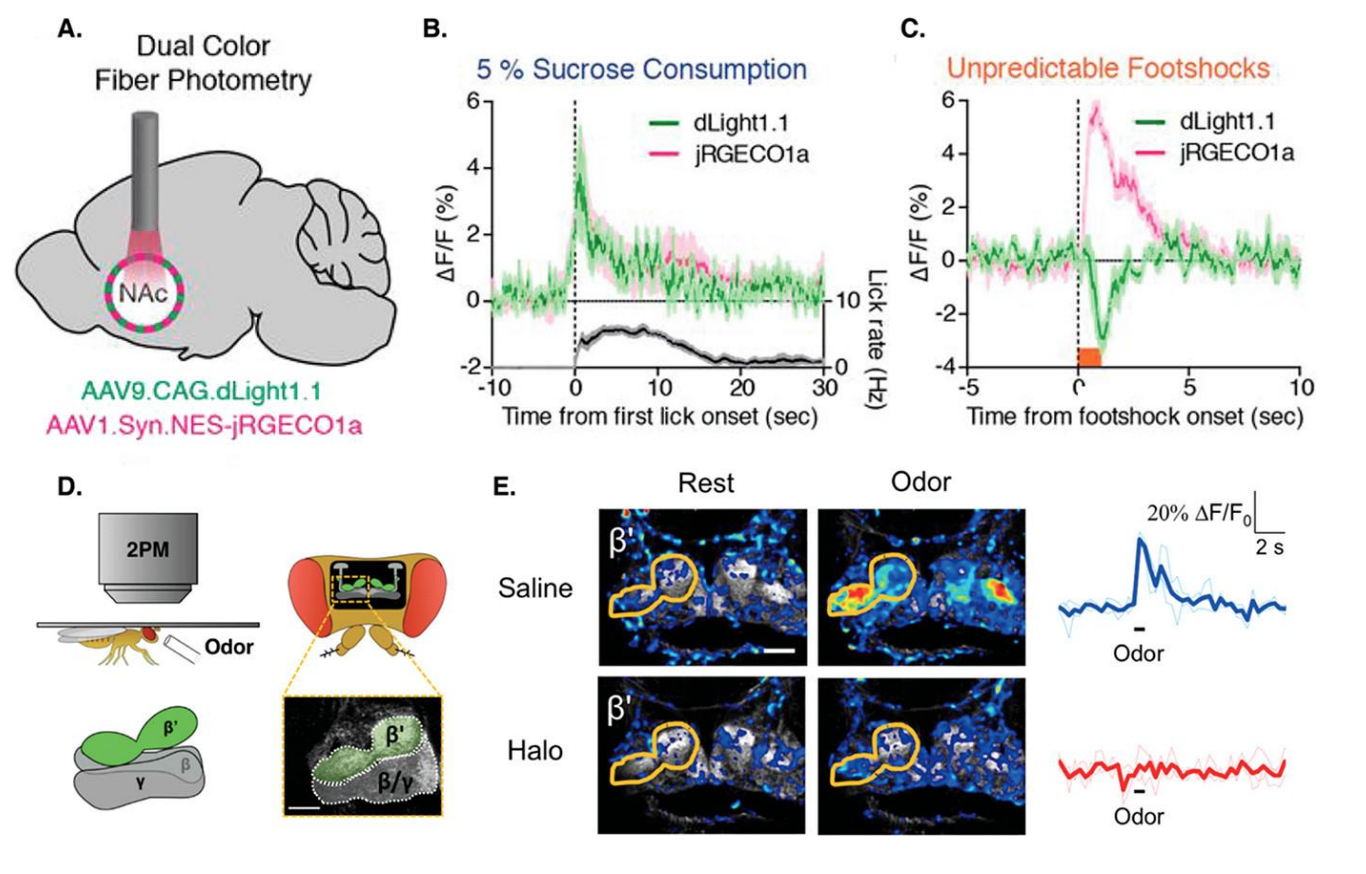
fiber photometry
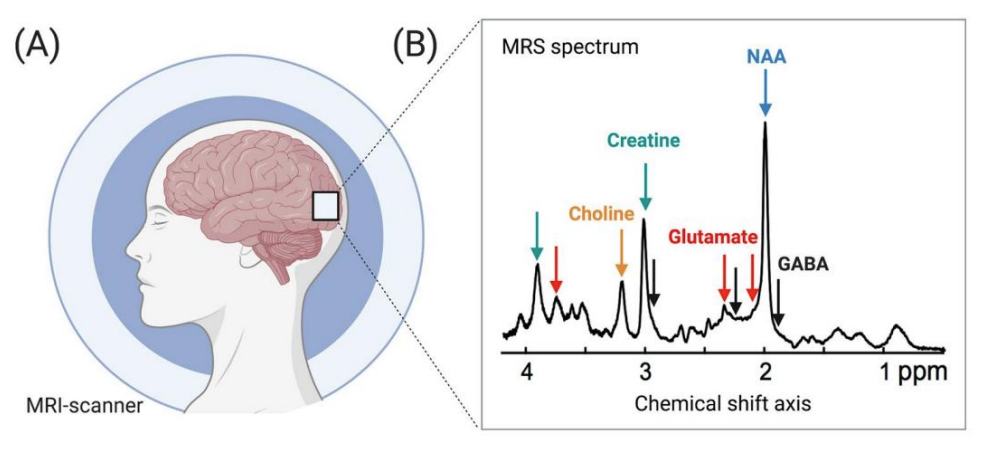
magnetic resonance spectroscopy
Microdialysis in animals
Invasive + labor-intensive, rarely done even in animals
sample CSF fluid to determine amount of NTs
Fiber photometry in animals
genetically engineered system where fluorescing compounds are used with fibers - can switch system on or off + measure signal
DA signal? look at DA fibers, and create neurons that fluoresce when high levels of dopaminergic activity occurs
add info from TB
Alternative options in humans
Need for less invasive techniques
An example is magnetic resonance spectroscopy - works for specific NTs as shown in figure - good for in vivo (don’t need to know NAA)
Useful for in vivo imaging, but limited spatial/temporal resolution and only works for certain neurotransmitters
Metabolites can be used as a surrogate measure
Metabolites are easier to measure (e.g. blood, urine)
5-Hydroxy indoleacetic acid (5-HIAA) = metabolite for serotonin
Homovanillic acid (HVA) = metabolite for dopamine —> high levels of HVA may be present for SZ
3-Methoxy-4-hydroxyphenylglycol (MHPG) = metabolite for noradrenaline (gambling, bipolar..?)
Metabolites also measured in cerebrospinal fluid (but this is invasive)
NTs break down + make metabolites
measure metabolites to infer NT levels - good in theory, but not in reality
metabolites collected in compartments + fluids
Gene variant-trait correlations
measuring these associations.. we can..
Assess links between gene variants and traits in humans (see PSY390)
Early research showed links between DA system genes and substance use
e.g. if you have a certain form of gene, higher risk
However, most links are weak + nonreproducible, but this doesn’t mean studying genes is useless
most gene variations very weakly linked to traits
finding gene for extroversion very unlikely
finding gene for depression also unlikely, but less so is the idea

Different approaches to genes…
Different approaches that genes (i.e. transgenic knockouts) are in fact a common and useful approach
missing a KO receptor or enzyme..

Where do we record cell acitivity?
It depends – if we wanted to understand the DA system (L04), we could record from cells in DA pathways
Aside: these same areas are good targets for manipulations (see next section)
add more notes
“Micro level”: Electrophysiology
Study of electrical + physiological properties of neurons
We can study individual cells or large groups of cells
In vivo (live brain) or in vitro brain slices
lots of insight on small group of cells

Example: DA neuron recording
DA neuron signaling changes w/most rewards (e.g. food, social interaction), not just drugs of abuse
dopaminergic firing changes during feeding

Related: Calcium Imaging
create calcium imaging + generate fluorescing calcium-sensitive ..
voltage-gated calcium channels - Ca rushes out
add more notes

“Macro” level
As we are often focused on specific cells, we prefer “micro techniques” for measuring activity
“Macro techniques” that observe many cells at once are also available
fMRI, PET, EEG and more
Though less common in our area, these techniques are very useful in certain cases
For example, characterizing brain activation with psychedelics via fMRI (as in the work of Carhart-Harris and colleagues)
looking at whole brain regions - but not usually done in this field
fMRI not very good to observe NT systemsy
Manipulating the NT systems
1. Diet
2. Drug treatment (e.g. w/cannulation)
3. Electrode targeting
4. Lesion (many methods)
5. Cell targeting w/optogenetics and chemogenetics
6. Transgenic manipulation
1) Diet
Some neurotransmitters are made with nutrients that from the diet (e.g. tryptophan > serotonin)
If we change the diet, we can change tryptophan availability and perhaps serotonin levels
Tryptophan loading and tryptophan depletion (L06)
if NT production ends on precursor → levels of diet corresponds to NT?
add notes

2) Drug treatment
Commonly: give varying doses of a drug (agonist or antagonist; X axis) and observe behavior (Y axis)
For example – if you are studying receptor Q, you’d give varying doses of an agonist for Q and then measure behavior
influence receptor activity with drug (turn on/off)
effects of removing = antagonist
effects of adding = like agonist

“Selective” drug delivery
Many ways to deliver a drug.. but Most methods are not specific (e.g. affect the whole body), which is NOT ideal when we’re trying to understand a restricted transmitter system.
If we wanted to understand the DA system (L04), we could look at the effects of DA drugs in certain areas (e.g. where there are DA receptors)!

“Selective” method: Via Cannula
Cannula implanted into amygdala
GABA agonist (muscimol) prior to learning inhibited the amygdala and impaired fear conditioning
surgical manipulations
coordinate system to rodent brain to locate specific area
implant in brain area of interest
can reversibly inactivate - implant canula into amygdala to deliver drugs there
what happens when you turn on GABA receptor = inhibitory
neurons would turn off below - briefly neurons are off - and can examine effects
learning less effective when muscimol used to turn off..

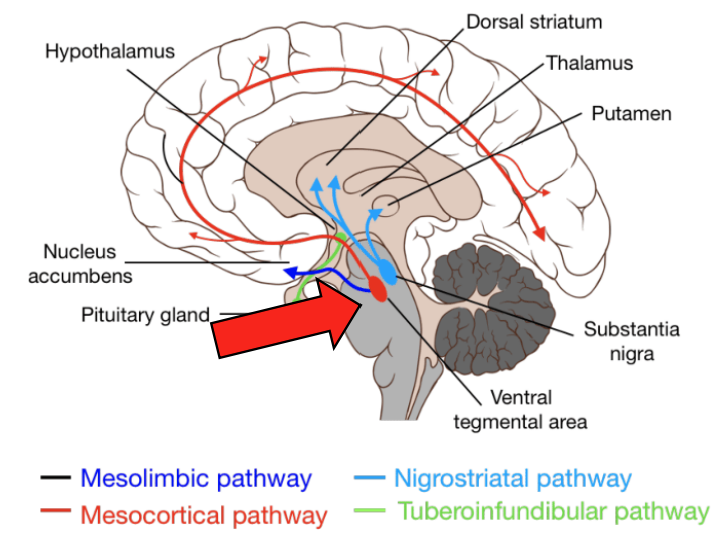
Selective effects on DA projections
targeted drug release not the only way to affect an area
If we wanted to understand the DA system (L04), we could manipulate the activity of key DA projections
3) Targeted electrode
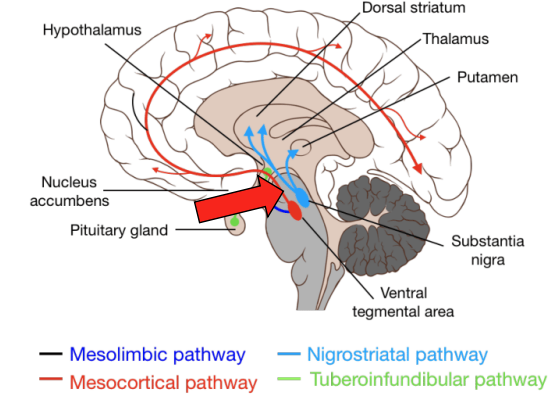
Electrodes can be implanted into the rodent brain at specific sites in neurotransmitter systems
Includes the intracranial self-stimulation paradigm
If the electrode is implanted in the ventral tegmental area* (with DA neurons), stimulation is reinforcing
Lesion of DA projections prevents this behavior
gives animal power to turn on - will always keep it on
why do this? give insight
activate once makes you very likely to activate it again - dopamine hypothesis for SUD
can stimulate brain but no DA fibers, no reinforcement..?
add notes

4. Lesion
Damage a brain area critical for neurotransmission (w/heat, chemicals or other methods)
The drug 6-hydroxydopamine (OHDA), for example, destroys NA + DA fibers while also impairing memory
Sometimes used to model Parkinson’s Disease
artificially destroy fibers - to stimulate the loss of DA occurring in PD

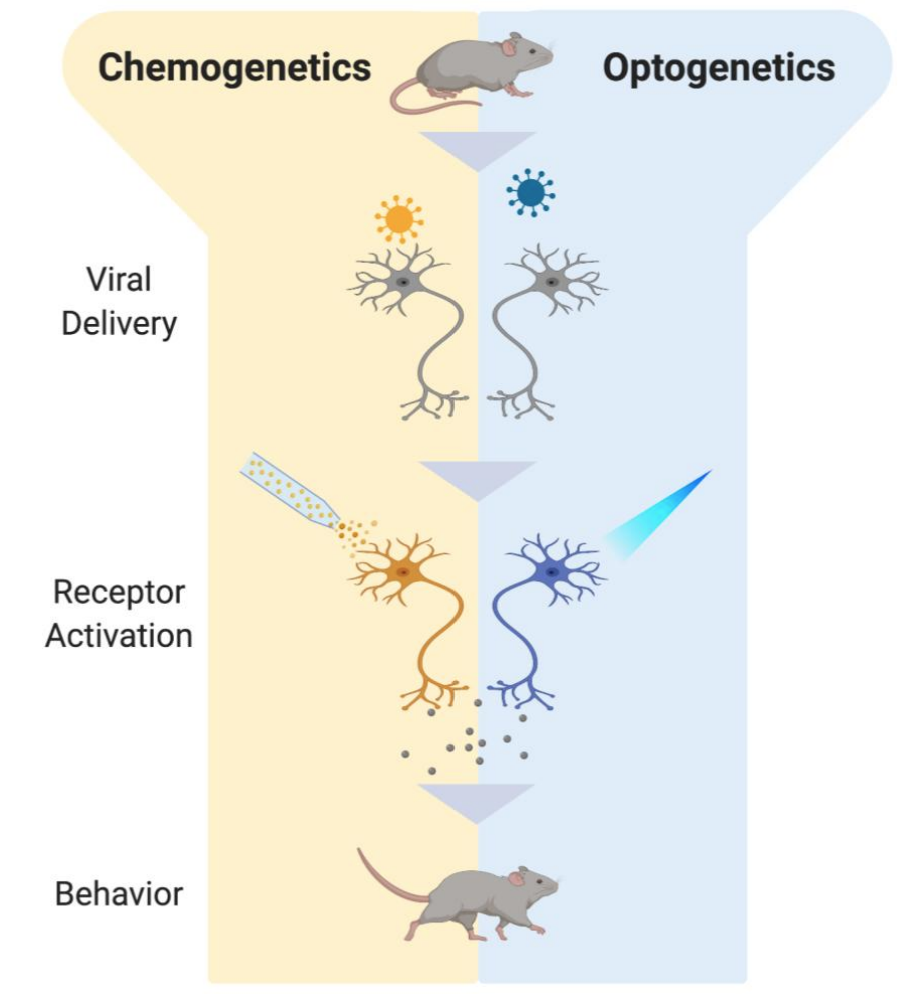
5. Chemogenetics vs. optogenetics
Selectively target a specific cell in a specific area (e.g. 5-HT cells in DRN, NA cells in LC)
Reversibly activate or inactivate that cell type
Optogenetics more popular; much better temporal resolution and fewer confounds
optogenetics (way more common than chemogenetics) - activation of neurons w light that have been genetically sensitized to light - almost every study is like that (can turn neuron off / on)
plant fiber to deliver light - observe (behavioural?) consequences when light delivered - extremely selective + fast
great spatial + temporal resolution - due to reliance on light
Activating LC neurons (Opto)
Stimulating the LC (which are NA cells) affects arousal and movement
can also design optogenetic system that switches things off

Activating DRN neurons (Chemo)
Chronic but not acute activation of dorsal raphe neurons (which are 5-HT cells) is antidepressant
artificial system generating cells specific to a drug
drug-sensitive switch in certain cells
what if receptor is active under other circumstances?
acute activation associated with higher levels of anxiety
acute activation associated w lower levels of depression ?

6) Transgenic modification
Variations in genes can lead to variations in behavior.

If we want to know how a transmitter affects behavior…
…we can see what happens when we manipulate genes in that transmitter system.
Transgenic mice
Remove a gene (knock-out or KO mouse)
Most common, a lot of the data we discuss is from KO mice
Add a gene (knock-in mouse)
Informative but far less common (not physiologically-relevant, doesn’t fit the reductionist approach)
Many ways to modify genes
Global: Gene modification in all cells
Selective: Gene modification in certain cells (e.g. only 5-HT cells)
Inducible: Gene modification can be turned on at a certain time (e.g. 6 months)
knock-out 5HT1B → aggressiveness - infer that it is involved
knock-in more complex, so most of the time KO
selective modification best
inducible activation in adulthood for instance, to give narrow understanding of what it does in adulthood
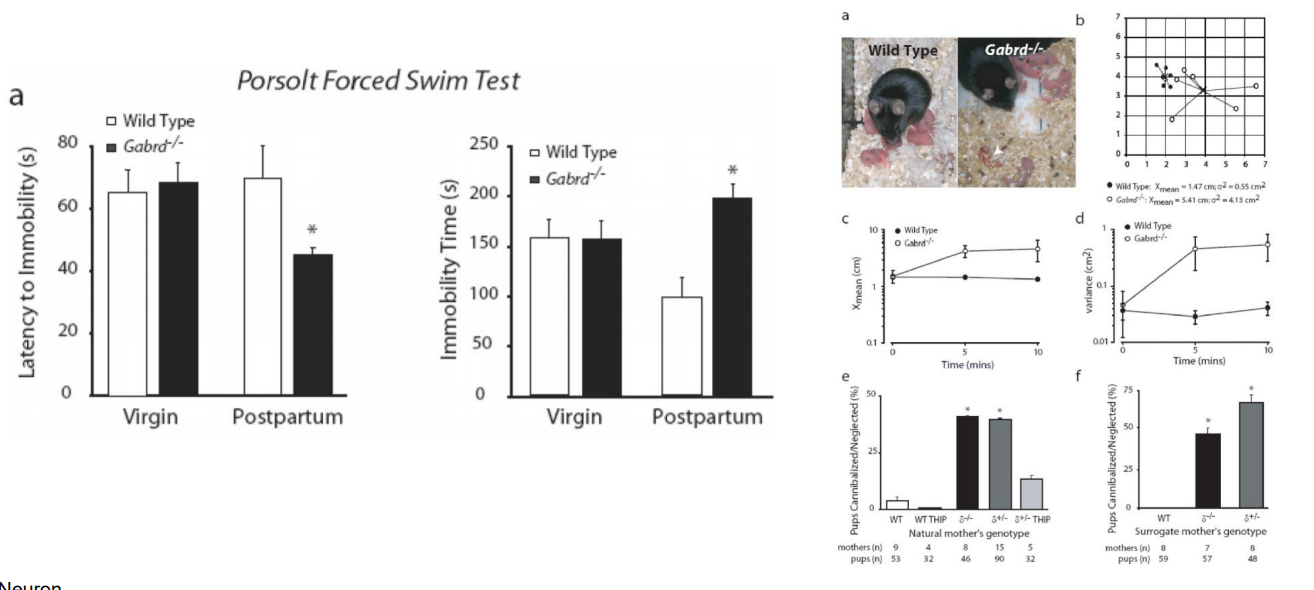
δ subunit KO mice
Deletion of the δGABAA receptor subunit is associated with depression-like behavior and abnormal maternal behavior post-partum (L08)
missing gene for subunit
can’t make recptors for it
behavioural differences occur
receptors known to be hormone-sensitive
Our test subjects
Humans are not frequently used in early research
Cannot always use the experimental method (invasive, unethical and sometimes impossible)
Potential for causal inferences is limited
Animal models (in particular mouse models) are often used instead
Mice are preferred for many reasons
Genome well-understood; similar structure to humans
Most human genes have mouse counterparts
Mouse populations are easy to produce and maintain
mice - genetic similarity to humans - hence transgenics useful
Limitations of animal models
Cost is high
Human research can be cheaper in some cases
Modeling human behaviors is challenging
Even good models (e.g. Depression) are imperfect
Many sophisticated behaviors (e.g. language) cannot be investigated at all
Not all findings are generalizable
Many drugs that work in animals do not work in humans (most fail, ~80%)
Concerns

Properties of “good” tests
Reliability
Similar results are obtained every time you repeat the test
Predictive validity (i.e. construct validity)
Animal test predicts the appropriate human behavior
Example - anxiety tests in rats identify anxiolytics in humans
Selectivity
Test performance mostly reflects the appropriate behavior
Example – a test for pain is not affected by cognitive ability
(In drug tests) Behavior affected by drugs in a dose-dependent manner.
reliability - same results under same conditions
not enough for test to be repeatable - must help us reliably predict
above two features most important
Types of Behavioral Testing
Anxiety-like Behavior
Depression-like Behavior
Learning, Memory and Cognition
Social Behavior
Anxiety
‘Feeling of worry, nervousness or unease’ about something
A trait we all have, to a degree - that’s useful (absence of anxiety would backfire)
Adaptive to an extent
Avoid danger, survive to reproduce
Though anxiety is viewed as useful, problems arise when it is not properly regulated

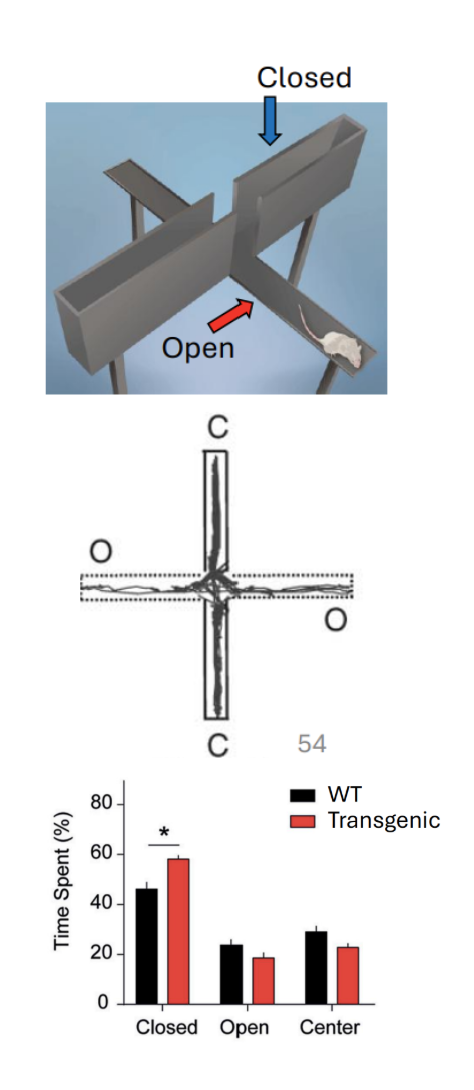
Elevated Plus Maze (EPM)
Plus-shaped maze with four arms
Closed arms: unexposed (safe space)
Open arms: exposed (to light/height)
Time spent in each arm measured
Animals strongly prefer closed arms (by ~x4-10 times)
Avoidance of open arms (low open arm time) is therefore an indicator of anxiety
EPM- sample results
Closed arm time is high in both groups
Closed arm time is significantly higher in Transgenics
look at approach + avoidance
risk-taking behaviour still important (e.g., for finding food) so time spent in open arms is low but not 0
Other tests
Open field test
Light-dark box
Successive alleys test
Zero maze (modified version of EPM)
EPM - In summary…
EPM regarded as industry standard for anxiety
No pure tests of anxiety; other traits can interact
Locomotor activity + pain are factors in all tests
Novelty interest is a factor in the open field
To interpret any one test (e.g. EPM), you should do several other tests • Notably, anxiety is a factor in other behavioral tests
Depression
Loss of interest or pleasure even when performing activities normally enjoyed (e.g. Anhedonia)
Decreased energy (e.g. Fatigue)
Feelings of guilt or low self-worth
Disturbed sleep, appetite and activity
Inability to concentrate
Thoughts of suicide
when modelling, we try to look for these behaviours
Depression in Animal Models
Behavioral despair or hopelessness
Modeled with forced swim test + tail suspension test
Anhedonia (more commonly modeled/..?)
Modeled with sucrose preference test (decline of sweets consumed by mice is indicator of anhedonia)
Forced Swim Test (FST)
When placed in water, animals demonstrate an escape response – swimming + climbing
Less swimming/climbing, early cessation of swimming/climbing was said to be “depression-like”
More recent views is that it is “stress coping” responses
Sample data:
Deletion of the delta GABAA receptor subunit is associated with depression-like behavior post-partum (GABA receptor KO mouse - they’re immobile faster)
animals don’t like swimming - when do they stop so how much swimming/climbing?

Memory
Process whereby information is stored, consolidated + retrieved
Several types of memory proposed (sensory, working/short-term + long-term)
These stores work over different time periods

Animal models of memory
Fear conditioning test (LTM)
Novel object recognition (LTM + STM)
T-maze (STM + WM; not covered)
Morris water maze (LTM; not covered
Why use fear to test memory?
Fear is a feeling, induced by perceived danger, that is associated with physiological + behavioral changes (e.g. fleeing, hiding or freezing)
Some fears are innate (like shadow over mouse, it thinks it’s a predator) but most are learned
If exposed to an aversive stimulus, animals will remember that experience (memory is key)
If re-exposed to an aversive stimulus that they remember, animals will show fear (expression of learned fear indicates memory)
fear (1) easily (and reliably) induced + (2) easily observed
expose to fear-induced aversive event
expression of fear to aversive event an indicator of memory (shock + sound)
more response = stronge rlearning
Fear Conditioning
Shock paired w/an environment (blue box) + tone (bell)
Box + tone become signals for the shock
When re-exposed to box or tone days later, the animal ‘expects’ another shock and displays freezing
As test is conducted days later, assesses LTM, Freezing ~ memory
sample data - Long-lasting memory resistant to decay (expressed for months later)*
measure purple box but sound to infer learning
learning + memory indicate conditioning - what else? maybe not better learners? maybe more pain sensitive, less movement (lazy) - must look into these and exclude
more freezing doesn’t guarantee learning, just suggests it - must do more tests to strengthen correlation

Object recognition (OR) test
Non-aversive memory test in 3 stages:
Training: Animal exposed to a set of identical objects
Break where animal is removed from chamber (variable time)
Testing: Animal returned to the chamber; one object replaced with a novel object
Animals recalling the familiar objects will show increased exploration of a novel object
Sample data: Deletion of the δGABAA receptor subunit is associated with poor performance in this task
level of interaction indicative of memory when exposed to increased exploration of new object

Other tests of cognition
5 choice serial response time task - Attention and impulse control (could be used to study ADHD, ? transmission etc.)
Puzzle box - Cognitive flexibility (switching b/w strategies)

Social behavior
Many disorders are characterized by abnormal social behavior (e.g. Schizophrenia, Autism, Anxiety…)
Social behavior in humans is complex; studying it in animals is challenging
Three-chambered social interaction test (SIT) - for general interactions b/w animals
Intruder test (for aggression)
Maternal behavior
Social interaction test (SIT)
Occurs in three phases
Part 1: Habituation to the apparatus
Part 2: Mouse (M1) in one chamber
Part 3: Novel mouse (M2) in new chamber + old mouse (M1) in new chamber
Sample data: How does the transgenic mouse differ in traits?
mice are singly-housed
like interacting, but also with newer mice
there’s an expected result - anything different is interesting (but must consider other factors as well)
interacting w new mouse = indicative of memory + preference for new
compared to some new, some old = not so much memory + preference

The road to a new drug - drug development
10+ years and billions in USD
Assumes the drug works and is safe in humans (not guaranteed)
Drugs can be pulled from the market at any time (due to adverse effects not shown in earlier tests)

Can we tell in advance if a drug has a high potential for abuse?
drug reinforcement
Studying reinforcing properties
Drugs as reinforcers
Drug reinforcement
Addiction has been defined as “compulsive engagement in a behavior (drug use) despite harmful consequences”
Term is being phased out; the term substance use disorder now preferred
Some drugs might carry a higher risk for abuse
Consideration for both recreational and therapeutic drugs
To gauge the addictive potential of a substance, we can test its value as a reinforcer (S+)
Studying reinforcing properties
Drugs given with a certain number of bar presses (fixed ratio schedule)
The number of presses is key; if you require too many they will stop performing for drug (break point/BP)
BP indicates “effort for drug”
Higher BPs suggest reinforcing properties
reinforcement = amount of bar presses they’ll do for drug
BP = amount of bar presses to get response
not high BP for psychedelics

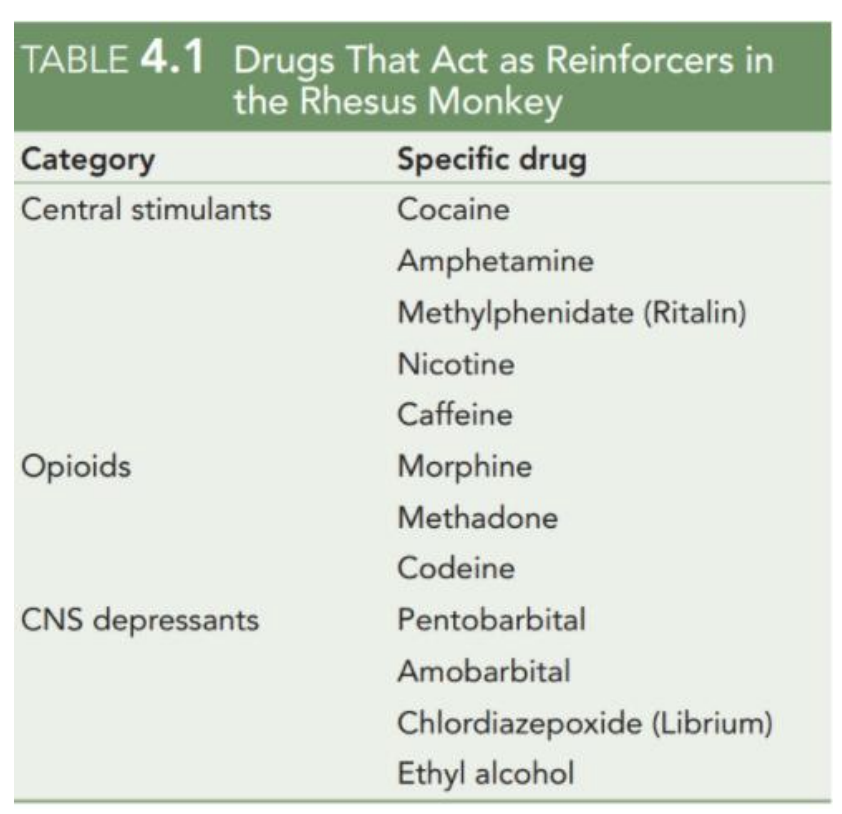
Drugs as reinforcers
Drug development + drug designs
Few new drugs developed based on rational drug design
Many major drugs in use today were discovered by accident or via screening
Even when we develop new drugs, they tend to use “old” mechanisms
Possible reasons for lack of progress
Lack of valid measures for disorders (face validity is insufficient)
Focus on traits rather than disorders (EPM)
Research practices (bad stats)
Species differences (generalization)
rational drug design = selection of drugs based on models
screening is the other way drugs developed? add onto a bit