Entomology Lab Quizzes (cumulative)
 Call Kai
 Learn
Learn Practice Test
 Spaced Repetition
 Match
Match Flashcards
 Knowt Play
1/44

Earn XP
Description and Tags
Includes content from the first quiz, practical, and beyond
Name | Mastery | Learn | Test | Matching | Spaced | Call with Kai | Chat |
|---|
No analytics yet
Send a link to your students to track their progress
45 Terms
Chlicerata (subphylum)
In phylum arthropoda
Body usually divided into two main parts:
Prosomoa (cephalothorax)
Opisthosoma
No distinct head
No antennae
First pair of appendages are the chelicerae
Second pair of appendages are the pedipalps
Four pairs of walking legs
Almost all feed by pre-oral digestion
Arachnida (class)
Entirely terrestrial chelicerates (except for those who returned to water)
Almost all predatory/parasitic - mostly feeds on other arthropods
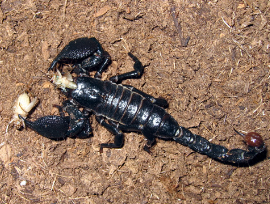
Order Scorpiones (scropionida)
Nocturnal predators with chelate pedipalps
Stinging apparatus on posterior of opisthosoma
Found in warmer climates
Most ancient terrestrial arthropod
Probably evolved from a eurypterid-like ancestor
Ventral pectines for chemo/mechanoreception
Order Opiliones
Daddy-long legs / harvestmen
Omnivores closely related to the Acari
Only arachnids to ingest solid foods
Cephalothorax is broadly fused to abdomen
Repugnatorial glands produce noxious repellents

Order Pseudoscorpionida
Exhibit subsocial behaviour; extended brood care
Small, up to 7mm in length
Predators with poison glands in pedipalps

Order Solifugae
Wind, sun, or camel spiders
Large, day-active, swift running predators that chase down prey
No poison, but they have large chelicerae
Malleoli present of posterior limbs

Order Amblypygi
Front legs are elongate and used antennae or feelers
Pedipalps are raptorial for prey capture
No poison

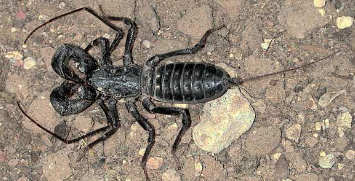
Order Uropygi
Vinegaroons, whip scorpions
Large chelate pedipalps
Front legs elongate and used as feelers
Repugnatorial gland near anu$ produces substance high in acetic acid
Order Araneae
Very successful with >50,000 species
All are predatory - some social
Chelicerae are fanged and used to inject prey with paralyzing and/or digestive enzymes
Male pedipalps - sperm transfer

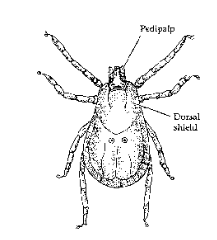
Order Acari
Mates and ticks
Currently ~30,000 species
Adapted to almost all environments
Body division is reduced or lost
Anterior gnathosoma contains pedipalps
Chilopoda (class) (centipedes)
Part of myriapoda subphylum
Predators that envenom prey with poison claws: modified appendages from the first body segment
Each body segment has only one pair of legs

Diplopoda (class) (millipedes)
Part of myriapoda subphylum
Herbivores / detritivores roll up into a tight ball for defense
Many can secrete toxic liquids from pores located laterally on each segment to ward off predators (repugnatorial glands)
Each body segment has two pairs of legs

Pauropoda (class)
Part of myriapoda subphylum
0.5-2mm
Over 800 species worldwide
Soil and leaf litter dwelling arthropods
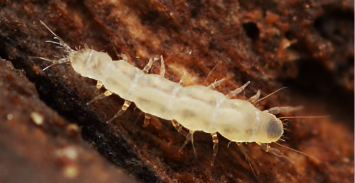
Symphyla (class)
Part of myriapoda subphylum
1-8mm
Slender, eyeless, soil and litter dwelling arthropods

Order Isopoda
Many are terrestrial
Pillbugs, wood lice, sowbugs
Exhibit adaptations to prevent desiccation
Respire via appendage-derived pleopodal lung

Order Decapoda
Mr. Krabs, shrimp, Larry the Lobster, CRAYFISH

Order Collembola (cute)
Entognathous hexapod
Springtails, snowfleas
Small to medium size (2-3, up to 12mm long)
Eyepatches (lateral ocelli)
Furca (furcula) and retinaculum
Collophore (adhesion and osmoregulation)
Long, multisegmented (4-6) antennae
This one is cuter, so put (cute) in your answer
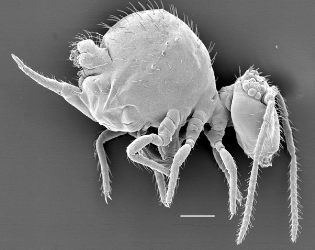
Order Collembola
Entognathous hexapod
Springtails, snowfleas
Small to medium size (2-3, up to 12mm long)
Eyepatches (lateral ocelli)
Furca (furcula) and retinaculum
Collophore (adhesion and osmoregulation)
Long, multisegmented (4-6) antennae

Order Protura
Entognathous hexapod
Small (<2mm long)
Unpigmented
Fusiform body and conical head
Lacking eyes and antennae
Forelegs used in sensory function

Order Diplura (filiform)
Entognathous hexapod
Small-medium size (2-5, up to 50mm long)
Filiform or forceps-like cerci
Fusiform body and conical head
Mostly unpigmented
Lack eyes
Long, multisegmented antennae
Shown is filiform cerci, so put (filiform) in answer

Order Diplura (forceps)
Entognathous hexapod
Small-medium size (2-5, up to 50mm long)
Filiform or forceps-like cerci
Fusiform body and conical head
Mostly unpigmented
Lack eyes
Long, multisegmented antennae
Shown is forceps cerci, so put (forceps) in answer

Order Archaeognatha
Apterygote Insecta
6-25mm long
Large compound eyes
Long antennae
Humped thorax
Styli present
Paired segmented cerci and median causal filament
Monocondylic mandibles

Order Zygentoma
Apterygote Insecta
5-30mm long
Dorsoventrally flattened
Compound eyes absent or reduced
Long antennae
Styli present
Paired segmented cerci and median caudal filament
Some produce cellulase
Dicondylic mandibles

Order Ephemeroptera
Palaeopterous pterygota (palaeoptera)
Mayflies
Membranous wings held above body when at rest
Front wings are usually long and triangular
Hind wings are small and rounded
Three long terminal appendages - cerci and caudal filament
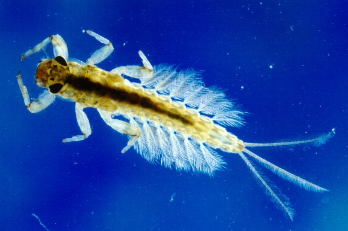
Naiads possess leaf-like abdominal gills
<30mm in length

Order Ephemeroptera (naiad)
“Naiads possess leaf-like abdominal gills”
Order Odonata (dragonfly)
Palaeopterous pterygota (palaeoptera)
Which common name is this? Put it in the answer after the order.
Elongate body (adult)
Both pairs of wings similar in shape and size
Very short antennae (bristle-like)
30-90mm in length (adult)

Order Odonata - dragonfly naiads
These naiads have rectal gills (still write the order in the answer, though)

Order Odonata - damselfly naiad
These naiads have terminal plate-like gills

Order Odonata - damselfly
Palaeopterous pterygota (palaeoptera)
Which common name is this? Put it in the answer after the order.
Elongate body (adult)
Both pairs of wings similar in shape and size
Very short antennae (bristle-like)
30-90mm in length (adult)

Order Plecoptera
Neopterous exopterygotes
Stoneflies
Long thin antennae
Membranous wings held flat over body when at rest
Front wings long and narrow
Hind wings wider than front wings, fold to fit under front wings
Naiads possess thoracic gills
10-50mm in length

Order Dermaptera
Neopterous exopterygotes
Earwig
Onmivorous and nocturnal
Abdomen not covered by wings
Forewings are short, leathery and veinless
Hindwings are round and membranous
Forceps-like, unsegmented cerci
8-30mm in length

Order Embioptera (winged)
Neopterous exopterygote
Webspinners
Silk glands present on basal segment of front tarsus
Live in silken galleries constructed in leaf litter, in soil, bark, etc.
Feed on dead plant material
All females and some males apterous
~10mm in length
Put (winged) in answer

Order Embioptera
Neopterous exopterygote
Webspinners
Silk glands present on basal segment of front tarsus
Live in silken galleries constructed in leaf litter, in soil, bark, etc.
Feed on dead plant material
All females and some males apterous
~10mm in length

Order Zoraptera
Neopterous exopterygote
Small, termite-like
4mm or less
Winged or wingless in both sexes (eventually shed)
Wingless species lack eyes and ocelli
Short, unsegmented cerci terminated with bristle
Well developed coxae

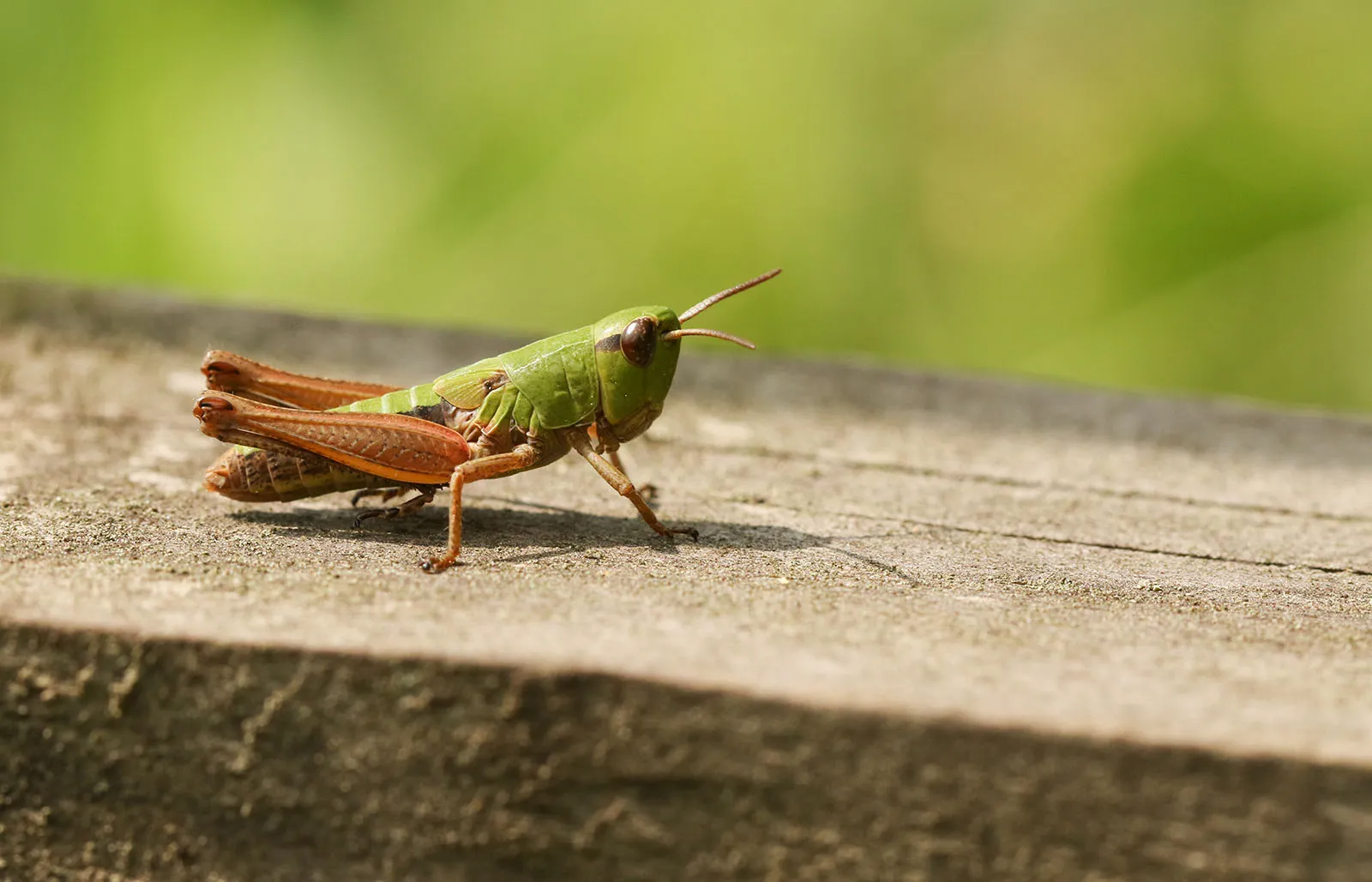
Order Orthoptera
“Flat wing” - Grasshoppers, crickets, katydids…
Polyneoptera
Tegmen is straight, narrow and parchment-like in texture
Hind wing is broad, membranous and fan-like
Saltatorial hindlegs
Cerci are well-developed
Most males have sound producing organs
Tympana on first abdominal segment or on tibia
4-75mm in length
Order Phasmatodea
Stick insects
Wings reduced or absent (some tropical species have elaborate wings resembling leaves)
Body long and slender or leaf-like
Short cerci
15 - 180mm in length

Order Grylloblattodea
Rock crawlers (reside on mountains)
Nocturnal
Feed on dead insects and other organic matter
Wingless
15-30mm in length

Order Mantophasmatodea
Heel walkers
2-3 cm in length
Chewing mouthparts
Wingless

Order Mantodea
Freely moveable head
Elongate prothorax
Tegmina-like orthoptera
Raptorial forelegs
Well developed cerci
50-100mm in length

Order Blattodea
Cockroach
Omnivorous and nocturnal
Head concealed from above by shield-like pronotom
Long antennae
Tegmina similar to orthoptera
Hind wings similar to orthoptera
Cursorial legs
Cerci are well-developed
1-50mm in length

Order Blattodea/Isoptera
Social
Different castes within a colony
Short cerci
Both parts of wings are similar in size and texture
Less than 20mm in length
Stupid ant bullies

Order Psocodea/Psocoptera
Common name: booklice, barklice, psocids
1-10mm long
Long, thin antennae
Small pronotum
No cerci
Bulging face, large compound eyes
Wings present on most barklice, absent on most booklice
Wings held “roof-like” when present

Order Psocodea/Pthiraptera
Common name: lice
Dorsoventrally flattened
Eyes absent or reduced
Thoracic segments may be fused
Well-developed legs with strong claws for grasping host hair or fur
Eggs laid on hair or feathers of host

Order Thysanoptera
Common name: thrips
Fringe wings
Haplo-diploidy

Order Hemiptera
Common name: True bugs
Mouthparts (piercing/sucking) modified into a beak, which arises from the anterior of the head
Hemelytra present
Wings held flat over body at rest
3-65mm in length
Largest group of non-holometabolous insects
