PSY200 Module 4
 Call Kai
 Learn
 Practice Test
 Spaced Repetition
 Match
 Flashcards
 Knowt Play
1/93

94 Terms
study of how we change and how we stay the same
developmental psychology
studies how you change from conception to death
lifespan development
lifespan development domains
physical development
cognitive development
psychosocial development
domain of lifespan development that examines growth and changes in the body, senses, motor skills, and health
physical development
domain of lifespan development that examines changes in learning, memory, language, thinking, and reasoning
cognitive development
domain of lifespan development that examines changes in emotions, personality, and social relationships
psychosocial development
nature (4 terms)
biology, genetics, innate, plato
nurture (4 terms)
environment, experiences, blank slate, aristotle
studied psychosocial theory of development using 8 tasks that compared one thing vs another thing
erikson
studied theory of cognitive development, determined children were little scientists, and proposed 4 stages of cognitive development
piaget

studied sociocultural theory of cognitive development and believed piaget left out the social factor of his “little scientist” assertion
vygotsky

studied theory of moral development and proposed 3 levels of moral reasoning
kohlberg

believed kohlberg was biased by sampling only men, and proposed that men and women have different perspectives on moral reasoning
gilligan

4 stages of piagets’s theory of cognitive development, in order
sensorimotor
preoperational
concrete operational
formal operational
3 levels of kohlberg’s theory of moral development, in order
preconventional
conventional
postconventional
according to gilligan, men have a ___ perspective of morals and women have a ___ perspective
justice, care
the two primary tasks erikson discovered and what stage of development they occur in
trust vs mistrust in infancy
identity vs role confusion in adolescence
stage of cognitive development that occurs between 0-2 yrs old, and includes object permanence and stranger anxiety
sensorimotor
stage of cognitive development that occurs between 2-7 yrs, and involves egocentrism and lack of conservation
preoperational
stage of cognitive development that occurs between 7-11, and involves concrete thinking and conservation
concrete operational
stage of cognitive development that occurs at age 11+, and involves hypothetical and abstract thinking
formal operational
at what age does object permanence occur
7 months
level of moral reasoning in which punishment, reinforcement, and what one enjoys determines ones morals
preconventional
level of moral reasoning in which social approval drives ones morals
conventional
level of moral reasoning in which one has a personal moral code in spite of what is socially acceptable
postconventional
3 stages of prenatal development
germinal
embryonic
fetal
stage of prenatal development that occurs in weeks 1-2, in which a zygote is formed, and ends with implantation
germinal
stage of prenatal development that occurs between 3-8 weeks and involves cell differentiation, heartbeat, and a placenta forming
embryonic
stage of prenatal development that occurs in weeks 9-40, in which the embryo continues to grow and become viable
fetal
growth pattern in pretnatal development where fetus grows from the head down to the feet
cephalocaudal
growth pattern in pretnatal development where fetus grows from the center of the body outward
proximodistal
things that harm a fetus, like smoking/drinking/drugs
teratogens
increases the risk of SIDS and FAS
teratogens
SIDS - meaning of abbreviation
sudden infant death syndrome
FAS - meaning of abbreviation
fetal alcohol syndrome
automatic responses of newborns like sucking and grasping
newborn reflexes
the four parenting styles
authoritative, authoritarian, permissive, uninvolved
parenting style that has democratic control and warmth
authoritative
parenting style that has high control without warmth
authoritarian
parenting style that has warmth without control
permissive
parenting style that has no control and no warmth
uninvolved
control of small movements/muscle groups
fine motor skills
control of large movements/muscle groups
gross motor skills
emotional bond
attachment
believed that attachment came from feeding
freud

believed that attachment came from comforting; experimented with monkeys
harlow
“strange situation technique”; experimented with secure/insecure attachment styles
ainsworth
rapid growth and s**ual maturity
puberty
s**ual characteristics related to reproducing
primary characteristics
s**ual characteristics not related to reproducing (voice deepening, body odor)
secondary characteristics
form of thinking that arises in adulthood that is not black/white thinking but grey
post-formal thinking
stage of adulthood where you get married, have kids, and start your career
early adulthood
stage of adulthood where you continue your career, your kids move away, and you begin caring for your parents
middle adulthood
stage of adulthood where you retire, have grandchildren, and become more dependent
late adulthood
healthcare that focuses on pain management and comfortable environment rather than curing (two names)
hospice, palliative
proposed the theory of 5 stages of grief
kubler-ross
5 stages of grief
denial, anger, bargaining, depression, acceptance
legal document detailing desired medical interventions (two names)
living will, advance directive
a person you designate to make healthcare choices for you in case you cannot
healthcare proxy
form of euthanasia where a doctor directly causes death via physician assisted suicide
active euthanasia
form of euthanasia where a doctor allows a person to die if they refuse treatment
passive euthanasia

13 states where physician assisted suicide is legalized
WA, OR, CA, MO, CO, NM, HW, IL, ME, VM, NY, NJ, DE
physical development - 4 terms
growth, senses, motor skills, health
psychosocial development - 3 terms
emotions, personality, social relationships
cognitive development - 5 terms
learning, memory, language, thinking, reasoning
erikson - ____ development using _____ _____
psychosocial, 8 tasks
Piaget - ___ development, proposed ____ ____
cognitive, 4 stages
called children "little scientists"
Piaget
Vygotsky - ___ theory of cognitive development
sociocultural
who believed Piaget left out the social factor of his "little scientist" assertion
Vygotsky
sensorimotor - 3 terms
0-2 years, object permanence, stranger anxiety
preoperational - 3 terms
2-7 years, egocentrism, lack of conservation
concrete operational - 3 terms
7-11 years, concrete thinking, conservation
formal operational - 3 terms
11+ years, hypothetical, abstract
germinal stage - 3 terms
weeks 1-2, zygote, ends with implantation
embryonic stage - 4 terms
weeks 3-8, cell differentiation, heartbeat, placenta
fetal stage - 3 terms
weeks 9-40, growth, becomes viable
newborn reflexes - 5 terms
sucking, rooting, grasping, moro, stepping
wants/needs that direct a behavior toward a goal
motivation
types of motivation
intrinsic and extrinsic
motivation guided by internal desire
intrinsic motivation
motivation guided by external sources, like punishments/rewards
extrinsic motivation
4 theories of motivation
drive theory
self-efficacy
maslow’s hierarchy of needs
yerkes-dodson law
theory that motivation is driven by biological needs
drive theory
theory that high excitement (arousal) is optimal for easy tasks and low excitement is optimal for hard tasks
yerkes-dodson law
motivation from success or belief in oneself
self-efficacy
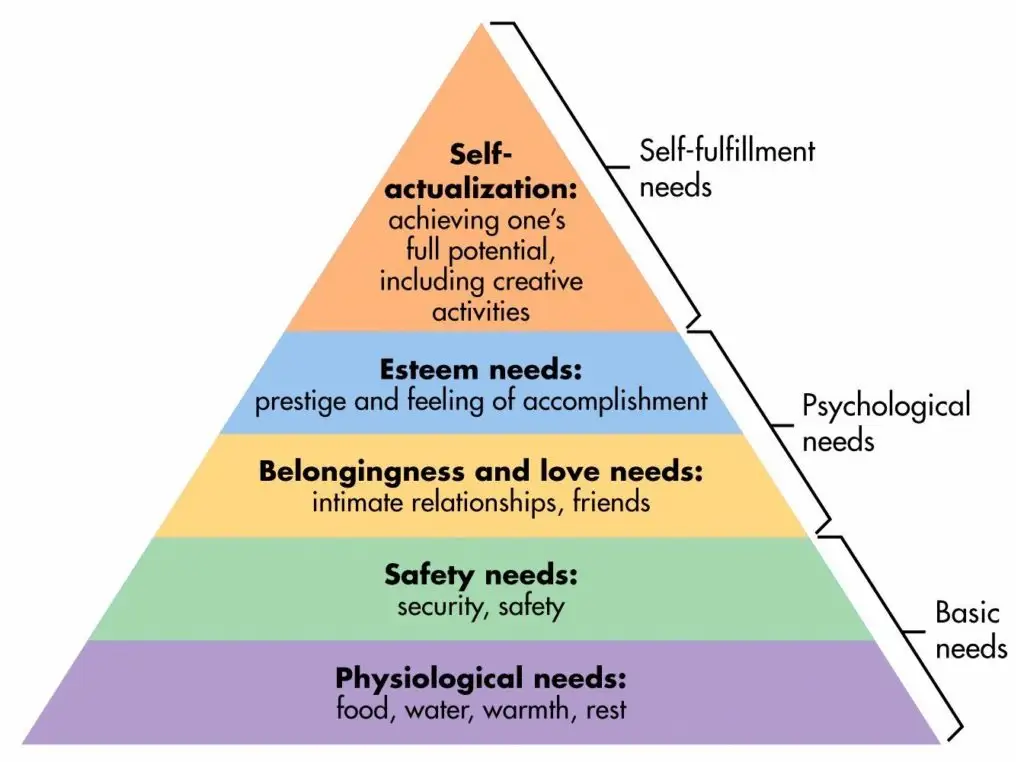
pyramid of needs that have the most important needs at the bottom, and least important at the top
maslow’s hierarchy of needs
maslow’s hierarchy of needs from most to least important (bottom to top)
physiological, security, social, esteem, self actualization
pattern of behavior that reduces drive
habit
short-term, subjective state of being
emotion
stimulus → physiological arousal → emotion
snake → shaking → scared
james-lange theory of emotion
stimulus → physiological arousal and emotion
snake → scared and shaking
cannon-bard theory of emotion
stimulus → physiological arousal and conscious cognitive appraisal → emotion
“im shaking and snakes are dangerous so im scared
schacter-singer theory of emotion
stimulus → unconscious appraisal → physiological response and emotion
“(snakes are dangerousous, so) im shaking and scared”
lazarus’ cognitive mediational theory