trematodes from ingesting hosts and skin penetration
 Call Kai
 Learn
 Practice Test
 Spaced Repetition
 Match
 Flashcards
 Knowt Play
1/81

There's no tags or description
Looks like no tags are added yet.
82 Terms
which of the following trematode life stages is infective on ingestion by the final host?
egg
miracidium
sporocyst
ceraria
metacercaria
metacercaria

what is the name of the structure indicated by the arrow?
miracidium
kinetoplast
operculum
arista
sporozoite
operculum
which of the following bacteria is involved in the pathogenesis of black disease in ruminants?
clostridiodes difficile
clostridium perfringens
clostridium tetani
clostridium novyi
clostridium piliforme
costridium novyi
what is the most appropriate method to control fascioloides magna infection in sheep and goats?
fecal test and isolate and cull infected animals
regular monthly deworming of all animals
fencing off ponds and marshy areas
yearly vaccination of newly acquired animals
clean and disinfect all farm equipment and stalls
fencing off ponds and marshy areas
which of the following is true regarding paramphistomes?
they can affect cattle, sheep, and horse hosts
they are recognizable by the anterior ventral and oral suckers
cattle acquire infection by ingestion of eggs in feces
migration of adults throughout body can result in disease
there is no approved treatment for this parasite
there is no approved treatment for this parasite
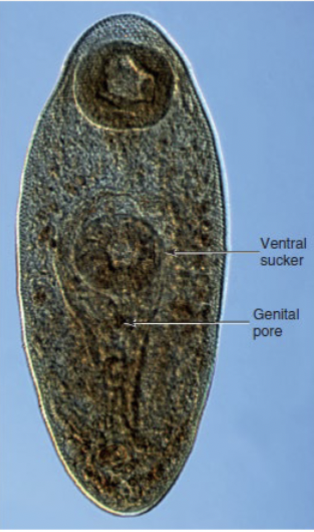
nanophyetus salmincola
nanophyetus salmincola live as adults in
the small intestine of definitive host
nanophyetus salmincola eggs are passed from host and then
miracidia enter snail, cercariae penetrate salmonoid skin, encyst as metacerariae
how do you get infected with nanophyetus salmincola
via ingestion of metacercariae in fish
nanophyetus salmincola definitive host
dog and cat

nanophyetus salmincola
nanophyetus salmincola flukes can cause
a bacterial disease called salmon poisioning disease

nanophyetus salmincola causing salmon poisoning disease
what causes salmon poisoning disease in dogs
flukes containing neorickettsia helminthoeca (rickettsial agent)
where is neorickettsia helminthoeca common
west coast of US
salmon poisoning disease clinical signs
lymphadenomegaly of cervical and mesenteric lymph nodes and hemorrhagic enteritis
treatment of salmon poisoning disease
doxycycline and oxytetracycline
salmon poisoning disease treatment challenge
90% of cases fatal without treatment

paragonimus
paragonimus live in
pairs or groups in cysts within lungs
paragonimus definitive host
cat and dog
paragonimus infection via
ingestion of metacercariae in crabs and crayfish
paragonimus clinical signs
chronic coughing
paragonimus and coughing
bullae can form and rupture leading to pneumothorax

cause of paragonimus
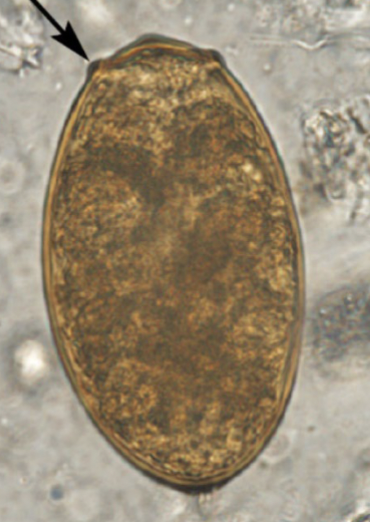
paragonimus
paragonimus diagnosis
large vase shaped operculated eggs in feces (or sputum) or a thickened ridge surrounding operculum
another diagnostic for paragonimus
transtracheal wash

dicrocoelium dendriticum
dicrocoelium dendriticum lives in
gallbladder, bile, and pancreatic duct of mammals, birds, and reptiles
dicrocoelium dendriticum definitive host
sheep, cattle, pigs, llamas, and alpacas
dicrocoelium dendriticum eggs
eggs from hosts ingested by land snail, cercariae leave snail in slime balls, ingested by ants and form metacercariae

dicrocoelium dendriticum result
dicrocoelium dendriticum disease
large number of flukes can occur usually with no clinical signs
dicrocoelium dendriticum chronic disease
can rarely cause progressive hepatic cirrhosis with cachexia, low wool production, decreased lactation

dicrocoelium dendriticum
dicrocoelium dendriticum diagnosis
small lopsided yellow brown operculate eggs
dicrocoelium dendriticum prevention
relies on covering anthills or keeping insectivores
insectivores
ducks, turkeys, chickens
platynosomum fastosum
lizard poisoning disease
where do platynosomum fastosum live
in bile and pancreatic ducts of cats

platynosomum fastosum
where are platynosomum fastosum common
southeastern US and caribbean
platynosomum fastosum eggs passed in feces and then
develop to cercariae in land snails, cercariae ingested by pill bugs and develop to metacercariae
who acts as paratenic hosts after ingesting pill bugs for platynosomum fastosum
lizards, toads, geckos, and skinks
how are cats infected with platynosomum fastosum
by ingesting pill bugs or paratenic hosts
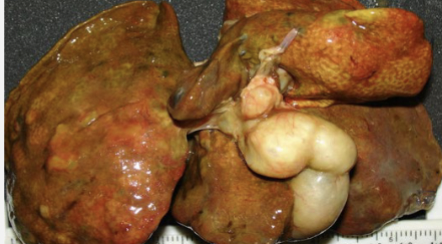
platynosomum fastosum

platynosomum fastosum
what can platynosomum fastosum cause
acute and chronic cholangitis and jaundice
what is platynosomum fastosum associated with
cholangiocarcinoma
alaria
spoon shaped flukes
alaria adults live in
in intestinal tract of canids and felids
alaria eggs passed in feces hatch in water and then
infect snail, exit and penetrate tadpoles, develop to mesocercariae (unencysted metacercariae)
alaria mesocercariae can be passed to
frogs, snakes, or mice that eat tadpoles
alaria definitive host ingests mesocercariae that develop to
metacercariae in lungs, then coughed up and swallowed to mature to adult in intestine
how can alaria mesocercariae be transmitted
through mother’s milk

alaria
alaria clinical signs
migration of mesocercariae can cause disease such as pulmonary hemorrhage
adult alaria can be associated with
enteritis
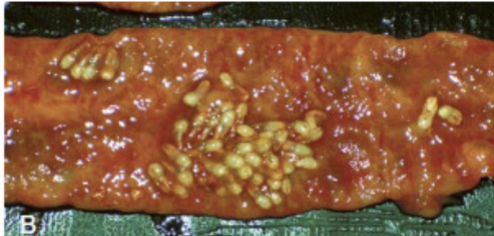
alaria
alaria is potentially
zoonotic in humans eating undercooked frog meat

schistosomes
schistosomes live as adults in
mesenteric veins of birds and mammals
schistosomes mating
seperate sexes mate within veins and pass eggs into blood that enter intestine
what do schistosome eggs produce
proteolytic enzymes to erode mesenteric vein and intestinal wall inducing granulomatous inflammation
schistosome eggs hatch in water, develop to cercariae in snail and then
cercariae penetrate skin of definitive hosts, migrate to lungs, liver, and then mesenteric veins

schistosomes
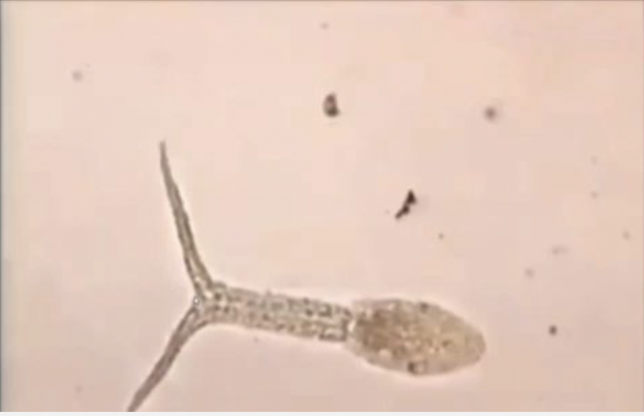
schistosomes cercaria

heterobilharzia americana
heterobilharzia americana can affect
dogs in the southern US
heterobilharzia americana final host and how
raccoons and dogs where the cercariae penetrate skin of swimming hosts
schistosome clinical disease
hypercalcemia and eggs can disseminate into body causing widespread granulomas
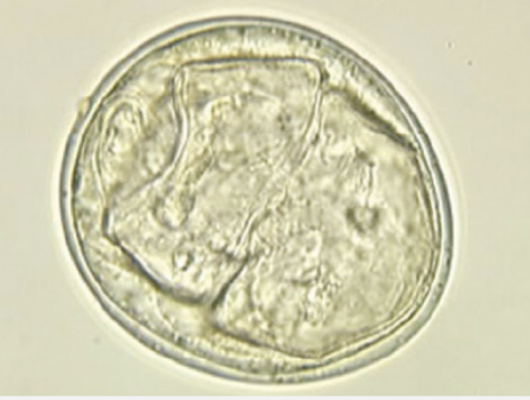
schistosomes
schistosomes diagnosis
fecal sedimentation in NaCI and eggs will hatch on exposure to water

schistosomes in humans
US schistosomes
swimmer’s itch
swimmer’s itch is
cercarial dermatitis is caused by waterfowl schistosomes
what happens in swimmer’s itch
cercariae invade human skin when swimming in ponds and causes a rash due to hypersensitivity reaction
praziquantel
effective against a wide range of cestodes and trematodes
praziquantel safety
considered very safe and is safe in breeding/pregnant animals
praziquantel high doses
can cause vomiting and tremors
praziquantel resistance
resistance is developing in tapeworm dipylidium caninum