Cell Cycle Regulation and Tumor Suppressors in Veterinary Medicine
 Call Kai
 Learn
Learn Practice Test
 Spaced Repetition
 Match
Match Flashcards
 Knowt Play
 Podcast
1/28

There's no tags or description
Looks like no tags are added yet.
Name | Mastery | Learn | Test | Matching | Spaced | Call with Kai | Chat |
|---|
No analytics yet
Send a link to your students to track their progress
29 Terms
What are the main phases of the cell cycle?
G1, S, G2, and M phases.

What occurs during the G1 phase of the cell cycle?
Cells grow and make more molecules, such as proteins and lipids.
What is the S phase of the cell cycle responsible for?
DNA synthesis and replication of genetic material.
What happens during the M phase of the cell cycle?
Cell division occurs via mitosis.
What is the G0 phase?
A non-dividing state where cells exit the cell cycle.
What are labile tissues?
Tissues that continuously divide, such as skin and intestinal cells.
What are stable tissues?
Tissues that can divide in response to a stimulus, such as liver cells.
What are permanent tissues?
Non-dividing tissues, such as nerve and muscle cells.
What role do mitogens play in the cell cycle?
growth factors that stimulate cells to grow and divide.
In which phase are cells responsive to mitogens?
G1 phase.
What is the function of cyclins in the cell cycle?
it activate cyclin-dependent kinases (CDKs) to progress through the cell cycle.

What do cyclin-dependent kinases (CDKs) do?
when activated, phosphorylate target proteins to drive cell cycle progression.
What are cyclin-dependent kinase inhibitors (CDKIs)?
Proteins that block the activity of CDK complexes, acting as brakes on the cell cycle.

What is the role of the p53 protein?
it acts as a tumor suppressor and is involved in DNA damage response and cell cycle arrest.

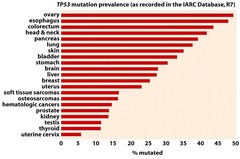
What happens when p53 function is lost?
can lead to uncontrolled cell proliferation and is common in many cancers.
What is the G1 restriction point checkpoint?
A checkpoint mediated by the retinoblastoma protein (pRb) that regulates progression from G1 to S phase.
How does pRb function in the cell cycle?
it inhibits progression to S phase until it is phosphorylated by cyclin-CDK complexes.
What is the significance of the E2F transcription factor?
it drives the cell out of G1 into S phase when dissociated from pRb.
What is the consequence of mutations in pRb?
it can lead to loss of cell cycle control and contribute to cancer development.
What role does the HPV E6 protein play in cancer?
it can degrade p53, leading to loss of its tumor suppressor function.
What is senescence in the context of cell biology?
the process where cells stop dividing and enter a state of permanent growth arrest.
What is apoptotic cell death?
a programmed and controlled process
what is necrotic cell death?
uncontrolled and often results from injury.
What is the role of tumor suppressor proteins?
it negatively control cell cycle progression and promote apoptosis.
What are some examples of tumor suppressor proteins?
p53, pRb, and BRCA1/2.
What happens to cells in permanent G0?
Cells are terminally differentiated and cannot divide again, such as nerve and muscle cells.
What triggers the cell cycle to move from G1 to S phase?
The presence of mitogenic growth factors and the activation of cyclin-CDK complexes.
What is the role of checkpoints in the cell cycle?
Checkpoints monitor and regulate the progression of the cell cycle to prevent errors.
What is the impact of blocking growth factor receptors?
it can prevent cells from progressing through the cell cycle.