PSYCH 223 - Chapter 8: Middle Adulthood
 Call Kai
 Learn
 Practice Test
 Spaced Repetition
 Match
 Flashcards
 Knowt Play
1/71

Earn XP
Description and Tags
lectures from Prof. Vrushali Rao Gumnur
72 Terms
What are the main physical developments that occur in middle adulthood?
Signs of primary aging show up
Psychological effects tied to appearance for some people
What are some physical changes that occur in middle adulthood?
Gradual decline in muscle strength, particularly in the leg and back areas
Calcium rich diet and regular exercise can alleviate effects
In what ways is physical decline seen in middle adulthood?
Osteoporosis
Presbyopia
Glaucoma
Night blindness
Presbycusis
What is osteoporosis?
Condition in which bones become brittle, fragile and thin due to lack of calcium
What is presbyopia?
Loss of near vision in due to changes in eye architecture
What is glaucoma?
Condition where pressure is generated in the eye due to excess ocular fluid that damages the optic nerve
What is night blindness?
Inability to adopt to dark environments because damaged lens and rod cells
What is presbycusis?
Loss of ability to hear high frequencies sounds
What happens to the nervous system in middle adulthood?
Synapses lost at a greater rate than generated → cognitive decline
Tissue shrinks → increase in cerebrospinal fluid volume.
White matter peaks before showing decline
Neuro-imaging research revealed difficulties in activating the right tool for a task
What does reaction time look like in middle adulthood?
Slower reaction time → there is a decline in the speed of neural transmission, causing slower responses
What are the benefits exercise during middle adulthood has on the muscle system?
Slower decline in:
Energy molecules
Muscle cell thickness
Number of muscle cells
Muscle thickness/mass/strength
Blood supply
Movement speed
Stamina
Slower increase in:
Fat and fibres
Reaction/recovery time
Muscle soreness
What are the benefits exercise during middle adulthood has on the nervous system?
Slower decline in processing impulses by the CNS
Slower increase in variation in speed of motor neuron impulses
What are the benefits exercise during middle adulthood has on the circulatory system?
Maintenance of lower levels of LDLs and higher HDL/cholesterol and HDL/LDL ratios
Decreased risk of high blood pressure, atherosclerosis, heart attack, stroke
What are the benefits exercise during middle adulthood has on the skeletal system?
Slower decline in bone minerals
Decreased risk of fractures and osteoporosis
What are the psychological benefits exercise during middle adulthood?
Enhanced mood
Feelings of well-being
Reduce stress
What does fertility and reproductive health look like for males in middle adulthood?
Reduced testosterone
Reduction in quality and volume of ejaculate
Difficulty reaching erection
What does fertility and reproductive health look like for females in middle adulthood?
Thinner, less elastic vagina walls
Shrinking of vaginal opening
Lower egg quality
What is female climacteric?
Transition that marks end of a woman’s child-bearing years
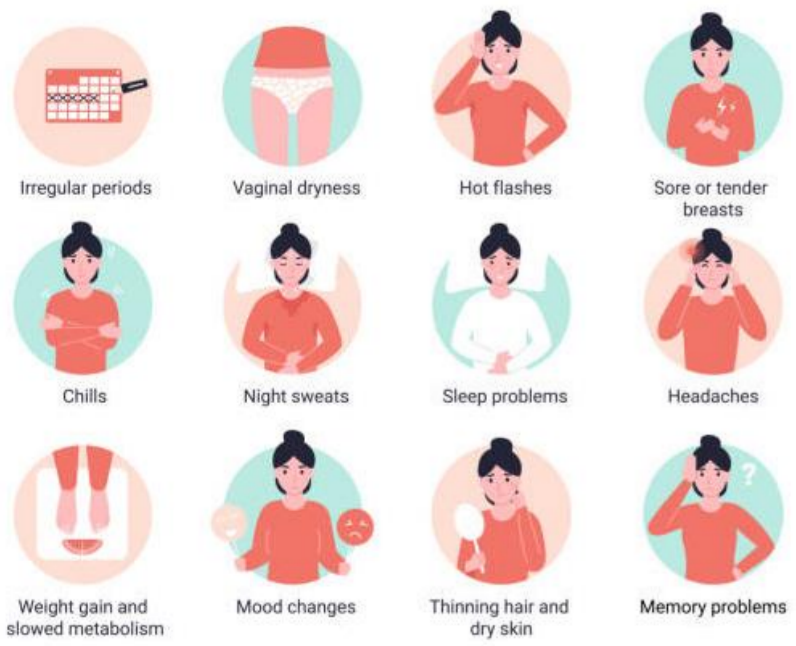
What is menopause? What are some characteristics of menopause?
Event marking the end of menstruation
Menopause usually begins around in the late 40s
Completed when menstruation doesn’t occur for a whole year
Drop in estrogen and progesterone
Ovulation stops with the end of menopause
What is male climacteric? What are some characteristics?
Period of changes in a man’s reproductive system in his 50s
Drop in testosterone levels
Enlargement of prostate gland
Difficult in urination
Possible erectile dysfunction
Still capable of reproduction

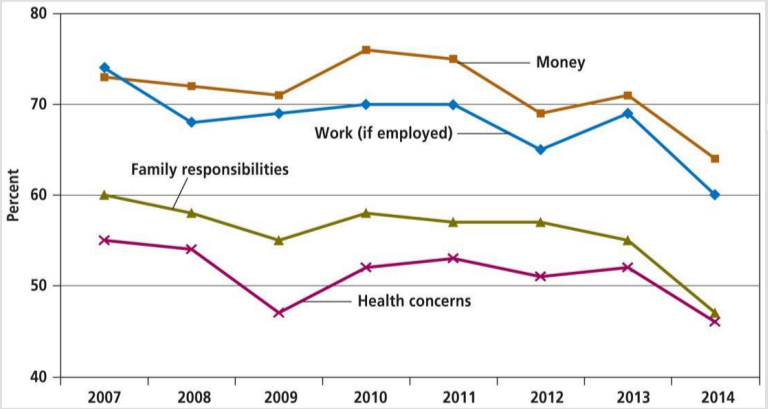
What are the main worries of adulthood?
Money
Work (if employed)
Family responsibilities
Health concerns
How can health risks be avoided in middle adulthood?
Better lifestyles and access to good health care has reduced death rate in middle adulthood
Regular health checks are recommended to detect any issues early
What are the effects of stress?
Stress hormones (e.g. Cortisol) can cause a myriad of biological reactions:
Direct physiological effects
Harmful behaviours
Indirect health-related behaviours
What are some direct physiological effects of stress?
Elevated blood pressure
Decrease in immune system functioning
Increased hormonal activity
Psychophysiological conditions
What are some harmful behaviours caused by stress?
Increased use of nicotine, alcohol, and other drugs
Decreased nutrition
Decreased sleep
What are some indirect health-related behaviours caused by stress?
Decreased compliance with medical advice
Increased delays in seeking medical care
Decreased likelihood of seeking medical advice
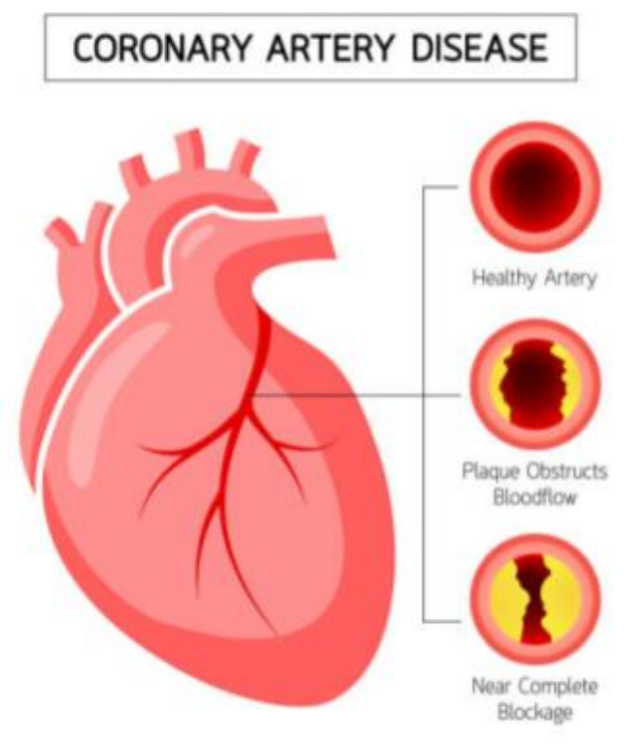
What is coronary artery disease?
Cardiovascular disease that involves the clogging of blood vessels → increased blood pressure
What are some contributing factors to different behaviours patterns?
Genetics
Lifestyle
Environment
What are some different behaviour patterns?
Type A: high ambition, multi-tasking and dynamic mood
Type B: low aggression, non-competitiveness
Type D: pessimistic outlook
What behaviour patterns are linked with higher risk of coronary heart disease?
Type A: high ambition, multi-tasking and dynamic mood
Type D: pessimistic outlook
What is cancer? How is it detected?
Cells of the body don’t stop reproducing, giving rise to harmful tumours
Leading cause of death in middle-aged adults in Canada (2019)
Routine checks like mammograms, prostate exams can aid in early detection
What are some causes of cancer?
Genetic and epigenetic causes
Mutagens → mutation causing agents
What are some treatments for cancer?
Radiation therapy
Chemotherapy
Tumour removal surgery
What are the main cognitive developments that occur in middle adulthood?
Gray and white matter volume begins to decline, leading to overall slowness in thinking
Middle-aged adults often rely on expertise
What are some trends in intelligence seen during middle adulthood?
Specific abilities like spatial reasoning, perceptual speed, verbal memory may decline at different rates
Reduced gray matter → reduced connectivity
Reduction in processing speed
Both hemispheres involved: inefficient specialization → consumes more resources
Spontaneous genetic mutation → improper function
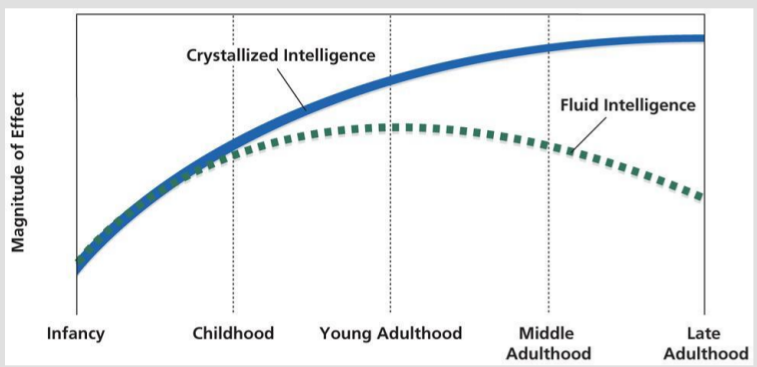
What is Nancy Denney’s model of cognitive change?
Exercised skills regularly can help maintain higher level of functioning in that area for a longer period of time

What is SOC?
Selective optimization with compensation - process by which people concentrate on skill area to compensate for losses in other areas
What is expertise?
Skill or knowledge acquired in a particular area
Why may individuals in late adulthood show discrepancies in intelligence and cognitive abilities?
Practical intelligence could be higher
Distinctive, occupational expertise
Restrictive study sample
What is episodic memory?
Ability to recount personal experiences in detail
What is semantic memory?
General knowledge, word meanings and factual information stored
What does memory look like in middle adulthood?
Middle-aged adults begin showing decline in long term memory storage and retrieval
Episodic memory is weaker, but can be improved with cues
Memories fitting into schemas are easier to recall
What are memory schema?
Organized mental framework to store in memory
What are normative-crisis theories?
Approach to development that is based on age-related universal stages
What are life events theories?
Approach to personality development that is based on particular events rather than age
Which of Erikson’s psychosocial stages occurs during middle adulthood?
Generativity vs stagnation stage - people consider their contributions to family and society
What developments are seen during Erikson’s generativity vs stagnation stage?
Generative adults seek to offer guidance and encouragement
Stagnation comes from lack of psychological growth; leads to frustration
George Valliant: ‘Keeping the meaning’ of life’: finding contentment and acceptance
What are some alternative theories of personality and social development in middle adulthood?
Roger Gould - feelings of urgency in attaining life goals in middle adulthood (starting 35-43 yrs)
Levinson proposed ‘seasons of life theory’ highlighting the transitions of midlife
No substantial evidence in support of midlife crisis
Some cultures may not have the concept of middle-adulthood
What is the midlife crisis or transition stage?
A stage of uncertainty and indecision brought about by the realization that life is finite
How do the big 5 personality traits change in middle adulthood?
Personality traits are fairly stable throughout life:
Neuroticism ↓
Openness ↓
Extraversion ↓
Conscientiousness ↑
Agreeableness ↑
Why may personality traits change thought they’re fairly stable?
Life events could alter perception
Research indicates the subjective-happiness remains stable over life, depending on ‘set-points’
Set-points could change in response to life events
What are the big 5 personality traits?
OCEAN:
Openness: a person’s level of curiosity and interest in new experiences
Conscientiousness: a person’s tendencies to be organized and responsible
Extraversion: how outgoing or shy a person is
Agreeableness: how easygoing and helpful a person tends to be
Neuroticism: the degree to which a person is moody, anxious, and self-critical
What do social relationships look like in middle adulthood?
Marital satisfaction keeps declining throughout, except at the birth of children
What do different studies suggest about marital satisfaction in middle adulthood?
Older studies (middle adulthood only):
U-shaped curve in marital satisfaction scores with time?
Newer/broader studies on adulthood:
Consistent decline in marital satisfaction
What are some ways marital satisfaction can be maintained?
Holding realistic expectations
Focus on positives
Compromise
Communication
Can help reduce potential conflict and relationship stressors
Why might there by higher rates of divorce in middle adulthood?
Continued strain
Lack of independence
Lost romantic attachment
Infidelity
What does remarriage look like in middle adulthood?
People more likely to marry other divorced people
Marriage gradient might stigmatize remarriage among older women
Blended families might face extra stressors
What are some family patterns that can be seen in middle adulthood?
Empty nest syndrome
Helicopter parenting
Boomerang children
What is empty nest syndrome?
Parent’s unhappiness and worries relating to their children moving out of the house
What is helicopter parenting?
Intrusively intervening in children’s lives
What are boomering children?
Young adults who return home to live with middle-aged parents
What is a sandwich generation?
Individuals who need to take care of their parents and their children
What can multigenerational families look like in middle adulthood?
Roles might change with parents becoming dependents → possibility of conflict
Collectivistic cultures expect this role change as a form of duty
Grandparenting can differ in involvement:
Involved
Companionate
Remote
What is the cycle of violence hypothesis?
Those who faced abuse as children tend to perpetuate that behaviour
What are the Walker’s stages/cycle of violence
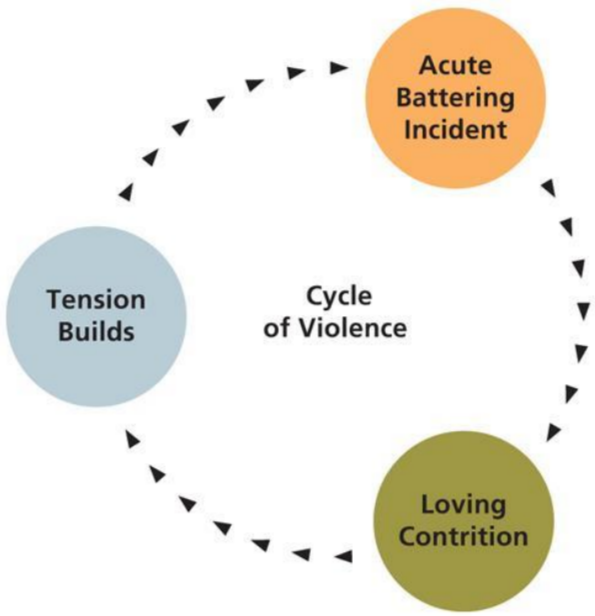
What can domestic violence look like in middle adulthood?
“Intimate partner violence”
Deeper divide between sexes can trigger abuse
Low status women at higher risk
How can domestic violence be prevented?
Educating couples about conflict resolution strategies and spreading awareness about safety and available resources
What does work vs leisure look like in middle adulthood?
Middle-aged adults tend to invest leisure time in social outdoor activities
28 waking hrs of leisure on average
What is burnout?
Situation where workers experience dissatisfaction, frustration and weariness from their jobs
How can burnout be avoided?
Good work practices
Mental disengagement
Encouragement and perks
Why may middle-aged adults take breaks in jobs?
Loss of interest
Unfulfilling
Maternity leave
Can lead to unemployment or career switches
What are some effects of job termination?
Depression and anxiety
Feeling unproductive
Pessimism and cynicism
Difficulty bouncing back