LEED v5: Practice Test (100 Questions)
 Call Kai
 Learn
 Practice Test
 Spaced Repetition
 Match
 Flashcards
 Knowt Play
1/159

Earn XP
Description and Tags
Practice Test
160 Terms

1
A. Eliminating on-site parking

2
B. It’s entire life cycle, from raw material extraction to construction and disposal
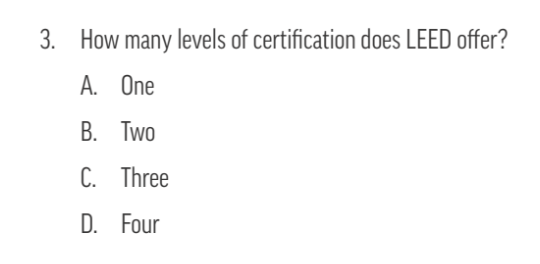
3
D. Four

4
A. Resilience

5
D. These species typically do not need irrigation except during a brief period after planting

6
D. It preserves undeveloped land outside the built-up areas for nature and agriculture.
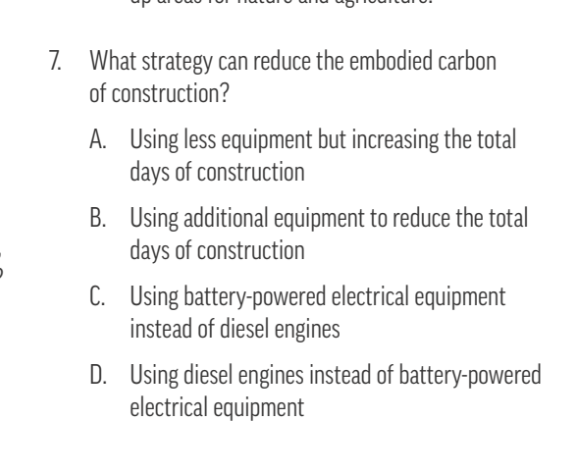
7
C. Using battery-powered electrical equipment instead of diesel engines.

8
A. Mold

9
A. Raising the cost of living in the area

10
C. Increasing worker productivity due to a healthier indoor enviorment.

11.
C. Blue light tends to be the most efficient, but can disrupt sleep patterns and reduce night vision.

12
A. Green Cleaning
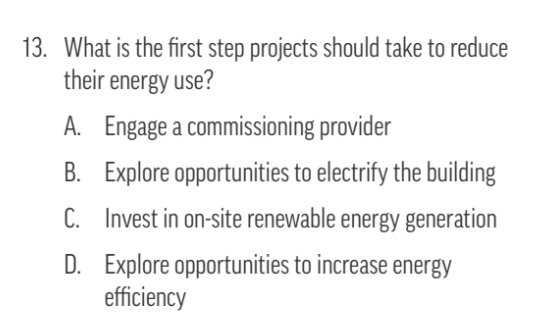
13
D. Explore opportunities to increase energy efficiency.

14
C. A small amount may not be harmful, or the likelihood of exposure may be harmful.

15
B. Brownfield

16
A. Normal Conditions

17
A. Green building

18
D. Cooling Towers

19
B. Resilience

20
D. LEED for Building Design and Construction (LEED BD+C): New Construction and Major Renovations

21
C. Process Load

22
C. Credit weightings

23
D. Responsible use and protection of the natural enviorment

24
D. The fear of not being able to find a place to charge when the battery is low

25
B. Sustainable development

26
C. Maintenance
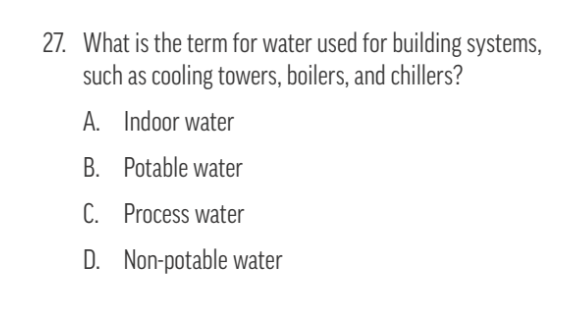
27
C. Process water

28
A. Water Efficiency

29
D. Energy-recovery ventilation

30
B. Indoor carbon dioxide (CO2) levels
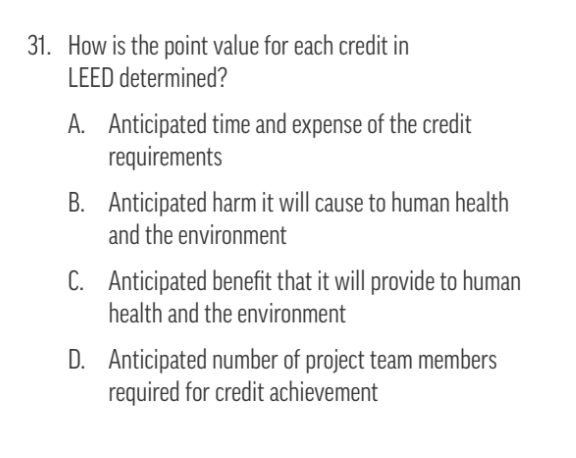
31
C. Anticipated benefit that it will provide to human health and the environment
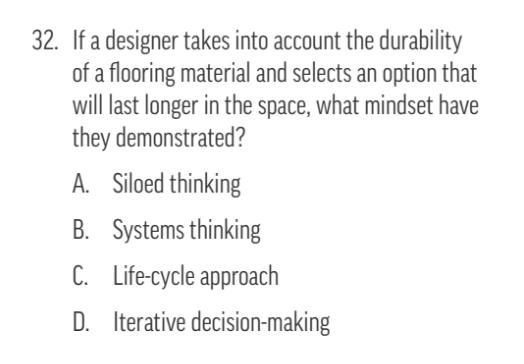
32
C. Life-cycle approach

33
B. Pilot Credit Library
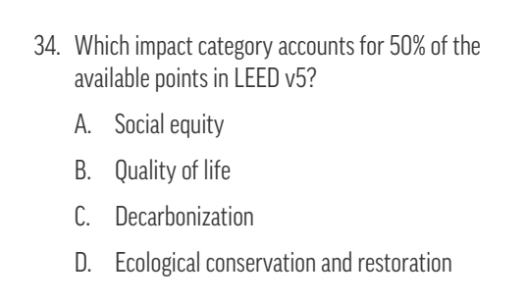
34
C. Decarbonization

35
B. Hazard Assesment
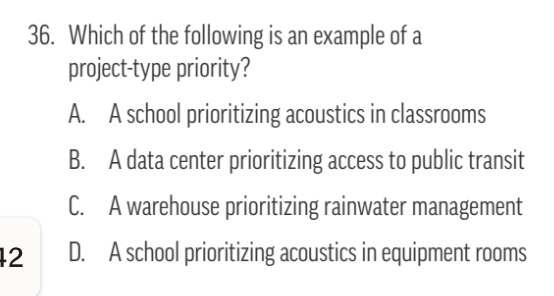
36
A. A school prioritizing acoustics in classrooms
37
D. Environmental and social performance

38
C. High-density development
39
B. Project Priorities

40
D. Regenerative

41
B. Discovery

42
A. Discovery
43
A. An intent and requirements

44
C. Iterative decision-making
45
C. 30%
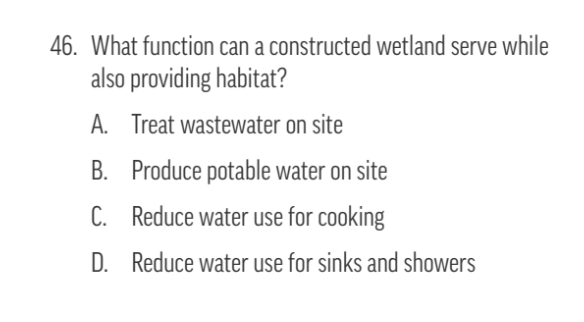
46
A. Treat wastewater on site

47
D. Project-type priorities

48
B. Go beyond common practice
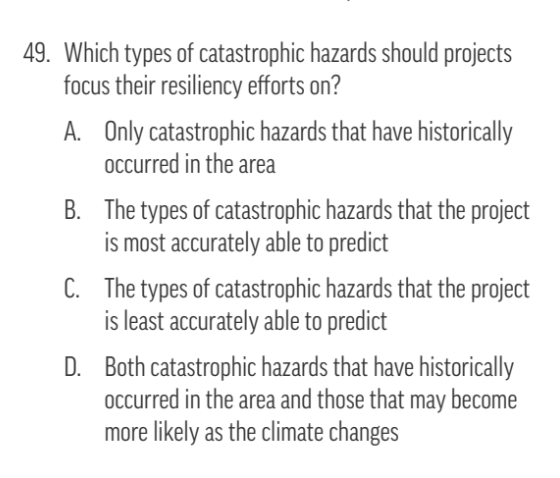
49
D. Both catastrophic hazards that have historically occurred in the are and those that may become more likely as the climate changes

50
D. Indirect and diffused light

51
D. Landfill and incineration facilities
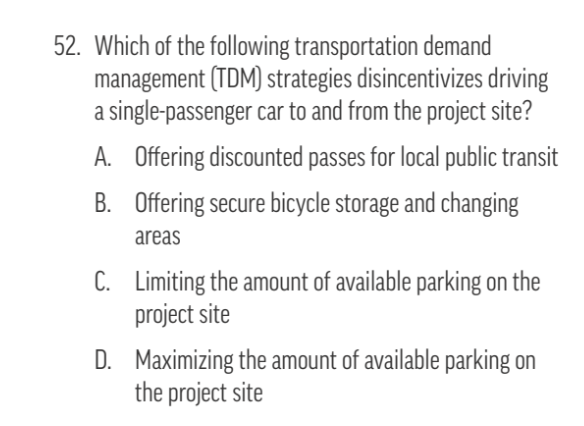
52
C. Limiting the amount of available parking on the project site

53
C. A project in an area that receives a lot of sunlight prioritizing on-site energy generation through solar panels

54
A. Schools

55
A. Built environment
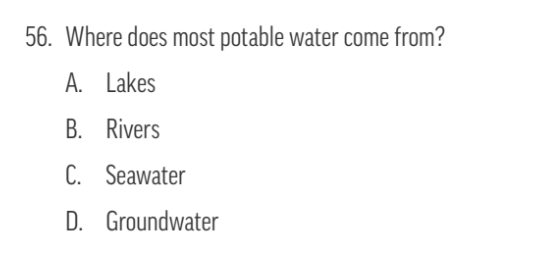
56
B. Rivers

57
C. Inclusive (or universal) design

Practice Test 58
A. Flow of water to a project

Practice Test 59
A. LEED Certified
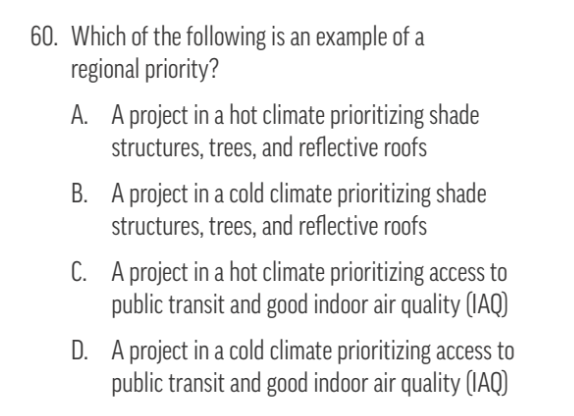
Practice Test 60
A. A project in hot climate prioritizing shade structures, trees, and reflective roofs
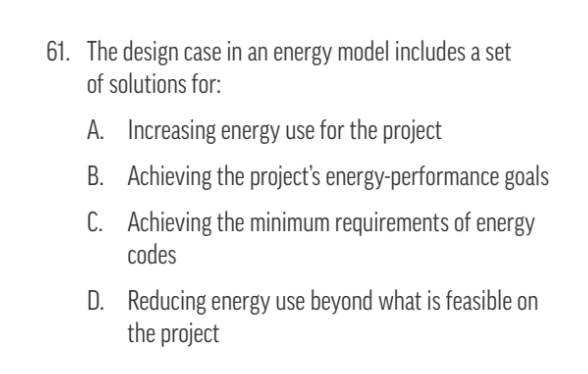
Practice Test 61
B. Achieving the project’s energy-performance goals
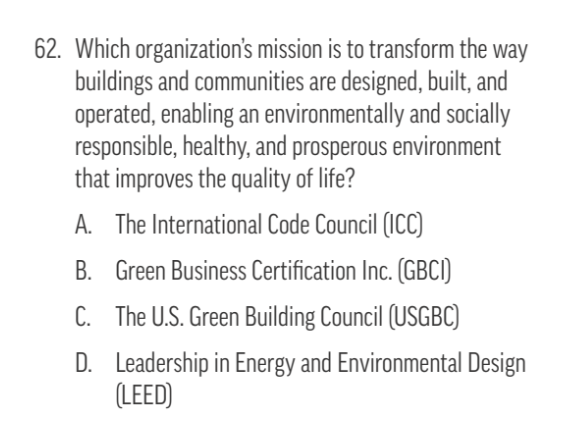
Practice Test 62
C. The U.S. Green Building Council (USGBC)

Practice Test 63
B. Ecosystem services
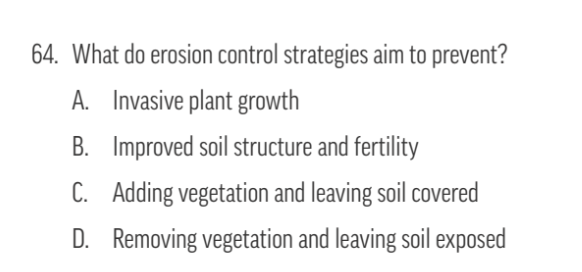
Practice Test 64
D. Removing vegetation and leaving soil exposed

65
A. Aerators

66
C. Understanding a site’s features and challenges in order to appropriately integrate the buildings and grounds into the local ecosystem

67
C. Fenceline communities
68
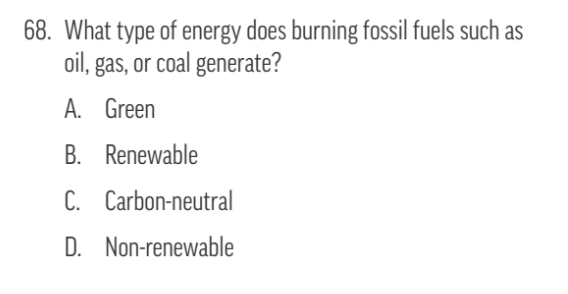
D. Non-renewable

69
D. Causing soil erosion and excess sediment in local waterways, exacerbating downstream flooding, and carrying harmful chemicals into the water system

70
C. Human health and well-being, the environment, and the economy

71
D. Source Control
72
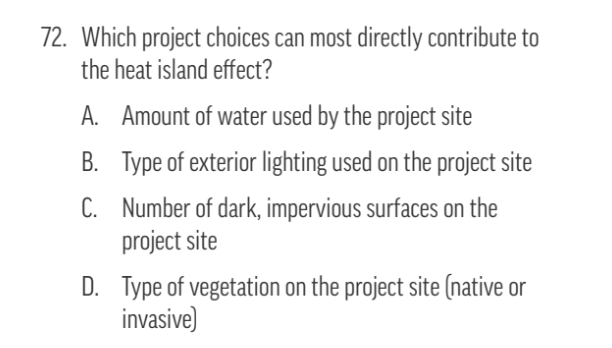
C. Number of dark, impervious surfaces on the project site

73
C. The U.S. Green Building Council (USGBC)

74
D. Building enclosure commissioning (BECx)

75
A. Irrigation

76
D. Greater insulating effectiveness

77
D. Minimum Program Requirements (MPRs)

78
D. Credit Catagories

79
A. Climate Risks

80
B. Green Business Certification Inc. (GBCI)

81
A. As water use rises, so does energy use

82
B. VOC content
83
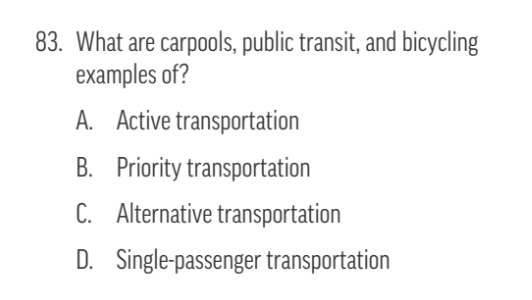
C. Alternative transportation

84
D. Volunteer committees

85
B. Potable water

86
B. When the peak thermal load is much higher than typical thermal load

87
C. 5 years

88
C. Commissioning provider

89
C. Overage
90
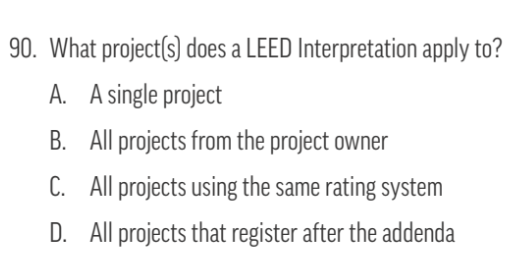
D. All projects that register after the addenda

91
D. Smaller particles
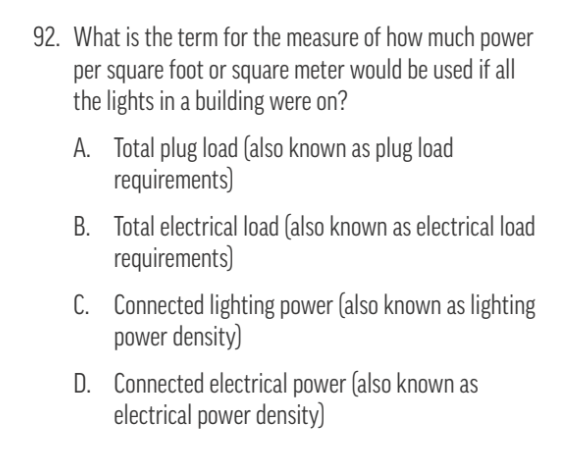
92
C. Connected lighting power (also known as lighting power density)

93
C. Prerequisites

94
A. Embodied carbon emissions

95
D. Sufficiency

96
B. Efficiency

97
B. People tend to be satisfied with a wider range of environmental conditions when they can modify them
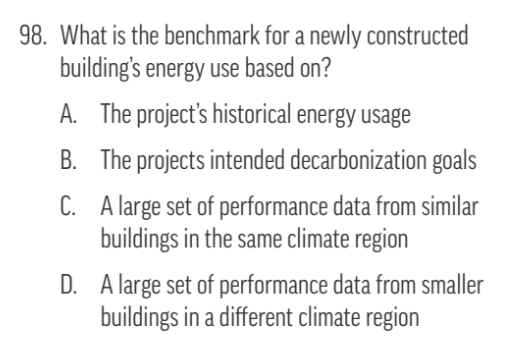
98
C. A large set of performance data from similar buildings in the same climate region

99
B. to protect the inside of the building from the conditions outside
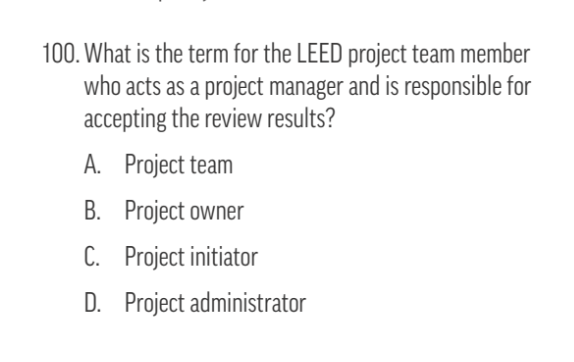
100
D. Project Administrator