Special Topics in Oral Biology - Intro to Basic Immunology
 Call Kai
 Learn
 Practice Test
 Spaced Repetition
 Match
 Flashcards
 Knowt Play
1/101

There's no tags or description
Looks like no tags are added yet.
102 Terms
immunology
study of immune system
the immune system and its responses are needed to resist infections due to microbes such as
bacteria, parasites, fungi, viruses are also overcome the effects of toxic proteins that might be virulence factors of those pathogens
Why study the immune system?
immune responses are the basis for how vaccines work
vaccines
- artificial representatives of real pathogens that will stimulate our immune system preemptively
- do not cause pathogenic disease
- mimic naturally occurring pathogens
Vaccine types
- killed pathogens produced in the lab
- live attenuated (non-pathogenic) versions of pathogens produced in the lab
- attenuated virulence factors (toxins) of pathogens
- lab produced non-pathogens that are engineered to make the virulence factors of pathogens
- mRNA or DNA of pathogen
vaccines lead to
eradication or near eradication of many infectious diseases
for effective vaccination programs, _________ compliance must be achieved due to herd immunity
70-95%
herd immunity
breaks the chain of infection
many of the diseases in the oral cavity
- have a microbial origin
- are caused by dysfunctional immune system
caries
- cavities that develop on the tooth surface are caused by Streptococcus mutans et al. consumption of sugars, inadequate immune response to this microbe
- plaque biofilm and no antibody protection with the gram positive cocci
certain strains of S. mutans are linked to
- heart valve inflammations
- cerebral microbleeds
- via bacteremia
periodontitis
- chronic inflammation and bone destruction around the tooth caused by Porphyromonas gingivalis (gram negative, anaerobic) et al. and inability to control inflammatory immune responses to this microbe
- inflammatory response here leads to destruction of bone and other tissue
periodontitis and periodontal pathogens are linked to
- coronary artery disease
- inflammatory bowel disease
- colon cancer
examples of viruses
polio, smallpox, influenza, measles, AIDS
examples of bacteria
TB, tetanus, whooping cough
examples of fungi
thrush, ringworm
examples of parasites
malaria, leishmaniasis
oral thrush
- caused by Candida albicans, a fungal pathogen
- overgrowth due to inadequate immune response to this microbe
- deficiency in Th17 and neutrophils, allows fungus to thrive
- result is a flourishing fungus on the surfaces of the mouth
systemic infection with Candida albicans has a ___% mortality rate
50
Endodontitis
- inflammation of the root of the tooth caused by Porphyromonas endodontalis and Enterococcus faecalis, et al.
- T cells, B cells, macrophages contribute to this response
- inability to control inflammatory response to these microbes lead to necrosis of the tooth root and pulp and tooth loss
Tooth loss elevates the risk for
dementia
What should we be aware of regarding the immune system?
- recovery from infectious disease requires immune response
- vaccines against many infectious disease
- duration of vaccination immunity varies
- IS in infants is immature, not complete
- IS responses decline with age
- IS helps prevent cancer development
- IS used therapeutically to control cancer growth
- inappropriate IS responses are at the heart of development of allergies
- inappropriate IS responses cause development of autoimmune diseases
initial immune response is from the
innate immune system
the innate immune system
- does not require prior exposure
- provides quick, robust anti-microbial resistance
- keeps us from being overwhelmed by pathogens while the adaptive immune system gets going
natural, intrinsic barriers and responses of innate immunity
- epithelial barriers
- mucous barriers
- lower pH of stomach, skin, mouth: chemical barrier
- higher salt concentration of skin: chemical barrier
- itching/scratching (stimulating inflammatory response)
- emesis (vomiting)
number one disease in the oral cavity
caries
molecules part of innate immunity
- lysozyme
- transferrin
- interferon
- cytokines
lysozyme
enzyme present in all secretions that breaks down peptidoglycan
transferrin
protein that binds up free iron
interferon
proteins that initiate an anti-viral response/state
cytokines
proteins produced by cells of the immune system for intercellular communications
innate immunity - complement
- collection of proteins that respond in serial fashion to have extracellular antimicrobial effects
- without infection, these proteins are inactive
- with infection, these proteins become activated
- found in blood and lymph
when complement proteins are activated
- promote inflammation
- promote migration of leukocytes (chemotaxis)
- enhance phagocytosis (opsonization)
- directly kill bacterial cells
- inactivate viruses
- work with or without antibody
hematopoiesis
- development of all blood cells of innate immune branch
- begins in the bone marrow with stimulation of pluripotential stem cells
pluripotential stem cells
divide and differentiate
pluripotential stem cells first to
lymphoid progenitors or myeloid progenitors
myeloid progenitors
divide and differentiate to either:
- reticuloendothelial or granulocytes
granulocytes include
- neutrophils
- eosinophils
- basophils/mast cells
reticuloendothelial are
lineage of macrophage family of cells
neutrophils
in blood, migrate into tissue upon infection

monocytes
in blood, deal with pathogens in circulatory system

macrophages
in tissues, throughout the body, deal with microbial invasion of tissues

cellular defenses are composed of
neutrophils, monocytes, macrophages

phagocytosis
- engulfment of a cell by another cell
- engulfment results in death of microbe being engulfed
- in order to cause death of engulfed cell, substances are produced that re toxic to the microbe and other substances that are inflammatory
the three main phagocytic cells produce
reactive oxygen products to help kill the pathogen
reactive oxygen products are
- super oxides
- nitric oxide
- hydrogen peroxide
- hypochlorous
Natural Killer (NK) cells
- lymphocyte found in blood and tissue that deals with virus infected cells or cancer cells
- viruses are not cells but are biological agents that replicate only by infecting cells and taking over cellular machinery
- one example is the influenza virus that infects lung epithelial cells
- activated quickly following virus infection
- kill virus infected cells
- cells killed cannot replicate virus
- ignore and do not kill healthy, uninfected cells

in order to activate NK cell
ligand cell attaches to activating receptor to trigger killing
granulocytes
- part of innate immune system
- part of myeloid lineage
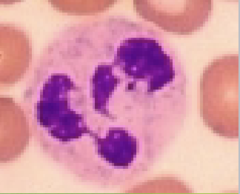
- multilobed nucleus
- cytoplasmic granules

neutrophil
- granulocyte
- stains very light blue
- most numerous WBC, in inflamed gingiva
- phagocytic
- can bind with some antibodies to help phagocytosis called opsonization (enhancement)
- first to migrate to sight of inflammation or infection
- will produce reactive oxygen molecules
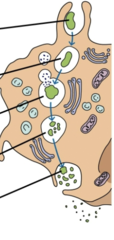
process of phagocytosis
- attachment of pathogen to cell membrane elements
- pseudopodia and fusion of cell membrane
- formation of phagosome-product of engulfment and fused cell membrane
- phagosome fuses with membrane bound lysosome to form phagolysosome
- contents degraded and released
pseudopodia
engulfment of pathogen
killing of microbes by phagocytes during phagocytosis is the result of a
respiratory burst of reactive oxygen products due to enzymes found at the membranes of phagosomes of phagocytes
enzymes at the membranes of phagosomes of phagocytes
- NAPDH oxidase
- superoxide dismutase
- myeloperoxidase
reactive oxygen products of enzymes are
O2 (superoxide)
H2O2 (hydrogen peroxide)
OCl (hypochlorous)
Eosinophil
- stains red
- low level in blood
- can interact with antibody
- can be phagocytic
- important against worm and parasitic infestations

Basophil
- stains dark blue
- low levels in blood
- granules contain histamine
- important in allergies
- promotes inflammation

Mast Cells
- granulocytes
- stain dark blue
- in tissue
- granules contain histamine
- important in allergies
- connective tissue or mucosal
Monocytes in blood differentiate to
macrophages in tissue or sites of inflammation
Kupffer cells
resident macrophage in liver
alveolar macrophages
resident lung macrophage
splenic macrophages
resident macrophage in spleen
peritoneal
resident macrophage of peritoneum
microglial cells
resident macrophage in brain
osteoclasts
derived from macrophages, resident in bone
inflammatory macrophages
migrate from blood and lymph to infected sites
all macrophages are
- bilobed nucleus
- phagocytic
- opsonize antibody-bound antigens
- present antigen to T cells
inflammation is the
choreography of innate immune components
inflammation
- part of innate immunity
- most primordial of immune mechanism
- body's response to injury whether infectious or not
- trauma, surgery, chemicals
- painful
- contain defense and repair mechanism
universal characteristics of inflammation
- swelling
- redness
- heat
- pain
- loss of function
the inflammatory response
chemicals of microbes trigger complement activation, mast cell release of histamine, and cytokine production
histamine in inflammatory response
released during inflammation inc vascular permeability
cytokines in inflammatory response
produced during inflammation increase endothelial cell adhesion molecules to which WBCs adhere
inflammatory response will include
- inc production of granulocytes
- inc migration or chemotaxis of WBCs
- adhesion of WBCs to endothelium
- flow of fluid, WBCs, RBCs through endothelium (extravasation)
- more blood fluid to affected area (more complement components)
- more phagocytes, monocytes, macrophages, neutrophils
adaptive immune responses
- slower compared to innate
- requires exposure to special molecule of microbe called antigen
- immune response to antigen takes 1-2 weeks to fully develop
- responses to antigen have memory effect
- specific response to antigen
- requires cooperation of cells and molecules
- response achieved with vaccinations
antigens
non self macromolecules found on microbes to which we respond immunologically and elicit antibodies that feedback and bind specifically to antigens
antigens (7):
- must be a foreign molecule
- must have chemical complexity, usually protein, glycoprotein, lipoprotein, polysaccharide
- must be large in size
- must have many sites recognized by immune system
- each site recognized is an epitope
- epitopes bind to antibody in non-covalent chemical interaction
each antibody recognizes an
epitope on the larger antigen
Some epitopes are
tolerated and resulting in no antibody production because it resembles a self antigen
3 cell types in acquired immune response to antigens
- B lymphocytes
- T lymphocytes
- APCs (Antigen Presenting Cells)
B lymphocytes
respond to antigen by making and secreting antibody
T lymphocytes
respond to antigen by making and secreting cytokines or respond by developing ability to be cytotoxic
APCs (Antigen Presenting Cells)
express all major histocompatibility complex proteins (MHC) responding to antigen by presenting antigen to T cells
- macrophages, dendritic cells, B lymphocytes
Acquired Immunity
ability to resist disease caused by foreign microbes that takes time to develop
Acquired Immunity is either
artificial or natural
Artificial Active Acquired Immunity
immunization or vaccines
Natural Active Acquired Immunity
- infection or exposure to antigen
- as good as it gets, as long as you can survive the exposure
Artificial Passive Acquired Immunity
adoptive transfer of antibody to patient in clinic
Natural Passive Acquired Immunity
mother's milk, placental transfer
humoral immunity
acquired immunity that requires antibodies
5 isotypes of human antibody
IgG
IgA
IgM
IgD
IgE
IgG
most numerous in blood and lymph
IgA
- most numerous in saliva and other secretions
- two versions in humans
- monomeric in blood
- dimeric in saliva
IgM
- largest in size
- 5 units stuck together (pentameric)
IgD
never secreted
IgE
causes allergies
some Igs work
with or without complement proteins
Ig stands for
immunoglobulin
humoral immunity is needed for
controlling Streptococcus mutans that cause caries in the mouth
cellular acquired immunity requires
- helper T cells
- macrophages
- cytokines of T cells and macrophages
- cytotoxic T cells