Drug Dose conversions & formulas
 Call Kai
 Learn
Learn Practice Test
 Spaced Repetition
 Match
Match Flashcards
 Knowt Play
1/36

There's no tags or description
Looks like no tags are added yet.
Name | Mastery | Learn | Test | Matching | Spaced | Call with Kai | Chat |
|---|
No analytics yet
Send a link to your students to track their progress
37 Terms
KCl Solution (Oral) to Tablets
KCl 10% = 20 mEq/15 mL
Calcium Salts elemental equivalence
Calcium carbonate = 40% elemental calcium
Calcium citrate = 21% elemental calcium
Aminophylline <-> Theophylline
Aminophylline to Theophylline: Multiply by 0.8 (remember: ATM)
Theophylline to Aminophylline: Divide by 0.8
Statin Dose Equivalencies
Pharmacists Rock At Saving Lives, Preventively Frequently
Pitavastatin — 2 mg
Rosuvastatin — 5 mg
Atorvastatin — 10 mg
Simvastatin — 20 mg
Lovastatin — 40 mg
Pravastatin — 40 mg
Fluvastatin — 80 mg
Levothyroxine dose form equivalencies?
IV:PO = 0.75:1
Metoprolol Dose Form Equivalencies?
IV:PO = 1:2.5
Loop Diuretics equivalencies

Insulin conversions
Usually, 1:1 conversion
Exceptions:
Going from NPH to Glargine
NPH is dosed BID, whereas glargine is dosed daily; use 80% of NPH dose
Calculation Example: Patient takes NPH 30 units in the morning and 20 units at night (TDD=50 units).
Convert to Glargine daily: 50 units×0.80=40 units once daily.
Going from Toujeo to other forms of glargine: use 80% of Toujeo dose
Calculation: Patient takes Toujeo 50 units daily.
Convert to Lantus (U-100) daily: 50 units×0.80=40 units once daily.
Steroids equivalencies?
Cortisone 25 mg
Hydrocortisone 20 mg
Prednisone 5 mg
Prednisolone 5 mg
Methylprednisolone 4 mg
Triamcinolone 4 mg
Betamethasone 0.6 mg
Dexamethasone 0.75 mg
Lithium syrup and mEq conversions?
300 mg lithium carbonate= 5 mL lithium citrate syrup = 8 mEq Li+ ion
What do the different percent strengths represent?
Weight in volume (% w/v): the number of grams (g) of drug dissolved in 100 millilitres (mL) of liquid or solution.
A 2% w/v means there is 2 g of drug dissolved in 100 mL of liquid or solution.
Weight in weight (% w/w): the number of g of drug in 100 g of the preparation.
A 6% w/w means there is 6 g of drug in 100 g of the preparation.
Volume in volume (% v/v): the # number of mL of a drug in 100 mL of liquid or solution.
A 10% v/v means there is 10 mL of drug in 100 mL of liquid or solution.
Convert from ratio to % strength:
100/ratio strength
Convert from % strength to ratio:
100/% strength
Convert PPM to % strength:
Move decimal to the LEFT 4 spaces
Convert % strength to PPM:
Move decimal to the RIGHT 4 spaces
Specific gravity

How to approach Dilution and concentration questions?
Q1*C1=Q2*C2
Units on both sides must match
Pure active ingredient = 100% concentration.
Diluent (e.g., petrolatum, lanolin, alcohol, ointment base, lactose) = 0% concentration because it contains none of the active drug.
If the question asks "What is the final weight/volume of the new mixture?" → Answer is Q2.
If the question asks "How much diluent/base must be added?" → Answer is Q2−Q1.
How to approach Alligation problems?
This is used when dealing with three concentrations


Osmolarity formula

How to determine number of dissociation particles?
Dextrose and Mannitol : 1
Calcium Chloride: 3
Sodium citrate: 4
Everything else is 2
How to calculate sodium chloride equivalent?

How to determine dissociation factor?
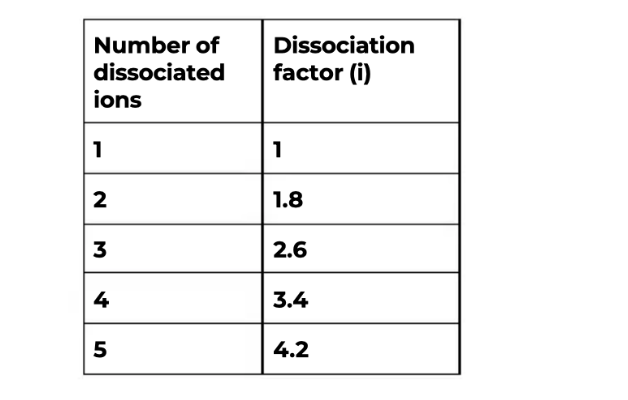
Dextrose and Mannitol : 1
Calcium Chloride: 3
Sodium citrate: 4
Everything else is 2
How to approach Isotonicity problems?

Moles

millimoles

mEq

Do not need to convert MW if its in g/mol
Total Energy Expenditure
TEE: BEE x Activity factor x stress factor
Activity Factors:
Confined to bed: 1.2 |
Out of Bed: 1.3 |
Fluid requirements for TPN:
1,500 mL + (20 mL)(weight in kg - 20); use Total Body Weight
Fats, Carbohydrates, and Protein conversions

Nitrogen Balance
Nitrogen Balance = grams of protein(AA)/6.25
Non-Protein Calories to Nitrogen ratio
Find nitrogen balance
Divide the total non-protein calories(dextrose and lipids) by the grams of the nitrogen
What is there to know about Fats/lipids?

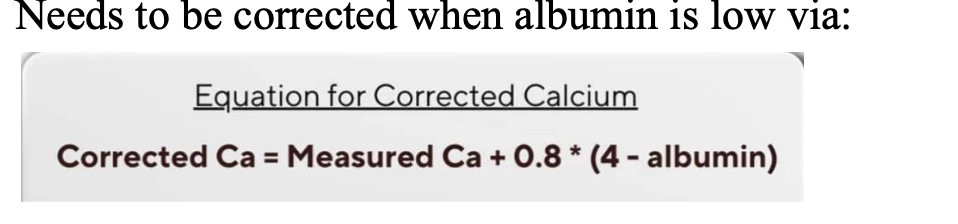
Corrected Calcium
How to reduce the risk of calcium and phosphate precipitation in parental nutrition?
Use calcium gluconate over calcium chloride
Add phosphate first
The calcium and phosphate added together should not exceed 45mEq in one liter
Maintain proper pH and refrigerate once bag is prepared
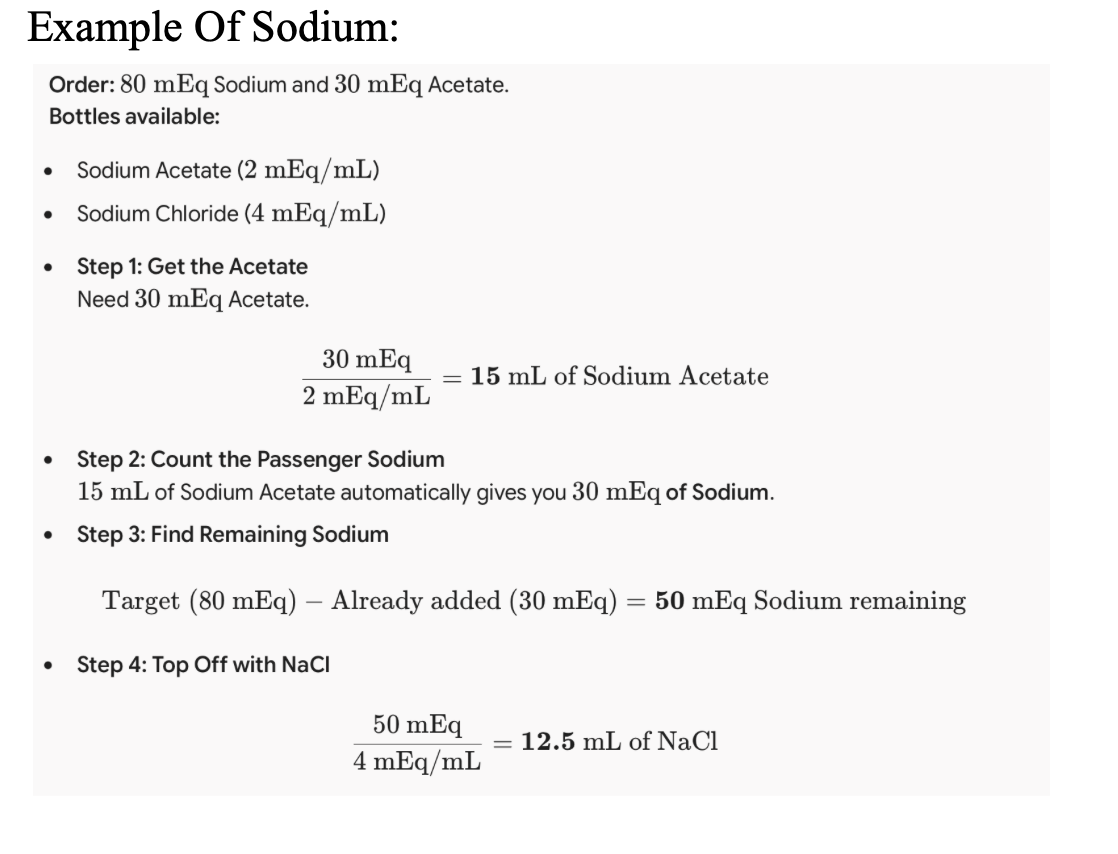
How to approach problems involving electrolytes?
1 Find the Single-Source Requirement: Look at the requirement that can only come from one bottle (e.g., Acetate).
2. Apply the conversion ratio
1:1 Ratio for Na and K+: That same mEq number is automatically how many mEq of the "passenger" ion (Sodium) you just added.
Phosphate: multiply volume you received by mEq
3. Subtract from the Total: Take the total requirement for that second ion (Total Sodium) and subtract the mEq you got in Step 2.
4. Convert Remaining mEq to Volume (mL): Divide the remaining mEq by the stock concentration of your second bottle (NaCl) to get your final volume.
Note: Phosphate will be written in mmol instead of mEq

Which drug products should not be administered in the feeding tube?
Enteric coating
Delayed or XR products
SL/ Buccal products
Hazardous drugs
What is the rule for preventing drug/enteral feeding interactions?
Hold Feedings 1 hour before and 2 hours after drug administration