Microbiology Lab Practical Review
 Call Kai
 Learn
Learn Practice Test
 Spaced Repetition
 Match
Match Flashcards
 Knowt Play
1/77

There's no tags or description
Looks like no tags are added yet.
Name | Mastery | Learn | Test | Matching | Spaced | Call with Kai | Chat |
|---|
No analytics yet
Send a link to your students to track their progress
78 Terms

What type of hemolysis is A
Beta hemolysis: complete RBC destruction; clear transparent zone around colony

What type of hemolysis is B
Alpha hemolysis: partial destruction of RBC; greenish/brownish discoloration around colony

Blood Agar Plate: What type of hemolysis is C
Gamma hemolysis: no hemolysis or cell breakdown; agar color remains unchanged
Why do we test hemolysis on a blood agar?
Identify the breakdown of RBCs by hemolysins; particularly identities Streptococcus & Staphylococcus species

Catalase Testing: What does this indicate?
A positive catalase test detects the catalase enzyme, which breaks down toxic hydrogen peroxide into water & oxygen
What type of test is catalase
Differential; distinguishing staphylococci (positive) from streptococci (negative) and enterococcus

PYR (pyrrolidonyl arylamidase) test
2-min colorimetric assay; detects enzyme L-pyrrolidonyl arylamidase & presumptively identify Group A streptococci & Eneterococcus species

PYR Test: What does this indicate?
Positive PYR Test, produces the enzyme L-pyrrolidonyl arylamidase

What does a negative PYR test look like?
no color change or a faded yellow/orange/blue hue
PYR Reagent
N,N-dimethylaminocinnamaldehyde

Lancefield Group test
used to classify beta-hemolytic streptococci based on specific carbohydrates in their cell walls
Lancefield Group Test: How is it read
If bacteria match the antibody on the latex bed, they will bind & form visible clumps (agglutination) within 1 minute
Lancefield Group A Strep (GAS)
Streptococcus pyogenes causes strep throat, scarlet fever, and skin
infections.
Lancefield Group B Strep (GBS)
Streptococcus agalactiae can cause severe neonatal infections, including
sepsis and meningitis.
Lancefield Groups C & G
Common in animals but can cause pharyngitis, skin infections, and bacteremia in humans
Lancefield Group D
Includes Enterococcus species (and Streptococcus bovis), which commonly cause urinary tract infections and endocarditis.
Lancefield Group F
primarily belong to the Streptococcus anginosus group; part of the normal flora; opportunistic pathogens known for causing severe infection

CCNA Agar Plate
Columbia Colistin-Nalidix Acid blood agar; differentiate bacteria based on their hemolytic reactions
What type of test is the CCNA Blood Agar Plate?
Selective & differential; gram-positive bacteria only & inhibits Gram-negative
CCNA Blood Agar Plate: Selective agents
Colistin disrupts cell membranes of Gram-negative bacteria, nalidixic acid blocks their DNA replication

Simmons Citrate Test
Test an organism’s ability to use citrate as its sole carbon source and ammonium as its sole nitrogen source.
Simmons Citrate Test: pH indicator
bromothymol blue

Simmons Citrate: What does B indicate?
Positive citrate test; bacteria capable of metabolizing citrate break it down into alkaline byproducts - rise in pH causes the bromothymol blue indicator to change from green to bright blue.

Gelatinase Test
identifies bacteria that produce extracellular enzymes (gelatinases) capable of hydrolyzing gelatin into amino acids
What type of test is gelatinase?
Differential
How is gelatinase incubated?
Incubate the tube for 24 hours, then place tube in refrigerator (around 4°C) for 30 minutes before reading

Gelatinase: What does A indicate?
Positive gelatinase test; medium remains liquid even after chilling so gelatin in media has been broken down

SIM Test
Sulfide, Indole, Motility; differential microbiology medium used to identify enteric bacteria. evaluates three traits in a single tube: hydrogen sulfide (H₂S) production, tryptophan breakdown (indole), and motility.

SIM Test: What does this indicate?
Positive sulfur reduction (H2S): microbe produces hydrogen sulfide.

SIM Test: negative Sulfur reduction
no black color

SIM Test: What does the tube on the right indicate?
positive Indole test; organism produces tryptophanase to break down tryptophan; A red ring forms at the top of the agar.
Indole Reagent (SIM Test)
Kovac’s reagent

SIM Test: Indole negative
No color change
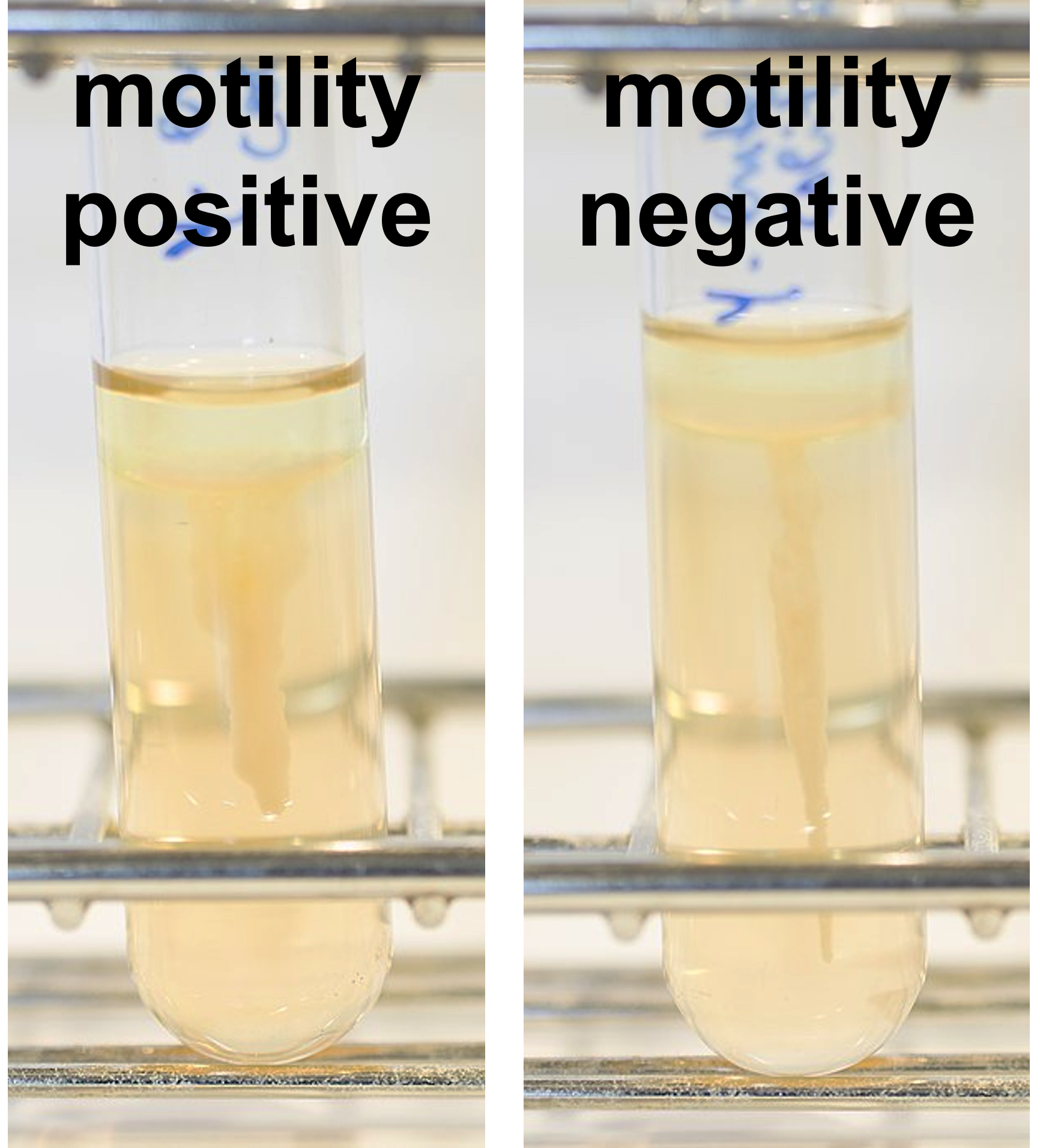
What does a positive motility test mean?
Growth radiates outward from the central stab line, creating a cloudy/diffuse appearance throughout the tube; microbe is flagellated
Why should an oxidase test be interpreted immediately
If you wait, it will be purple because it will oxidase sitting out on the benchtop
Oxidase Test
determines if bacteria produce cytochrome c oxidase, an enzyme used in the aerobic electron transport chain. for gram-negative bacteria only

Oxidase test: What does A indicate?
Positive oxidase test; organism is aerobic; area turns dark blue, purple, or black within 10 to 60 seconds
Triple Sugar Iron Agar (TSIA)
a differential microbiological medium used to identify Gram-negative enteric bacteria based on carbohydrate fermentation and hydrogen sulfide (H₂S) production.
TSIA Test Contains
glucose, lactose, sucrose, phenol red (pH indicator), and ferrous sulfate.
What 2 environments does the TSIA test create?
1) butt (bottom): anaerobic, where fermentation occurs
2) Slant (top): aerobic, allowing for oxidation & less acid buildup
TSIA Test: How to incoculate
Using a sterilized straight inoculation needle, pick a colony, stab the butt of the tube, and then streak the surface of the slant in a zig-zag motion.
TSIA Test Sugar Ratio
0.1% glucose, 1% lactose, and 1% sucrose

TSIA Test: Red/Yellow (K/A)
Glucose fermentation only. Because glucose is limited (0.1%), the bacteria consume it quickly and then switch to breaking down amino acids, which produces alkaline byproducts and turns the slant red

Yellow/Yellow (A/A)
Ferments glucose plus lactose and/or sucrose. Because the combined concentration of lactose and sucrose (2%) is so high, the acid produced will mask the alkaline byproducts, causing the entire tube to stay yellow.

Red / Red (K/K)
No sugars are fermented. The bacteria only use peptones, keeping the entire tube alkaline.

Gas Production
Bubbles in the agar or the agar cracking and lifting off the bottom

H2S Production
A black precipitate in the butt of the tube, which is caused by hydrogen sulfide reacting with ferrous sulfate
Urease Test
detects whether an organism produces the enzyme urease, which breaks down urea into ammonia and carbon dioxide.

What does B indicate?
positive urease test; production of basic ammonia raises the pH, turning a pH indicator (phenol red) from pale yellow/orange to bright pink.

Negative urease test
Remains yellow/orange
MRVP (Methyl Red & Voges-Proskauer)
2 biochemical tests used to identify bacterial species by determining their glucose fermentation pathway. It uses MR-VP broth, which contains glucose, peptone, and phosphate buffer.

MR-VP: Methyl Red Test
Detects mixed acid fermentation, which produces large amounts of organic acids (like lactic and formic acid) and significantly drops the pH below 4.4

MR-VP: Voges-Proskauer Test - positive
etects the 2,3-butanediol fermentation pathway, which produces neutral end-products like acetoin instead of high acid levels
MR-VP: Voges-Proskauer Test - negative
No color change
Nitrate Reduction
used to determine if bacteria can use the enzyme nitrate reductase to convert nitrate (NO₃⁻) into nitrite (NO₂⁻) or further into nitrogenous gases (N₂).
First Step in Nitrate Reduction
Check for Gas (Durham Tube): If positive (and organism is a non-fermenter): The bacteria reduced nitrate all the way to nitrogen gas (N₂)
Nitrate Reagents
sulfanilic acid (Reagent A) and alpha-naphthylamine (Reagent B)

What indicates a positive result after the reagents (Nitrate reduction test)
cherry-red color develops within a few minutes. This means the bacteria reduced nitrate to nitrite.

What does the zinc dust determine (nitrate reduction test)?
A red color develops. Zinc forces the reduction of unreduced nitrate into nitrite, confirming that the nitrate was untouched by the bacteria. (negative) ; if positive for nitrate reduction, no color change occurs
What type of test is the MacConkey Agar Plate
Selective & differential
Selective Agents of MacConkey Agar Plate
Crystal violet & bile salts stop Gram + bacteria from growing, letting only Gram - species thrive
Differential Agent of MacConkey Agar Plate
lactose allows bacteria to show if they can digest sugar

Interpreting results of MacConkey Plate - Fermenters
Turn pink to red (examples: Escherichia coli, Klebsiella).

Interpreting results of MacConkey Plate - Non-Fermenters
Stay clear, colorless, or transparent (examples: Salmonella, Shigella, Pseudomonas)

Cetrimide Agar - What does it test?
elective culture medium designed to isolate and identify Pseudomonas aeruginosa
What kind of test is the Cetrimide Agar?
selective; Cetrimide acts as a quaternary ammonium compound that disrupts the cell membranes of other microorganisms

Positive Cetrimide Agar Test
Greenish-bluish colonies grow, confirming presence of P. aeruginosa

Glucose Fermentation - What does it Test?
identifies if a bacterium can break down glucose to produce acid and gas
Glucose Fermentation - What is the pH indicator?
Phenol red, turns yellow below a pH of 6.8 and stays red/pink at neutral or alkaline pH

Glucose Fermentation - Result: A/G
Yellow broth + gas bubble: this means the bacteria ferments glucose and produces acid and gas (e.g., Escherichia coli)
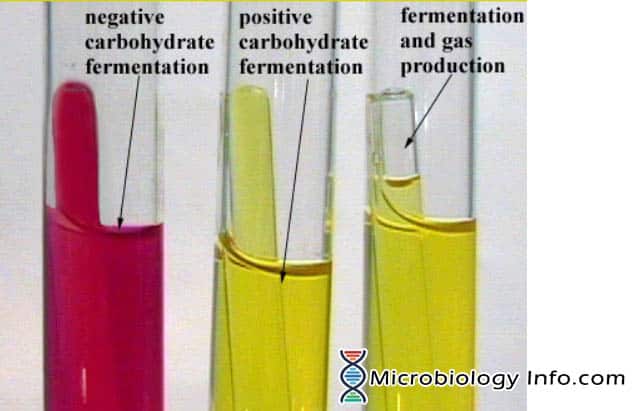
Glucose Fermentation - Result: A
Yellow broth + no gas: this means the bacteria ferments glucose to acid only, with no gas produced (e.g., Shigella or Salmonella Typhi)

Glucose Fermentation - Result: -
Red broth + no gas: this means the bacteria does not ferment glucose; the organism may instead use peptone, making the tube slightly more alkaline/red

Chocolate Agar - What does it test?
designed to recover fastidious organisms from clinical specimens enabling microbiologists to isolate them for further identification and confirmatory testing.
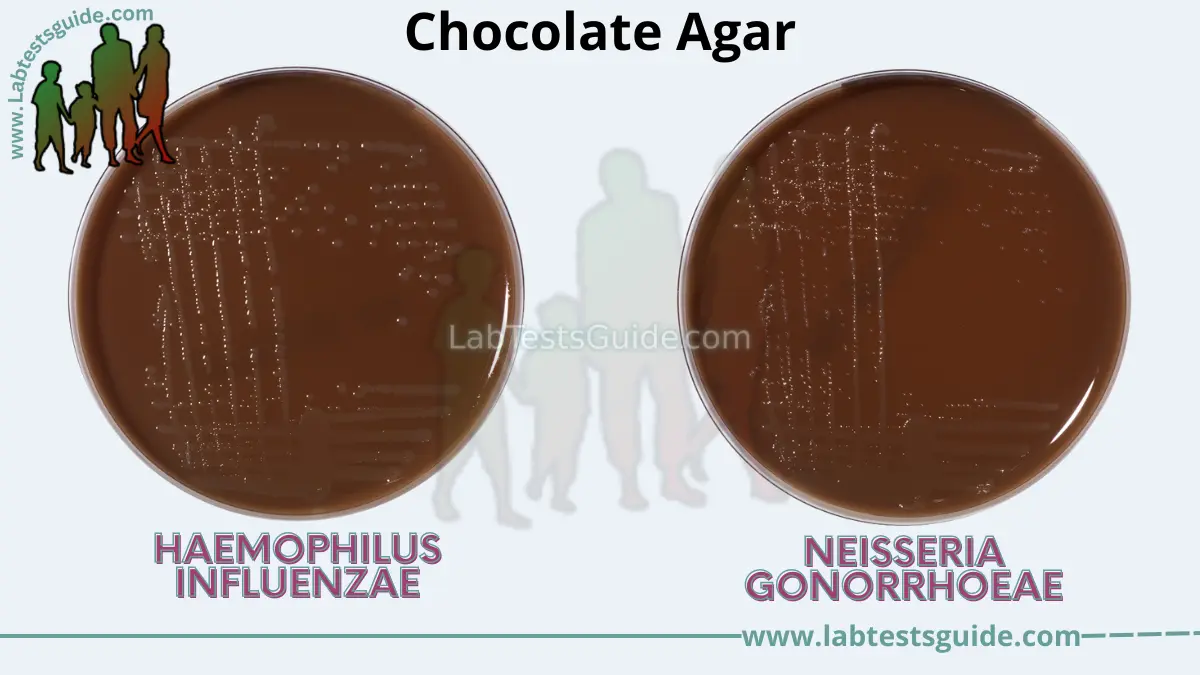
Chocolate Agar - What does it contain?
It gets its brown color from lysed red blood cells. Heating the blood breaks open the cells and releases critical nutrients—like hemin (Factor X) and NAD (Factor V)—that picky bacteria need to grow

Modified Thayer-Martin Media - What does it Test?
chocolate agar medium used primarily to isolate and grow pathogenic Neisseria bacteria—specifically Neisseria gonorrhoeae
Antimicrobials in Thayer-Martin Media
Vancomycin: kills Gram (+) bacteria, Colistin: stops Gram (-) bacteria, Nystatin: stops yeasts, Trimethoprim: Stops Proteus species from spreading across the plate

Superoxol - What does this test?
identify and differentiate Neisseria gonorrhoeae (the bacterium that causes gonorrhea) from other Neisseria species and clinical isolates.
How does the Superoxol test work?
Uses 30% hydrogen peroxide (H₂O₂) as a liquid reagent instead of the standard 3% solution used in routine tests. Produces an immediate, vigorous, and "explosive" bubbling reaction if positive, due to high catalase enzyme activity in the target bacteria.