Medical Terminology week1
 Call Kai
 Learn
 Practice Test
 Spaced Repetition
 Match
 Flashcards
 Knowt Play
1/112

There's no tags or description
Looks like no tags are added yet.
113 Terms
Anatomy
The study of the structure of the body and its parts
Physiology
The study of the function of the whole body or its systems or organs
Pathology
The study of disease
Pathophysiology
The study of functional changes associated with disease and injury
Etiology
The study of the origins and causes of diseases
Manifestation
obvious evidence or display of characteristic signs and symptoms of an illness or disorder; specific evidence that a disease is present
disease
harmful structural or functional change to the whole body or part(s) of it
syndrome
set of signs and symptoms occurring together as part of a specific disease
DIagnosis
the act of identifying a disease or injury
symptom
changes perceived by the patient; e.g. pain or diarrhea
sign
changes observed by a person examining a patient; e.g. swelling or fever
screening
testing for asymptomatic or potential diseases or injuries
Pharmacology
The study of sources, properties, and uses of drugs
Drug
a substance used to diagnosis
ech(o)
sound
echocardiography= ultrasound examination of the heart
electr(o)-
electricity
Electromyography= recording of electrical activity of muscles
graph
picture, recording or instrument for recording
cardiograph= instrument for recording heart muscle activity
-ism
condition or state
Hirsutism= a condition with excessive hair growth in women
-lithiasis
the presence of stones
Nephrolithiasis= the presence of kidney stones
mal-
bad, poor or evil
malabsoprtion= deficient absorption (intake) of food in the small intestine
nos(o)-
disease
Nosology= systematic classification of diseases
otomy, -tomy
cutting or a surgical incision
colotomy= surgical incision of the colon
-plasia
development, growth, formation
hyperplasia= enlargement of an organ or tissue
pur(o)-, py(o)-
pus
purulent= containing or consisting of pus
pyr(o)-, pyret(o)-
fever
pyretic= feverish
Abd, Abdo
abdomen
a
anterior
anat
anatomy
CC
chief complaint (why they came in)
CD
communicable disease
cyt
1. cytology 2. cytoplasm
D
dorsal
epidem
epidemic
H&P
history and physical
MAR
medication administration record
MRI
magnetic resonance imaging
P
1. physiology 2. posterior
PFSH
personal, family, social history
ROS
review of systems
U/A
urinalysis
V, vent, ventr
ventral
WBC
white blood count
ana-
apart
coronal or frontal plane
divides the body into anterior and posterior portions

transverse or horizontal plane
divides the body into superior (upper) and inferior (lower) portions

sagittal plane
divides body into left and right portions
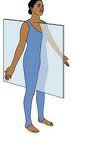
midsagittal plane
divides the body into EQUAL left and right halves

parasagittal plane
Divides body into UNEQUAL right and left halves

anterior
closer to the front of the body
cranial
toward the head
contralateral
on opposite sides of the body
deep
farther away from the surface of the body
distal
farther away from the body's core
dorsal
toward the back of the body
inferior
below, lower
ipsilateral
on the same side of the body
lateral
Away from the midline of the body
medial
Toward the midline of the body
posterior
closer to the back of the body
proximal
near/closer to the body's core
superficial
close(r) to the surface
superior
above, higher
ventral
toward or at to the front of the body
abdominal
pertaining to the abdomen
brachial
pertaining to the arm
Cardiovascular
pertaining to the heart and circulation or blood vessels
cervical
pertaining to the neck or cervix
cranial
relating to the skull (cranium)
dorsal
pertaining to the back (dorsum)
femoral
pertaining to the femur
humeral
pertaining to the humerus (upper arm bone)
lumbar
relating to the loins
malleolar
Relating to the ankle/malleolus or ankle region
nasal
pertaining to the nose
pelvic
pertaining to the pelvis
radial
pertaining to the radius
spinal
pertaining to the spine or the spinal cord
tracheobronchial
pertaining to the trachea and bronchi
vertebral
relating to a vertebra
A1C
long-term control of diabetes treatment
Blood pressure control
high blood pressure
Chest X-rays
lung cancer, acute and chronic inflammations, pneumothorax (air in the thorax cavity)
colonoscopy
visual examination of the colon for things such as cancer or the colon and/or rectum
arthroscopy
the visual examination of the internal structure of a joint
bronchoscopy
the visual examination of the throat, larynx (voice box), trachea (windpipe), and lower airways
cystoscopy
visual examination of the bladder
laparoscopy
visual examination of the abdominopelvic cavity, such as ovaries, uterus, small and large intestine
proctoscopy
procedure for looking at the anus and rectum
upper gastrointestinal endoscopy
examination of the esophagus, stomach, and first part of duodenum
Analgesics
Lessen pain
Anesthetics
Cause lack of feeling or awareness; produce the sensation of numbness
Antacids
neutralize gastric acids or decrease gastric acid release
Antiarrhythmics
Prevent cardiac irregularities
Antibiotics
Destroy or inhibit bacterial growth
Anticoagulants
Prevent the formation of blood clots; decrease the formation of existing clots
Anticonvulsants
Reduce the number and severity of seizures in patients with epilepsy
Antidepressants
elevate moof
Antidiabetics
Oral medications to control sugar levels in patients with type 11, non-insulin-dependent diabetes
Antiemetics
control nausea, vomiting, and motion sickness
Antihistamines
Relieve symptoms of allergies like sneezing, itchy and watery eyes, and a runny nose; can also relieve itchiness caused by insect bites and stings