Anat and Phys Ch 5
 Call Kai
 Learn
Learn Practice Test
 Spaced Repetition
 Match
Match Flashcards
 Knowt Play
1/33

There's no tags or description
Looks like no tags are added yet.
Name | Mastery | Learn | Test | Matching | Spaced | Call with Kai | Chat |
|---|
No analytics yet
Send a link to your students to track their progress
34 Terms
The epidermis consists of mostly of
four cell types found in the epidermis
keratinized stratified squamous epithelium
Melanocytes
Keratinocytes
Dendritic (Langerhans) cells: specialized immune cells
Tactile (Merkel) cells: sense touch

Hair shaft
Epidermis
Dermis
Papillary layer
Reticular layer
subcutaneous tissue (hypodermis)
sensory nerve fiber
lamellar corpuscle
hair follicle receptor
dermal papillae
sweat pore
Eccrine sweat gland
Arrector pilli
sebaceous (oil) gland
hair follicle
hair root
dermal vascular plexus
adipose tissue
The epidermis is composed mostly of (blank)
four cell types found in the epidermis
keratinized stratified squamous epithelium
keratinocytes
melanocytes
dendritic (langerhans) cells
tactile (merkel) cells
The epidermis is composed of (blank) or (blank) distinct layers (one layer is only found in thick skin)
Thin skin is only composed of (blank) layers
What are the five layers of skin
four, five
four
Stratum Corneum
Stratum Lucidum (only in thick skin)
Stratum Granulosum
Stratum Spinosum
Stratum Basale
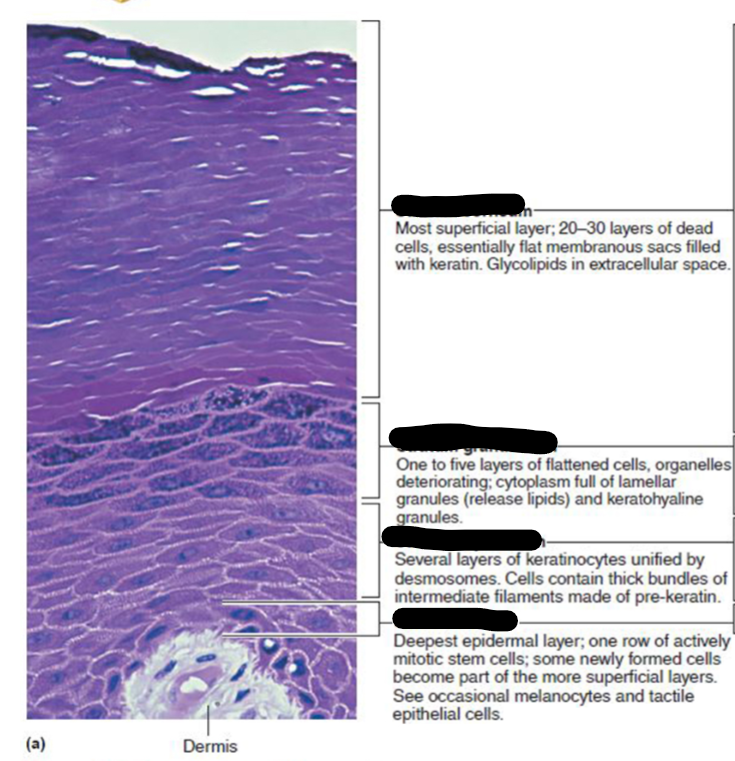
layer and description
Stratum corneum: the most superficial layer containing 20-30 layers of flat, dead cells filled with keratin
stratum granulosum: one to five layers of flattened cells. Organelles are deteriorating; cytoplasm is full of lamellar granules (release lipids) and keratohyaline granules
stratum spinosum: several layers of keratinocytes unified by desmosomes. Cells contain thick bundles of intermediate filaments made of pre-keratin
stratum basale: deepest layer, composed of actively mitotic stem cells. Some newly formed cells become part of the more superficial layers. occasional melanocytes and tactile epithelial cells


Cleavage lines
represent separations between underlying collagen fiber bundles in the reticular dermis
circular around the trunk and longitudinally around the limbs
Surgical incisions made parallel to these lines heal better than made across them
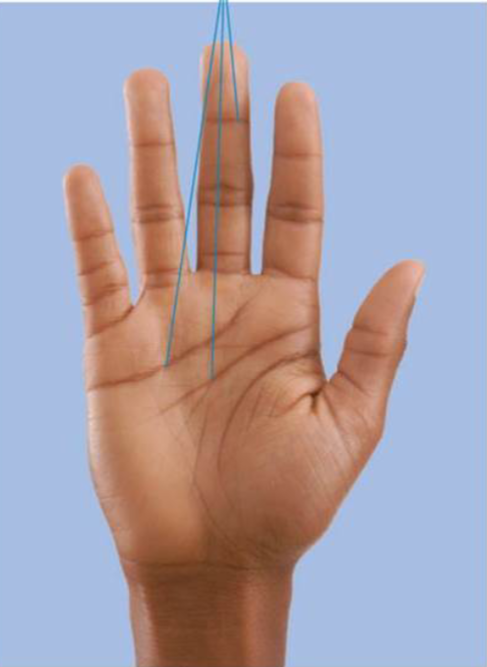
Flexure lines
form where the dermis is closely attached to the underlying structures
3 pigments contribute to skin color: identify and describe
melanin
only pigment made in skin
made by melanocytes
made from the amino acid tyrosine by tyrosinase
Carotene
yellow to orange pigment
most obvious in palms or soles
Hemoglobin
pinkish hue in fair skin due to lower levels of melanin
Excessive (blank) exposure damages skin: elastic fibers (blank), causing skin to become (blank)
Alterations in skin color can indicate disease: list four diseases associated with skin color
sun, clump, leathery
Jaundice: yellow cast
Pallor: blanching or pale color
Erythema: red color
Cyanosis: blue
(bruises (black or blue marks) are also alterations in skin color)
hair consists of (blank) (blank) cells
where isnt hair located
functions of hair
dead keratinized
palms, soles, lips, nipples, and portions of external genitalia
Warns of insects on skin; hair on head guards against physical trauma; protects from heat loss; shields skin from sunlight

Follicle wall
peripheral connective tissue
external root sheath
internal root sheath
cuticle
cortex
medulla

follicle
external root sheath
internal rooth sheath
cuticle
cortex
medulla
subcutaneous adipose tissue
two types of hair
follicles cycle between (blank) and (blank) phases
Vellus (thin, short hair/peach fuzz) and Terminal (thick, coarse, mature hair)
active, regressive
alopecia
True (frank) baldness
male pattern baldness
Telogen effluvium
other factors leading to hair thinning
hair thinning in both sexes after age 40
genetically determined and sex-influenced condition
caused by follicular response to Dihydrotestosterone (DHT)
abrupt hair thinning due to an abundance of hair follicles entering resting phase at once
drugs, low protein diet, hypothyroidism

Lunule
lateral nail fold
nail plate
Eponychium (cuticle)
proximal nail fold
hyponychium
nail bed
phalanx
nail appearance that can help diagnose some diseases
yellow tinged nails
thick yellow nails
beau’s nails
koilonchya (spoon nail)
sweat glands are also called (blank) glands
where are sweat glands located
two main types of sweat glands
sweat glands contain (blank) cells that do what
sudoriferous
all skin surfaces except nipples and parts of external genitalia
Eccrine (Merocrine) and Apocrine
sweat glands contain myoepithelial cells that contract upon nervous system stimulation to force sweat into ducts

sebaceous gland
sweat pore
Eccrine (merocrine) gland
duct
secretory cells
Apocrine sweat glands
confined to (blank) and (blank) areas
secrete viscous (blank) or (blank) sweat that contains (blank) substances and (blank)
(blank) than eccrine sweat glands with ducts emptying into (blank) follicles
begin functioning at (blank)
two types of modified apocrine glands
axillary, anogenital
milky, yellowish, fatty, proteins
larger, hair
puberty
ceruminous glands and mammary glands
function, method of secretion, secretion exit and location of Eccrine Sweat, Apocrine Sweat and sebaceous glands
Eccrine Sweat Glands
function: temperature control
method of secretion: merocrine (exocytosis)
secretion exit: skin surface
everywhere, especially palms, soles and forehead
Apocrine Sweat Glands
function: may act as sexual scent glands
method of secretion: merocrine (exocytosis)
secretion exit: upper part of hair follicle
Location: axillary and anogenital regions
Sebaceous (oil) Glands
function: lubricate skin and hair
method of secretion: holocrine
upper part of hair follicle
location: everywhere except palms and soles
Acne definition
whiteheads
seborrhea
infectious inflammation of oil glands
blocked sebaceous glands
also known as cradle cap, overactive sebaceous glands
skin is first and foremost a (blank)
main functions of skin (PBC MBE)
barrier
protection
body temperature regulation
cutaneous sensations
metabolic function
blood reservoir
excretion of wastes
skin is exposed to (blank), (blank), (blank) and (blank)
this constitutes 3 barriers within skin:
microorganisms, abrasions, temperature extremes, harmful chemicals
chemical barrier, physical barrier, biological barrier
what could happen if organic solvents or heavy metals pass the skin and enter the blood
multiple organ systems can be devastated which could be lethal: the kidneys could shut down, brain could be damaged, absorption of lead can result in anemia and neurological effects
insensible perspiration
sensible perspiration
what do blood vessels do in response to a cold environment
under normal resting body temperature, sweat glands produce 500 ml/day of unnoticeable sweat
body temperature rises and the dilation of dermal vessels can cause sweat gland activity to produce 12 L (3 gallons) of noticeable sweat. this is designed to cool the body
constrict
cutaneous sensory receptors are part of the (blank) system
(blank) respond to stimuli outside the body, such as temperature and touch
(blank) sense painful stimuli
nervous
exteroreceptors
free nerve endings
skin can hold up to (blank) percent of the body’s total blood volume
skin vessels can be (blank) to shunt blood to other organs such as exercising a muscle
skin can secrete limited amounts of (blank) wastes, such as (blank), (blank) and (blank)
sweating can cause (blank) and (blank) loss
5
constricted
nitrogenous, ammonia, urea, uric acid
salt, water
skin can develop over (blank) conditions and ailments
True/False: many internal diseases revel themselves on skin
most common disorders to skin are
less common disorders but most damaging to skin:
1000
true
infections
skin cancer, burns
most skin tumors are (blank) and do not (blank)
risk factors that contribute to skin cancer
true/false: there are some skin lotions that contain enzymes that can repair DNA
3 major types of cancer
benign, metastasize
overexposure to UV rays, frequent irritation of skin
true
melanoma, squamous cell carcinoma, basal cell carcinoma

basal cell carcinoma
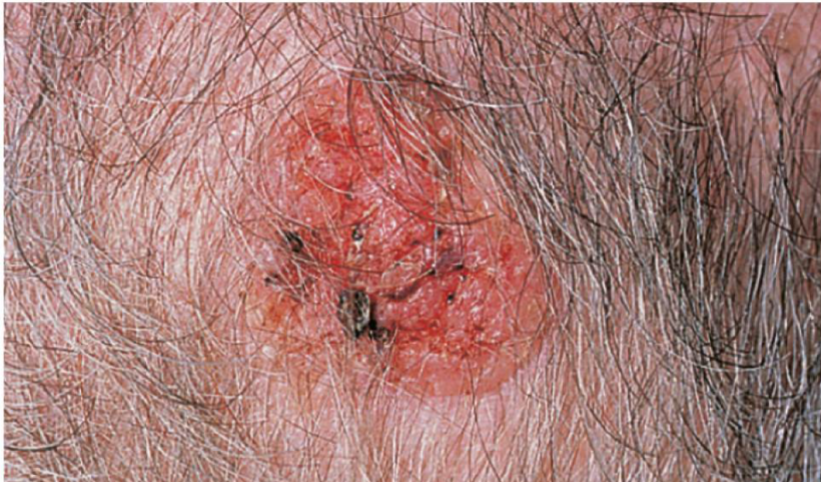
squamous cell carcinoma

melanoma
tissue damage can be caused by (blank), (blank), (blank), or certain (blank)
damage is caused by the denaturation of (blank), which destroys cells
how do we evaluate burns
heat, electricity, radiation, chemicals
proteins
body is broken into 11 sections with each section representing 9% of the body surface (except genitals which represent 1%). this is used to evaluate the volume of fluid loss
the skin of the fetus develops by what month
after age 30 (blank) (blank) assaults start to show
as we get older (blank) replacement slows, making skin become (blank), (blank) and (blank)
why do older people have an increased risk of cancer
ways to delay aging
fourth
cumulative, environmental
epithelial, thin, dry, itchy
decreased numbers of melanocytes and dendritic (Langerhans) cells
uv protection, good nutrition, lots of fluids, good hygiene