Biology- Lesson 10: Plant cells, tissues, and organs
 Call Kai
 Learn
 Practice Test
 Spaced Repetition
 Match
 Flashcards
 Knowt Play
1/21

There's no tags or description
Looks like no tags are added yet.
22 Terms
What are undifferentiated cells in plants called
Meristematic cells
Where are undifferentiated cells in plants found
Meristematic cells are found at the tip, the root, and stem of the plant
What are the three types of specialized cells meristematic cells can become
Dermal tissue
Ground tissue
Vascular tissue

Dermal tissue function
Protects from external environment
Ground tissue function
Performs photosynthesis and/or supports the plants bodyVa
Vascular tissue
Transports water, nutrients, and sugars throughout the plant (like veins in plants)
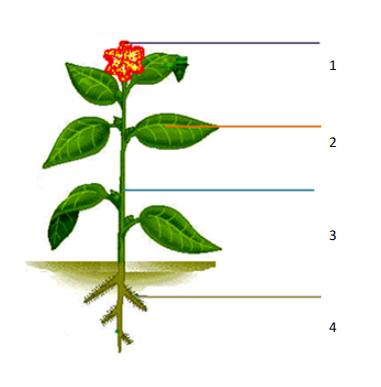
Name the plant organs
Reproductive structures
Leaves
Stem
Roots
Function and parts of a plant’s reproductive structure (2)
Make more plants
Includes flowers, cones, and seeds
Function of leaves (2)
Provides large surface area for photosynthesis
Primary source of photosynthesis in plants
Function of the stem (3)
Support plant and elevate leaves
Transport water between roots and shoots
Store water and nutrients
Function of roots (3)
Anchor the plant
Absorbs minerals and water
Store nutrients
Function of ground and vascular tissue in leaves
Ground and vascular tissue provides chloroplasts with H2O, CO2, and sunlight for photosynthesis
Ground tissue contains many chloroplasts and is supported by vascular tissue
What are guard cells
They are located at the bottom of leaves and help with transpiration
Why does the top of leaves have a wax coating and what is it called
The cuticle is a waxy protective layer covering the leaf's epidermis, helping prevent water loss through evaporation
This prevents the leaf from drying out and helps the plant conserve water, which can be transported to the stem and other parts of the plant through specialized tissue

Label the layers of leaf
Cuticle
Epidermis
Palisade mesophyll
Vein
Lower epidermis
Spongy mesophyll
Stomata
Chloroplast function
Double-membrane organelle responsible for photosynthesis
Contains chlorophyll pigment
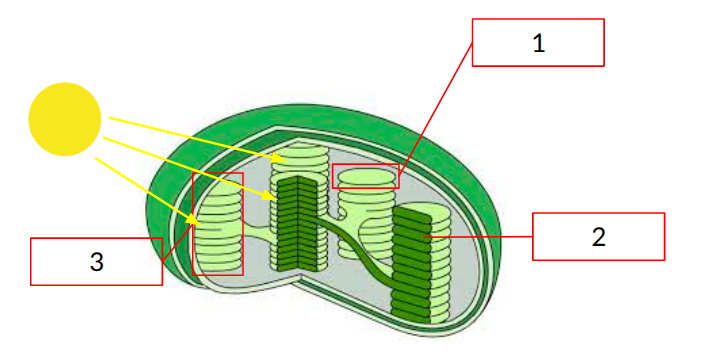
Label and explain parts of a chloroplast
Thylakoid
Disk containing chlorophyll
Absorbs light
Lumen
Inner part of thylakoid
Granum
Stack of thylakoids
Difference between xylem and phloem tissue (ie. what do they transport)
Xylem tissue → transports water throughout the plant
Phloem tissue → transports nutrients throughout the plant
Difference between fibrous and taproot
Fibrous root →A network of many branched out roots (grass)
Taproot → One thick, main root with smaller roots branching off (carrot)
Role of flowers (in reproducing)
Attract pollinators
Role of fruits (in reproducing)
Spread fertilized seeds
What is transpiration
Process where water evaporates from a plant's leaves through the tiny pores (stomata), moving water and minerals from the roots up through the stem (passive)
Also helps cool the plant and supplies water for photosynthesis.