KINGDOM FUNGI - LAB PRACTICAL
 Call Kai
 Learn
 Practice Test
 Spaced Repetition
 Match
 Flashcards
 Knowt Play
1/14

There's no tags or description
Looks like no tags are added yet.
15 Terms

The fungal network is composed of _____ in a series called _____
hyphae, mycelium

fungi are this time of consumer...
absorptive heterotrophs

Define Karogamy and Plasmogamy, similarities and differences
Karogamy - fusing of the dikaryotic (n+n) nuclei into one
Plasmogamy - when two mating strains fuse their cytoplasms

Gametes are produced by ____ and differentiation of _____ cells
mitosis, haploid (n)

List the five most diverse phyla of fungi.
Chytridiomycota - most ancient fungi, and they have flagella.
Zygomycota - Bread molds!
Ascomycota - "sac" fungi, ex. Morels
Basidiomycota - "club" fungi, ex. death caps
Glomeromycota - form symbiotic relationships with members of kingdom plantae.

This phylum typically contains aquatic saprobes or parasites on plants, animals, and protists. They also have flagella. Name the phyla and other characteristics.
Chytridiomycota (Chytrids), only phylum to have flagella, which their spores have. They are the most ancient fungi.

This phylum contains the bread molds, and they derive their name form a certain sexual reproductive structure. Further explain their life cycle.
Zygomycota (Bread Molds), when two mating strains meet, they form a resistant zygosporangium as a form of sexual reproduction. The hyphae will later break out of the zygosporangium and produce a sporangiophore via mitosis, which forms spores asexually via budding.

This phylum contains sac fungi, give examples of various species and also the unique sexual reproductive structures that are formed by this phylum.
Ascomycota: ex. Morels, some molds, morels, and truffles.
Their reproductive structure is called the ascus, which contains ascospores which can germinate into new mating strains. These mating strains can "bud" parts of themselves off, also known as conidia, which can form new mycelium asexually.

In most cases, how many ascospores are found per ascus?
eight! usually four (-) spores and four (+) spores.

This phylum contains "club" fungi, name a few members as well as the unique features of this phylum.
Basidiomycota: mushrooms, puffballs, and shelf fungi. They reproduce using the surface structure called the "fruiting body."

This phylum is known for their symbiotic relationships with plant roots. Furthemore, what is the general term for fungi in these types of symbioses? What does the plant get out of them, and what does the fungi get out of it?
Glomeromycota - Plant Root Symbionts
They are referred to as mycorrhizae. In which the fungus is able to aid the plant in nutrient absorption using it's vast mycelium network, and the fungi get's a share of those nutrients.
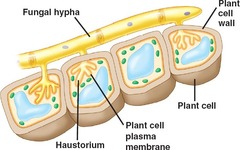
What is the name of mycorrhizae that penetrates the plant root cell walls? What phylum are they from?
Phylum: Glomeromycota
They are known as arbuscular mycorrhizae.
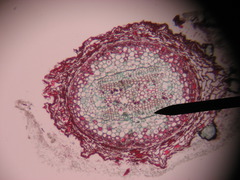
What is the name of mycorrhizae that does not penetrate the root cell walls? What phylum are they typically in?
Phylum: Traditionally Basidiomycota
Ectomycorrhizae.
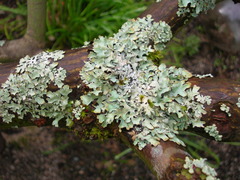
Name the different types of lichens. What are their characteristics?
Crustose - crusty, adhered tightly to the substrate and dry to the touch
Foliose - Still adhere to the substrate, but just like traditional foliage, they will peel away from the substrate in small sheets.
Fruticose - The only three-dimensional substrate, growing away from the substrate in erect stalks.

What are the two components of a lichen? How do they each benefit?
Mycobiont - The fungus, is able to absorb nutrients from the other party.
Photobiont - the photosynthetic organism. It benefits by being given a place to stay.