term 1 all biology vocab
 Call Kai
 Learn
Learn Practice Test
 Spaced Repetition
 Match
Match Flashcards
 Knowt Play
1/61

There's no tags or description
Looks like no tags are added yet.
Name | Mastery | Learn | Test | Matching | Spaced | Call with Kai | Chat |
|---|
No analytics yet
Send a link to your students to track their progress
62 Terms
Osmosis
Water moves toward an area of higher SOLUTE concentration

Solvent
-Present in greatest amount.
-Dissolving medium
-Usually a liquid.
Solute
-Present in lesser amounts.
-Usually atoms, ions, or molecules.
-What gets dissolved.
Semipermeable membrane
A barrier that allows certain molecules —typically small or uncharged ones like water—to pass through while blocking others, enabling processes such as diffusion and osmosis.
Passive transport
Not against concentration gradient - no energy input. Moving with the gradient.
Diffusion
A type of passive transport. Movement of solutes from high to low concentration.
Tonicity
Ability of a solution to alter the shape of a cell.
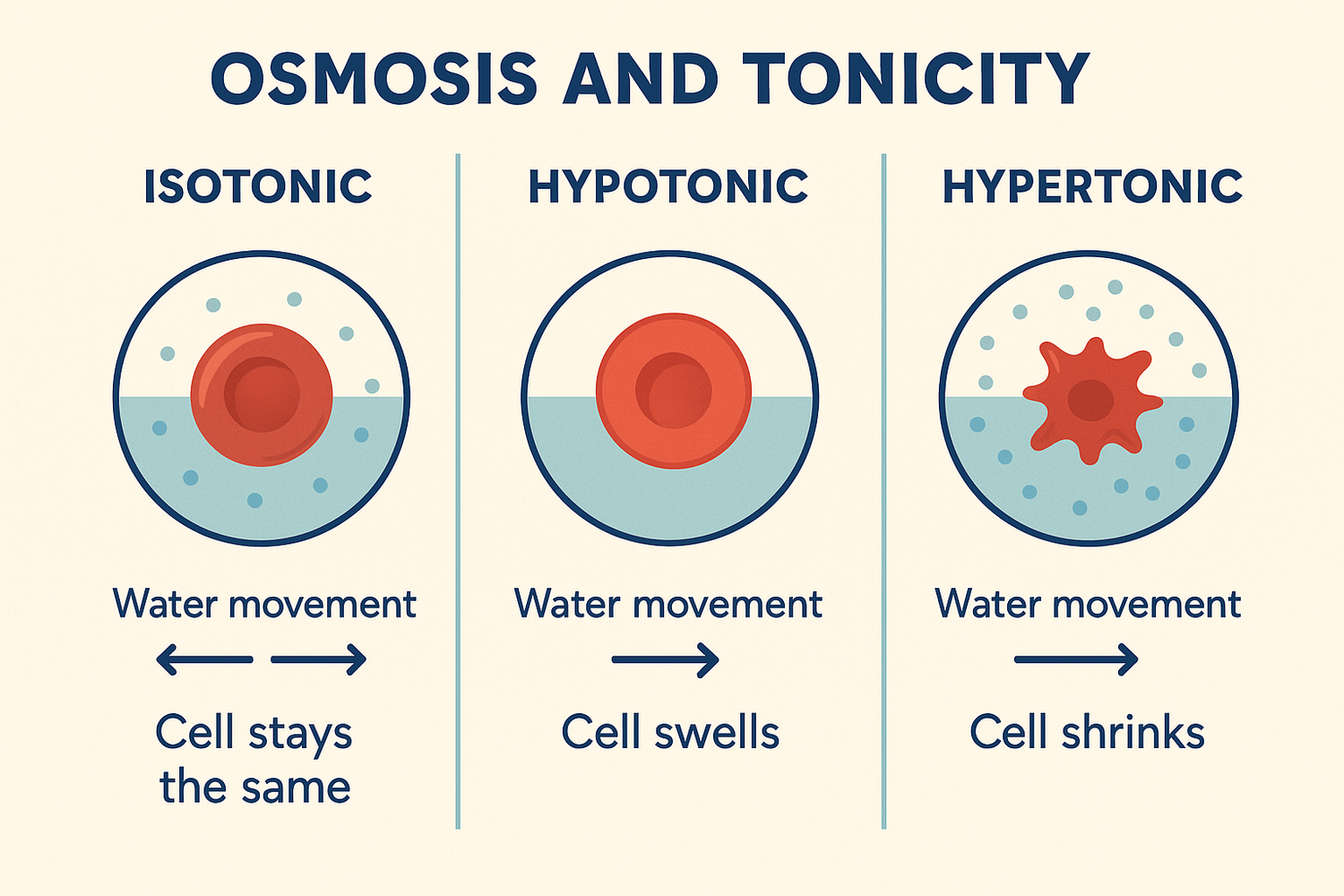
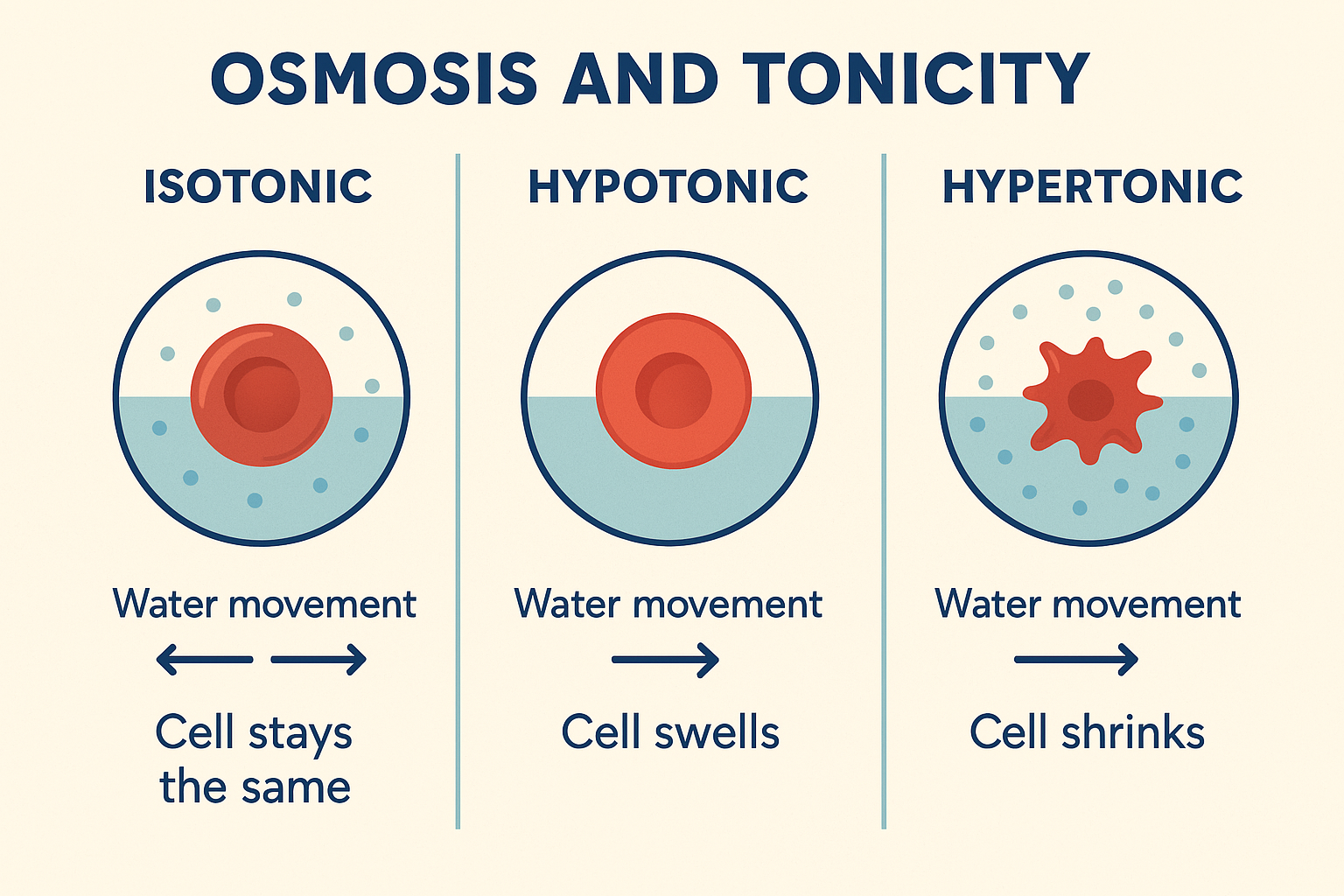
Hypotonic
Low or no solute. Hemolysis (burst)

Isotonic
Equal concentration to cell.
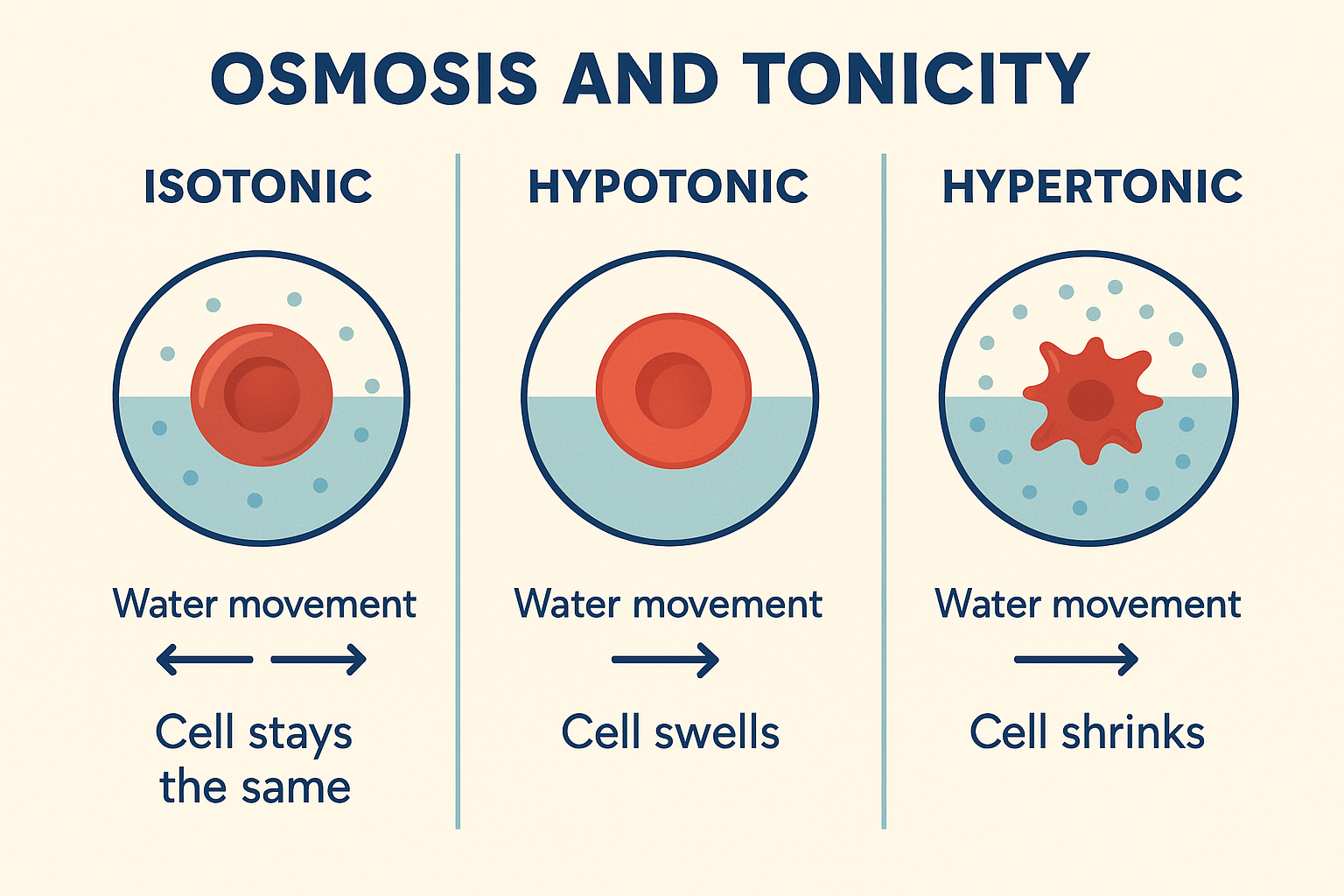
Hypertonic
Higher concentration of solute. Crenation (shrivel up)
hypotonic
A solution with a lower concentration of solutes compared to another solution, If cells are put into hypotonic solution they will swell.

active transport
The movement of molecules across a cell membrane from a region of lower concentration to a region of higher concentration, requiring energy in the form of ATP.
facilitated diffusion
The process by which molecules move across a cell membrane through protein channels from an area of higher concentration to an area of lower concentration, without the use of energy.

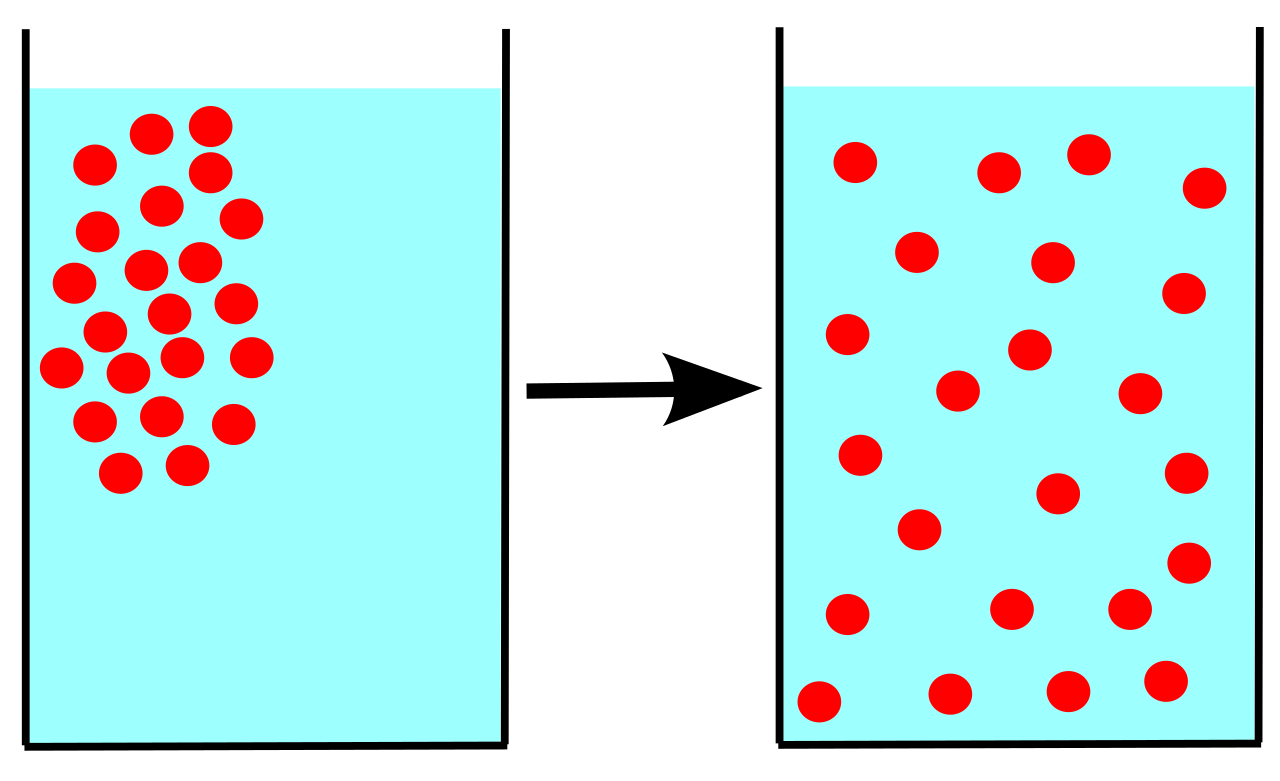
Diffusion
Movement of particles or molecules from an area of high concentration to an area of low concentration

Osmosis
Diffusion of water across a selectively permeable membrane

Selectively pemeable membrane
A membrane that allows certain materials to pass through, but not others
Equilibrium
The condition that exists in system when there is a relatively equal distribution of a particular molecule

Hypertonic
A solution that has a higher concentration of solutes than another.

Hypotonic
A solution that has a lower concentration of solutes than another.

Isotonic
Two solutions that have an equal concentration of solutes.

Solute
substance that is dissolved in a solution

Solvent
the liquid that contains the dissolved solute in a solution.

Cell Membrane
regulates and controls what enters or leaves the cell
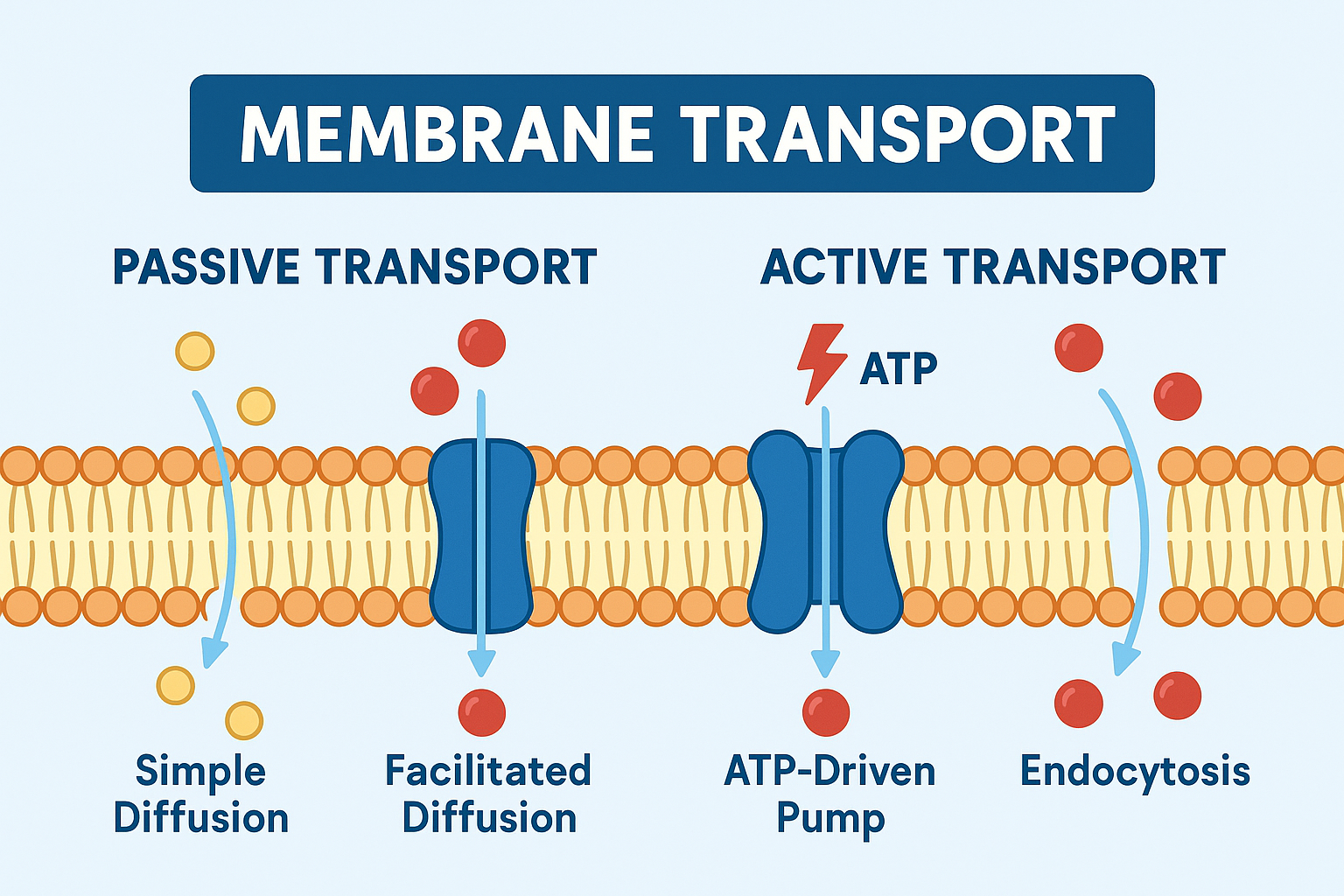
Facilitated Diffusion
this form of diffusion is regulated by protein channels in the membrane and requires no energy input from the cell
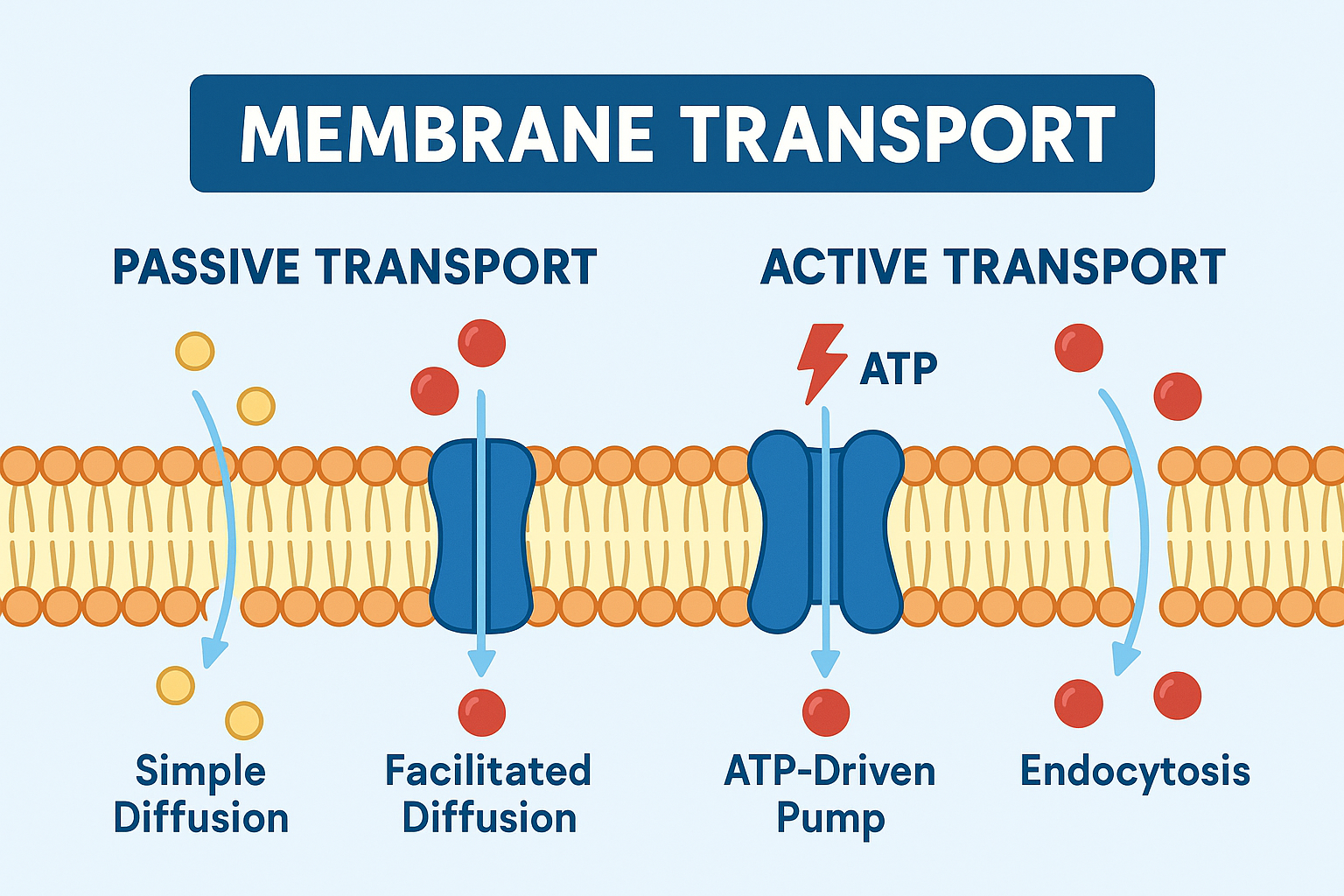
Active Transport
movement of molecules or ion into or out of the cell against its concentration gradient (from low to high) and requires an input of energy.

Endocytosis
movement of substances into the cell by creating a new vacuole at the cell membrane. requires energy.

Exocytosis
movement of substances out of a cell by merging a vacuole with the cell membrane. requires energy.

Hypertonic
the left side is _____ compared to the right side.
Cell Membrane
Composed of a phospholipid bilayer

Phospholipid
molecule that makes up cell membranes. It has a hydrophilic "head" and two hydrophobic "tails".

Hydrophilic
water loving. substances that easily mix with water.

Hydrophobic
water hating. substances that will not mix with water.

Transport Protein
Proteins within the cell membrane that function to move substances into or out of the cell.
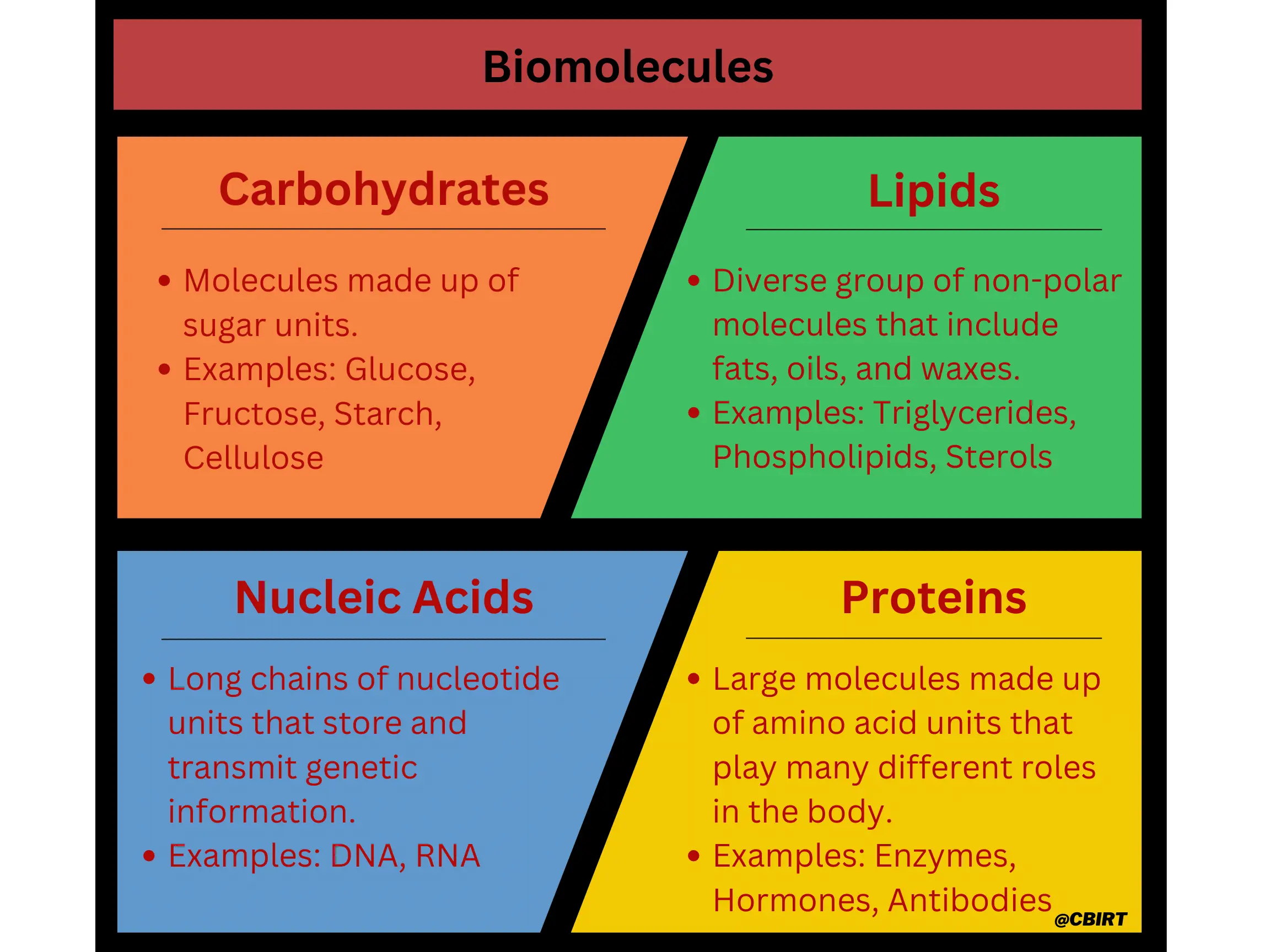
Biomolecule
An organic molecule used and made by living things.

Monomer
A small unit that can join together with other small units to form polymers.

Polymer
Large molecule formed when many smaller molecules bond together

Carbohydrate
A molecule that is used by plants and animals to store energy for a short time. Also make plant cell wall- Examples include bread, fruits.

Lipid
A molecule that is used by animals for long term energy. Lipids also make the cell membrane. Used in our body for warmth as well.

Two examples of Lipid
Fat, Oil, Wax, Hormones

What biomolecules provide warmth and protection?
Lipds

Protein
A molecule that is needed to build and repair body structures and to regulate processes in the body (cells). Examples include meat, nuts, beans, dairy

Monomers of Proteins
Amino Acids

Nucleic acids
Complex macromolecules that store and transmit genetic information (DNA and RNA)

Monomer of Nucleic Acids
nucleotides

Monomer of Carbohydrates
Monosaccharides
Enzyme
This type of protein controls the rate of reactions.
Prokaryote
A unicellular organism that lacks a nucleus and membrane bound organelles (Bacteria, Archae)
Eukaryote
A cell that contains a nucleus and membrane bound organelles (Plants, Animals, Protists)
Cell membrane
A cell structure that controls which substances can enter or leave the cell.
Nucleus
Control center of the cell
ribosome
site of protein synthesis (making proteins)
Endoplasmic Reticulum (ER)
The transportation system of the cell. It moves materials around the cell
Golgi apparatus
A system of membranes that modifies and packages proteins for export by the cell
vacuole
Cell organelle that stores materials such as water, salts, proteins, and carbohydrates
cytoplasm
A jellylike fluid inside the cell in which the organelles are suspended
Cell Theory
idea that all living things are composed of cells, cells are the basic units of structure and function in living things, and new cells are produced from existing cells
Plant cell vs animal cell
Plant cells: chloroplasts, cell wall, vacuole is larger than in animal cell
Animal cells: no chloroplasts, no cell wall, vacuole is smaller than those in plant cell
Mitochondia
Organelles that produces much of an energy that Is needed to carry out functions "Powerhouse"
Chloroplast
An organelle found in plant and algae cells where photosynthesis occurs
lysosome
cell organelle filled with enzymes needed to break down certain materials in the cell
cell wall
strong, supporting layer around the cell membrane in some cells (in plant cells)