A&P Lab practical #1
 Call Kai
 Learn
Learn Practice Test
 Spaced Repetition
 Match
Match Flashcards
 Knowt Play
1/80

There's no tags or description
Looks like no tags are added yet.
Name | Mastery | Learn | Test | Matching | Spaced | Call with Kai | Chat |
|---|
No analytics yet
Send a link to your students to track their progress
81 Terms
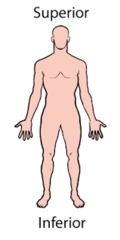
superior, inferior
towards head or towards feet
anterior/ventral
towards front/belly side

posterior/dorsal
towards back/ spine

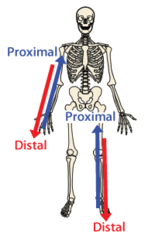
proximal/distal
at or toward trunk (beginning), away from body surface (end) → elbow is proximal to the fingers BUt distal to the shoulder
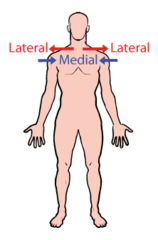
medial/lateral
towards midline, away form midline (thumb is most lateral) → heart is medial to the lungs
superficial, deep
at or near body surface, away from body surface (skill is superficial to brain)

Sagittal
separate left and right

frontal/coronal
separate front and back
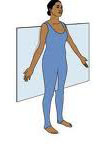
horizontal/transverse
separate upper and lower body

Homeostasis set point
1st step = variable body is maintaining→ the target physiological value or ideal level that a biological system aims to maintain

Homeostasis sensor/receptor
2nd = senses changes from set point → monitor physiological value
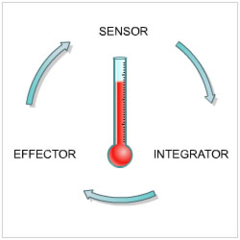
Homeostasis control (integration center)
3rd =receives and processes information → send our command → compares value to normal range

Homeostasis effector
responds to commands → causes change to reverse situation

Homeostasis stimulus
a detectable change in the internal or external environment that disrupts a stable condition and triggers a homeostatic response.
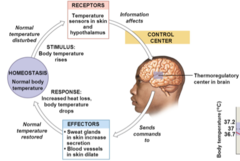
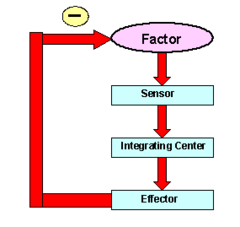
Negative feedback
Regulation that restores the set point → opposes the direction of the stimulus (variables = blood pH, blood pressure, blood sugar, water, hormone levels, body temperature.)
Positive feedback
regulation produces a response that exaggerates a physiological response/activity → this is done in potentially dangerous situations where a fast response is needed (ex = blood clot, childbirth contractions, lactation, nerve impulses)

6 essential elements
PONCCHO (oxygen, carbon, hydrogen, nitrogen, calcium, phosphorus)

Protons
(+) charge, have mass, ATOMIC # → change protons = change element

Neutrons
no charge, have mass, change newtons = change isotopes

Electrons
(-) charge, dictates reactivity, NO MASS, change electrons = chane IONS

Which subatomic particle dictates chemical reactivity
electrons

Ionic bond
transfer of electrons (cation = donate, anion = acceptor)
Covalent bonds
sharing of electrons

Polar covalent bond
unequal sharing of electrons

Non-polar covalent bond
equal sharing of electrons - less reactive

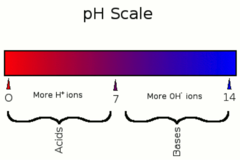
Acid
releases H+ ions (lowers pH)

Base
releases OH- ions (increase pH)
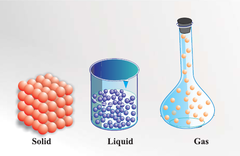
Matter
anything that has mass or takes up space
Element
unique substance that cannot be broken down into simpler substances
Atom
building blocks of elements → atoms of one element differs from atom of another (P, N E)

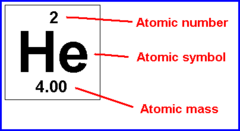
Atomic symbol + mass
a standardized one- or two-letter abbreviation used to represent a chemical element (atomic number = # protons)

Coarse Focus
make large imprecise adjustments to move stage height (DO NOT USE 40x/100x)

Fine Focus
precise adjustment focus → SAFE FOR ALL MAGNIFICATIONS

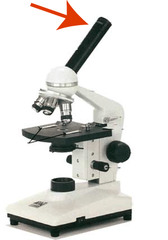
Eyepiece
can be adjusted to eyes → have ocular lenses with 10x magnification
Objective lenses
scanning (4x), low power (10x) high power (40x) oil immersion (100x) → Total magnification = lens * 10 → 4X * 10 = 40

Mechanical stage + knobs
height is adjusted by coars eadjustment knob _> stage clip holds glass slide in place → mechanical stage knobs adjust position of slide (left/right/down/up)
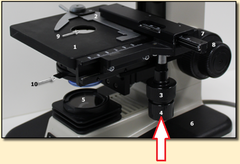
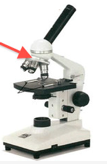
Revolving nose piece
holds objective lenses → rotates and clicks
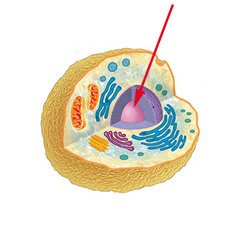
Nucleus
Control center of the cell → has all genetic info for protein production
Nucleolus
dark spot → contains chromatin (dna + proteins)

Nuclear envelope
membrane of nucleus

Nuclear pores
allow passage of proteins, RNA and solutes between nucleus and cytoplasm

Cytoplasm
cytosol + organelles + inclusions

Inclusions in cytoplasm
Consist of metabolic by-products, storage forms of various nutrients, inert crystals, pigments

Plasma membrane components
phospholipid bilayer + integral proteins (allows for external protection + selective permeability into the cell)

Golgi apparatus
Consists of stacked cisternae → Works with endoplasmic reticulum to modify and sort synthesized protein ⇒ release via vesicles

Rough ER
HAS RIBOSOMEs → production of proteins

Smooth ER
no ribosomes → production of lipids and carbohydrates

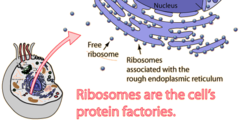
Ribosomes
site of protein production → two ribosome subunits that attach to mRNA to start translation
Mitochondria
site of ATP production → requires oxygen → double membranes (cristae = inner membrane)

Lysosomes
garbage men → LOTS OF DIGESTIVE ENZYMES for waste → Remove old organelles via autophagy; cell "self destruct" via autolysis

Peroxisomes
DETOXIFY → se enzymes (catalase) to break down fatty acids and detoxify harmful substances → turn ROS species into hydroxide

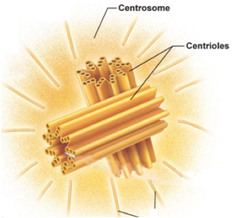
Centrosomes
mall, non-membrane-bound organelle found in animal cells that acts as the main microtubule-organizing center
Cytoskeleton
group of fibrous membranes that provide structural support for cell → microfilaments, microtubules, intermediate filaments
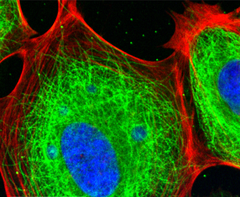
Epithelial tissue
protection, secretion, absorption, filtration, sensation IN LININGS + high regeneration (Simple/strat, squamous, cuboidal, columnar, pseudostrat/column, transitional)

Connective tissue
(DIVERSE → SUPPORT, CARRY NUTRIENTS) specialized cells + extracellular matrix (ground substance = non cell fluid, semi-solid, hardened)

Muscle Tissue
Movement produced by contraction of cells → skeletal, cardiac, smooth

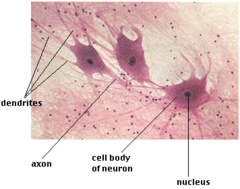
Nervous tissue
Specialized to conduct electrical impulses from one region of the body to another → mainly found in CNS (brain + SC)
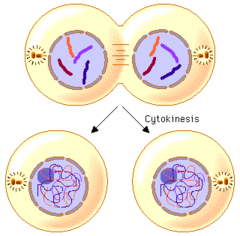
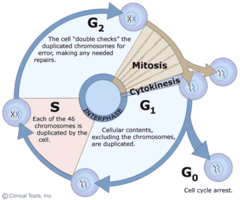
Cytokinesis
cell splits into two daughter cells (diploid)
Prophase
Chromosomes condense, Spindle fibers emerge from centrosome → nuclear envelope breaks down

Prometaphase
kinetochores appear and mitotic spindles attach → chromatin continues to condense
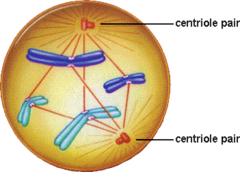
Metaphase
chromosomes lined up at metaphase plate

Anaphase
sister chromatids are pulled apart to opposite ends of cell

Telophase
nuclear envelope reforms, microfilaments starts cleavage furrow, mitotic spindle breaks down

During ____ chromosomes shorten and thicken allowing tehm to become visible
prophase

The reforming of nuclear envelope occurs during
telophase

Mitosis only occurs during
growth and tissue repair

Interphase
most of teh cell is spent here (g1, s, g2) → cell grows and synthesis new DAN for cell division
Integumentary system functions
interaction with external environment, protection form physical and chemical damage, regulate body temperature (insulation/evaoporation), synthesize vitamin D (endocrine function as well), sensory (tips of fingers) → Meissner corpuscle (light touch) and the Pacinian corpuscle (vibration) → CUTANEOUS MEMBRANE + ACCESSORY STRUCTURES

Epidermis
PREDOMINANTLY KERATINOCYTES stratified squamous epithelium → epidermis and epidermal papillary → form several layers = STRATA

Dermis
Has blood vessels, touch receptors, and accesory organs → papillary layer (20%) + Reticular layer (80%)

Papillary layer
20% of dermis → AREOLAR tissue

Reticular layer
80% of dermis → DENSSE IRREGULAR CT → COLLAGEN + ELASTIC fibers

Hair structures
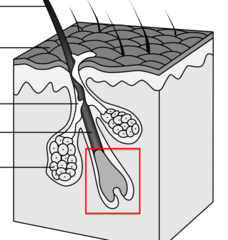
follicle → 3 zones: bulb, root, shaft

Hair follicle
organ that produces hair

Hair bulb
swollen base SITS ON PAPILLA
Hair root
hair within the skin

Epidermal ridges
raised folds of the outer skin layer that interlock with the underlying dermis to create a strong bond and improve grip

Dermal papillae
border of dermis The dermal papilla is a small, specialized cluster of connective tissue cells located at the very base of the hair follicle that acts as the control center for hair growth and cycling

Sebaceous glands
ALWAYS ON → secretes sebum (fats, oils, dead epithelial cells (cuboidal)) -. MOISTURIZE/CONDITION HAIR + SKIN

Sweat Glands
NOT always on → watery fluid (99% water) + electrolytes → THERMOREGULATION + excretion + ANTIBACTERIAL PROPS

Hypodermis
separates skin from muscles → mainly adipose tissue (loose connective T) → HIGHLY VASCULAR + INNERVATED
