L15 - Cholesterol Synthesis and Plasma Lipoproteins
 Call Kai
 Learn
Learn Practice Test
 Spaced Repetition
 Match
Match Flashcards
 Knowt Play
1/16

There's no tags or description
Looks like no tags are added yet.
Name | Mastery | Learn | Test | Matching | Spaced | Call with Kai | Chat |
|---|
No analytics yet
Send a link to your students to track their progress
17 Terms
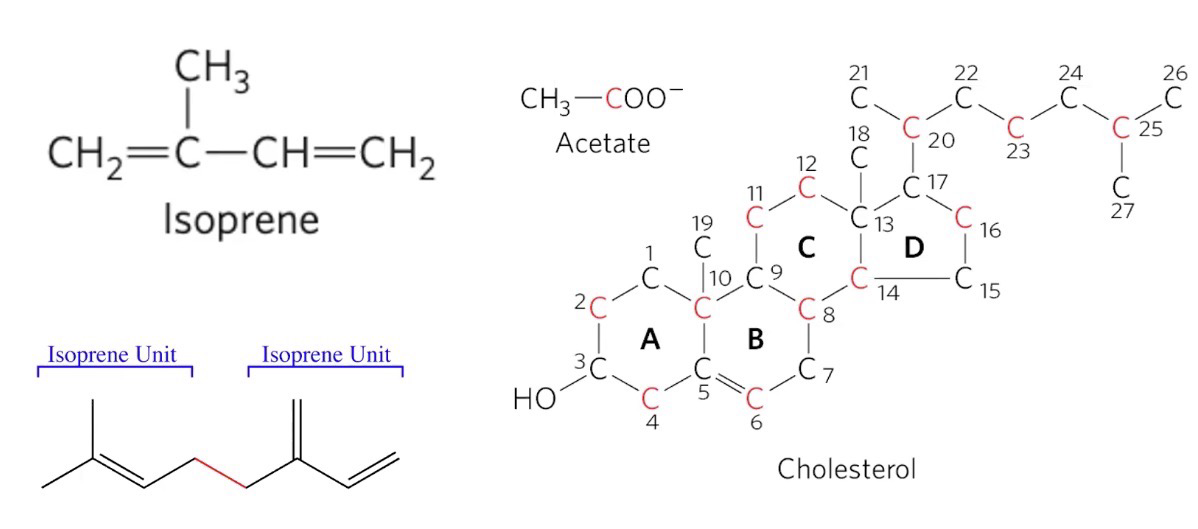
Cholesterol, basic info
4 fused-ring, planar, important for membrane fluidity
Precursor for steroids, bowel acids, Vitamin D, etc.
General stages of Cholesterol synthesis
Acetate → Mevalonate → Activated isoprene → Squalene → Cholesterol
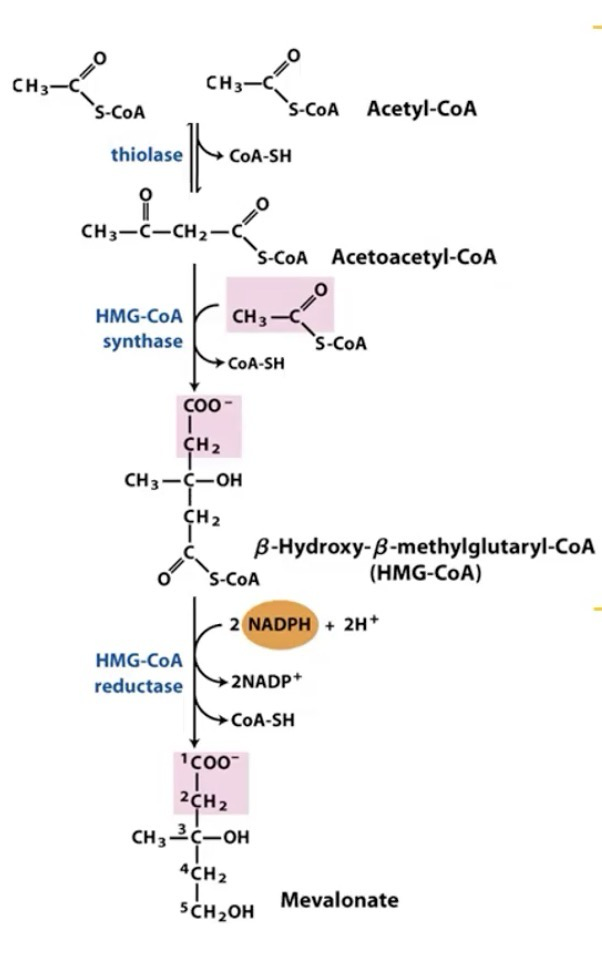
Acetate → Mevalonate Pathway (First stage of Cholesterol synthesis)
ACA is transferred to the cytosol
2 Acetyl-CoA → Acetoacetyl-CoA + CoA-SH via thiolase
Acetoacetyl-CoA + Acetyl-CoA +H2O → β-Hydroxy-β-methylglutaryl-CoA (HMG-CoA) via HMG-CoA synthase
HMG-CoA → Mevalonate + CoA-SH via HMG-CoA reductase (Needs 2NHDPH + 2H+)
Class of drug that inhibits the first stage of cholesterol synthesis
Statin targets HMG-CoA reductase, limiting the formation of mevalonate. Competitive inhibitors
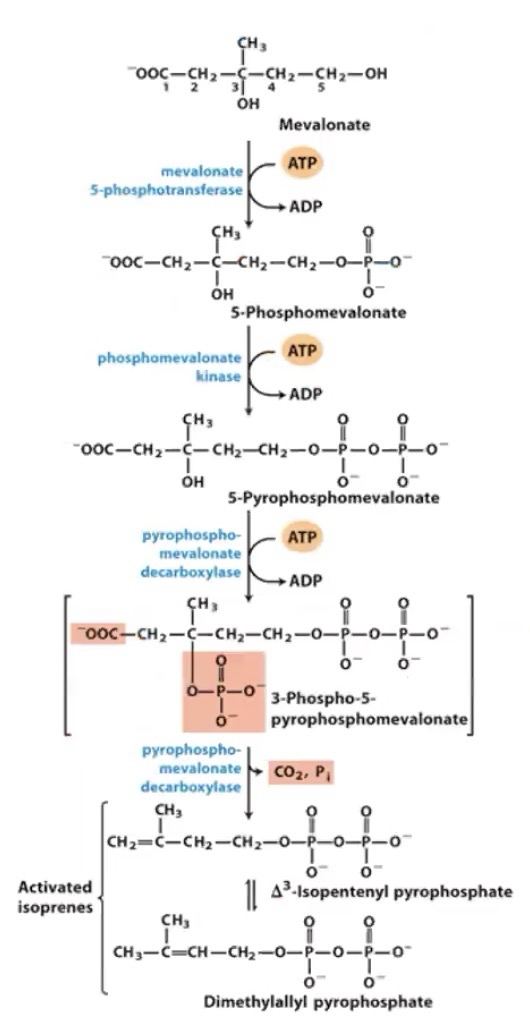
Mevalonate → Activate Isopene Pathway/Important info (Second stage of Cholesterol synthesis)
Requires 3 ATP; Resulting structure is Δ3-Isopentenyl pyrophosphate and Dimethylallyl pyrophosphate; Decarboxylation stage (6C → 5C); Activated by pyrophosphate
Activated isoprene → Squalene Pathway/Important info (Third stage of Cholesterol synthesis)
6 activated isoprene makes 1 squalene; Geranyl has 2 farnesyl has 3; 30C molecule; Requires NADPH + H+
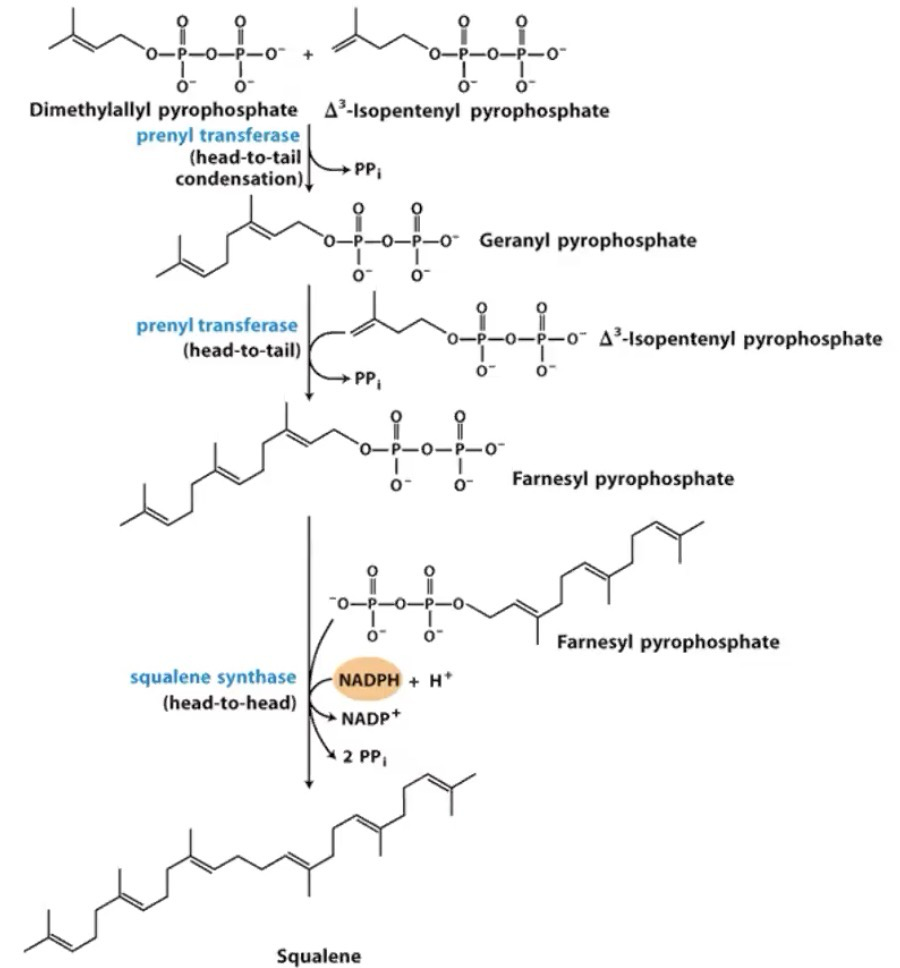
Squalene → Cholesterol Pathway/Important info (Fourth stage of Cholesterol synthesis)
Squalene goes through cyclization; a hydroxyl group is installed (C #3) in this stage; Requires multiple steps to convert to cholesterol

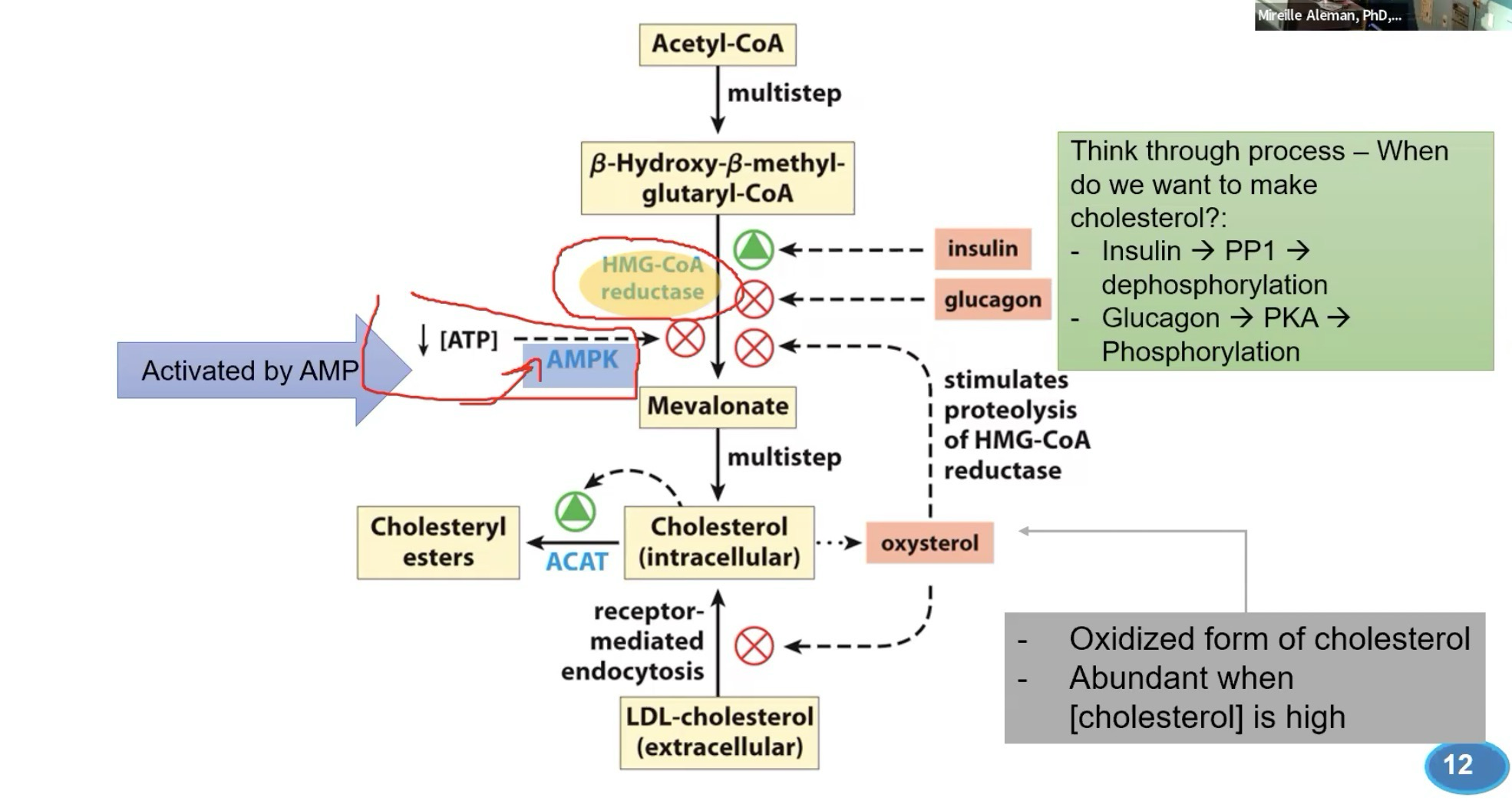
Regulation of cholesterol synthesis (Allosteric and Covalent)
Glucose-based: Insulin activates (Dephosphorylation), Glucagon inhibits (Phosphorylation)
Energy-level-based: AMP (Via AMPK) inhibits
Oxysterols: Oxidized form of cholesterol that forms due to abundance; typically inhibits but can also turn into Cholesteryl esters for storage
Receptor-mediated endocytosis: Oxysterol can inhibit cholesterol uptake into the cell (Stops LDL-cholesterol signaling)
Regulation of cholesterol synthesis (Transcription and translation)
Long-term regulation of cholesterol synthesis
Genes required for cholesterol synthesis are regulated depending on cholesterol
Insig: Retains SREBP in ER
SCAP: SREBP Cleavage Activating Protein
SREBP: Sterol Regulatory Element Binding Protein
High cholesterol: Insig, SCAP, and SREBP are inhibited by sterol and oxysterol
Low cholesterol: Insig is ubiquitinated and degraded; SCAP and SREBP migrate to the Golgi, and the regulatory domain on SREBP is cleaved. This cleaved portion is released from the Golgi and enters the nucleus, where transcription of lipid-synthesizing enzymes is stimulated (~20)

Plasma Lipoproteins
Ex. Chylomicrons (L13)
Plasma lipoproteins are large macromolecular complexes that is made of a single layer of lipids and apoproteins.
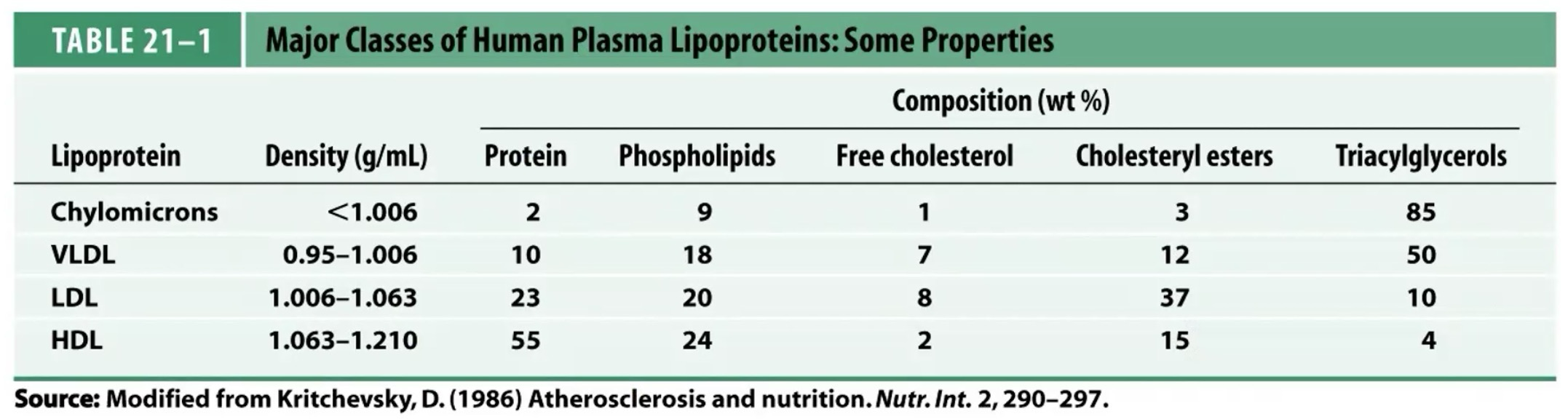
Plasma Lipoproteins involved in endogenous transport
Higher % means a higher amount of those molecules in the lipoprotein
Chylomicron is exogenous; has high triacylglycerol
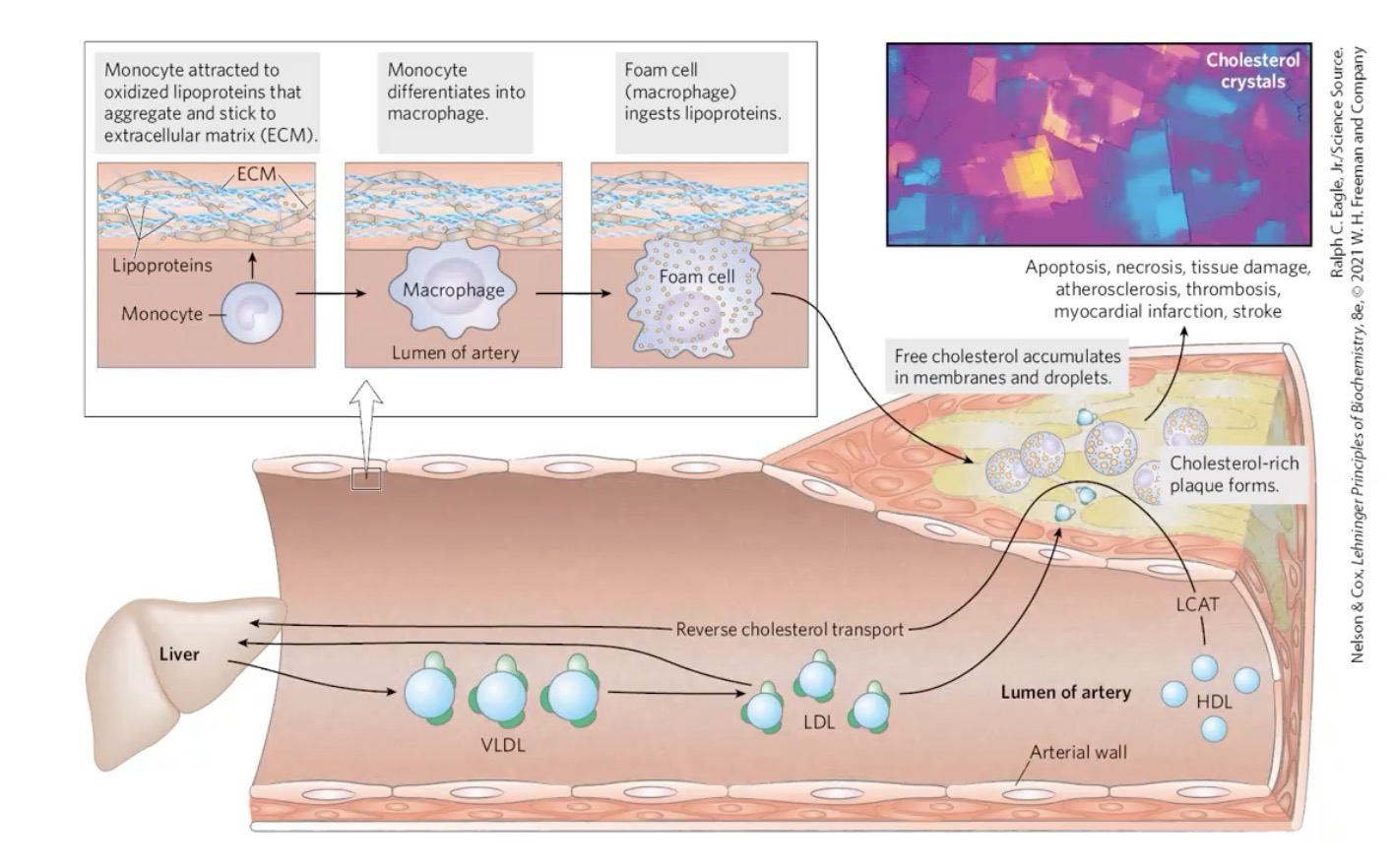
VLDL is made and released from the liver, travels through the blood, and empties into cells, where it turns into LDL, which is geared more towards storage of cholesterol (Cholesteryl esters). LDL turns into HDL
LDL is considered “Bad” while HDL is considered “Good”
VLDL: Very low density lipoproteins
LDL: Low density lipoproteins
HDL: High density lipoporteins
ApoB-48
242,000 mw, important in chylomicrons, specifically cholesterol transport/clearance
ApoB-100
512,000 mw, important in VLDL and LDL, specifically for binding to LDL receptors
ApoC-II
9,000 mw, important in Chylomicrons, VLDL, and HDL, specifically for lipoprotein lipase activation
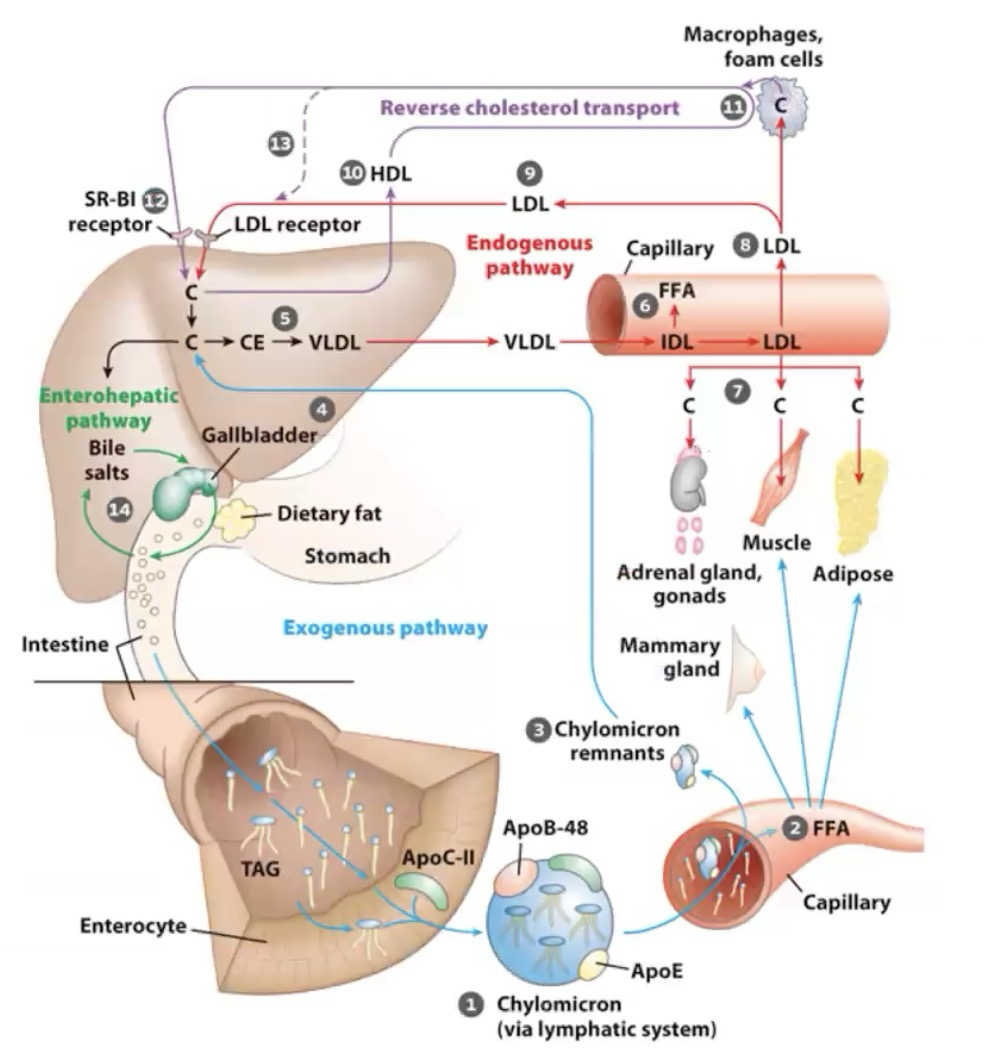
Lipid transport General Pathway
Exogenous pathway: Covered in L13, fat is taken in, broken down, and moved via chylomicrons
Endogenous pathway: Liver recycles fat into VLDL, ships to target tissue, targeted by lipoproteins, turns into IDL (Intermediate density lipoproteins), eventually turns into and is released as LDL, which now mostly has cholesterol and cholesterol esters for other target tissues (receptor-mediated endocytosis, eventually returns to the liver to be recycled.
Role of HDL: Sometimes, LDL is lodged somewhere during transport. HDL is a scavenger complex that is shipped from the liver (Mostly empty) and takes up any LDLs that haven’t been utilized and are stuck somewhere.
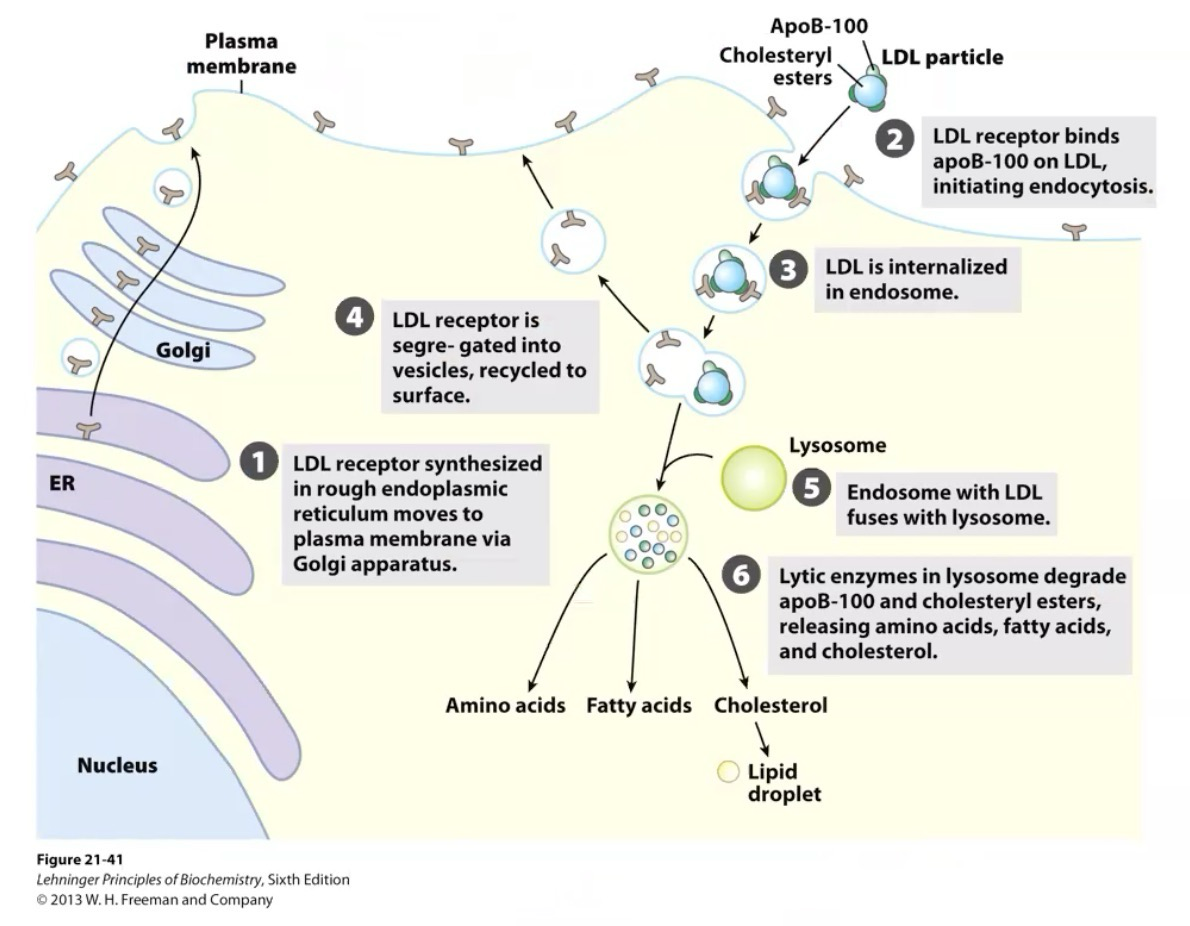
Receptor-Mediated Endocytosis pathway/important info
ApoB-100 is recognized on LDL, initiates endocytosis. LDL enters adipocyte, LDL receptor is recycled and put back on membrane surface, LDL content is recycled
Dysregulation of Lipid Metabolism/Formation of _____
Plaque; Leads to occluded artery; LDL concentration increases in blood, enters space between endothelial and smooth muscle cells. undergoes oxidation.
Can be cleared if a monocyte recognizes area, differentiates into mocophage and engulfs lipoproteins, turning the monocyte into a foam cell. This can then be cleared by HDL.
If clearance does not occur, plaque accumulates and occludes artery