Architecture Exam 2
 Call Kai
 Learn
 Practice Test
 Spaced Repetition
 Match
 Flashcards
 Knowt Play
1/19

There's no tags or description
Looks like no tags are added yet.
20 Terms

Plan of an Early Christian basilica
The design of Early Christian basilicas was taken from the Roman basilicas (administrative center and court of justice combined)
5-part basilica
Roof made of timber (first to catch fire)
clerestory window
No second floor for women, but different divisions for genders and classes.
Has:
A big garden in the center
Enter church through Narthex
In front is the Nave (for important men)
Ahead is the apse (holiest place of the church and belongs to Maria)
Aisle on the left and right of the Nave (for non important men)

Early Christian. 1st half of 5th century Acheropoeitos church Thessaloniki
'Example of early Christian basilica
One of the oldest functioning basilicas in the world
Exterior made of bricks, stones, and interchanging layers.
Church known for its natural light with lots of windows
First church converted into a mosque when Ottomans entered Thessaloniki
Suffered fire on the roof in late 19th century with one part of the aisle destroyed
Built partially on premises of the roman baths

Early Christian. 1st half of 5th century Acheropoeitos interior.
At the Nave
Walls are white washed
Lots of destroyed frescoes and mosaics when church became a mosque
Only mosaics to remain from early 5th century are under the arches
Second floor on the right is reconstructed and on the left is original
Second floor for women

Early Christian. 1st half of 5th century Acheropoeitos Theodosian capital.
Can see column with inscription written in Arabic language of the Ottoman Empire
Column made out of a single piece of marble
Columns were green marble (most expensive)
All have the theo doThe capital is corinthian

Early Christian reconstructed church of Hagios Demetrius Thessaloniki Original 5th century, reconstruction after fire of 1917.
Design of early Christian basilica (sloping roof, longitudinal)
Fifth-parted church
Has a lot of history
Could accomodate 1000 people
Fire of 1917 destroyed the biggest part of the church (roof, walls)
Reconstructed between 1917-1948 and given back to people of Thessaloniki as a church
10 years before christianity became ilegal, Hagios Demetrius was imprisoned because he was a christian and had miraculous powers in the area of the Roman baths (where he was murdered). On top of his grave, they built a small church with a sloping roof

Early Christian. Hagios Demetrius façade.
Shows façade of church
Has three entrances at the facade and entrances at the aisles
You can see which parts are original (bricks and stones, very plain)
Most is original, the rest has been reconstructed, walls have been elevated, tower was built bigger
On fabric of church, they added unpolished white pieces of marble

Early Christian. Hagios Demetrius interior.
We see the Naive
At end there is a hexagonal
Filled with mosaics dedicated to the people of Thessaloniki
All the mosaics came from different periods

Early Christian. Underground space of Hagios Demetrius.
Below surface of modern church
Holiest place of the church
This is area of Roman bathes
Basin filled to rim with holy oil, in front of it, a smaller basin was filled with holy water

Early Byzantine. 532-537 AD Hagia Sophia Constantinople. Anthemius and Isidorus.
Modern istanbul
Longitudinal with a sloping roof, destroyed from a riot.
Peach terracota color
Dome made of bricks supported by pendentives made of stone
2 half domes on the sides
Supported by 4 huge buttresses
3 meter wall thickness

Early Byzantine. Hagia Sophia Interior.
Dome based on 4 pendatives
Huge spherical triangles made of stone support dome (down to the base) made of light bricks
Has lots of windows and light
Windows are covered in alabaster slabs
Dome has 40 windows around it
Has anaconic mosaics

Early Byzantine. Hagia Sophia dome.

Early Byzantine 7th century. Hagia Sophia Thessaloniki.
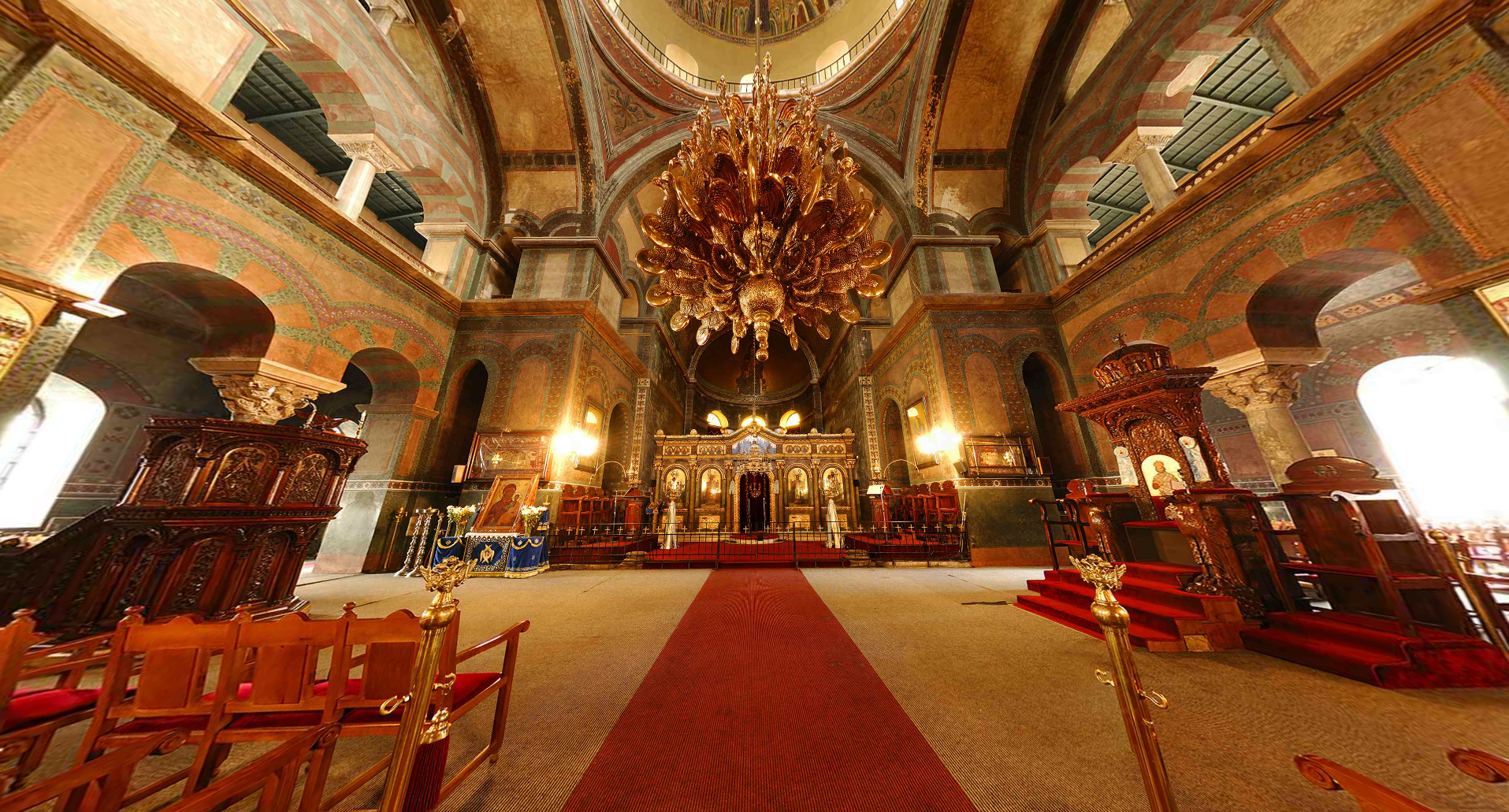
Early Byzantine 7th century. Hagia Sophia Thessaloniki interior.
Aniconic decorations

Early Byzantine 7th century. Dome of Hagia Sophia Thessaloniki.
The dome belongs to Jesus
Pendentives are made of stone
Jesus is sitting in a circle held up by 2 angels
Each person is separated by a tree (all are wearing white, holding a book)
Maria can be seen below Jesus

Late Byzantine. 14th century. Church of the Holy Apostles Thessaloniki
Bricks and Stone
Added extra gallery (made church bigger and wider)
2 domes above entrance, one above the Narthex, and 2 above the apse
Image is facing the apse
Fake arches, fake doors
These domes are not based on pendentives
They are Lighter, narrower, and taller
Arch of bishop was from an hour away from Thessaloniki, built a small church there, but wanted a church to have the name of where he is from so this was built

Ottoman period. 15th century Bezesteni market Thessaloniki.
Had safety guards (Textile, velvet, silk, with golden thread, perfume)
Market: 40 to 50 shops inside and 30 to 40 shops outside (related to clothes, threads, beads)
Made of stone and thick stone covered by lead
Any brick seen is just for beautification
Sells fabric inside
Domes are based on pendatives

Ottoman period. 15th century Bezesteni market interior.
Second floor
Braces in arches
Everything but main dome is made of thin brick
Down below is the first floor (not many shops open)

Ottoman period. 15th century Bey Hamam Thessaloniki.
This is one of the domes
first Ottoman bathhouse built in Thessaloniki
Oldest surviving bathhouse in Greece
In use until 1969
Hamam: steam room
There was a different place for men and women
Has a cafe - bar
Used to be white washed like other ottoman monuments
Made of
brick for beautification
Stone for the structure
Larger stones at the base and smaller as you move up
Had chambers underground to generate steam
All the domes had angled holes (rarely any water entered)

Ottoman period. 15th – 16th century The White Tower Thessaloniki.
Used to have a thick wall in front of it (from the harbor and down the waterfront) 7 meters high
Wall was demolished in 1816.

Ottoman period 15th – 16th century The White Tower interior.