Art of the Spanish World Exam 2
 Call Kai
 Learn
 Practice Test
 Spaced Repetition
 Match
 Flashcards
 Knowt Play
1/61

There's no tags or description
Looks like no tags are added yet.
62 Terms

What is the title , year and author of this artwork?
Title: Letter on the Island that the king of Spain has recently found
Year: 1493
Author: Giuliano Dati - an Italian poet

What is the significance of this piece?
This piece was made based on the descriptions of the New World in Columbus letters. This was the first glimpse that people in Europe got of the New World. It depicts the natural abundance that it posses as well as describes the indigenous. In the image the indigenous community is depicted as uncivil/untamed. This was partly to send the message that Europeans are superior to them and that their actions in the New world is justified because they are “less than human”

What is the title , year and author of this artwork?
Title: De insulis inventis
Year: 1495
Author: Unknown?

What is the significance of this piece?
One of the first depictions of the New World in Europe. It emphasized the differences between European and indigenous culture. The Europeans arrive on a ship clothed while the indigenous are naked and holding sticks to make them look almost barbaric. It is almost as if they are trying to make them look less human in order to justify the horrid actions they did to them.

What is the title , year and author of this artwork?
Title: Natural History of the West Indies. Hammock.
Year: 1535
Author: Fernández de Oviedo

What is the significance of this piece?
Fernandez lived in the Caribbean and gave first hand accounts of what he saw unlike Giuliano who only worked of descriptions from Columbus letters. This was an early recorded example of culture appropriation as he took something from the Indigenous culture and renamed it to fit European style.

What is the title , year and author of this artwork?
Title: Natural History of the West Indies. Pineapple.
Year: 1535
Author: Fernández de Oviedo

What is the significance of this piece?
First hand observations, the pineapple is drawn by a person that lived in the Caribbean. He named it Pina because he says it resembles a pine cone. This is an early example of culture appropriation and it describes the new world through the lens of colonialism. The pineapple becomes a symbol of wealth in Europe. This also goes to show how the Europeans has power over narrative because even though this fruit was cultivated by the natives their knowledge goes largely uncredited.
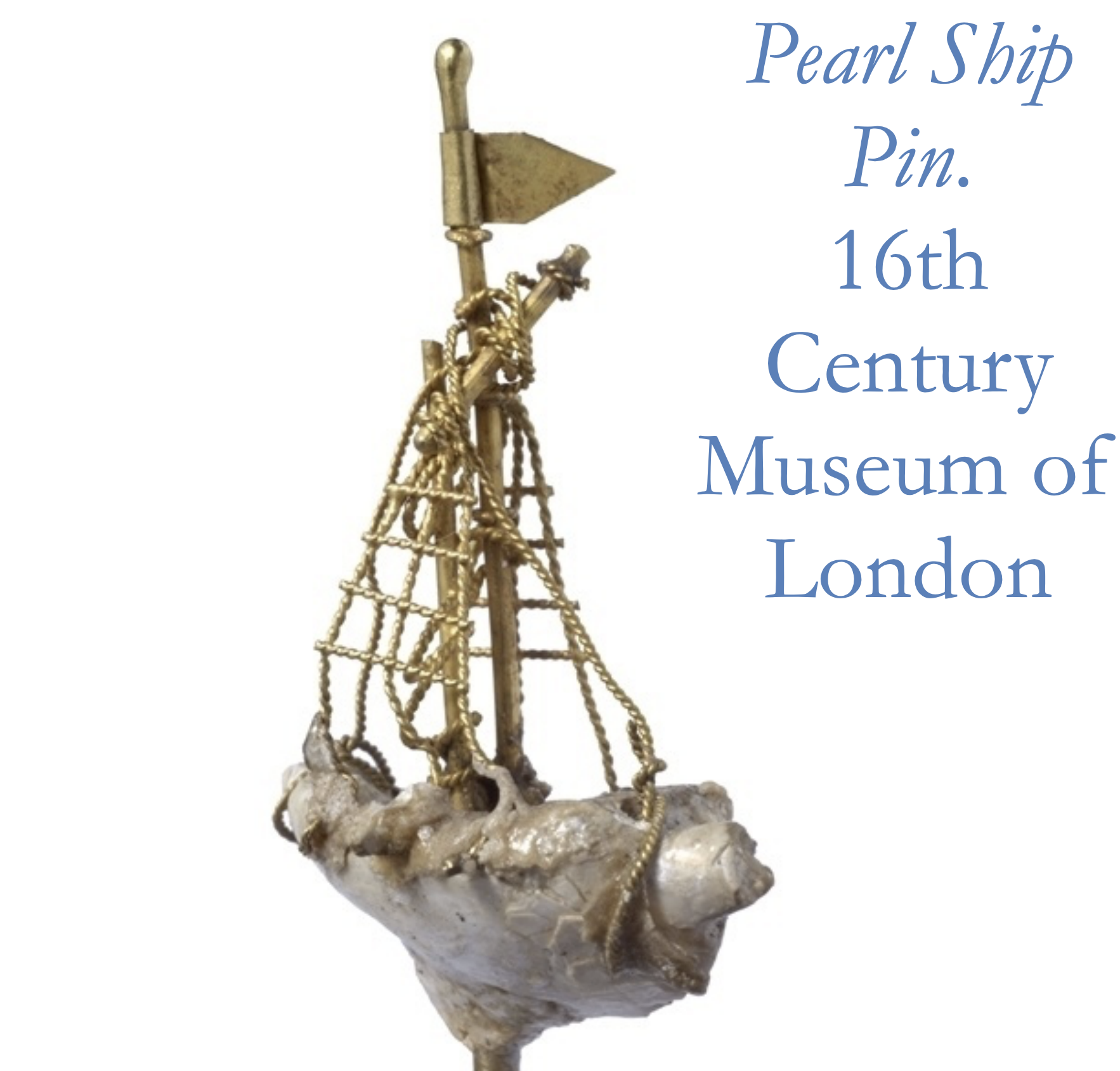
What is the title , year and author of this artwork?
Title: Pearl Ship Pin
Year: 16th century
Author: Unknown
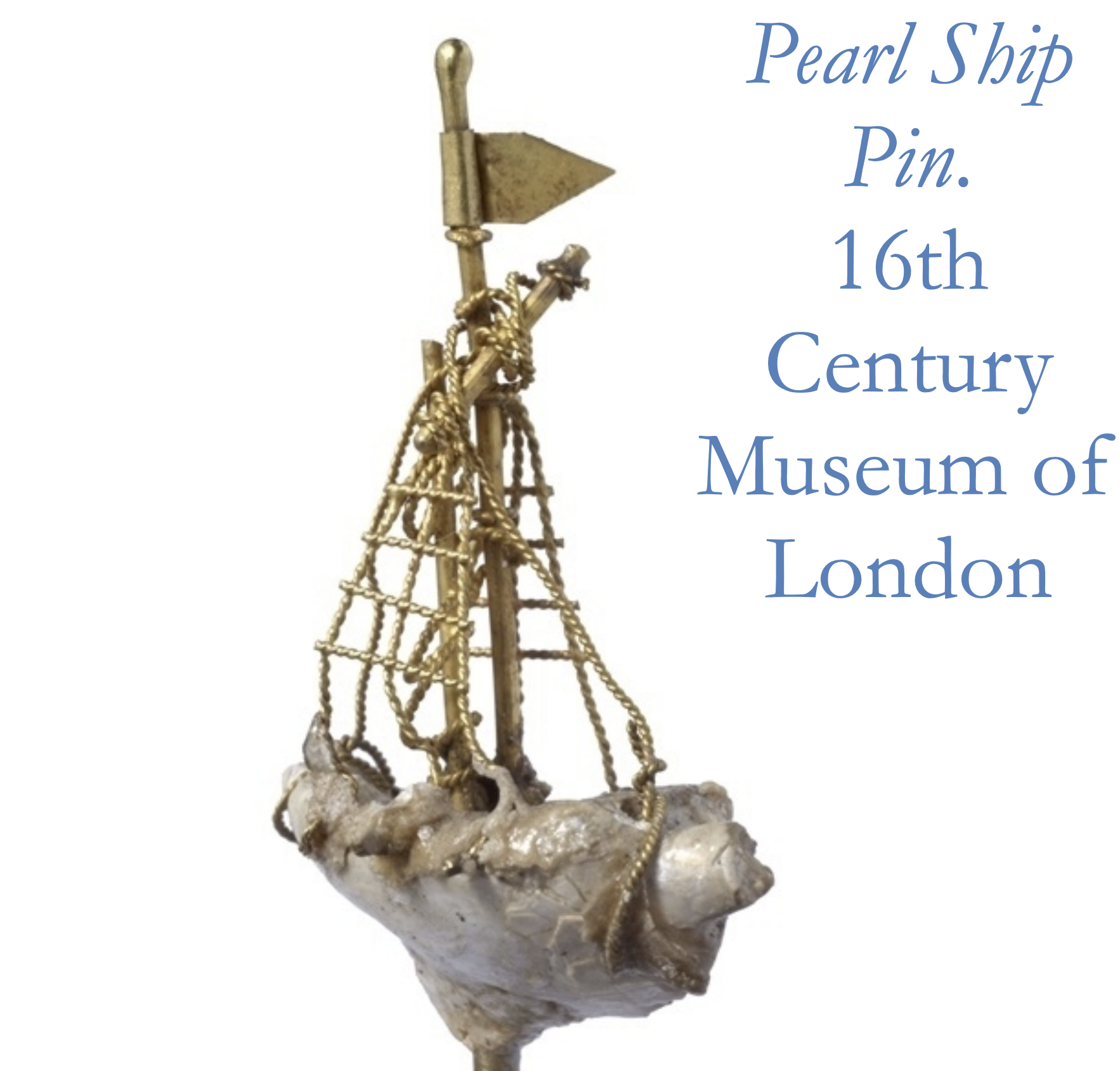
What is the significance of this piece?
The pearls are a representation of Spanish control over trading routes and the extraction of resources from the New World. All of the pearls used in European craftwork during this time were gathered by indigenous divers. The pearls become a symbol of luxury without displaying the human cost.
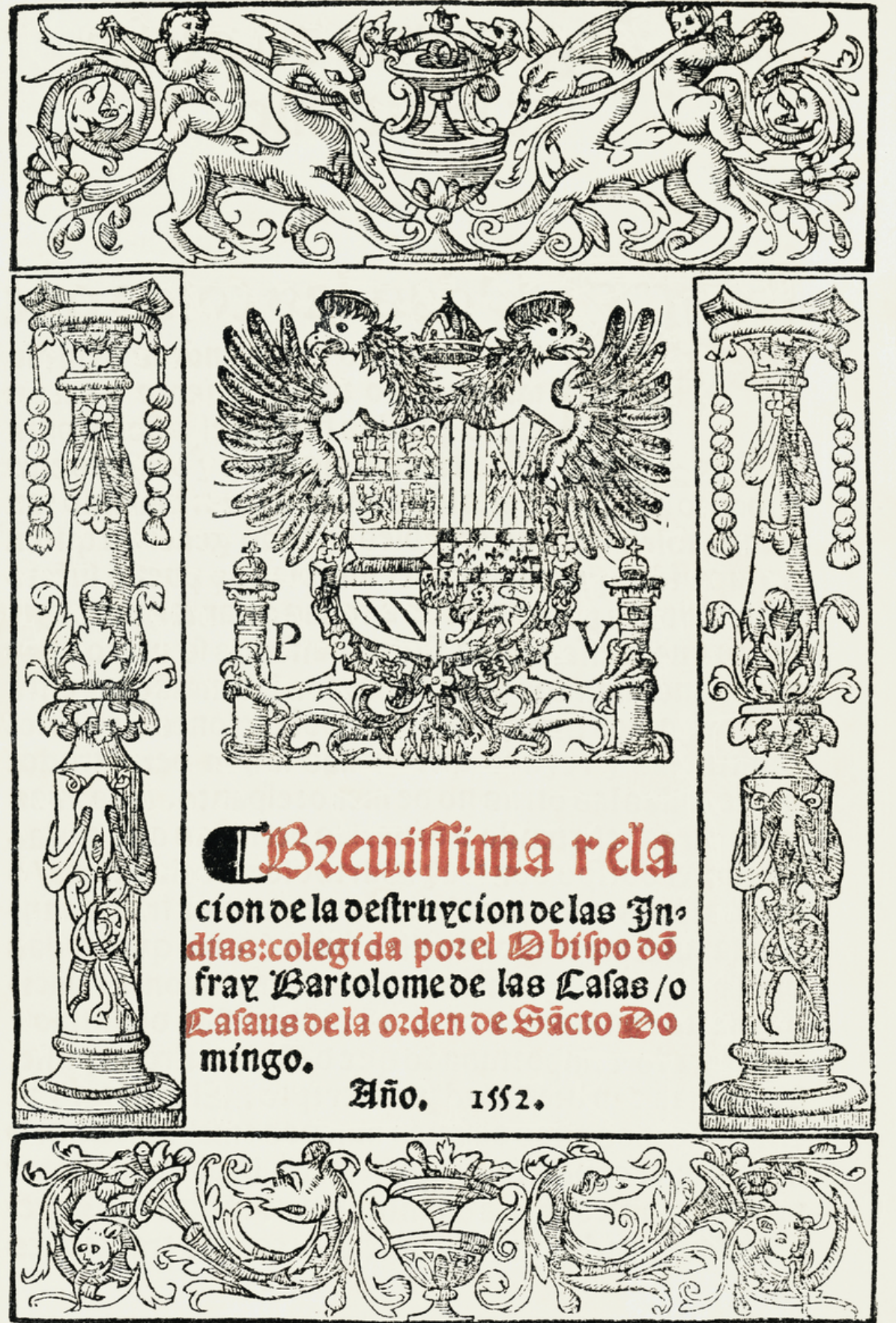
What is the title , year and author of this artwork?
Title: Brevissima relacion
Year:1552
Author: Bartolomé de las Casas,

What is the significance of this piece?
This was a summary of the letters sent to the crown by Bartolome de las cases. He speaks out out against the violence, mass death of indigenous and enslavement taking place in the new world he blames Spanish greed. This was a message to the crown exposing cruelty and defending indegenous rights which was later used to create New Laws of 1542. The book was published in 1552 however this was a decades long argument.
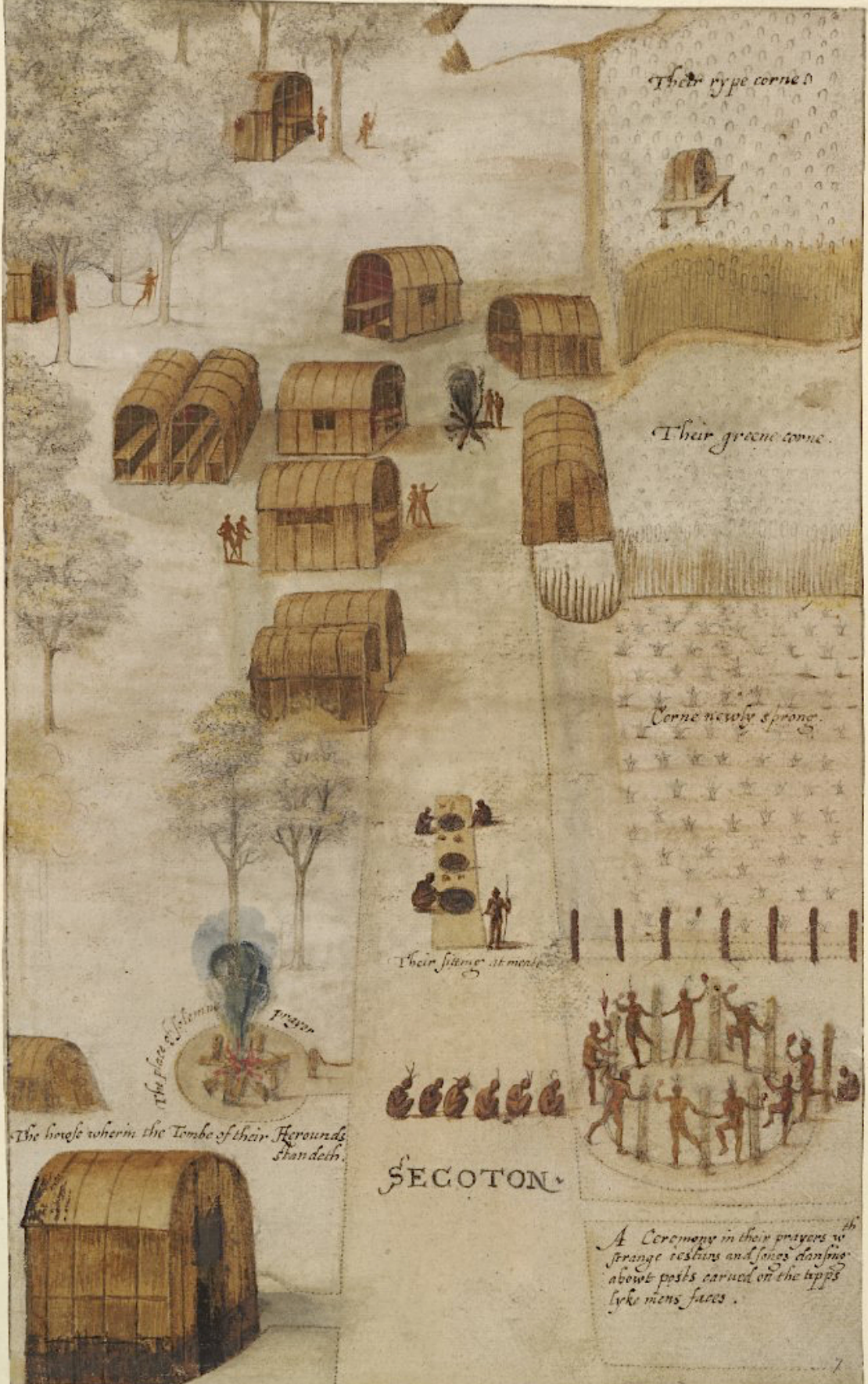
What is the title , year and author of this artwork?
Title: The town of Secoton,
Year:1585-1593
Author: John White

What is the significance of this piece?
This piece was made using water colors. This painting is showing English settlement in the Americas and serves as a comparison to Spain. They took promotors from the Black Legend and presented themselves as the better option or better rulers (English over Spanish rule). White was there documenting the people and the land in order to report back to the king. The image depicts the land as abundant in resources. Furthermore the indigenous are depicted unclothed and untamed is meant to show that they can be easily ruled over.

What is the title , year and author of this artwork?
Title: The town of Secoton
Year: 1590 (after the water color by john snow)
Author: Theodore de Bry

What is the significance of this piece?
This engraving was more detailed and descriptive about the town of secton that John White water colors. it showed features of the town of secton such as the fields, ceremonial areas and the dwellings. he style of his work with the engraving technique makes the image cleaner and more connected with European style it also made it easier to print which spread this image more easily around Europe. This image promoted settlement in the new world by showing the abundance of resources and displaying the indigenous as easily governed. Furthermore it also ties back to the black legend and emphasized the narrative that english rule was better than Spanish. it is also important to mention that this shows how the indigenous never had any power in how they were represented.

What is the title , year and author of this artwork?
Title: Spanish Fury at Antwerp. (Belgium/Flanders)
Year:1576
Author: unknown
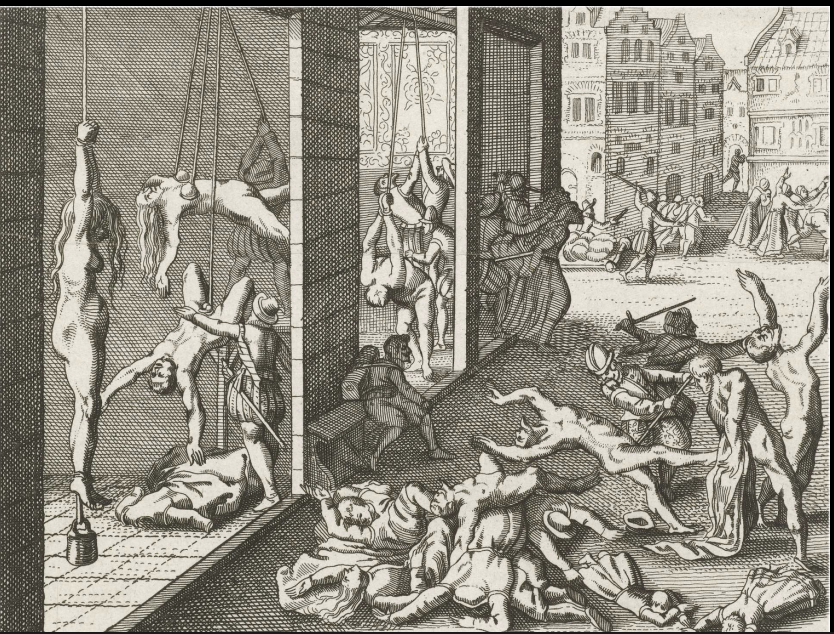
What is the significance of this piece?
This work is showing Spanish troops in Hasburg army mutinied over unpaid wages. The image shows mass violence. The victims are naked which demonstrates vulnerability which is meant to highlight the cruelty of Spanish rule. Anti-Spanish propaganda of the Dutch Revolt used events like this to show viewers that cruelty of Spain in Europe as well as the Americas.
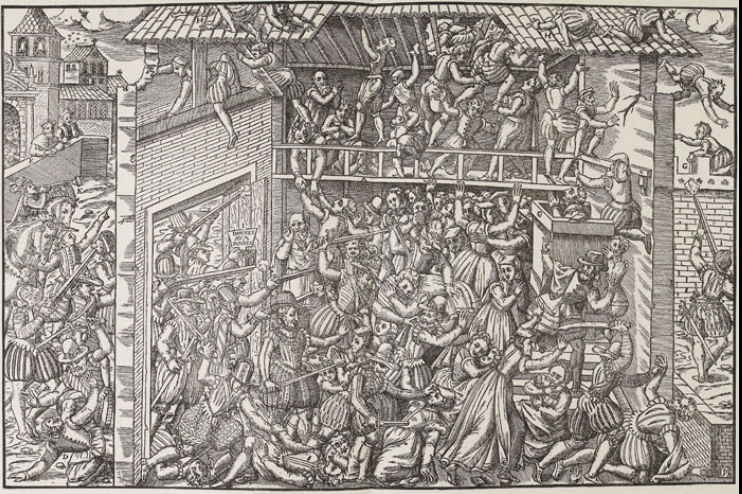
What is the title , year and author of this artwork?
Title: The Massacre of Vessy * Catholic violence against Protestants
Year: 1562
Author: unknown
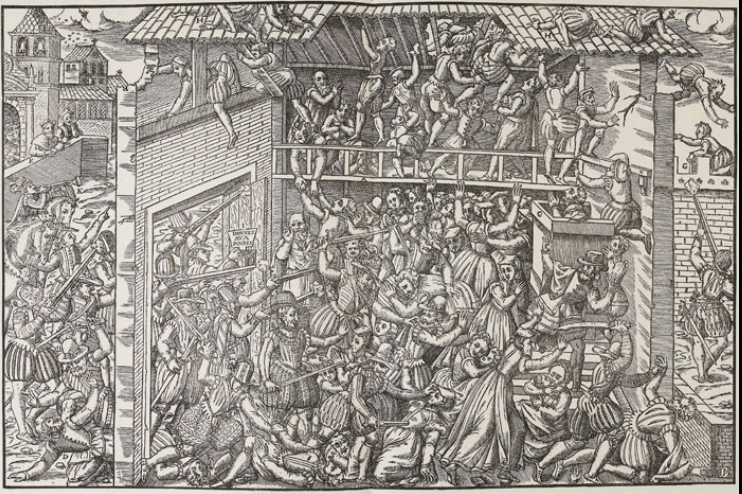
What is the significance of this piece?
Partison version of the massacre. The image of Vassy shows unarmed worshippers cut down by armed soldiers. By displaying how a space of worship became a killing ground was a strong visual arguments. This tied into the Black legend by drawing on a wider habit of portraying religious enemies as persecutors

What is the title , year and author of this artwork?
Title: The Burning of the Indians. V. 4, plate 18. * Catholic violence against indigenous
Year:
Author: Theodore de Bry

What is the significance of this piece?
Colonialism and the black legend. The image gives no Spanish perspective and no reason for the attack. The main comparison being clothed and unclothed not only does it highlight the cruelty of Spanish rule but it also demonstrates the vulnerability of the indigenous groups, nothing in the image suggest combat or resistance.

What is the title , year and author of this artwork?
Title: Hanging, Burning, and Clubbing of Indians, from Bartolomé de las Casas.
Year: 1598
Author: Theodore de Bay.

What is the significance of this piece?
De Bry’s plate shows Spaniards hanging a row of bound Indigenous people from a gallows while a fire burns beneath them. A soldier in the foreground holds a child upside down, another feeds the flames, and others club and spear people along a shoreline where a ship waits at anchor. It illustrates atrocities Las Casas described in his Brevísima relación, but it was made decades later by Europeans who never saw the events, and the victims have idealized, classical bodies instead of Indigenous features. A Protestant publishing house used it during the Dutch Revolt to feed the Black Legend, the image of Spain as uniquely cruel, so the plate is both a visual indictment with a real factual basis and a political tool. For your course, it shows colonial violence as the opposite of convivencia, and it contrasts sharply with the feather works, where Indigenous people appear as makers and not as victim

What is the title , year and author of this artwork?
Title: Burning at the Stake with a Catholic Priest from Bartolomé de las Casas.
Year: 1598
Author: Theodore de Bay.

What is the significance of this piece?
This 1598 plate shows a bound Indigenous man burning at the stake while a friar holds a crucifix beside him and armed Spanish soldiers look on. It likely illustrates the story of Hatuey from Las Casas, though the plate has no text to confirm that. The victim is drawn with European features and a classical, muscular body. De Bry and Winghe never saw the Americas, so they relied on the artistic conventions they knew, and the choice also made the victim sympathetic to European viewers, who would feel more outrage for a figure resembling themselves and who would recognize him as an innocent martyr like those in Protestant martyrologies. The cost is that real Indigenous appearance and culture disappear, and he becomes a symbol for a European argument. Las Casas, a Catholic reformer, wrote to improve Spanish policy from within, but de Bry, a Protestant publisher during the Dutch Revolt, used it to condemn Catholicism and Spain as a whole, feeding the Black Legend. For your course, it shows conversion at the stake as coercion, the opposite of convivencia.

What is the title , year and author of this artwork?
Title: Aztec Feather Mosaic. The Mass of St. Gregory. Made for Diego Huanutzin (ruler of Tenochtitlan, i.e. Mexico City) as a gift from Pope Paul III.
Year: 1539
Author:

What is the significance of this piece?
This feather mosaic, made in Mexico in 1539 and inscribed to Pope Paul III, shows the Mass of St. Gregory: Christ as the Man of Sorrows rises from a sarcophagus behind an altar while Gregory and two attendants kneel in the foreground, surrounded by the instruments of the Passion. The composition was copied from a European devotional print, and the subject affirms the Real Presence of Christ in the Eucharist, which presented New Spain to Rome as a faithful Catholic province. The medium is what makes it distinctive. Indigenous amanteca featherworkers built the image from iridescent feathers, a material the Mexica prized as sacred and as a sign of rank, so a Christian scene is rendered in a material with its own religious weight. The inscription names Diego Huanitzin, the Indigenous governor of Tenochtitlan, so the object also advertised Indigenous skill and elite status to a European audience. example of negotiated hybridity among objects, though the exchange was unequal and shaped by Franciscan sponsorship, and it contrasts with de Bry’s plates, where Indigenous people appear only as victims drawn by Europeans.

What is the title , year and author of this artwork?
Title: Bishop’s Miter with Scenes of Christ’s Passion Amanteca (Feather painting/ mosaic. 16th century
Year:
Author:

What is the significance of this piece?
This miter was made by Indigenous amanteca featherworkers in New Spain for a Catholic bishop to wear during Mass. A Crucifixion fills the center of the front, surrounded by smaller Passion scenes and figures, and the two hanging lappets are covered in dense ornament, with what look like papal arms near their ends. The feathers give the surface a shimmering, textured look that paint or embroidery could not match. Your slide pairs it with an Italian engraving of about 1500, so that print is the likely European source for the composition. This corrects my earlier guess that the source was Dürer. In the print, the Crucifixion and Passion scenes sit inside the monograms of Jesus and Mary, with saints Sebastian, Anthony, and Roch at the bottom. The two objects show the split between European iconography and Indigenous materials and craft. The Mexica valued feathers as sacred and as a sign of rank, so a bishop’s headgear built from them joins two systems of sacred authority. The makers were trained in Franciscan workshops, but they worked in a guild tradition of their own, so the miter is not simple copying. For your course, it is an example of negotiated hybridity within a colonial and Catholic framework. It contrasts with de Bry’s plates, where Indigenous people appear only as victims drawn by Europeans.
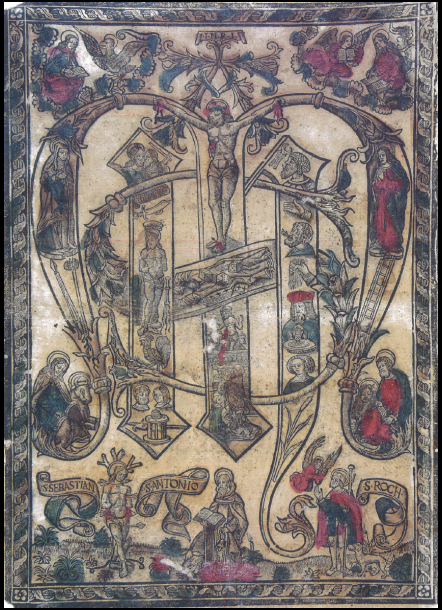
What is the title , year and author of this artwork?
Title:Engraving Showing the Crucifixion and Scenes of the Passion contained in the monograms of Jesus and Mary
Year:1500
Author:

What is the significance of this piece?
This hand-colored Italian print shows Christ crucified at the center, framed by the interlaced letters of the monograms of Jesus and Mary. Smaller Passion scenes fill the spaces inside the letters, and saints appear around the border, with Sebastian, Anthony, and Roch labeled at the bottom. It is a European devotional image, produced as a print and meant to be reproduced and carried across the Spanish world. Its role in your guide is as a source, not as a colonial object. Friars brought prints like this to Mexico as models for Indigenous artists, who translated them into other media, as the feather miter shows. Placing the two side by side lets you separate what is European (the composition, the iconography, the devotional message) from what is Indigenous (the feather medium, the color effects, and the choices made in adapting the design). It also shows how images circulated through colonial networks. Print is a medium that spreads fixed European models, and the feather works show those models being reworked on arrival, which supports an argument about hybridity over simple imposition.

What is the title , year and author of this artwork?
Title: Juan de la Corte
Year: 1623
Author: Festival in Plaza Mayor
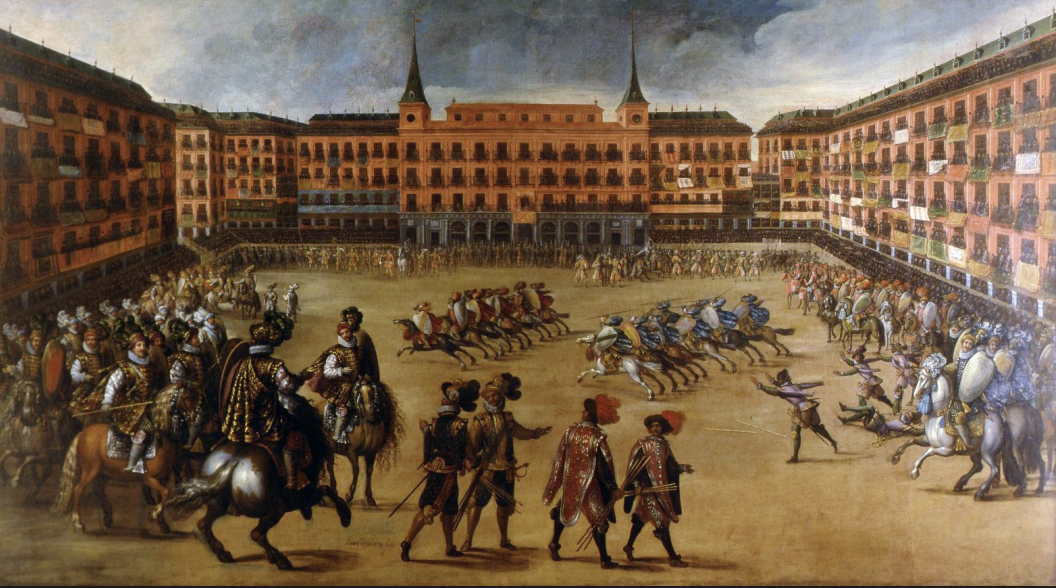
What is the significance of this piece?
descends from a Muslim cavalry tradition and is performed by Christian nobles in turbans, plumes, and “Moorish” dress. Because this happens only a decade after the Moriscos were expelled (1609-14), the painting shows the afterlife of convivencia: Spain erased a living minority while keeping its culture as costume and spectacle, a way of claiming the Muslim past without the people who lived it. That makes it central to the course theme of coexistence, appropriation, and exclusion in the Spanish world. The image also records social hierarchy, with nobles on horseback, servants on foot, and crowds on the balconies, and it shows Madrid, the court’s capital, as a stage for the empire. Finally, it works as a counterpoint to the other objects on your list. The de Bry, Antwerp, and Vassy prints show Spain through hostile eyes, while this painting is Spain’s own self-image, and the feather works show Indigenous makers reshaping Christian imagery, whereas here Spaniards control how another culture is performed.

What is the title , year and author of this artwork?
Title: Auto de Fe en Plaza Mayor, Madrid
Year: 1663
Author: Francisco Rizi.

What is the significance of this piece?

What is the title , year and author of this artwork?
Title: , View of the Plaza Mayor (Zócalo) of Mexico City
Year: 1695
Author: Cristóbal de Villalpando

What is the significance of this piece?
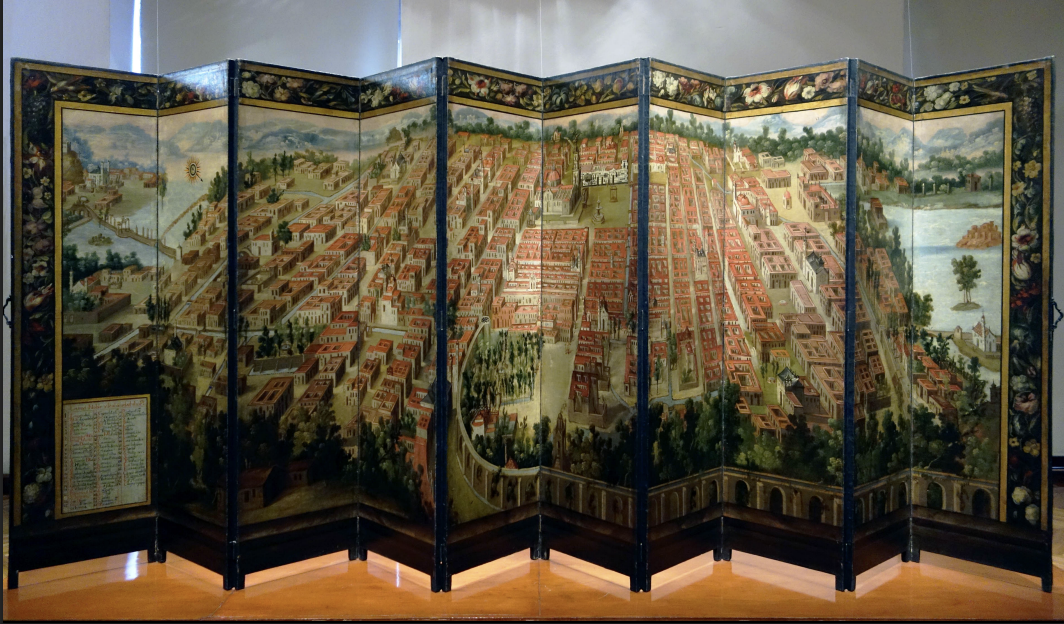
What is the title , year and author of this artwork?
Title: Mexico City side, Biombo with the Conquest of Mexico and View of Mexico City, New Spain,
Year: late 17th century
Author:

What is the significance of this piece?

What is the title , year and author of this artwork?
Title: Conquest of Tenochtitlan, Biombo showing the Conquest of Mexico and View of Mexico City, New Spain,
Year: late 17th century
Author:

What is the significance of this piece?
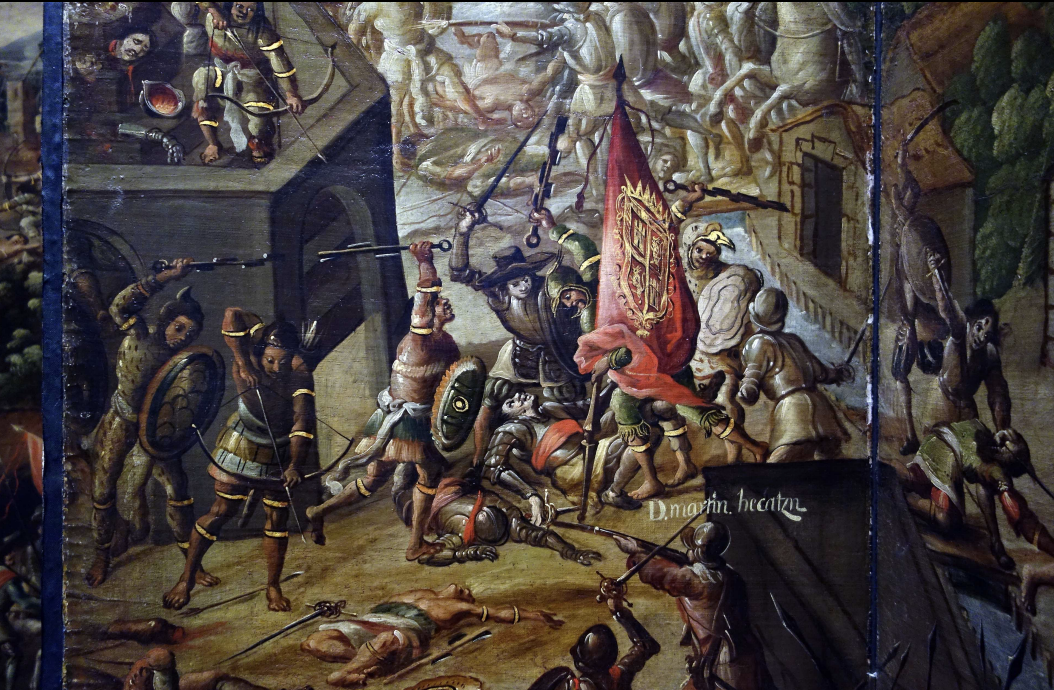
What is the title , year and author of this artwork?
Title: Battle scene (detail), Biombo with the Conquest of Mexico and View of Mexico City, New Spain,
Year: late 17th century
Author:

What is the significance of this piece?
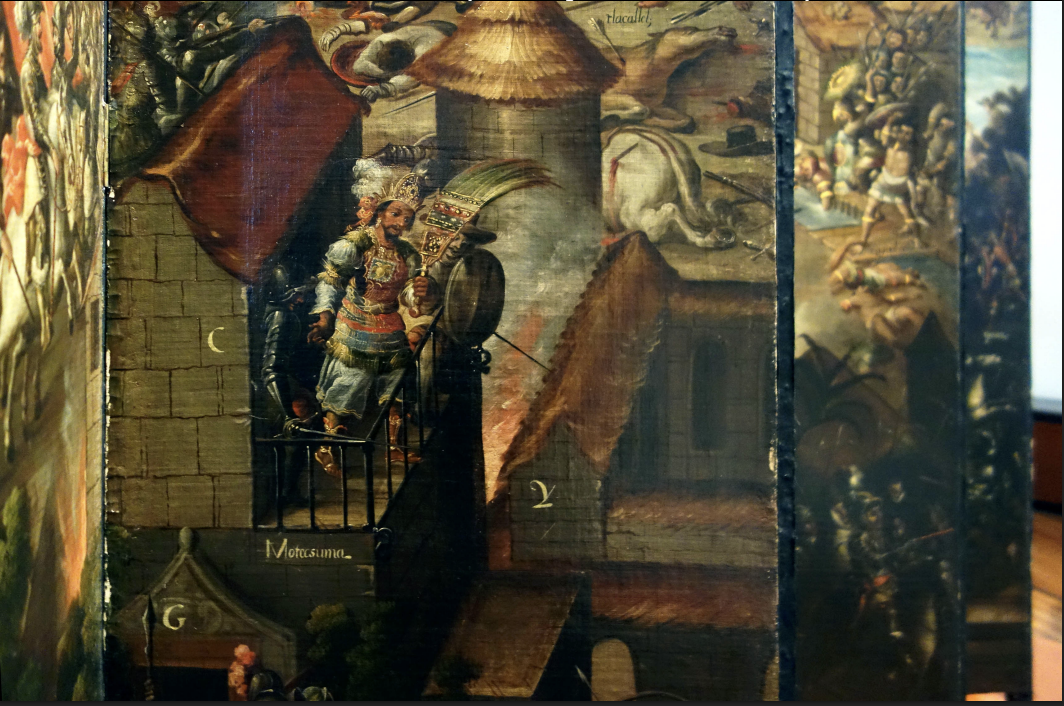
What is the title , year and author of this artwork?
Title: Assassination of Moctezuma II (detail), Biombo with the Conquest of Mexico and View of Mexico City, New Spain
Year: late 17th century
Author:
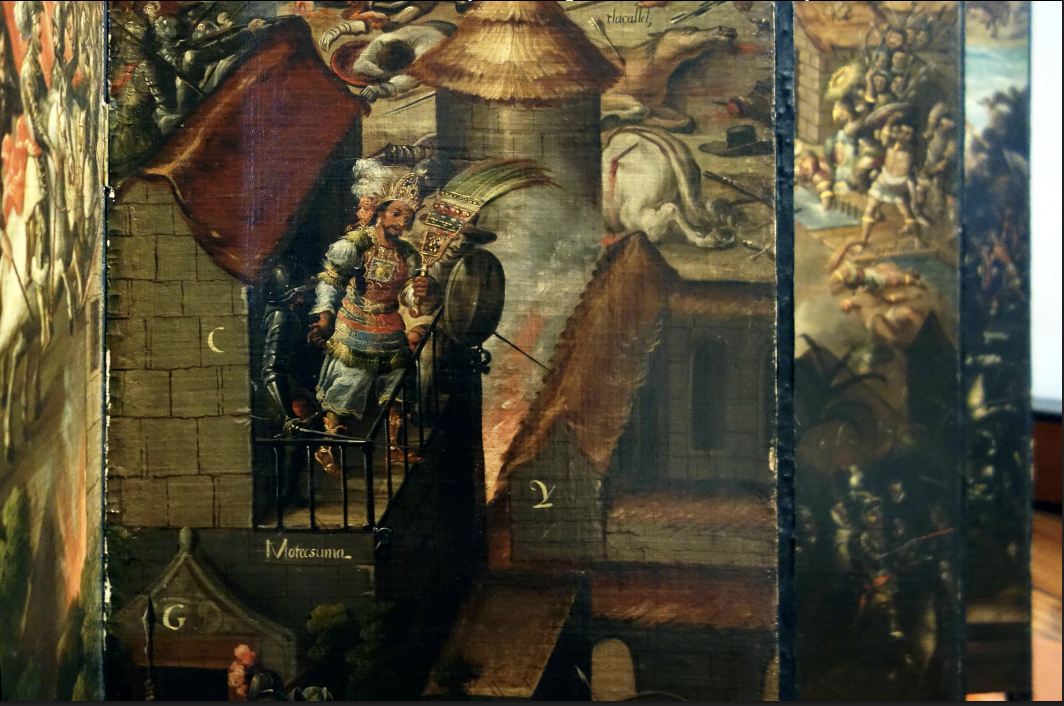
What is the significance of this piece?

What is the title , year and author of this artwork?
Title: “Miracle of a Black Leg.” ca.
Year: 1370–75
Author: Matteo di Pacino

What is the significance of this piece?
The story of this piece was that a white man had lost his leg ad so they took the leg of a dead black man and gave it to the white man. The miracle was that the leg then turned what. This is significant because it goes to show you how black individuals were viewed in Europe as it they were only they to be used as needed by white individuals.

What is the title , year and author of this artwork?
Title: Saint Benedict of Palermo, c. Polychrome and gilt wood, glas
Year: 1734
Author:José Montes de Oca

What is the significance of this piece?

What is the title , year and author of this artwork?
Title:. Saint Benedict of Palermo,
Year: 1770-1780
Author: Juan Pascual de Mena

What is the significance of this piece?

What is the title , year and author of this artwork?
Title: Portrait of St. Benedict the Moor called by all “the Black Saint”.
Year:1700
Author: Anon

What is the significance of this piece?
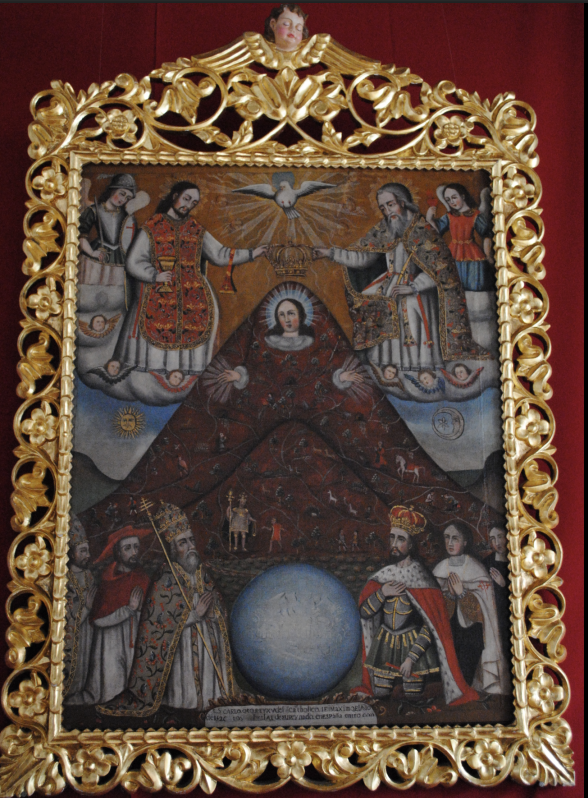
What is the title , year and author of this artwork?
Title: Cusco artist. The Virgin of Potosí.
Year: 1700
Author: Anon

What is the significance of this piece?

What is the title , year and author of this artwork?
Title: Christ Child of Huanca, circa
Year: 1600
Author:

What is the significance of this piece?

What is the title , year and author of this artwork?
Title: Legend of the Virgin of Guadalupe appearing to Juan Diego
Year: 1665
Author: Jose Juarez

What is the significance of this piece?

What is the title , year and author of this artwork?
Title: Virgin of Guadalupe. ca.
Year: 1556
Author: Marcos Cipac de Aquino

What is the significance of this piece?