IB ESS: Topic 1. 1 Quiz
 Call Kai
 Learn
Learn Practice Test
 Spaced Repetition
 Match
Match Flashcards
 Knowt Play
1/54

Earn XP
Description and Tags
(Environmental Disasters, EVS's, The Environmental Movement)
Name | Mastery | Learn | Test | Matching | Spaced | Call with Kai | Chat |
|---|
No analytics yet
Send a link to your students to track their progress
55 Terms
What year did the Minamata Disease take place?
1956
What year did the Bhopal Disaster take place?
1984
What year did the Chernobyl Nuclear Disaster take place?
1986
What year did the Deepwater Horizon Oil Spill take place?
2010
What year did the Fukushima Nuclear Disaster take place?
2011
What year did the La Pampilla Refinery take place?
2022
What year did the UN Conference on the Human Environment take place?
1972
What year did the UN World Commission on Environment and Development take place?
1987
What year did the UN Conference on Environment and Development (Earth Summit at Rio) take place?
1992
What year did the Johannesburg World Summit on Sustainable Development and Rio + 20 take place?
2002 and 2012
What year did the Green Revolution take place?
1940s-1960s
What was the Minamata disease?
A disease (discovered in Minamata City, Japan) linked to the release of methyl mercury into the wastewater produced by the Chisso Corporation’s chemical factory. The mercury (contaminated shellfish & fish along the coast) caused mercury poisoning.
What were symptoms of the Minamata disease?
(neurological):
-numbness of the hands
-muscle weakness
-damage to hearing, speech, and vision
-extreme cases: insanity, paralysis, death, and birth defects
What was the Bhopal Disaster?
The union carbide pesticide plant (Indian City of Bhopal) released 42 tonnes of the toxic gas methyl isocyanate due to a tank overheating and bursting.
What was the aftermath of the Bhopal Disaster?
-500,00 people were exposed
-8,000-10,000 died (withing the first 72 hours)
-25,000 have died since from gas-related diseases
What was the Chernobyl Nuclear Disaster?
A reactor (number 4 at the Chernobyl plant in Ukraine part of the USSR) exploded, causing a spread of highly radioactive dust (fallout) in the atmosphere.
What was the aftermath of the Chernobyl Nuclear Disaster?
-Areas like: Ukraine, Russia, and Belarus were badly contaminated
-336,000 people were evacuated and resettled
-Increased risk of cancer in exposed areas
What was the Deepwater Horizon Oil Spill?
The largest marine oil spill (in the Gulf of Mexico) in the history of the petroleum industry due to an explosion on a platform.
What was the aftermath of the Deepwater Horizon Oil Spill?
-4.9 million barrels (210 million gallons) of oil spillage
-British Petroleum spent $65 billion on clean up costs, charges, and penalties
What was the Fukushima Nuclear Disaster?
An earthquake hit (Northern Japan) causing a tsunami that his the coastal Fukushima nuclear power plant and caused a meltdown in three of the six reactors, causing radioactive material to escape into the sea.
What was the aftermath of the Fukushima Nuclear Disaster?
-Before the incident, 30% of Japan’s energy came from nuclear power
-all 48 reactors in japan were closed —> increased dependency on fossil fuels
-other countries (Germany) also backtracked on nuclear ambitions
What was the La Pampilla Refinery?
A leak from a pipeline during the discharge of oil (at La Pampilla Refinery, off the coast of Peru) resulted in nearly 12,000 barrels of crude oil spilling into one of the world’s most diverse marine ecosystems.
What was the aftermath of the La Pampilla Refinery?
-affected 25 beaches
-polluted marine reserves
-covered 1187 km² of sea and 1740 km² of coastal land
-killed invertebrates, fish, seabirds (1000 coated in oil), and endangered sea otters
-700k people affected, and 5000 people lost livelihoods
What was the UN Conference of the Human Environment?
The conference (Stockholm Conference) examined how activity was affecting the global environment. It led to the Stockholm Declaration, which set targets/shaped action at the local level. This led to the Rio Earth summit (producing Agenda 21 & Rio Declaration)
What was the UN World Commission on Environment and Development?
A report (Brundtland report) by WCED was published and was a follow-up to the Stockholm Conference. It took ideas from the conference and developed them further. The report linked environmental concerns to development, promoting sustainable development through international collaboration.
What was the UN Conference on Environment and Development?
172 nations met in Rio de Janeiro, and the summit’s message was that our attitudes and behaviors towards environmental issues would bring necessary changes (leading to the adoption of Agenda 21 —> sustainable development worldwide). Encourages people to move from the idea that economic growth should occur at the expense of the environment (think about indirect values of ecosystems). led to: Convention on Biological Diversity, the UN Framework Convention on Climate change (led to the Kyoto Protocol and the Paris Agreement).
What was the Johannesburg World Summit and Rio + 20?
The summit (on sustainable development) followed up Rio 1992 ten years later, targeted social issues to reduce poverty and increase people’s access to safe drinking water and sanitation. Rio + 20 brought governments together to agree on measures to reduce poverty while promoting good jobs, clean energy and more sustainable and fair use of resources.
What was the Green Revolution?
A time when developments in scientific research and technology in farming led to increased agricultural productivity worldwide. Norman Borlaug is credited with saving over a billion people from starvation with his research into producing high-yielding varieties of wheat. The intensification of agriculture raised many questions for the environmental movement.
How can renewable energy benefit our environment?
It lessens our dependence on fossil fuels. Other technological innovations such as solar panels and wind turbines are alternatives to burning fossil fuels. Hybrid and electric vehicles are becoming increasingly popular and also use less or no fossil fuels.
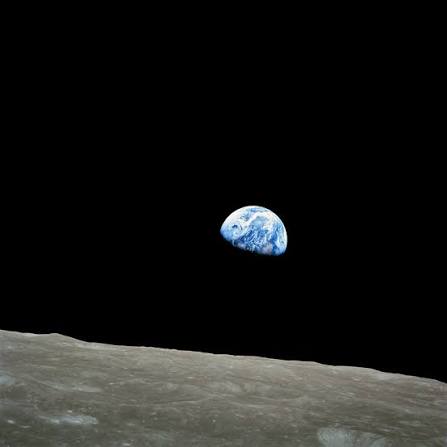
What photo in 1968 changed the world?
Earthrise
Define the term “Perspectives”
A way in which an individual views and understands a situation, guiding our decision making. Can be based on a range of personal and collective experiences/assumptions, values, beliefs. affected by: sociocultural norms, scientific understandings, laws, religion, economic conditions, local and global events, and life experiences between generations of humans.
Define the term “Arguments”
Different forms of perspectives that are made to support a personally held perspective or to counter a different one.
Define the term “Value”
Principles that people feel have worth and importance in life. Values can be: Moral, cultural, economic, or environmental. They affect people’s priorities, judgements, perspectives, and choices. Values are individually held, but are shared with and shaped by others in a community. Differences can lead to tensions between individuals and organizations.
What do perspectives ultimately lead to?
Actions (Perspectives —> Values —> Actions)

How can we utilize value surveys and questionnaires?
Value Surveys: Used to investigate the values underpinning the perspectives shown by a particular social group
Questionnaire: Used to investigate patterns, trends, and attitudes on any topic. Can be used to correlate worldviews/perspectives with environmental/sustainability issues.
Define the term “Paradigms”
Paradigms (worldviews) are the lenses shared by groups of people through which they perceive, make sense of, and act within, their environment. Can be influenced by cultural, religious, economic or sociopolitical context. Shaped by social media + community.
Define the term “Environmental Value System (EVS)”
A model that shows the inputs that affect our perspectives and the output resulting from our perspectives. A system is an assembly of parts and the relationships between them, which together constitute a whole. Systems will have inputs outputs, and storages.
What are some common inputs?
-education
-worldviews (paradigms)
-media
-cultural influences
-economic factors
-sociopolitical factors
-religion
What are some common outputs?
-judgements
-positions
-courses of action on how to act regarding environmental issues
What are the three categories EVSs can be placed into?
-Ecocentrism (nature-centered)
-Anthropocentrism (people-centered)
-Technocentrism (technology-centered)
Define what a Technocentrists is:
Believe that technology will keep pace with and provide solutions to environmental problems. Sometimes referred to as cornucopian view- a belief in the unending resourcefulness of humans and their ability to control their environment and leads to an optimistic view about the state of the world.

What are some common characteristics of cornucopians?
-Belief that people can always find a way out of any difficulties, whether political, scientific, or technological
-Acceptance that pro-growth goals define the rationality of project appraisal and policy formulation
-Optimism about the ability of humans to improve the lives of the world’s people
-Faith that scientific and technological expertise provides the basic foundation for advice on matters pertaining to economic growth and public health and safety
-Suspicion of attempts to widen the basis for participation and lengthy discussion in project appraisal and policy renewal
-Belief that all impediments can be overcome given a will, ingenuity and sufficient resources arising out of growth
Define what an Ecocentrist is:
Nature-centered and distrust modern large-scale technology. Prefer to work with natural environmental systems to solve problems before they get out of hand. See themselves as subject to nature rather than in control of it. Tend to see the world with limited resources where growth needs to be controlled so that only beneficial growth occurs.
what are the two subcategories of ecocentrists?
-Deep ecologists
-Self-reliance soft ecologists

Define what Anthropocentrism is?
A human focused approach. Considered as “humans sustainably managing the global system” through regulations, policies, incentives, etc. Takes ideas from both technocentrism and ecocentrism. They do this through taxes, environmental regulation, legislation, and debate.
What is a subcategory of anthropocentrism?
Environmental Managers: believe that economic growth and resource exploitation can continue assuming:
-there are suitable economic adjustments to taxes, fees, etc
-improvements in the legal rights to a minimum level of environmental quality
-compensation arrangements satisfactory to those who experience adverse environmental effects
(also believe in acceptance of new project appraisal techniques and decision review arrangements to allow for wider discussion or genuine search for consensus among representative groups or interested parties)
Changes in perspectives:
Perspectives, and beliefs that underpin them, change over time in all societies. Actions of certain groups (such as Greenpeace) have garnered media attention and mounted an anti-whaling campaign in the 1970s that confronted Soviet whalers in the Pacific Ocean. This morphed into the “Save the Whale” campaign that changed the public’s perception of whale hunting

Who was Greta Thunberg?
Climate activism began when she persuaded her parents to adopt lifestyle choices that reduced her family’s carbon footprint. She protested against Swedish parliament to influence outcome on Climate Change (school strikes every Friday)—> fueled her rise to status of a global icon. Influence on the world stage —> “Greta effect”.
Who was Rachel Carson?
American marine biologist, writer, and conservationist —> books (advanced marine conservation and the global environmental movement). Believed problems were caused by synthetic pesticides. book (raised environmental concerns to americans) spurred a reversal in national pesticide policy —> nationwide ban on DDT —> creation of U.S environmental protection agency.
Who was Jane Goodall?
English zoologist, primatologist and anthropologist. World’s expert on Chimpanzees, studying social + family interactions. Founder of the Jane Goodall institute and roots & shoots programme. Worked on conservation and animal welfare issues. A part of the Nonhuman rights project.
Who was Máxima Acuña?
Peruvian subsistence farmer and environmentalist, fought to remain on land, wanted for a new mine (Conga Mine), enduring years of violent intimidation by Newmont mining corporation + Buenaventura —> prize (Goldman Environmental)
Who was Wangari Maathai?
Environmentalists from Kenya. Founded the green belt movement (30 million trees planted) —> created jobs and secured firewood for rural communities —> targeted women-led groups (trees = plant on farms, schools, church). Aimed to conserve the environment and improve life quality.
Who was Robert D. Bullard?
“Father of Environmental Justice” —> decades acting as an advocate of environmental and racial justice across the U.S —> published books (sustainable development). African American neighborhoods = waste sites —> began a long academic and activist campaign against environmental racism. Minorities didn’t have a seat at the table for environmental decisions and Bullard made sure they did
Who was Dato’ Seri Tengku Dr. Zainal Adlin Bin Tengku Mahamood?
Malaysian conservationist —> Initiated several conservation programs in biodiverse regions in east Malaysia —> involved in the conception of creation of the “heart of borneo”, promotes to preserve central pristine ecosystems —> protects one of the largest transboundary rainforests in the world
Describe Earth Day:
each year on April 22, we celebrate Earth Day. It was founded in 1970 by senator Gaylord Nelson from wisconsin. The goal is to highlight and promote the role of responsible consumption in achieving sustainability.