bio unit 2
 Call Kai
 Learn
Learn Practice Test
 Spaced Repetition
 Match
Match Flashcards
 Knowt Play
1/79

There's no tags or description
Looks like no tags are added yet.
Name | Mastery | Learn | Test | Matching | Spaced | Call with Kai | Chat |
|---|
No analytics yet
Send a link to your students to track their progress
80 Terms
endothermic reaction
absorbs energy
ΔG > 0 (positive, so creates products w/ higher free energy)
decreases entropy (disorder of surroundings) in system
non-spontaneous
ex. photosynthesis

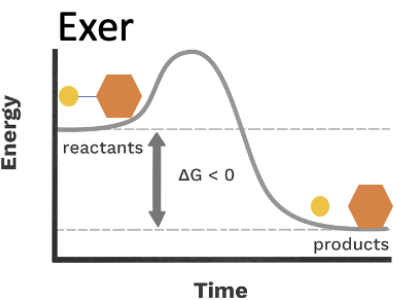
exothermic reaction
releases energy
ΔG < 0 (negative; creates products w/ lower free energy)
increases entropy (disorder of surroundings) in system
spontaneous
ex. cellular respiration
anabolic pathways
process of metabolism that constructs large, complex molecules from smaller simpler ones (small to large)
ENDERGONIC (requires & absorbs energy)
ex. amino acids → polypeptides → protein

catabolic pathways
process of metabolism that breaks down large, complex molecules into smaller simpler ones (large to small)
EXERGONIC (releases energy)
ex. glucose → CO2 & H2O, protein digestion

define metabolism
the sum of all the chemical reactions that continuously occur within each cell of a living organism
converting food into energy!!
operates through 2 main processes: catabolic & anabolic pathways

define system
a group of interacting, chemical components that work together (doesn’t include surroundings)

define kinetic energy & examples
energy in motion/used currently / ability of an object in motion to do work
ex. mechanical, sound, electrical, light, thermal energy

define potential energy & examples
the capacity of stored energy, but could be used (not currently)
relates to position of shared electrons in covalent bonds (polar vs. nonpolar)
ex. chemical (like a battery), gravitational, nuclear, elastic

fill in the blank: polar covalent bonds are (strong/weak), (short/long), (high/low) in potential energy —> why?
strong, short, low due to unequal pull b/c it has less “potential”/likely to break
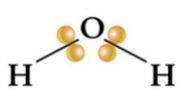
fill in the blank: nonpolar covalent bonds are (strong/weak), (short/long), (high/low) in potential energy —> why?
weak, long, and high in potential energy b/c they have the “potential”/possibility to break
ex. methane or glucose b/c its C-C & C-H nonpolar bonds

define the 1st law of thermodynamics
energy cannot be created nor destroyed — only transferred & transformed
what 2 factors determine a reaction will occur spontaneously?
when the products have:
lower potential energy
lower entropy
compared to the reactants
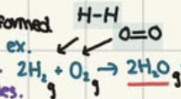
when does entropy increase in a system?
when a reaction is spontaneous or when energy/molecules become disordered/spread out


left:
less entropy b/c pretty ordered: one side mostly (-), another side mostly (+) molecules
more potential energy to change: (+) attracted to (-), so want to attach tgtr and move
right:
more entropy b/c disordered: both sides a random mixture of (+) & (-)
less potential energy to change: no pull to switch sides
define cell theory
foundational scientific principle w/ 3 principles
all living organisms are made of cells
cells are the basic units of structure and function
all cells come from pre-existing cells
traits of prokaryotic cells
lack membrane-bound organelles (ex. true nucleus)
DNA located single circular chromosome in nucleoid region (since no membrane bound nucleus)
reproduce through binary fission

trait of eukaryotic cells
possesses membrane-bound organelles
contains a nucleus w/ DNA chromosomes
reproduces w/ mitosis and meiosis
5 traits living organisms share
made of cells
self-replication (mitosis or binary fission)
process genetic information
gain and use energy
undergo evolution
nucleus function
stores genetic information (chromosomes; dictates cell activity)
handles ribosome assembly
structural support (nuclear lamina)
nonexistent in prokaryotic cells

ribosomes function
translates genetic code from messenger RNA —> protein synthesis
larger in eukaryotic than prokaryotic
function of rough endoplasmic reticulum
protein synthesis & processing

function of smooth endoplasmic reticulum
lipid synthesis & processing

golgi apparatus
protein, lipid, & carbohydrate processing

lysosomes function
digestion & recycling

vacuoles function
storage, digestion, & recycling

peroxisomes (made of & function)
made of catalase (processes peroxide); oxidation (break down) of fatty acids to provide energy

mitochondria function
ATP production

chloroplasts (made of & function)
made of pigments; produces sugar via photosynthesis

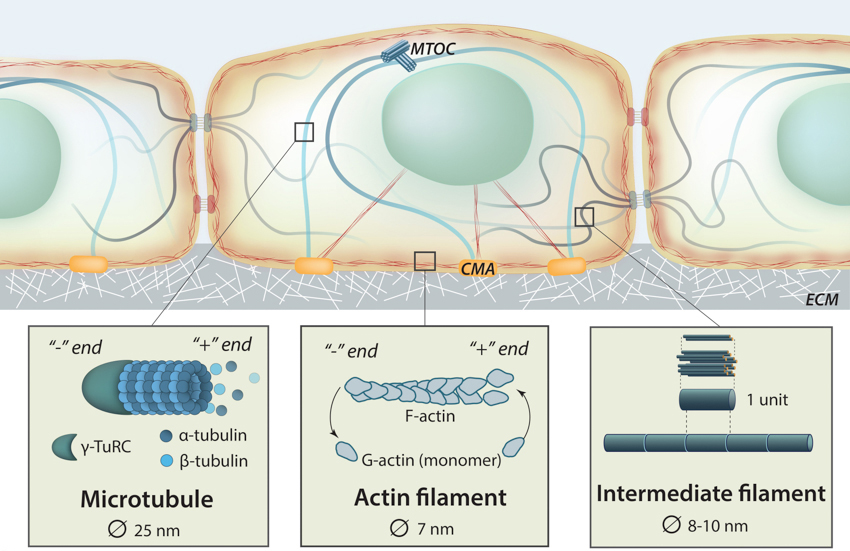
cytoskeleton (made of & function)
actin filaments (protein fibers); structural support, movement of materials
ATP is formed when ___ & ___ combine
ADP & phosphate
Oxidation
loss of electrons or H atoms from a particle
O - Oxidation
I - is
L - Loss
can only occur if reduction also occurs
ex. organisms extract energy from fuel molecules by oxidizing them
a molecule’s potential energy decreases after oxidation!!
OIL RIG stands for:
O - Oxidation
I - is
L - Loss
R - Reduction
I - is
G - Gain
one cannot occur w/o the other
processes that involve both are Redox reactions!!!!
Reduction
gain of electrons or H atoms from a particle
R - Reduction
I - is
G - Gain
can only occur if oxidation also occurs
a molecule’s potential energy increases after reduction
phosphorylation
the addition of a phosphate group to a molecule by the enzyme “kinase,” which acts as a protein on-off switch to control cell activity
A + B + ATP → A + BP + ADP (molecule B phosphorylated)

dephosphorylation
the removal of the phosphate group from a molecule
define energy coupling
the process where cells use energy released from an exergonic reaction (releases energy) to power an endergonic reaction (requires & absorbs energy)
primarily driven by ATP
enzyme
a protein that serves as a biological catalyst
reduces activation energy by temporarily binding the substrates to the active site
catalyst
a substance that greatly accelerates a chemical reaction w/o being a reactant in reaction (so doesn’t become a product)
substraces
reactants of catalyzed reactions
induced fit
the process where the binding of a substrate to an enzyme’s active site causes the enzyme’s structure to change to mold to the precise shape of the substrate in order to maximize the catalyst’s effectiveness

what factors influence enzymatic activity aka catalytic rate?
concentration (amount) of substrates, temp, pH, competitive & allosteric inhibitors, & feedback inhibition
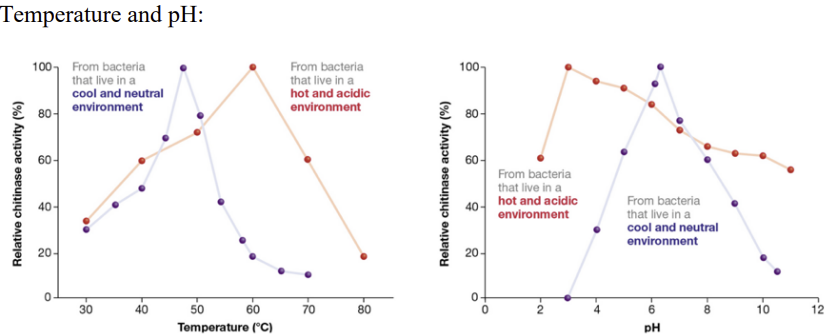
how does pH & temperature affect enzymes’ catalytic rate?
if outside the peak range, pH can disrupt an enzyme’s ability maintain its shape of the active site —> hinders a substrate’s ability to bind
allosteric regulation
control of an enzyme’s activity through the sites that aren’t the active site (aka Allosteric sites)
may cause Allosteric Activation
allosteric sites
sites that are distinct from the main, active site; an effector molecule can influence enzyme’s activity (change or turn on-off)

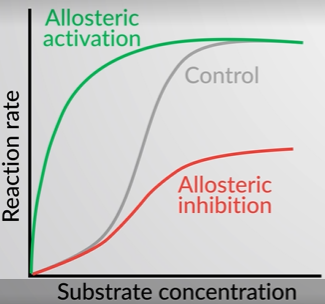
Allosteric Activation / positive effector
after an effector molecule binds to an allosteric site, there’s an increase in attraction of the enzyme’s active sites for substraces, which leads to → an increased rate in enzyme activity & reaction
graph w/ x=substrate concentration & y=reaction rate: goes from s-shape to hyperbolic (almost square) curve

Allosteric Inhibition / negative effector
a process when after an effector molecule binds to an allosteric site, there’s an decrease in attraction of the enzyme’s active sites for substraces, which leads to → an decreased rate in enzyme activity & reaction


which is an allosteric activator, inhibitor, and w/o either?
green = activator
gray = w/o effector molecule
red = inhibitor
competitive inhibition
a process where a molecule (inhibitor) blocks an enzyme’s active site, preventing the normal substrate from binding → no reaction

feedback inhibition
type of control that occurs when high amounts of product in a metabolic pathway inhibits the regulatory sites of a enzyme early in the pathway, halting the pathway
ex. in glycolysis, if ATP concentrations (amounts) is high → starts to bind to allosteric/regulatory sites → ATP becomes an allosteric inhibitor → halts whole cellular respiration

coenzymes
organic molecules (higher presence of C-H)
cofactors
inorganic helper molecules (little to no presence of C-H) that help increase the function of enzymes/molecules
glycolysis
1st stage of cellular respiration
catabolic
redox reactions
aka reduction-oxidation reactions

photosynthesis
located in the chloroplast
consists of light-dependent & light-independent (Calvin Cycle) reactions
series of redox reactions
producing sugar and O2 from CO2 & H2O
carbon fixation
turning inorganic CO2 from air into useful organic molecules like sugars that contain more chemical energy than the reactants
requires mucho energy input (anabolic)
light-dependent reactions
reactants: sunlight, water, NADP+, & ADP
products: heat, O2, ATP and NADPH
located in the thylakoids
Calvin Cycle aka light-independent reactions
use ATP & NADPH as energy sources to build carbohydrate molecules
3 phases
Photophosphorylation
the process that plant cells use to use light energy (sunlight) to convert ADP and a phosphate group to ATP