Parasitic Relationships and Platyhelminthes (Flatworms) : Trematodes
 Call Kai
 Learn
 Practice Test
 Spaced Repetition
 Match
 Flashcards
 Knowt Play
1/93

There's no tags or description
Looks like no tags are added yet.
94 Terms
The 2 classes of Platyhelmines (Flat Worms) studied are
Trematodes
Cestodes
Types of Parasitic Relationships
Obligate
Facultattive
Characteristics of Obligate Parasitic Relationships
the parasite or host fully depend on the life of the other for survival/reproduction
Characteristics of Facultative Parasitic Relationships
the relationship is noy essential for life or reproduction of the host or parasite
example of obligative relationship
many parasites
tapeworms
flukes
nematodes
The relationship between infection and disease
infection with a a parasite does not always lead to disease or a malfunctioning process (enteric protozoa and tapeworms)
Some dangerous symbionts cause no disease in some hosts ( olio)
Types of Parasitism
ectoparaasite
endoparasite
intralcellular
extracellular
faculative
obligate
accidental
temporary/intermittent
ectoparasites
Organisms that live on the exterior of a host, feeding on its tissues or fluids (fleas, ticks, and lice)
endoparasites and the 2 classes
Organisms that live inside the host's body, often causing disease
intracellular - reside within the cell
extracellular - reside outside the cell
types of hosts
definative and intermediate hosts
definitive hosts
Organisms that host the mature, sexually reproductive stage of a parasite. Usually a vertebrae host
why most definative hosts have vertebrae
Trophic Transmission: Parasites move up the food chain via predation, naturally maturing when eaten by larger, apex vertebrate predators.
Host Longevity: Vertebrates live much longer than invertebrates, providing a stable, multi-year environment for continuous reproduction.
Resource Abundance: Vertebrates offer massive body sizes and nutrient-rich blood, providing the high metabolic energy needed to produce eggs.
intermediate hosts
Organisms that host the larval, immature stages of a parasite, often providing a site for development before the parasite reaches its definitive host. Usually invertabrae (vector) hosts
why intermediate hosts are usually nonvertabrae
Massive Population Amplification: Asexual cloning allows a single invading parasite to multiply into thousands of larvae, vastly increasing the odds that at least one will successfully reach the next host.
Lower Metabolic Cost: Asexual reproduction requires much less energy than complex sexual mating, making it perfectly suited for the smaller, resource-limited bodies of invertebrates (like snails or insects).
Exploiting Short Lifespans: Intermediate hosts often live short lives; rapid asexual multiplication allows the parasite to quickly overrun the host and prepare for transmission before the host dies.
Common name for platyhelmines
flatworms
Subclass of trematodes that make up most of the parasitic flatporms
Digenea
characterisitcs of platyhelmithes
bilateral symmetry, no body cavity with no specialized circulatory/respatory organs
how flat shape of platyhelmithes affect physiology
flat shapes allow oxygen and nutrients to diffuse easily across their body surface.
neodermata subclass
includes both trematoda (dignea) and cestoda, have a tegument and are exlusivly parasitic.
body plan of digenea
depend on the position of the attachment organ, most trematodes of humans are distomes
distome body plan
characterized by two suckers, one oral and one ventral, allowing attachment to host tissues.
one of the most common and abundant parasitic worms
dignea/digenetic trematodes
characteristic of Digenea development include at least __ hosts
2
life cycle of dignea
molluscs → 2nd/3rd intermediate host → definitive hosts
Anatomy of Digenea
2 suckers for attachment (oral sucker and ventral sucker/acetabulum)
dignea reproducting atlternates between _____ and ______ reproduction
sexual, asexual
Pharynx of Dignea
MUSCULAR STRUCTURE used to pump food into digestive tract
trematodes have reproductive flexability that includes
being mostly hermaphroditic, meaning they have both male and female genders, and sexual fertilization is possible
what tremadoes do not have a hermaphroditism
schitsosomes
how nutrients are taken up in trematodes
throgh the oral sucker and tegument
tegument characteristics
is a single cell ( a syncytium) formed by a fusion of multiple cells, covers the whole body, and takes up nutrients
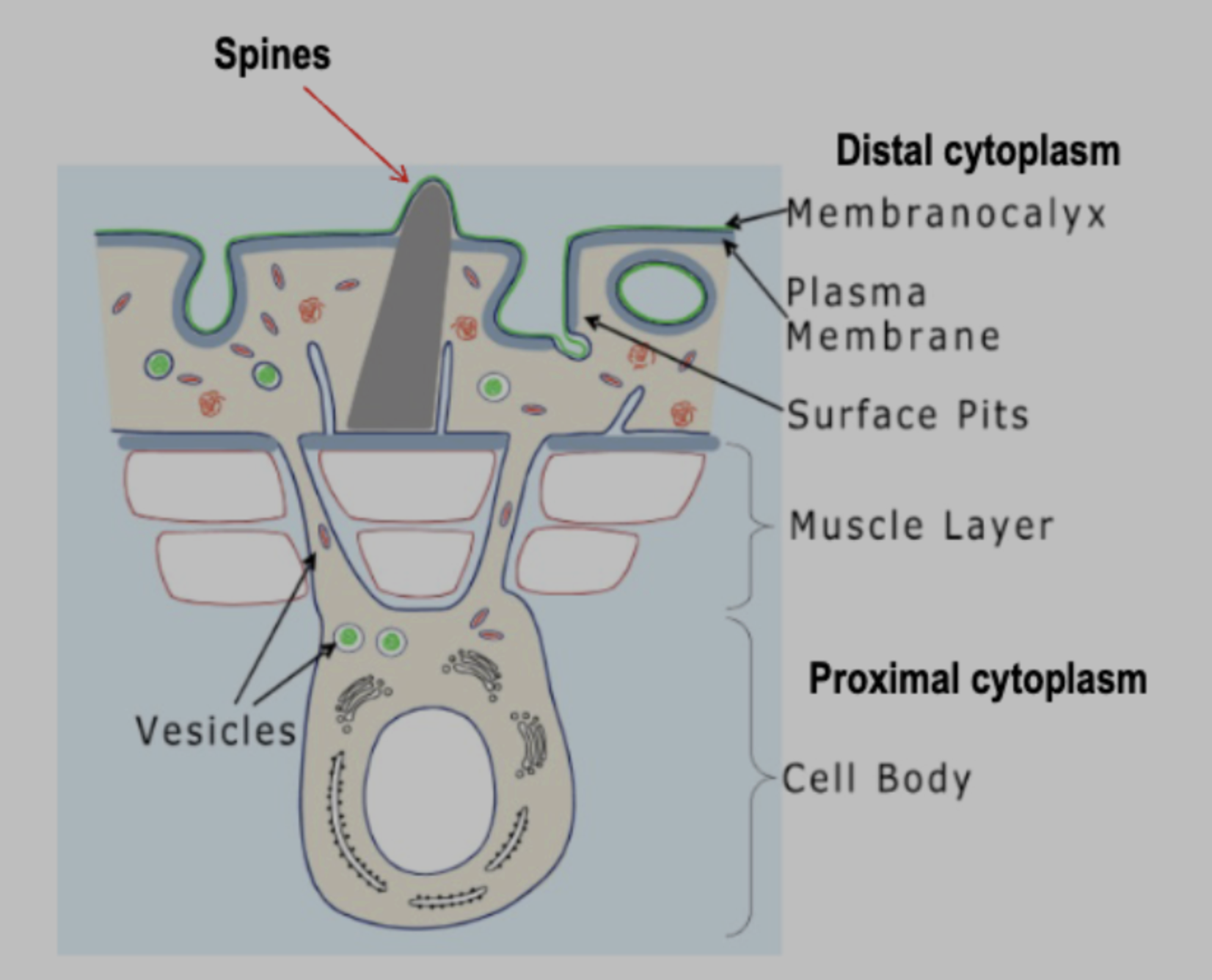
location of tegument cell body and nuclei
underlie 2 muscle layers

physiology of actin spines on tegument
allow trematodes to anchor themselves

divisions of the tegument and what they contain
proximal cytoplasm (cell body, nucleus, vesicles, ER, Golgi, Mitochondria )
muscle layer
distal cytoplasm (lined by plasma membrane with glycocalyx)
Glycocalyx role in the tegument
provides protection and aids in adhesion to host tissues.
classification of trematodes excratory system
pronephridial excretion system
platyhelminth/trematode pronephridial excretion system
contains a pronephridium, which is a flame cell and a tubule cell, which together act as a microfilter system which merge intpo a central duct that releases through excretion pores. Allows for osmoregulation and waste removal
flame cell in pronephridial excretion system
has cillia, beats rapidly (looks like flickering candle)
tubule cell cell in pronephridial excretion system
forms the duct leading away from cell
how waste is excreted in trematodes
a pronephridial excretion system feeding into excritory pores
other function of escratory system in trematodes
is osmoregulation, helping maintain fluid balance in the organism
location of excratory pores in trematodes
located at the posterior end of the body, facilitating waste removal.
Trematode Reproductive Strategy (number)
produce a massive ammount of offspring
Most tremtodes are ______
hermaphrodites
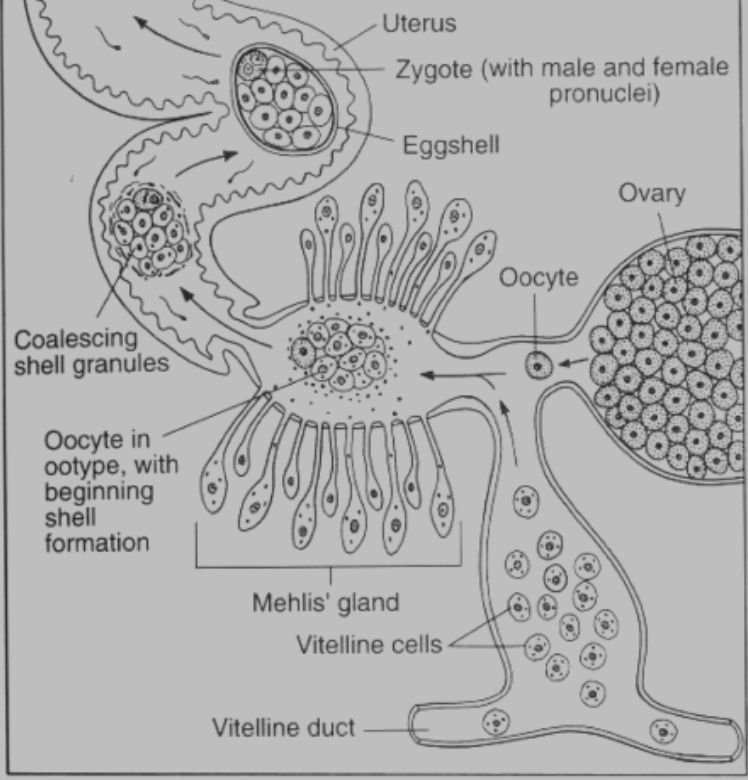
What components meet in the trematode ootype to form an egg?
he oocyte (from ovary), vitelline cells (from vitellaria), and sperm.
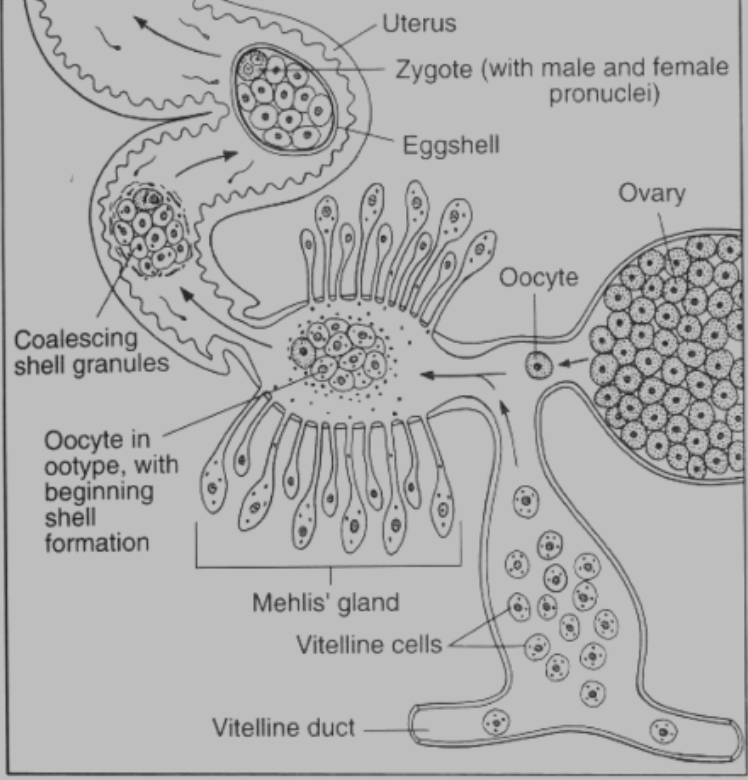
What are the two main functions of vitelline (yolk) cells in trematode reproduction
Provide nutrients for the embryo.
Provide proteins/granules to build the eggshell.

What is the main function of the Mehlis' gland in trematodes
Surrounds the ootype and secretes fluid to lubricate egg passage and trigger eggshell formation from vitelline cells
where does fertilization occur in trematodes
ootype

examples of _________ egg (class)
trematode
life cycle stages of trematodes
egg → miracidium → sporocyts → redia → cercaria→ metacercaria → adult fluke
Not all species have all stages of lifecycle
combining _______ reproduction allow trematodes to have enormous number of offspring
sexual and asexual
all trematodes have at least host/s, one of which is a ____.
2; snail
invasive stages of Trematodes
miracidia and cercariae
where asexual reproduction occurs in trematodes
germinal balls in the first intermediate host
at what life cycle stages do trematodes undergo asexual reproduction
sporocyst and redia stages
germinal balls have ______ which _______
omnipotent progenitor cells; don’t need to be fertilized to begin development

chatacteristics of egg stage of the trematode
constains an embryo and must leave the final host to continue developmen
how does the trematode embryo know when to hatch
using light, osmomolarity, and temprature
miciricidum stage (2nd) characteristics
highly motile due to ciliated surface, have simple eyes, and several chemical/mechanical receptors, have penetration glands, hatch upon ingestion by snail (intermediate host)
what do the simple eyes of the miracidium allow the organism to do
avoid light
what is the overall role of the receptors on the miracidium
to find their intermediate hosts
role of penetration glands
secrete enzymes (prosteases, etc,) upon contact with appropriate host which allow for penetration of tissue
how miracidium attach to intermediate host
use penetrtion glands to penetrate the GUT epithelium
the stage in the full progression of the trematode life cycle that follows miracidium
the sporocyct
how does the miracidium transition to the sporocyst
The sporocyst enters the gut epithelium of the intermediate host and undergoes metamorphosis to develop into the sporocyst, which allows for asexual reproduction.
how does the transition from miracidium to sporocyst allow for asecual reproduction
the body organs are reduced to a germinal sac, harboring germinal balls
how does the sporocyst take up nutrients
only through tegument and absorbs nutrients from hosts body fluids
what does the germinal mass do in the sporocyst and what can they develop into
germinal mass (containing stem-like progenitor cells) expands and reproduces asexually to develop into daughter sporocysts, rediae, or cercariae.

what are the 3 stages that sporocysts can develop into
daughter sporocysts, rediae, or cercariae.

redia characteristics
elongated, oral and ventral suckers, a gut, and a birth pore
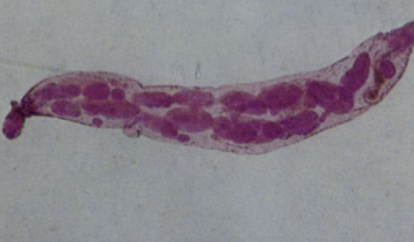
what stage is this trematode at
redia stage

what stage is this trematode at
sporocyst

what stage is this trematode at
miracidium
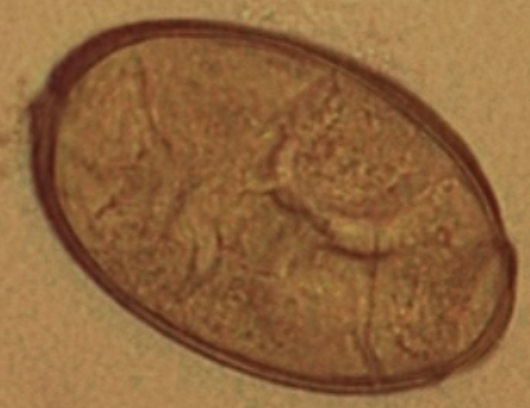
what generic stage is this trematode at
egg
what is the point of the birth pore on the ridia
to release cercaria
redia are ____ in the intermediate hosts and prey on other ___________ (2) of same and other species
mobile; sporocysts and redia

what stage is this trematode at
cercaria stage
cercaria stage main characteristics
leave intermediate hosts and infect final hosts, show many adult anatomical features, and leave the snail in multiple stages
why does the cercaria leave the intermediate host in stages
to maximize chances of survival and successful infection of final hosts, leave in repeated intermediate bursts
what stage follows the Redia stage int he regular progressionof trematodes
the cercaria stage
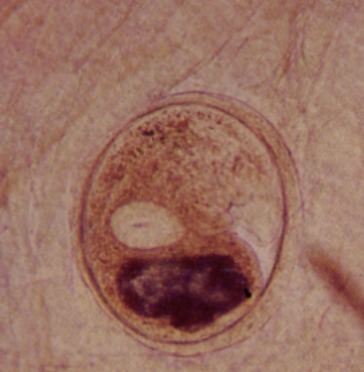
what stage is this trematode at
the metacercaria stage
what is the metacercaria phase
where cercaria loose their tails and encyst themselves in a host/the environment, encysted resting larveal stage, and is an adaptation that allows the trematode to survive until it finds a suitable final host.
What is the only exception to the metaceraria stage noted?
Schistosoma, which penetrate host skin directly
Where are metacercaria located on Clonorchis
within the muscles of fish
Where are metacercaria located on Fasciola?
on plants
what is the common name for Dicrocoelium dendriticum
lancet liver fluke
how does Dicrocoelium dendriticum (lancet liver fluke) manipulate the hosts behavior?
a metacercaria lodges into the central ganglia of the brain and the worm makes the ant go to the end of grass blades
zombie snail trematode
Leucochloridium sp., worm eggs taken up by snails, causing pulsating structures in their tentacles that attract birds.
trematodes that have medical importance (can infect humans or are known to)
Schistosoma: Blood flukes (cercariae directly penetrate skin)
Clonorchis & Opisthorchis: Liver flukes (metacercariae in undercooked fish)
Paragonimus: Lung flukes (metacercariae in crabs/crayfish)
Fasciolopsis, Fasciola, & Dicrocoelium: Intestinal & liver flukes (metacercariae encysted on aquatic plants)
trematodes that reside in the liver, lung, or intestines
Clonorchis, Opisthorchis, Paragonimus, Fasciolopsis, Fasciola, Dicrocoelium