RESPIRATORY DISORDERS & THEIR MANAGEMENT III: FIBROSIS & OSA
 Call Kai
 Learn
Learn Practice Test
 Spaced Repetition
 Match
Match Flashcards
 Knowt Play
1/40

There's no tags or description
Looks like no tags are added yet.
Name | Mastery | Learn | Test | Matching | Spaced | Call with Kai | Chat |
|---|
No analytics yet
Send a link to your students to track their progress
41 Terms

what is interstitial lung disease (ILD)
a group of disorders that cause fibrosis (scarring) of the lung parenchyma
primarily the interstitial space surrounding the alveoli

what are the types of ILD
Idiopathic pulmonary fibrosis (IPF)
Drugs - amiodarone, methotrexate, radiotherapy/ radiation
External antigen
Autoimmune ILD - rheumatoid arthritis, SLE (lupus), systemic sclerosis, Sjogren’s syndrome, idiopathic inflammatory myopathies
Sarcoidosis
what are examples of external antigen ILDs
hypersensitivity pneumonitis - Bird Fancier’s lung (bird feathers)/ Farmer’s lung (fungal spores)
reversible and steroid-responsive
pneumoconiosis (dust related) - asbestosis, silicosis, coal-miner’s lung
common in South Yorkshire
outline the pathophysiology of interstitial lung disease

what are symptoms of ILD
dyspnoea especially on exertion
dry cough (not productive unless infection)
reduce exercise tolerance
what are signs of ILD
increased work of breathing
cyanosis
low oxygen saturations
auscultation - fine crackles (so rule out other causes of crackles like heart failure, bronchiectasis)
systemic signs
what is a sign of ILD that is only present in idiopathic pulmonary fibrosis
clubbing is only present in IPF
what are some systemic signs of ILD
rashes in SLE (lupus) or sarcoidosis
cervical lymphadenopathy in sarcoidosis
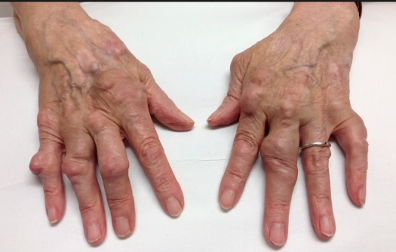
polyarthritis with deformities in rheumatoid arthritis

image showing classic butterfly rash in lupus
image showing classic rheumatoid arthritis hands
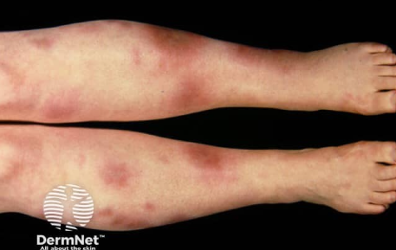
sarcoidosis: tender red patches on skin
sarcoidosis: redness in eyes

what investigations can be done for interstitial lung disease (ILD) (3)
spirometry including transfer factors (DLCO)
chest x-ray (CXR)
high resolution CT chest
what is the DLCO test
Diffusing Capacity of the Lung for Carbon Monoxide (DLCO)
measurement of alveolar gas exchange
measures amount of CO bound to haemoglobin after 10s breath hold with small amount of CO in inhaled gas

normal healthy CT scan
ILD CT scan

spirometry flowchart
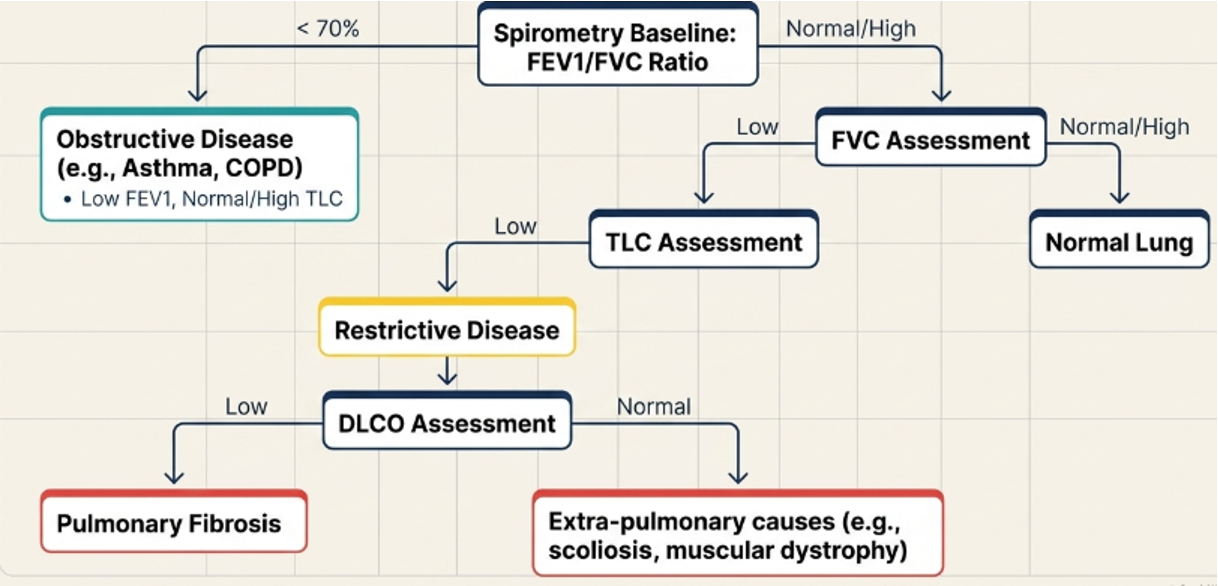
volume/ time and flow-volume loops

outline the management of idiopathic pulmonary fibrosis (IPF)
pulmonary rehabilitation
long term oxygen therapy (LTOT)
anti-fibroblast therapies (only work for some people)
nintedanib used if FVC >80%
pirfenidone used if FVC 50-80%
lung transplantation referral if someone is young and healthy
what is the median survival for IPF
≈ 3yrs
so often best supportive care (BSC) is given at diagnosis
how effective is mechanical ventilation at treating IPF
mechanical ventilation has poor outcomes
which treatment is universal in interstitial lung disease
pulmonary rehabilitation is useful in all ILD
other types of ILD treatments vary
what is the main treatment for drug-induced and/ or external allergens ILD
removing or reducing exposure to the offending antigen
in Bird Fancier’s lung (type of hypersensitivity pneumonitis) people need to get risk of carpets/ furniture and sometimes even move house
hypersensitivity pneumonitis: allergy-based response steroids are effective
what would be the treatment for systemic ILD
treatment of the underlying condition would be the main aim and hopefully the ILD will improve
what does OSA stand for
obstructive sleep apnoea
define OSA
sleep-related breathing disorder
characterised by transient, partial or complete obstruction of the upper airways
leading to frequent and/ or prolonged apnoeas or hypopneas and resultant temporary hypoxias
how common is OSA
common
prevalence of 0.5-4% of the population (as common as type I diabetes)
apnoea VS hypopnea
apnoea: complete airflow obstruction with temporary cessation of breathing for >10s
hypopnea: decreased airflow of >30% for >10s
what are the different types of apnoea (3)
obstructive (peripheral apnoea)
most common
central (brainstem related)
mixed
what structure controls breathing
the brain stem
what are night-time symptoms of OSA
constant stertor (snoring)
choking/ gasping episodes
apnoeas
enuresis (bed wetting)
particularly common in paediatric OSA patients
what are paediatric day-time symptoms of OSA
ADHD
aggressionlearning difficulties
mouth breathers
hyponasality (sounds congested)
what are adult day-time symptoms of OSA
excessive sleepiness (might think they have narcolepsy)
loss of libido
irritability
what are signs of OSA
obesity (main risk factor in adults)
adenotonsillar hypertrophy (main cause in children)
syndromes (esp. in paediatrics)
give examples of syndromes that can result in OSA
general examination to rule out syndromes which cause craniofacial abnormalities
Down’s - associated with naso and oropharyngeal narrowing and adenotonsillar hypertrophy
Pierre Robin sequence - cause retro and micrognathia » glossoptosis
Treacher Collin’s - cause retro and micrognathia » glossoptosis
(paediatrics!)

what investigations can be done for OSA
bold = main two investigations
Epworth sleepiness score/ STOP-Bang score
Overnight Pulse Oximetry (image)
Polysomnography (PSG) - full sleep study (expensive)
is an adult is suspected of having OSA what should be done
refer to sleep clinic to prove it is sleep apnoea
unless specific ENT cause may be contributing
is a child is suspected of having OSA what should be done
refer to ENT clinic
because majority have large tonsils so they need removing

what else can a polysomnography be used for
if someone is unsure whether a patient has central sleep apnoea or peripheral sleep apnoea

what can be done if a more distal cause of OSA/ failed CPAP
can consider drug-induced sleep endoscopy (DISE) in specialist centres
how are apnoeas/ hypopneas graded

outline management for OSA in adults

outline management for OSA in children

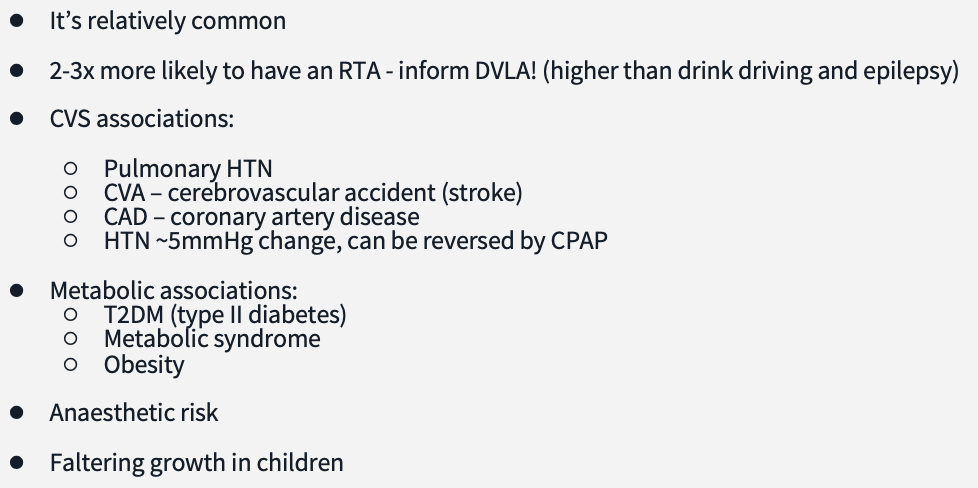
why is OSA such a problem (5)