Pharm II Final: NSAIDs, SA & Equine Pain Management, GI Therapies 1 & 2, Liver Drugs
 Call Kai
 Learn
 Practice Test
 Spaced Repetition
 Match
 Flashcards
 Knowt Play
1/193

There's no tags or description
Looks like no tags are added yet.
194 Terms
Cellular damage
What initiates the inflammatory cascade?
-Triggers arachidonic acid to differentiate into cyclooxygenase or lipooxygenase

COX2 (Cyclooxygenase 2)
Inducible COX that's activated in damaged or inflamed tissue
-Promotes fever, pain, & inflammation by synthesizing prostaglandins (PGE2)
-Main target of NSAIDS

COX1 (Cyclooxygenase 1)
Continuously expressed COX that's present in normal tissue to manage mucosal protection, renal blood flow, hemostasis, & PLT aggregation
-Catalyzes formation of constitutive prostaglandins for normal functions
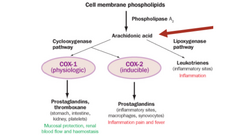
Prostaglandins
What chemicals sensitize nociceptors and contribute to inflammation, pain, & fever?
-However, they're also present in kidney & GI tract so NSAIDs can negatively affect these areas too

Prostaglandins
The COX enzymes catalyze the conversion of arachidonic acid into ______.
-NSAIDS block this conversion
True
True or False: Some of the specific functions of the 2 COX enzymes may crossover, therefore, COX2 activity is also important for some physiological functions
Loss of protective functions (decreased renal BF, less PLT function, risk of Gi ulcers)
When COX is blocked, there are fewer prostaglandins produced. What is a negative consequence of this?
EP 1-4 receptors
Receptors that play a role in GI homeostasis & renal function
-Present on the cell membrane
EP4 receptor
Receptor on the cell membrane that's responsible for the healing-promoting effect of PGE2 & blood pressure regulation in kidneys
*important for mediating pain & inflammation
GI, liver, kidneys
What 3 organs are NSAID side effects most common in?

Selective COX2 inhibitors
Commonly used NSAIDs that attempt to inhibit solely COX2
-Nearly impossible to not at least minimally affect COX1
-Ex: Carprofen, meloxicam, piroxicam
Carprofen (Rimadyl)
COX2-selective NSAID that reaches peak plasma conc. 2-3 hrs post dosing with a T1/2 of 8 hours
-99% protein bound
-Elimination via hepatic biotransformation with excretion in feces & urine
GI signs
Which adverse effects are most common in Carprofen?
-Renal signs
-Hepatic signs
-GI signs
False (these drugs are cleared very slowly since they lack major liver enzymes & have risks, Robenacoxib is safer for cats)
True or False: Cats can take acetaminophen, propofol, carprofen, & acetylsalicylic acid (aspirin) for mild pain management.
Robenacoxib (Onsior)
COX2-selective NSAIDs for cats & dogs with a weak, rapidly reversible binding for COX1 enzyme
-Approved in US for 3-day use in cats
Expensive
What is a downside of using robenacoxib in dogs?
Grapiprant (Galliprant)
Non-COX-inhibiting NSAID that antagonizes EP4 prostaglandin E2 receptor (pain mediating receptor) on cell membranes
Grapiprant (Galliprant)
What NSAID is very specific for treating osteoarthritis in dogs?
-Significantly decreases inflammation in this area of the body but not as much in other areas
COX2
Which COX enzyme can be upregulated by certain cancers?
-As a result, drugs that inhibit this COX enzyme are useful in treatment of certain cancers
Piroxicam
COX2 selective NSAID that is very specific for helping treat urogenital cancers (TCC or urothelial carcinomas)
5-7 days
What is the washout period between NSAID & steroid use?
GI ulcers or bleeding (intestinal perforations, liver damage)
When an NSAID is combined with another type of NSAID (including low-dose aspirin) or with a corticosteroid (ex. prednisone), what is there an increased risk of?
Renal failure
What is a risk of giving NSAIDS with ACE inhibitors (for cardiac disease & hypertension) & diuretics?
Vomiting
What is the most common adverse effect seen with NSAID related GI ulceration?
False (don't do this but overtime they may mildly affect clotting time)
True or False: COX2 selective NSAIDs substantially delay clotting time.
Decrease (suspected that COX inhibition of PG synthesis impairs the inflammatory phase of healing, and bone morphogenetic proteins)
Do NSAIDs increase or decrease bone healing?
True
True or False: Potential adverse effects of renal PG inhibition by NSAIDs include decreased RBF & GFR, hypertension, sodium retention, and edema.
Both (since COX1 & 2 enzymes are both present in the kidney)
Does blocking COX1 or COX2 enzymes via NSAIDs have the potential to cause adverse renal effects?
Hypertension, proteinuria
What signs of chronic kidney disease can be amplified by NSAIDs?
*Why monitoring & low doses are important!!!
-Use analgesic drugs with less renal toxicity in place of NSAIDs if able
Liver, kidney
Most NSAIDs are:
-Well absorbed from the GI tract
-Biotransformed in the ____
-Excreted by the ____ via glomerular filtration & tubular secretion or by bile
*Biotransformation & elimination half-lives vary significantly by species
NSAIDs are highly protein bound and biotransformed in the liver
Why are NSAIDs NOT very effective in patients with protein losing enteropathy or liver disease?
Aspirin
NSAID that inhibits COX1 at low doses & COX1/COX2 at high doses
-Crosses BBB & placenta
Decreases PGE2 synthesis
High dose aspirin is used to treat pain secondary to inflammatory disease. How does it generate mild analgesia?
*safer, more effective drugs are available and recommended
Clopidogrel
Low dose aspirin reduces the tendency of blood clots in certain diseases. What drug has largely replaced aspirin for the same effect?
Anti-platelet
What is the intended use of low dose aspirin?
-Used for some heart diseases, glomerular disease, & other conditions
PGI2 (prostacyclin)
Prostaglandin that inhibits gastric acid secretion
-Blocked by aspirin to increase GA secretion, diminish mucosal protection via inhibiting PGE2, & creates an increased risk of ulcers
Thromboxane (TXA2)
Chemical that enhances PLT aggregation
-Inhibited by aspirin = increased risk of bleeding for up to 1 wk following use
Acetaminophen
Selective COX2 inhibitor that's an anti-pyretic & weak analgesic
-NEVER USE IN CATS
Tylenol-3, Tylenol-4
A class 3, low dose, compounded form of acetaminophen with codeine (weak mu agonist/opioid) for analgesia in dogs
-Minimal anti-inflammatory effects
-AE: Depression, vomiting, methemoglobinemia
Ibuprofen
NSAID used in human medicine to decrease inflammation, pain, & fever
-Should not be given to small animals due to the risk of toxicity
False (GI signs appear 2-6 hrs PI but serious complications may not be seen for 4-5 days post ingestion)
True or False: Complications from ibuprofen toxicity in animals arise 2-6 hours after ingestion.
Adaptive, maladaptive
Types of Pain:
-____ = nociceptive or inflammatory; helpful bc it produces behavior that promotes healing & recovery
-_____ = functional or neuropathic; Unhelpful pain (out of proportion to actual tissue damage) that persists long after the tissues have healed
Poor bioavailability (don't absorb them well)
Why are oral opioids not traditionally used for outpatient treatment of chronic pain?
Buprenorphine
Class 3 transmucosal opioid for both acute & chronic pain in cats and dogs
*Dosages may be higher with this route compared to injectables; Has potent analgesic effects that are 25x greater than those of morphine
Simbadol
FDA-approved injectable buprenorphine formulation for cats that provides analgesia for 24 hours
-Administered once daily for up to 3 days

Zorbium
Transdermal buprenorphine that's FDA approved for cats
-Provides analgesia for 4 days (works within 1-2 hrs)

Fentanyl patches
Provides a sustained delivery of fentanyl (mu opioid receptor agonist, Class 2) for up to 72+ hours
-Rate of drug release is related to surface area of the exposed skin, drug travels through stratum corneum
*Should be applied 12-24 hours prior to the anticipated need for analgesia
CRI (constant rate infusion)
Transdermal fentanyl patches (which provide 100x morphine's potency) are indicated for use in painful dogs & cats that can't receive a ...
anti-NGF MAb (Anti-nerve growth factor Monoclonal antibody)
Binds to nerve growth factors (NGF) & block its interaction in order to prevent pain-sensing neurons from sending their signals
-Long duration of action (4+ weeks)
-Eliminate drug via protein catabolism & recycling (no hepatic or renal clearance)

Frunevetmab, Bedinvetmab
Anti-NGF Monocolonal Antibodies for Osteoarthritis:
-_____ (Solensia®) = specific for cats
-______(Librela®) = specific for dogs

Chronic osteoarthritis
Nerve growth factor (NGF) is present in high concentration in joints of patients with ..
Block Na channels in nerve membranes (so threshold potential isn't reached & action potential can't occur)
How do local anesthetics block peripheral pain impulses?
-Prevents peripheral signals from reaching CNS
Wind up (hypersensitization)
What unique type of pain can local anesthetics block?
Nocita
Liposome-encapsulated bupivacaine that's injected SQ to provide analgesia for up to 72 hours
-Labeled for orthopedic surgery in dogs & onychectomy in cats
Allow slow, controlled bupivacine release (triggered by heat)
Nocita is a liposome-encapsulated bupivacaine product. What do these liposomes do?
-Hint: these molecules are why this product lasts 72 hrs

Gabapentin
Drug that effectively treats neuropathic pain
-Most common side effect: sedation
-Selectively inhibits Ca channels leading to reduced neurotransmitter release
Ataxia
What is a side effect of gabapentin that can occur more often in older, larger breed dogs with decreased muscle mass?
*Discontinue drug if this occurs
Long half life, higher oral bioavailability
Pregabalin has a similar mechanism of action to gabapentin. What are 2 differences in pregabalin?
Ketamine
Injectable NMDA receptor antagonist that blocks wind up pain
-May still feel pain, but pain is not exaggerated & is more likely to be controlled by traditional analgesic drugs (NSAIDs & opioids)
NMDA receptors
What receptors in the dorsal horn of the spinal cord are activated & responsible for creating central sensitization pain (wind up pain)?
Amantadine
Oral NMDA antagonist that blocks wind up pain & is useful for treating chronic pain (arthritis)
-Must be given in conjunction with another analgesic (NSAID) since it doesn't control acute pain
Amantadine
If a dog is in chronic pain, what medication should be added to their treatment plan if any of the following are present:
• NSAIDs suddenly 'not working' after controlling pain long-term
• Long-standing untreated pain
• Moderate to severe cancer pain
• Osteoarthritis
Tramadol
Uncommonly used Weak μ-opioid receptor agonist that's used as a sedative rather than analgesic
-Unlikely to provide analgesia for canine OA pain since dogs produce very little amounts of the intermediate metabolite that creates this type of analgesia
Amitrpytyline
Tricyclic antidepressants that provides analgesia by blocking catecholamine reuptake & other methods
-Prevents wind up pain but not a very strong analgesic
*Indications: Chronic pain with a known or potential neuropathic component
Increased, decreased (reduces GI function in horses)
Prolonged pain is due to prolonged stimulation at the the level of the spinal cord characterized by _____ sympathetic tone & _____ parasympathetic activity.
Thromboxane, Prostaglandin E2
What are the 2 most common inflammatory chemical stimuli that NSAIDs try to control?
Inhibits cyclooxygenase (which prevents expression of PGE2 & Thromboxane)
What is the MOA of NSAIDs?
False (won't improve effect after binding threshold is met, more is not better)
True or False: Increasing NSAID dosing will improve the effect without increasing the risk of complications.
Firocoxib
COX2 selective NSAID with reduced inhibition of COX1
-Loading Dose: 0.3mg/kg IV or orally Day 1
-Equine Injectable form: Equioxx, give directly into the vein or aspirate blood into catheter line before administering
Firocoxib
What NSAID is better for long term usage in horses compared to bup & banamine because it's more specific for COX2 & doesn't interfere with COX1 as much?
Flunixin Meglumine (banamine)
Nonselective NSAID in horses that can be given IV (1.1 mg/kg) or PO q 12 hrs until peak inflammation is controlled & then q 24 hrs PRN
-More pain control than selective but risk of more side effects
Phenylbutazone
Nonselective NSAID that can be given IV (2.2 mg/kg) or PO q 12-24 hrs in horses
-Don't exceed 4 grams a day for more than 2 days
True
True or False: If you are unable to adequately manage pain with NSAIDS, add another class of drugs, particularly lidocaine.
Gastroprotectants
With long term use of NSAIDs consider using ....
-Ex: Gastrogard (higher ulcer dose than prevention), Ranitidine, Neighloxx
1.1 mg/kg
The Gastrogard for treating ulcers is 4.4mg/kg in horses. What is the dose for preventing ulcers?
Inhibits fast Na channels (inhibits the recovery after repolarization)
What is the MOA of lidocaine?
-Uses: systemic, regionally, or epidurally
MAC
Lidocaine reduces the ___ of Halothane, Isoflurane & Desoflurane in horses
-By inhibiting fast Na channels --> changes nerve signaling uptake of brain's awareness
False (does not affect the heart, Improves post operative ileus but is not a true pro-kinetic )
True or False: Lidocaine has cardiovascular depressive effects & decreases GI function in horses.
Excitatory effects
Anti-inflammatory effects of Lidocaine are associated with the down regulation of ____ ____ of PGE2 by controlling Na+ channel regulations
Ileus
What post-operative complication in horses does systemic lidocaine improve?
-Slowing efferent signals to the brain to improve the feedback loop to the gut
Doesn't increase myoenteric neurotransmission (SI contractibility)
Why is lidocaine not a true prokinetic in horses?
-It slows the inflammatory response in the brain to reduce inflammation in the intestine & allow the viscera to return to normal function
CNS depression, ataxia, collapse
What are the negative side effects of systemic lidocaine?
25%
When there's neurotoxicity due to a lidocaine CRI, discontinue the drug until signs dissipate (rapidly metabolized). Then reduce the CRI by ___% to continue therapy.
1.3, 50
Dosing of Lidocaine:
-Loading Dose: ___ mg/kg intravenously over 10 minutes.
-CRI: ___ μg/kg/minute intravenously
20 minutes (Re-bolus Lidocaine if the drug has been discontinued for longer than 20 minutes)
Pharmokinetics indicate that the steady state of lidocaine in horses is below therapeutic levels ___ minutes after CRI administration has stopped.
mg/hr, mL/hr
CRI calculation for Lidocaine:
1) Calculate _____
2) Calculate _____ (remember 1% = 10 mg/mL) for the fluid pump
*Calculations will be on exam
Add to fluids
How can lidocaine be administered if you don't have a fluid pump?
-(Fluid volume in bags hung)/Liter per hour --> Multiply this # x hourly lidocaine volume
Epinephrine, norepinephrine, inhibition
A2 Agonists MOA:
-Sedative effects= reduction in ____ release from the adrenal gland
-Analgesic effects = spinal & supraspinal inhibition of _____
-Control visceral pain from the relaxation of intestines due to their _____ of phasic & tonic motor activity
A2 agonists
What drug class do these drugs belong to:
- Xylazine: 0.2-2.2 mg/kg IV
-Detomidine: 10-20 μg/kg IV (0.01-0.02 mg/kg IV)
-Medetomidine: 4-7 μg/kg IV (0.004-0.007 mg IV)
*Utilized in horses for pain management
A2 agonists
What drug class has these cardiovascular side effects in horses?
- Bradycardia
- Second degree AV blocks
- Increased vascular resistance
- Decreased cardiac output
3 mg
For standing surgeries, 12 mg of detomidine can be added into 250 mLs of LRS. What is the loading dose of detomidine?
-CRI is 1 drop per second
-Duration: 45-60 minutes
-Can add 5 mg of Butorphanol to the loading dose & another 5 mg to the CRI
Opioid agonists
What drug class binds to the G-protein coupled receptors to cause cellular hyperpolarization?
MOP
There are 3 classical opioid receptors (DOP, KOP and MOP). Which receptor do most clinically relevant opioid analgesics bind to in the CNS & PNS (in an agonist manner to elicit analgesia)?

Butorphanol, Morphine
What are the 2 most commonly used opioids in horses?
-Also help improve the sedative effects of IV Detomidine
NSAIDs
What drugs do opioids have Excellent Synergistic properties with?
Synovial membranes
Where in the body do opioids demonstrate anti-inflammatory effects in horses?
Decrease peristalsis
Why do opioids cause colic in horses?
Butorphanol
What opioid improves the quality of induction in field anesthesia for routine castration & improved recovery with reduced post-op pain?
-5 mg IV with premeds & 5 mg at onset
Morphine (4x higher risk)
Is there a greater risk of equine colic with butorphanol (0.01-0.02 mg/kg IV) or morphine (0.05-0.1 mg/kg IV)?
Gabapentin
Neurotransmitter drug that inhibits α2δ-1 subunits to decrease the density of pre-synaptic voltage gated Ca channels in horses
-Decreases subsequent release of excitatory neurotransmitters; more effective in cats & dogs