Chapter 25 and 26
 Call Kai
 Learn
 Practice Test
 Spaced Repetition
 Match
 Flashcards
 Knowt Play
1/61

There's no tags or description
Looks like no tags are added yet.
62 Terms
species
groups of actually or potentially interbreeding organisms that can produce fertile offspring
reproductively isolated from other groups
speciation
transforms parental species into another species or divides single species into 2 or more separate species
stasis
species does not significantly change
anagenesis
species changes over time as a whole
cladogenesis
the species splits into 2 different species over time
biological barriers
that prevent or reduce interbreeding populations
ecological
behavioral
temporal/seasonal
mechanical
gametic
lead to speciation
ecological isolation
speciation can occur when 2 populations occupy different habitats
gryllus pennsylvanicus prefers sandy soil, gryllus firmus prefers loamy soil
live in close proximity but genetically isolated from soil preferences
behavioral isolation
courtship rituals and other behaviors unique to a species are effective barriers to mating
courtship songs and dances
temporal/seasonal isolation
rana aurora breeds earlier in the year than rana boylil
mechanical isolation
the shape of the male reproductive organ varies among male damselfly species and is only compatible with the female of that species
reproductive organ incompatibility keeps the species reproductively isolated
gamete isolation
gametes may be incompatible or not attracted to each other
red and purple sea urchins can release eggs and sperm at the same time, but they are not compatible with each other
prezygotic isolating mechansisms
prevent mating from taking place
individuals may not find each other or see each other as suitable mates
postzygotic isolating mechanisms
create reproductive isolation even when members of 2 populations mate with each other
hybrids are sterile or have lower fitness
hybrid unviability
an embryo is produced, but cannot survive development
hybrid sterility
different species can produce a viable offspring, but that offspring cannot reproduce (mules, ligers)
hybrid breakdown
first generation hybrids are viable but subsequent generations have lower fitness
geographic barriers
prevents gene flow between isolated population
ancestors of snapping shrimp: prior to formation of isthmus of panama, members were of single species
snapping shrimp geographic barrier example
When isthmus of Panama closed, each of seven ancestral species of shrimp was divided into two separate populations (7>>14).
Three million years of separation resulted in complete or nearly complete speciation involving strong pre- and post-zygotic isolating mechanisms for all seven species pairs.
allopathic speciation
initiated by a geographic barrier to gene flow between 2 populations
galapagos example
relatively young geologically and are volcanic, oldest to the east
Darwin’s finches consist of 14 species that evolved from a single ancestral species that migrated to the Galápagos Islands and underwent repeated allopatric speciation
as the number of islands increase, so do the number of finch species
phylogeny (evolutionary history)
genetic differences among present-day species can be used to reconstruct their evolutionary histories
phylogenetic trees
branches: lineages over time
branch points/nodes: when species split into 2 or more
steps to constructing species-level phylogenetic trees from DNA sequences
acquire DNA sequences representing genome of interest from numerous different species
align sequences: computer program
DNA differences used to construct

why do different parts of genes evolve at different rates?
the highest rates of nucleotide substitution are in sequences that have the least effect on protein function
gene families arise through duplications
the globin gene family arose from duplication mutations
molecular clocks
measure the rate of evolutionary change
measured in terms of amino acid or nucleotide sequences to estimate time of divergence from common ancestor
highly conserved essential genes with slow, steady mutation rates are normally used
population
group of individuals belonging to same species
live in same geographic area
actually or can potentially interbreed
a populations gene pool
genetic information carried by members of population
most populations contain high degree of heterozygosity
domestic dog
hardy-weinberg law
describes what happens to allele and genotype frequencies in “ideal” populations
genes that do not fit the model have 1 or more of these forces acting on them
“ideal” population assumes:
equal rates of survival and reproduction (no selection)
no new alleles arise (no mutation)
no migration into or out of the population (no gene flow)
population is infinitely large (no genetic drift)
random mating occurs (no sexual selection)
what is the HW law equation and what does it show
after one generation of random mating, genotypic frequencies are predicted from allele frequencies
p² + 2pq + q² = 1
what does everything mean in the HW equation?1
p is the frequency of allele A.
q is the frequency of allele a
p² is the frequency of AA
2pq is the frequency of Aa
q² is the frequency of aa
for a single autosomal gene with 2 alleles A, a:
Frequency of A = 0.7 and a = 0.3. Note: A + a = 1.
AA = (0.7) × (0.7) = 0.49 means the AA genotype will occur 49 percent of the time.
Aa = (0.7) × (0.3) (2) = 0.42 or 42 percent will be heterozygous.
aa = (0.3) × (0.3) = 0.09 or 9 percent will be homozygous recessive.
what are the 3 consequences of the HW model?
dominant traits do not necessarily increase from 1 gen to next
genetic variability can be maintained
knowing the frequency of one genotype enables calculation of the frequencies of other genotypes at locus
who was natural selection discovered by
independently by charles darwin and alfred russel wallace
natural seletion
individuals exhibit variations in phenotype
variations are heritable
some phenotypes are more successful at survival and reproduce at higher rates
does not produce objectively better organisms, just ones better adapted
fitness
an individuals genetic contribution to future generations
genes associated with high rates of repro success: high fitness
genotypes of low rates of repro success: low fitness
when does the frequency of the allele decline?
if homozygous individuals sie without leaving offspring
allele “a” homozygous lethal allele
frequency is halved in 2 gens, halved again in 6 gens
some genetic disorders persist because
heterozygotes have an advantage (sickle cell and malaria)
the disease arises from a mutation that happens de novo during gamete formation (non-familial down syndrome)
the disorder manifests after reproductive age (huntington’s)
intensity of degrees of selection against nonlethal recessive allele a
strong (red) to weak (blue)
intermediate (yellow, purple and green)
even weak selection can cause great changes over time
differences in fitness must be large to produce rapid changes

directional selection
traits at one end of the spectrum of phenotypes become selected for or against, usually as result of changes in the environment
population mean shifts in direction of one extreme phenotype
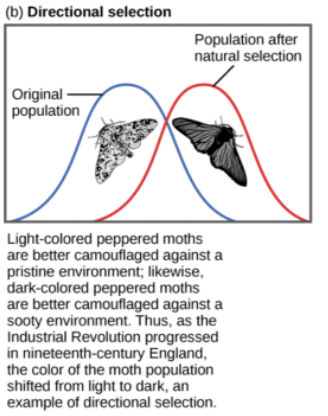
ex of directional selection
beak size in finches during dry yrs increased due to strong selection
finch eats nuts and seeds, during drought yrs have less small and soft seeds and more large and hard seeds
large beaks are better suited to the large and hard seeds

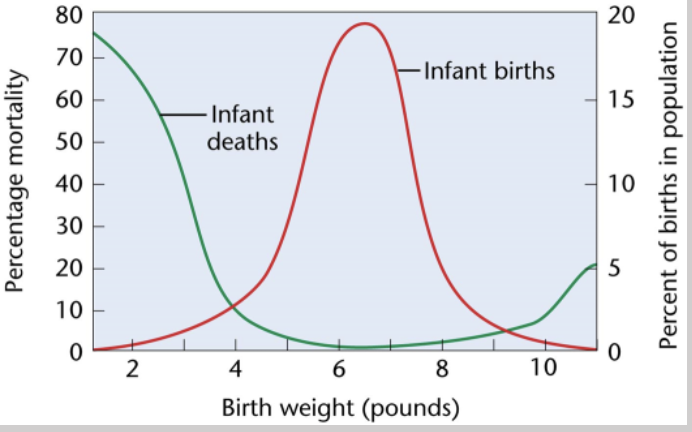
stabilizing selection
intermediate phenotypes are favored
both extremes are selected against
reduces pop variance over time but not the mean
favors maximum adaptation to existing environment-reduces phenotypic and genetic diversity of population

ex of stabilizing selection
human birth weight study over an 11 yr period
disruptive selection
selection against intermediate phenotypes
both phenotypic extremes are selected for
results in a population with increasingly bimodal distribution for a trait
2 distinct populations form as result of bidirectional selection

ex of disruptive selection
artificial selection for low and high bristle number in a drosophila population

several conditions must be met for accuracy when measuring the impact of changing allele frequencies:
allele must produce distinctive phenotype that can be distinguished from similar phenotypes produced by other alleles
trait must be fully expressed or completely penetrant so that mutants can be identified
identical phenotype must never be produced by nongenetic means
when does migration and what is its affect on the gene pool
occurs when individuals move between populations
reduces genetic differences between populations
increases level of genetic variation within a population
what does the HW law assume about migration?
that is doesnt take place
genetic drift
significant random fluctuations in allele frequencies in small populations
possible by chance alone
what can genetic drift arise through?
a founder effect
a genetic bottleneck
the founder effect
occurs when population originates from small number of individuals, usually by migration
genes carried by members of population are derived from the original founder
how do island populations relate to the founder effect?
island pops often arise from a small number of founders from the mainland
darwins finches

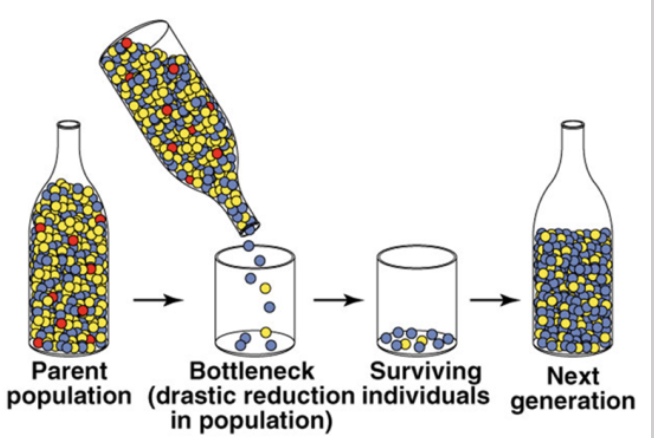
genetic bottlenecks
develops when large population remains in place yet undergoes drastic but temporary reduction in numbers
pop may recover but with greatly reduced genetic diversity
cheetahs
sexual selection (nonrandom mating)
process in which individuals with certain inherited characteristics are more likely to acquire mates than other individuals of the same sex
ex: male birds are often more brightly colored and ostentatious than females
what can sexual selection result in?
sexual dimorphism: marked differences between the sexes in secondary sexual characteristics
“good genes” hypothesis
ornamental traits in males are selected by females because they are linked to higher fitness
positive assortative
similar genotypes more likely to mate than dissimilar ones
form of nonrandom mating
negative assortative
dissimilar genotypes are more likely to mate
form of nonrandom mating
inbreeding
commonly affects genotype frequencies in population genetics, almost always deleterious
what are the effects of inbreeding?
increases proportion of homozygotes in pop
completely inbred pop theoretically will consist only of homozygous genotypes
detrimental recessive alleles can become more common, and the likelihood of being homozygous for those alleles also increases