PSYCH 243 Midterm 3
 Call Kai
 Learn
 Practice Test
 Spaced Repetition
 Match
 Flashcards
 Knowt Play
1/75

There's no tags or description
Looks like no tags are added yet.
76 Terms
How do low SES and chronic stress impact brain development?
-reduced volumes in cortical ___ matter
-Reduced volume in the ____ and the ____
-Reduced ____ surface area
-maturational lags in ___ and ____ lobes
Grey, hippocampus, amygdala, cortical, frontal, temporal
T or F: The prefrontal cortex plays a critical role in executive function (e.g. attention, inhibitory control) and connects with many other brain regions
T
T or F: Higher levels of maternal sensitivity in early childhood are associated with higher total brain volume
T
Parental behavior high in ____ can buffer the developing brain from the effects of poverty
nurturing
What do anti-poverty social policies (e.g. cash assistance, access to medical care) do in terms of brain development?
Reduce the negative impact of poverty on hippocampal volume
A neurodevelopmental disorder characterized by impairments in gross or fine motor skills that affect/impair activities of daily living
Developmental coordination disorder
Children with this disorder have difficulties that are often mistakenly ascribed to oppositional behavior, learning/attention difficulties, or simple laziness
Developmental coordination disorder
Children with this disorder have difficulty with the following:
-gross/fine motor skills
-coordination
-balance
-physical activity
-writing
-time perception
Developmental coordination disorder
Children with developmental coordination disorder showed ___ thresholds for detecting changes in the duration or timing of ____ stimuli and ____ neural responses to such changes
higher, auditory, delayed
T or F: Developmental coordination disorder persists into adulthood
T
The Canadian Physical Activity Guidelines recommend that children engage in at least ___ minutes of moderate to vigorous physical activity daily
60
____ ____ has many benefits for children:
-enhances bone health
-improvements in executive function
-benefits children’s attention
-benefits children’s memory
-benefits children’s goal-directed thinking and behavior
-benefits children’s creativity
-benefits children’s academic success
physical activity
the tendency to consider only one piece of information/dimension when multiple pieces/dimensions need to be processed
Centration
General characteristics of preoperational thought (Piaget)
-learn to use ___ representations
-develop some ability to think and ____
-thinking is not ____
-____ (can only process one dimension at once)
symbolic, reason, logical, centration
What kind of play is important for the development of morality (e.g. practice at living by a set of rules, perspective taking)?
Sociodramatic
collaborative pretend play where two or more children act out roles, scenarios, and stories using real or imagined objects and rules
Sociodramatic play
Specific characteristics of Preoperational thought (Piaget)
-_____ (no perspective taking)
-____ thinking
-lack of _____
-failure at ___ inclusion
egocentrism, animistic, conservation, class
Inability to take the perspective of another person
Egocentrism
The belief that inanimate objects have lifelike qualities, feelings, intentions, or consciousness
Animistic thinking
the idea that the amount of something remains the same despite changes in its form, shape, or appearance
Conservation
The development of conservation, substage 1:
Recognize that two amounts are ____ (before ____) the same. After transformation, children judge that the two amounts are ___ the ___. Center on the perceptually ___ dimension
initially, transformation, not, same, salient
The development of conservation, substage 2:
____ in their response. Children thus can focus on ___ dimensions, but not yet ____, only ____
Vacillate, two, simultaneously, successively
The development of conservation, substage 3:
_____ in coordination task, can ____ both dimensions ____. Children ___ their conservation judgements
succeed, coordinate, simultaneously, justify
In what three ways to children who succeed in conservation tasks justify their conservation judgements?
Identity, Inversion, Compensation
Is the following an example of an Identity, Inversion, or Compensation justification for a conservation judgement?
“Nothing has really changed, it is still the same”
Identity
Is the following an example of an Identity, Inversion, or Compensation justification for a conservation judgement?
“If you poured the milk back, it would still be the same”
Inversion
Is the following an example of an Identity, Inversion, or Compensation justification for a conservation judgement?
“Well, the milk is not as high, but it is more spread out (wide)”
Compensation
Concrete operations begin once children succeed in ___ tasks, ___ inclusion, ___, and ___ inference
conservation, class, seriation, transitive
Internalized mental actions that fit into a logical system
Operations
Characteristics of Concrete Operational thought:
-Systems of mental operations allow children to combine, order, and transform objects in their ___
-Called concrete operations because they relate directly to ___ objects and ___ about objects, not to ___ propositions.
-___ in conservation tasks, class inclusion, seriation, and transitive inference
minds, tangible, thoughts, abstract, success
Understanding that a superordinate class (A; animals) includes its subclasses (B1; cats, or B2: dogs)
Class inclusion
Class inclusion is tested by children’s understanding that the ____ class is larger than the ____ class
superordinate, subordinate
What two operations are required for a child to succeed at class inclusion?
Addition and subtraction
T or F: preoperational children succeed at class inclusion while concrete operational children fail
F
Ordering stimuli along a quantitative dimension (e.g. smallest to largest)
Seriation
Combine relations in a logical manner and make inferences
(Example
1: A > B, A is taller than B
2: B > C, B is taller than C
3: A - C, who is taller, A or C?
Transitive inference
T or F: preoperational children succeed at transitive inference tasks while concrete operational children fail
F
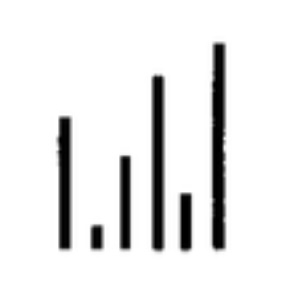
In a task involving ordering sticks from smallest-largest, children at stage __ in the development of seriation will order them as depicted
1

In a task involving ordering sticks from smallest-largest, children at stage __ in the development of seriation will order them as depicted
2

In a task involving ordering sticks from smallest-largest, children at stage __ in the development of seriation will order them as depicted
2

In a task involving ordering sticks from smallest-largest, children at stage __ or __ in the development of seriation will order them as depicted
3, 4
At this stage in the development of seriation, children will show no overall ordering and often group items into small, disconnected pairs or "mini-series" (such as a few big items and a few small items) without forming a single sequence.
Stage 1
At this stage in the development of seriation, children compare items two at a time, creating short pairs or partial sequences rather than integrating everything into one continuous order.
Stage 2
At this stage in the development of seriation, Children can build a full ordered series (such as a "stairway" of sticks), but often rely on trial-and-error and struggle to insert new items into the right spot without rebuilding or rearranging
Stage 3
At this stage in the development of seriation, In the concrete operational stage, children systematically find the smallest or largest item repeatedly, easily insert new items into an existing sequence, and understand reversibility and transitive inference
Stage 4
Movement from the inter- to the intra- psychological (social → individual) in Vygotsky’s Sociocultural theory
Genetic law of cultural development
Vygotsky’s Sociocultural theory:
-Genetic law of ___ development
-Importance of ___ ___ and ___ tools (language, number system, alphabet, etc.)
-_____ of cultural tools (___) leads to higher cognition and ___ of own behavior
cultural, social interaction, cultural, internalization, mediation, control
Vygotsky’s reinterpretation of Piaget’s egocentric speech:
-Function: helps ___ behavior (used more when tasks are ___)
-Gradually becomes more ___ (____ into higher cognitive processes)
guide, difficult, silent, transforms
What theorist thought that children’s cognitive development depends on the tools provided by society, and their minds are shaped by the cultural context in which they live?
Vygotsky
Order these types of speech in the correct order of derivative development according to Vygotsky from first to last
a) Inner speech
b) Social speech
c) Private/egocentric speech
b
c
a
Out loud, used to communicate with and influence other people, such as asking for help or sharing ideas (Vygotsky speech stage/type)
Social speech
Out loud though not intended for others to hear, Acts as a bridge between external talk and internal thought. Children talk themselves through tasks, plan steps, and regulate behavior—especially during hard or unfamiliar challenges (Vygotsky speech stage/type) AKA private speech
Egocentric speech
Silent and internal, private speech becomes internalized and abbreviated. It supports silent planning, reasoning, problem-solving, and emotional self-control
Inner speech
adjusting support to fit child’s level of performance (within sone of proximal dev.)
Scaffolding
the gap between what a learner can do independently (solitary performance) and what they can achieve with guidance or collaboration from a more knowledgeable person (assisted performance), it represents the "sweet spot" where new skills and understanding emerge
Zone of proximal development
principles of early childhood education are based on
Vygotsky’s theory:
-____ discovery
-Peer ____
-Importance of ___-___ play for dev. of ___-____
Assisted, collaboration, make, believe, self, regulation
Higher cognitive processes involved in conscious control of action and thought, closely related to constructs of self-control and self-regulation
Executive function
Name the 4 executive function processes discussed in lecture
Working memory, inhibition, flexibility, planning
Holding things in mind and operate on them
Working memory
Suppressing a preponent response
Inhibition
Shifting between responses and goals
Flexibility
Thinking out a sequence of actions ahead of time (often generalized under inhibition or working memory)
Planning
T or F: Executive function is linked to the prefrontal cortex and increases rapidly during preschool
T
Name the three tests for measuring inhibition (executive function) discussed in lec
Simon says task, Day-night task, Stroop test
What do the following 3 tasks measure?:
-Simon says: only executive movements when command is prefaced by, “Simon says”, otherwise remain motionless
-Day-night task: When shown a picture of a sun, must say “night”; when shown photo of the moon, must say “day”
-Stroop test : Say color of word; GREEN BLUE YELLOW
Inhibition
Name the two tests for measuring Working memory (executive function) discussed in lec
Forward digit span, backward digit span
What do the following 3 tasks measure?:
-Forward digit span: Children given string of numbers and must repeat them in same order as presented
-backward digit span: Children given string of numbers and must repeat them backwards
Working memory
Name the 2 tasks to measure flexibility (executive function) discussed in lec
Dimensional Change Card Sorting Task, Wisconsin Card Sorting Task
What do the following tasks measure?:
-Dimensional Change Card Sorting Task: examiner explicitly tells the participant to sort two-dimensional cards by one rule (such as color) and then announces a direct switch to a second rule (such as shape).
-Wisconsin Card Sorting Task: The participant must figure out an unstated sorting rule (color, shape, or number) through trial-and-error feedback and adapt when the rule changes without warning.
Flexibility
At what age does success at the Simon says task develop?
4-5
At what age does success at the stroop task develop?
4-5
At what age does success at the Day-Night task develop?
3.5-5
At what age does success at the forward digit span task develop?
3-4
At what age does success at the backward digit span task develop?
4-6
At what age does success at the Dimensional Change Card Sorting Task develop?
4-5
Between what ages does success at the Wisconsin Card Sorting task steadily increase?
6-11